Liber V · Chaos Magick · Chapter I: Chaos Magick
Ray Sherwin: Co-Founder of Chaos Magick and The Book of Results
Ray Sherwin, co-founder of chaos magick and the IOT: The Book of Results (1978), The New Equinox, The Theatre of Magick and his break with the order in 1982.

Ray Sherwin (born 1952) is an English occult writer and publisher who, together with Peter J. Carroll, laid the foundations of chaos magick in the late 1970s. His short manual The Book of Results (1978) was, with Carroll's Liber Null, one of the two founding texts of the movement, and his magazine The New Equinox gave the new current an early forum before he distanced himself from the Illuminates of Thanateros in 1982.
Early Life and the Yorkshire Occult Scene§
Sherwin was born in Yorkshire in 1952 and grew up in the north of England at a time when interest in magic, paganism and Eastern religion was spreading through the post-1960s counterculture. Like many young British occultists of the period he came to magic through the writings of Aleister Crowley and the wider literature of the Hermetic Order of the Golden Dawn, then undergoing a revival thanks to new editions and the publications of Israel Regardie and Kenneth Grant.
West Yorkshire became an unexpectedly important centre for this activity. The Sorcerer's Apprentice, an occult shop and mail-order business in Leeds, sold and published magical books and served as a meeting point for local practitioners, and recollections of the period by members of the early chaos milieu describe Sherwin's home in the village of East Morton, near Keighley, as another gathering place. This informal network, rather than any established order, was the setting in which the first chaos ideas were discussed, tested and printed. Its history is told more broadly in Contemporary Occultism.
The New Equinox and the Birth of Chaos Magick§
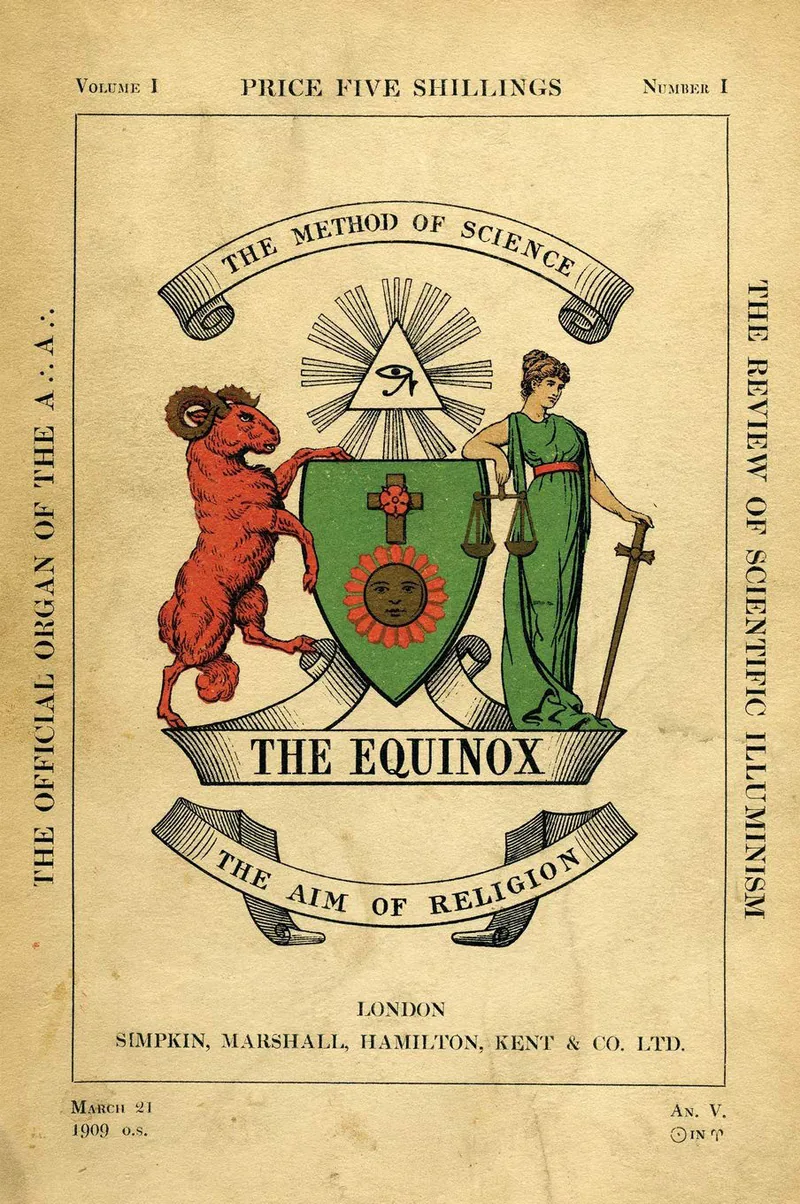
In the later 1970s Sherwin edited and published The New Equinox, an irregular journal whose title deliberately echoed Crowley's The Equinox (1909–1913). It printed material on Thelemic magick, ritual experiments and, increasingly, the ideas that would come to be called chaos magic. It was in this milieu that Sherwin and Peter J. Carroll met and began to collaborate.
The two men shared a dissatisfaction with the elaborate, hierarchical systems of the older orders. They wanted a magic that was practical, economical and open to testing, drawing on the sigil technique of Austin Osman Spare, on Crowley's experimental attitude and on a generally sceptical view of metaphysical claims. In 1978 they jointly announced the formation of the Illuminates of Thanateros (IOT), at first a loose association of magicians working with these methods rather than a structured order. The subsequent history of that organisation is traced in The Illuminates of Thanateros.
The Book of Results (1978)§
The Book of Results appeared in 1978, the same year as Carroll's Liber Null, and early copies of the two were distributed together through the Leeds network. It is a short work, closer to a pamphlet than a treatise, and it concentrates on one subject: sigil magic as a means of achieving specific, practical ends.
Contents and argument§
Sherwin presents magic in deliberately unmystical terms. A magical act, in his account, is an attempt to bring about a change, and its value lies in whether the change happens rather than in the symbolism or the beliefs that accompany it. The core of the book is an exposition of Spare's sigil method: a desire is written out as a statement, reduced by eliminating repeated letters, combined into a single abstract glyph, charged in a moment of intense concentration or exhaustion and then put out of mind. Sherwin stresses that this last step is essential. The magician must free the intention from what Crowley had called "lust of result", the anxious conscious attention that, on this theory, prevents a desire from working at the deeper level of the mind.
The book also discusses the psychology of belief and the necessity of personal experiment. Its tone is cool and sometimes impatient with occult pretension, and later practitioners recall that its scepticism was a large part of its appeal. Sherwin does not claim that sigils succeed infallibly, and he frames the method as a hypothesis to be tested in practice. Its procedure is described in more detail in Sigil Magic.
Reception and editions§
Although printed in a small run, The Book of Results became one of the standard works of early chaos magick and was frequently recommended alongside Liber Null and, later, Phil Hine's Condensed Chaos. A revised edition with a foreword by Carroll was issued in 2005, making the text widely available for the first time in decades. For the place of the book in the movement's literature as a whole, see Chaos Magick Books.
The Theatre of Magick and Later Works§
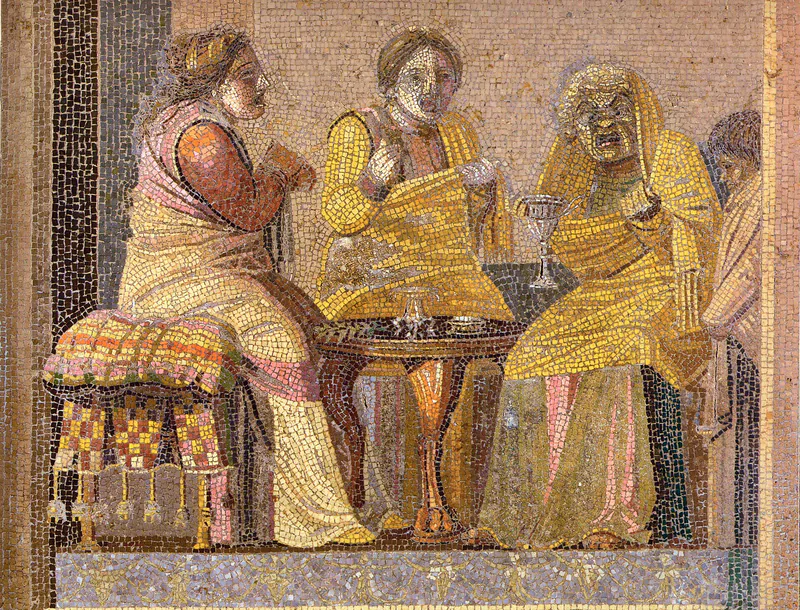
Sherwin's second book, The Theatre of Magick, was first published in 1982 by the Sorcerer's Apprentice. It extends his approach from the single act of sigil-making to ritual as a whole, treating ceremony as a kind of theatre through which the magician deliberately stages and directs his own states of mind. The idea that ritual is effective partly because it is dramatic and psychological, rather than because it compels external powers, was widely shared in chaos circles, and Sherwin's book gave it an early, concise expression. A new edition appeared in 2006.
The Cardinal Rites of Chaos (1985), published by the Northampton occult press Occultique, offered a set of seasonal rituals in a chaos idiom, an interesting attempt to combine the movement's experimental ethos with the calendar-based practice that was becoming popular in British paganism through the Wheel of the Year. In 1986 Sherwin contributed an introduction to an edition of Crowley's sexual-magical instructions Liber Agape and De Arte Magica. His later publications include Aromatic Oils (2010), reflecting a long-standing interest in perfumery and aromatherapy, and VITRIOL (2015), issued under the imprint Morton Press.
The Break with the IOT in 1982§
By the early 1980s the IOT was changing. Under Carroll's leadership it gradually acquired a formal structure, with grades, offices and rules that would be codified later in the decade when the order became known as "the Pact". Sherwin objected to this development. In 1982 he publicly disassociated himself from the IOT, reportedly because he disapproved of what he saw as an emerging priesthood within a movement that had begun as a rejection of exactly that kind of authority.
The episode illustrates a tension present in chaos magick from the start. Its founders argued that no system had final authority and that each magician should rely on experiment; yet sustaining a group over time seemed to require roles, rules and recognised teachers. Carroll accepted that structure as a practical necessity, while Sherwin preferred to remain independent. Similar debates recurred in later decades, notably during the internal conflicts of the early 1990s sometimes called the "Ice Magick" schism.
Influence and Assessment§
Sherwin's public output has been modest compared with Carroll's, and he has generally kept a lower profile in the movement he helped to found. His importance lies in timing and tone. The Book of Results fixed the sigil method at the centre of chaos practice and presented it in a sceptical, results-oriented language that distinguished the new current from the ceremonial and devotional magic of its time. The New Equinox provided an early outlet for writers who would shape British occultism in the following decades, and his network in West Yorkshire helped turn a few individuals' experiments into a movement.
Historians such as Dave Evans, in The History of British Magick After Crowley (2007), treat Sherwin as one of the two co-founders of chaos magic and note the importance of the northern English small-press scene in which he worked. His break with the IOT also makes him an early witness to the movement's continuing argument between radical individualism and the needs of organisation, a debate that is part of any balanced account of what chaos magick is.
Frequently asked questions§
Who is Ray Sherwin?§
Ray Sherwin is an English occult author and publisher, born in Yorkshire in 1952, who co-founded chaos magick and the Illuminates of Thanateros with Peter J. Carroll in 1978. He is best known for The Book of Results and for editing the journal The New Equinox.
What is The Book of Results about?§
It is a short manual of sigil magic, published in 1978, that presents Austin Osman Spare's method of encoding a desire in a glyph, charging it and forgetting it. Its tone is sceptical and practical, judging magic by whether it produces results.
Why did Ray Sherwin leave the IOT?§
In 1982 Sherwin disassociated himself from the order because he disapproved of its developing hierarchy, which he regarded as an emerging priesthood. He preferred an independent, unstructured approach to chaos magic.
Is The Book of Results still in print?§
A revised edition with a foreword by Peter J. Carroll appeared in 2005, and the book has since remained available. Readers should note which edition they are using, as early printings were small.
Sources and further reading§
- The Book of Results — Ray Sherwin, 1978
- The Theatre of Magick — Ray Sherwin, 1982
- The Cardinal Rites of Chaos — Ray Sherwin, 1985
- Liber Null and Psychonaut — Peter J. Carroll, 1987
- The Book of Pleasure (Self-Love): The Psychology of Ecstasy — Austin Osman Spare, 1913
- The History of British Magick After Crowley — Dave Evans, 2007
- Stealing Fire from Heaven: The Rise of Modern Western Magic — Nevill Drury, 2011