Liber XXXV · Witchcraft & Wicca · Chapter VI: The Wheel of the Year
The Wheel of the Year: The Eight Pagan Sabbats Explained
The Wheel of the Year explained: the eight sabbats from Samhain to Mabon, their Celtic and Germanic sources, modern origins and southern hemisphere dates.

The Wheel of the Year is the cycle of eight seasonal festivals, or sabbats, observed in Wicca and much of modern Paganism: Samhain, Yule, Imbolc, Ostara, Beltane, Litha, Lughnasadh and Mabon. It combines the four Irish quarter days and the four solar turning points, the solstices and equinoxes, into a single calendar. Although its components draw on genuine medieval and folk traditions, the eight-fold system as a whole was assembled in England between the 1950s and the 1970s.
What the Wheel of the Year Is§
Most Wiccans and many other modern Pagans understand the year as a turning wheel with eight spokes, each marking a point where the energies of the season are celebrated. The festivals are roughly six to seven weeks apart. Four of them, called the "greater sabbats" in many traditions, fall at the start of the Gaelic seasons around the beginnings of February, May, August and November. The other four, the "lesser sabbats", are fixed by the sun at the solstices and equinoxes.
In Wiccan theology the Wheel often carries a mythic narrative. A common version describes the Goddess and the Horned God through the seasons: the God is born at the winter solstice, grows in strength through spring, unites with the Goddess at Beltane, reaches his height at midsummer, sacrifices himself with the harvest and passes into the underworld at Samhain, to be reborn at Yule. Another well-known motif, drawn from folklore and from Robert Graves's The White Goddess (1948), represents the year as a contest between an Oak King, who rules the waxing half, and a Holly King, who rules the waning half. Neither story is ancient as a whole; both are modern liturgical myths built from older imagery.
Celtic Sources: The Four Gaelic Quarter Days§
The strongest historical foundations of the Wheel are the four festivals of the medieval Irish calendar. Irish texts, some of them preserving material older than the manuscripts in which they survive, name four seasonal turning points:

- Samhain, around 1 November, the start of winter and in many tales a time when the boundary with the Otherworld was open.
- Imbolc, around 1 February, associated with early spring, lambing and later with Saint Brigid.
- Bealtaine (Beltane), around 1 May, the start of summer, linked in early sources with fires and the driving of cattle.
- Lughnasadh, around 1 August, a harvest festival associated with the god Lugh.
Scottish Gaelic and Manx equivalents existed, and Welsh tradition kept its own important dates at the starts of May and November. Ronald Hutton's The Stations of the Sun (1996), the most thorough survey of the British ritual year, cautions that the medieval sources describe these days in literary and legal contexts and tell us little about any pre-Christian religious rites. They were certainly significant dates in the farming and legal year; how they were celebrated before Christianity is largely unknown.
Germanic and Anglo-Saxon Sources§
The solar festivals draw on a different body of evidence. The Northumbrian monk Bede, in his treatise The Reckoning of Time (725), recorded the Old English names of the months. He mentioned two months called Giuli around the winter solstice, an Old English cognate of the Scandinavian jól, from which "Yule" derives. He also described a night called Modranecht, "mothers' night", at the start of the year, and stated that the month of April was named after a goddess called Eostre, whose name was transferred to the Christian Easter. Bede's month names also include Litha for the period around midsummer.
Scholars debate how much weight to place on Bede's single reference to Eostre, and the extent to which Yule in Scandinavia was a solstice festival or a midwinter feast whose timing shifted. Old Norse sources describe midwinter feasting and sacrifice, but these were written down by Christian authors centuries after conversion.
Solstices and Equinoxes in Prehistory§
Monuments such as Newgrange in Ireland and Stonehenge in England are aligned to the winter solstice sunrise and sunset, which shows that prehistoric communities marked the sun's turning points. What rites accompanied them cannot be reconstructed. By contrast, there is little evidence that the equinoxes were major festivals in the British Isles before modern times, which is one reason scholars regard Ostara and Mabon as the most recent elements of the Wheel.
The Modern Synthesis: Gardner, Nichols and the 1950s–70s§
Early Gardnerian Wicca celebrated the four Gaelic festivals, which Gardner called by English names such as Candlemas, May Eve, Lammas and Hallowe'en, reflecting Margaret Murray's claim that the defendants in the European witch trials had gathered at these quarter days. According to Hutton's research, Gardner's coven at Bricket Wood adopted the solstices and equinoxes as well around 1958, producing an eight-fold year.
A key figure here was Ross Nichols (1902–1975), a friend of Gardner's and a member of the Ancient Druid Order, who in 1964 founded the Order of Bards, Ovates and Druids. Nichols advocated a ritual year combining the solar and the Celtic festivals, and Druid and Wiccan circles influenced each other on this point. The Druid revival of the eighteenth and nineteenth centuries had already made the summer solstice at Stonehenge a focal date.
The names now widely used, especially in America, were standardised in the 1970s. The Pagan writer Aidan Kelly is generally credited with proposing "Mabon", from the Welsh mythological figure Mabon ap Modron, for the autumn equinox, and with spreading "Ostara" and "Litha", taken from Bede via the German folklorist Jacob Grimm. The phrase "Wheel of the Year" itself became common in Pagan publications in the same period. The resulting calendar is a modern creation, but one assembled from authentic historical fragments and from a long tradition of European seasonal custom. It appears in the wider story told in Wicca and Gerald Gardner.
How Each Sabbat Is Observed§
Practice varies widely between covens, traditions and solitary practitioners. The following describes common themes rather than fixed rules.
Samhain (31 October – 1 November)§
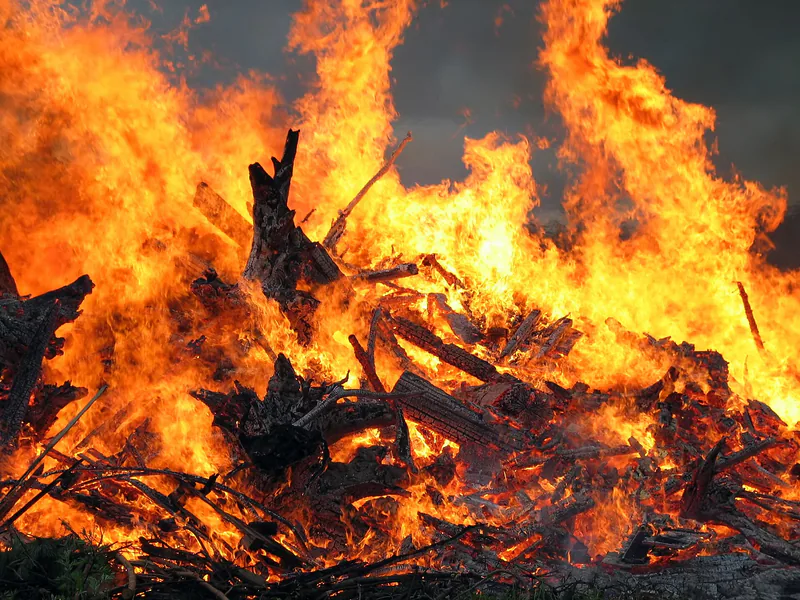
Often treated as the most important sabbat and, in many traditions, the Pagan new year. Samhain is a festival of the dead: practitioners remember ancestors and those who have died in the past year, set out places or offerings for them, and may practise divination, using methods ranging from scrying to the cards discussed in the history of tarot. Its imagery overlaps with the popular Halloween, which developed from the Christian All Hallows' Eve alongside older Gaelic customs.
Yule (Winter Solstice, about 21 December)§
Yule celebrates the return of the sun after the longest night. Common customs include candles and fires, evergreen decorations, the Yule log and feasting. Many Christmas customs, though not all, share this seasonal imagery, and Pagans often celebrate both in family settings.
Imbolc (1–2 February)§
Imbolc marks the first stirrings of spring. It is associated with the goddess Brigid, patron of poetry, smithcraft and healing, who in Irish Christianity became Saint Brigid of Kildare. Observances include lighting candles, making Brigid's crosses from rushes, cleansing the home and dedicating new projects.
Ostara (Spring Equinox, about 20 March)§
The spring equinox celebrates balance between light and dark and the renewal of growth. Eggs, hares and seeds are common symbols, borrowed in part from folk Easter customs.
Beltane (30 April – 1 May)§
Beltane celebrates the fullness of spring and fertility. Bonfires, maypoles, flower garlands and the crowning of a May Queen draw on centuries of British and European May Day custom. In Wiccan theology it often marks the sacred marriage of the Goddess and God.
Litha (Summer Solstice, about 21 June)§
Midsummer celebrates the sun at its peak. Practitioners may hold outdoor rites, keep vigil to see the sunrise or gather herbs. Midsummer fires were widespread in European folk practice, and the gatherings at Stonehenge are a highly visible modern example.
Lughnasadh or Lammas (1 August)§
The first harvest. The Old English hlafmæsse, "loaf-mass", was a Christian festival at which bread from the new grain was blessed. Pagan observances bake bread, give thanks for the harvest and may hold games and contests in honour of Lugh.
Mabon (Autumn Equinox, about 22 September)§
The second harvest and a festival of balance and thanksgiving, often compared to a harvest home. The name, as noted above, is a 1970s coinage, and some practitioners prefer simply "Autumn Equinox" or "Harvest Home".
Northern and Southern Hemisphere Wheels§
Because the sabbats are tied to the European seasons, practitioners in Australia, New Zealand, South Africa and South America face a practical problem: Samhain falls in spring and Beltane in autumn. Since at least the 1980s many southern-hemisphere Pagans have adopted a reversed Wheel that follows their own seasons. In this arrangement Samhain is kept around 30 April – 1 May, Yule at the June solstice, Imbolc around 1 August, Ostara at the September equinox, Beltane around 31 October, Litha at the December solstice, Lughnasadh around 1 February and Mabon at the March equinox.
Others prefer to keep the northern dates, either because of the traditional and mythic associations or to stay synchronised with the global community. Still others adapt the Wheel to local conditions: in parts of Australia, for example, some practitioners draw on local seasonal markers such as wet and dry seasons. The debate reflects a broader feature of modern Paganism, which treats the Wheel as a living, adaptable framework for relating to the natural world rather than as a fixed inherited calendar.
Significance in Modern Paganism§
For practitioners, the Wheel is less a historical claim than a devotional practice: a way of attending to the turning of the seasons, the agricultural cycle and the passage of life and death. The calendar is shared, with variations, by Wiccans, many Druids, and eclectic Pagans, though some groups, including several forms of traditional witchcraft and reconstructionist paganisms, keep different festival cycles. Historians emphasise that recognising the modern construction of the Wheel need not diminish its religious meaning; it is simply part of the story of how a new religion created a liturgical year from older materials.
Frequently asked questions§
Is the Wheel of the Year an ancient pagan calendar?§
Not as a complete system. The four Gaelic festivals are attested in medieval Irish sources, and the solstices were marked in prehistory, but no ancient source describes all eight festivals as a single calendar. The eight-fold Wheel was assembled in English Wiccan and Druid circles in the 1950s and standardised during the 1970s.
Which sabbat is the Pagan new year?§
Many Wiccans and Pagans treat Samhain as the new year, following the idea that the Celtic year began with winter. Others regard Yule, the rebirth of the sun, as the start of the cycle. There is no universal rule, and the claim that Samhain was the Celtic new year is itself debated by historians.
Where do the names Ostara and Mabon come from?§
Ostara derives from the goddess Eostre mentioned by Bede, in the form given by Jacob Grimm in the nineteenth century. Mabon is taken from a figure in Welsh mythology and was applied to the autumn equinox in the 1970s. Neither name is recorded as the name of a festival in antiquity.
How do southern hemisphere Pagans celebrate the Wheel?§
Many reverse the calendar so the sabbats match local seasons, keeping Samhain at the end of April and Yule at the June solstice. Others retain the northern dates. Both approaches are common, and the choice is usually left to individual practitioners or groups.
Sources and further reading§
- The Stations of the Sun: A History of the Ritual Year in Britain — Ronald Hutton, 1996
- The Triumph of the Moon: A History of Modern Pagan Witchcraft — Ronald Hutton, 1999
- The Reckoning of Time (De temporum ratione) — Bede, 725 (trans. Faith Wallis, 1999)
- The White Goddess — Robert Graves, 1948
- The Book of Druidry — Ross Nichols, 1990
- Eight Sabbats for Witches — Janet and Stewart Farrar, 1981
- Pagan Britain — Ronald Hutton, 2013