Liber XXII · Occultism · Chapter I: British Occultism
British Occultism: From Barrett's Magus to Dion Fortune
British occultism from Sibly and Barrett's The Magus to Bulwer-Lytton, Anna Kingsford, the Golden Dawn, Alan Leo and Dion Fortune, c. 1780 to 1950.

British occultism is the tradition of learned magic, astrology and esoteric philosophy that took shape in England, Scotland and Ireland between the late eighteenth century and the Second World War. It began with antiquarian astrologers and compilers such as Ebenezer Sibly and Francis Barrett, grew within Freemasonry and Victorian fiction, and reached its classic form in the Theosophical lodges of London and the Hermetic Order of the Golden Dawn of 1888. Its twentieth-century heirs, from Aleister Crowley and A. E. Waite to Dion Fortune and Gerald Gardner, made Britain the main exporter of modern ritual magic to the English-speaking world.
Georgian Beginnings: Sibly, Barrett and The Magus§
Learned magic never disappeared from Britain after the age of John Dee and the seventeenth-century astrologers, but by the mid-eighteenth century it survived mainly in almanacs, chapbooks and private manuscript collections. Its revival began with a handful of enthusiasts who republished and digested older books. Ebenezer Sibly, a Bristol-born physician, astrologer and Freemason, issued A New and Complete Illustration of the Celestial Science of Astrology in parts between 1784 and 1788, a large work that combined horoscopic technique with material on spirits, witchcraft and magical operations.
More influential was Francis Barrett's The Magus, or Celestial Intelligencer (1801). Barrett drew heavily, often word for word, on the 1651 English translation of Agrippa's Three Books of Occult Philosophy, the pseudo-Agrippan Fourth Book and other Renaissance sources, adding engraved plates of demons' heads and magical seals. The book also contained a treatise on crystal scrying, now in our catalogue as The Art of Drawing Spirits into Crystals. Barrett advertised for pupils, though nothing certain is known of any circle he formed. Historians regard The Magus less as original thought than as a bridge: it put the vocabulary of Agrippa's occult philosophy into the hands of nineteenth-century readers.
A small world of visionaries and collectors carried the interest forward. The painter-astrologer John Varley, a friend of William Blake, published a treatise on zodiacal physiognomy in 1828, and London booksellers such as John Denley traded in magical manuscripts.
Victorian Adepts: Bulwer-Lytton, Hockley and the Masonic Rosicrucians§
The Victorian occult scene was small, male, often Masonic and intensely bookish. Frederick Hockley (1808–1885), an accountant by profession, copied grimoires for collectors and kept records of crystal-gazing sessions in which seers reported visions and messages from spirits. His manuscripts later passed to members of the Golden Dawn and shaped their knowledge of the older magical literature.
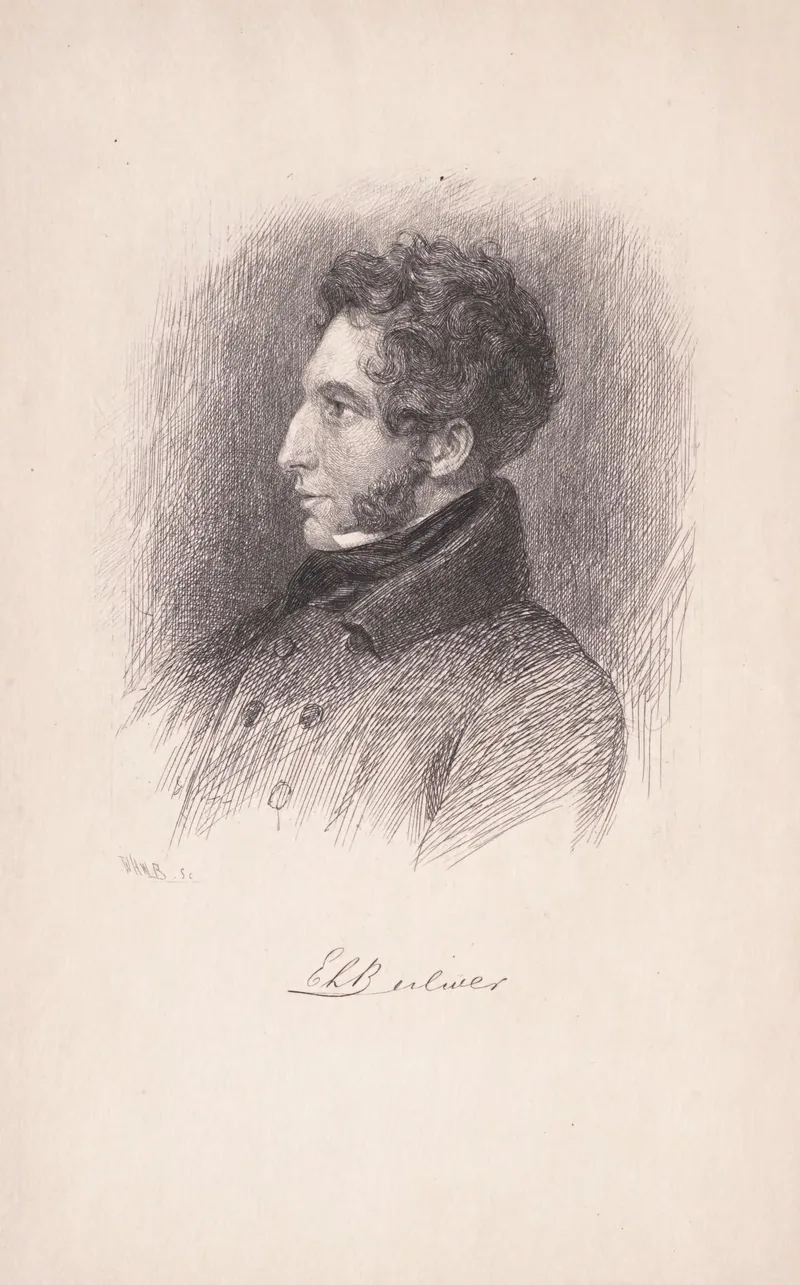
The novelist and politician Edward Bulwer-Lytton gave the subject glamour. His Zanoni (1842) portrayed an immortal Rosicrucian adept, and A Strange Story (1862) and The Coming Race (1871) explored mesmerism, occult powers and a hidden subterranean energy he called vril. Bulwer-Lytton met Éliphas Lévi during the Frenchman's visits to London in 1854 and 1861, and the novels made the idea of a secret brotherhood of adepts familiar to a wide public. The French connection is traced in our article on French occultism.
Freemasonry supplied the institutional frame. In 1866 Robert Wentworth Little and others founded the Societas Rosicruciana in Anglia, open only to Master Masons, which organised its members in nine grades on an eighteenth-century German Rosicrucian model. Kenneth Mackenzie, who had visited Lévi in Paris, compiled the Royal Masonic Cyclopaedia (1875–1877), a compendium of Masonic and esoteric lore. Several founders of the Golden Dawn came from this milieu; on the wider background see Freemasonry and Rosicrucianism.
Theosophy, Anna Kingsford and the Hermetic Society§
The arrival of Theosophy transformed British occultism in the 1880s. The London Lodge of the Theosophical Society was formed in 1878, and A. P. Sinnett's The Occult World (1881) and Esoteric Buddhism (1883) brought the teachings of Blavatsky's Masters to educated readers. Blavatsky herself lived in London from 1887 until her death in 1891, founding the Blavatsky Lodge and an Esoteric Section for advanced students.
Not every British Theosophist wanted an Eastern orientation. Anna Kingsford (1846–1888), one of the first Englishwomen to qualify in medicine (in Paris, in 1880), was a vegetarian and anti-vivisection campaigner who experienced visionary dreams. With Edward Maitland she wrote The Perfect Way, or the Finding of Christ (1882), an esoteric Christianity drawing on Hermetic and Neoplatonic ideas. After a period as president of the London Lodge she founded the Hermetic Society in 1884, at which S. L. MacGregor Mathers and William Wynn Westcott lectured. Her insistence on a Western, Christian and Hermetic path anticipated the programme of the order they would soon create.
The Golden Dawn and the Making of a Magical Curriculum§
The Hermetic Order of the Golden Dawn, founded in London in 1888 by Westcott, Mathers and William Robert Woodman, was the decisive achievement of British occultism. It combined the Masonic idea of graded initiation with a syllabus of Kabbalah, astrology, geomancy, tarot, alchemical symbolism, Enochian magic and ceremonial ritual. Unlike most earlier groups it admitted women on equal terms, and its members included W. B. Yeats, Florence Farr, Annie Horniman, Moina Mathers, Arthur Machen, Algernon Blackwood, A. E. Waite and, briefly, Aleister Crowley.
What gave the Golden Dawn its lasting influence was its textual work. Mathers published The Kabbalah Unveiled (1887), an English edition of the Key of Solomon (1889) and The Book of Abramelin (1898), and Westcott edited Hermetic and Chaldean texts such as the Chaldean Oracles (1895). These editions, together with the order's own manuscripts, became the canon of English-language ritual magic. The order split after 1900; its successors are described in magical orders.
Astrology, Tarot and the Edwardian Occult Marketplace§
Alongside the secret orders a public occult culture flourished. Popular astrology had long been sustained by almanacs; Richard James Morrison, who published as "Zadkiel", won a celebrated libel action in 1863 against an admiral who had accused him of deceiving society figures with a crystal ball, though the jury awarded him only nominal damages. The Vagrancy Act of 1824, which punished anyone "pretending or professing to tell fortunes", hung over professional practitioners throughout the period.
Alan Leo (William Frederick Allan, 1860–1917) turned astrology into a modern business and a branch of Theosophy. His journal Modern Astrology, his textbooks and his mail-order horoscope service reached a mass readership, and he presented the birth chart as a map of character and karma rather than a forecast of events. He was prosecuted for fortune-telling in 1914, when the case failed, and again in 1917, when he was fined. The historian Patrick Curry has shown how Leo's psychological, spiritual astrology shaped the astrology of the twentieth century.
Tarot underwent a similar change. In 1909 the London publisher William Rider issued a deck designed by Waite and drawn by Pamela Colman Smith, with fully illustrated pip cards, accompanied by Waite's commentary, later expanded as The Pictorial Key to the Tarot. It became the most widely used tarot of the century (see history of tarot). Crowley, meanwhile, published Golden Dawn material in his journal The Equinox (1909–1913) and developed Thelema after 1904.
Between the Wars: Dion Fortune, Regardie and the Law§
After the First World War, British occultism became more psychological and more public. Dion Fortune (Violet Firth, 1890–1946), who had trained in psychoanalytic counselling before joining a Golden Dawn successor order around 1919, founded her own group, the Fraternity (later Society) of the Inner Light, in the mid-1920s, with centres in London and Glastonbury. Her Psychic Self-Defence (1930) and The Mystical Qabalah (1935) explained occult training in the language of psychology, and her novels, notably The Sea Priestess (1938), presented the cult of the goddess as a living path. During the Second World War she organised a programme of group meditation for the protection of Britain.
Israel Regardie, Crowley's former secretary, published the bulk of the Golden Dawn rituals and teachings between 1937 and 1940, ending the era of secrecy. The law also changed. The Witchcraft Act of 1735, which treated claims of magical power as fraud, was used as late as 1944 against the medium Helen Duncan; its replacement by the Fraudulent Mediums Act in 1951 coincided with Gerald Gardner's public presentation of Wicca, whose rituals drew on Golden Dawn and Thelemic sources. The later story continues in contemporary occultism.
How historians interpret British occultism§
Older accounts, such as Francis King's Ritual Magic in England (1970) and Ellic Howe's documentary history of the Golden Dawn, focused on personalities and quarrels. More recent historians, notably Alex Owen and Ronald Hutton, read British occultism as part of modern culture: a laboratory for new ideas of the self, for women's spiritual authority and for the creation of new religions.
Frequently asked questions§
Who were the most important British occultists?§
Key figures include Francis Barrett, Edward Bulwer-Lytton, Anna Kingsford, S. L. MacGregor Mathers, William Wynn Westcott, A. E. Waite, Alan Leo, Aleister Crowley and Dion Fortune. Israel Regardie and Gerald Gardner carried their legacy into the second half of the twentieth century.
What was The Magus by Francis Barrett?§
The Magus (1801) was a large illustrated compendium of natural magic, astrology, Kabbalah and ceremonial magic. It was mostly compiled from Agrippa and other Renaissance texts rather than original, but it was the most accessible English handbook of magic for much of the nineteenth century.
Why was Britain so important for modern ritual magic?§
Britain combined a strong Masonic culture, a large reading public and a group of scholar-occultists who translated and published older magical texts. The Golden Dawn's curriculum, the Rider–Waite tarot and Regardie's publications spread through the English-speaking world and became the foundation of most later Western ceremonial magic.
Was fortune-telling illegal in Britain?§
Professional fortune-telling could be prosecuted under the Vagrancy Act of 1824, and claims of supernatural power under the Witchcraft Act of 1735. The latter was replaced in 1951 by the Fraudulent Mediums Act, itself repealed in 2008 in favour of consumer-protection law.
Sources and further reading§
- The Magus, or Celestial Intelligencer — Francis Barrett, 1801
- Zanoni — Edward Bulwer-Lytton, 1842
- The Perfect Way, or the Finding of Christ — Anna Kingsford and Edward Maitland, 1882
- The Mystical Qabalah — Dion Fortune, 1935
- Ritual Magic in England: 1887 to the Present Day — Francis King, 1970
- The Magicians of the Golden Dawn — Ellic Howe, 1972
- A Confusion of Prophets: Victorian and Edwardian Astrology — Patrick Curry, 1992
- The Triumph of the Moon: A History of Modern Pagan Witchcraft — Ronald Hutton, 1999
- The Place of Enchantment: British Occultism and the Culture of the Modern — Alex Owen, 2004