Timeline of Western Occultism: Key Dates from Hermes to Today
A timeline of Western occultism: the key dates, books and movements from the Hermetica and the grimoires to the Golden Dawn, Wicca and chaos magic.

The history of Western occultism runs from the magical papyri and Hermetic treatises of Roman Egypt, through the Arabic and Latin books of astral magic and the grimoires of the Middle Ages, to the occult philosophy of the Renaissance and the modern occult revival that began in nineteenth-century Paris and London. This timeline gathers the key dates in one place, from the Corpus Hermeticum to the Golden Dawn, Theosophy, Thelema, Wicca, chaos magic and the academic study of esotericism. Dates for ancient and medieval texts are often approximate, and the entries say so.
Ancient and Late Antique Foundations (to c. 500)§
- c. 2nd century BCE – 5th century CE: The texts now called the Greek Magical Papyri are written in Roman Egypt, preserving spells, invocations and rituals that mix Egyptian, Greek and Jewish elements.
- c. 1st–3rd centuries CE: The Greek treatises of the Corpus Hermeticum, attributed to Hermes Trismegistus, are composed; their exact dates remain uncertain.
- c. 300 CE: Zosimos of Panopolis writes on alchemy, the earliest alchemical author whose works survive in substantial fragments.
- c. 300 CE: Iamblichus defends theurgy, ritual union with the gods, in the work later called On the Mysteries.
- 1st–5th centuries CE (dating debated): The Testament of Solomon describes Solomon's control of demons by a magic ring.
- 413–426: Augustine's City of God condemns pagan theurgy and magic, framing Christian judgements for a thousand years.
Medieval Magic and the Arabic Transmission (c. 500–1450)§
- 9th century: In Baghdad, al-Kindi proposes a theory of rays by which stars, words and images act on the world; the Jabirian alchemical corpus takes shape around the same period.
- 10th–11th centuries: The Arabic Ghayat al-Hakim, later known in Latin as the Picatrix, compiles astral magic and talismanic lore.
- 1144: Robert of Chester translates an Arabic alchemical treatise into Latin, traditionally counted as the first work of alchemy in the Latin West.
- 12th–13th centuries: The Ars notoria and the Sworn Book of Honorius circulate as Latin books of angelic and ritual magic.
- 1256: A Castilian translation of the Picatrix is made at the court of Alfonso X; a Latin version follows.
- 1398: The theology faculty of Paris condemns twenty-eight propositions in defence of magic.
Renaissance Occult Philosophy (1450–1600)§
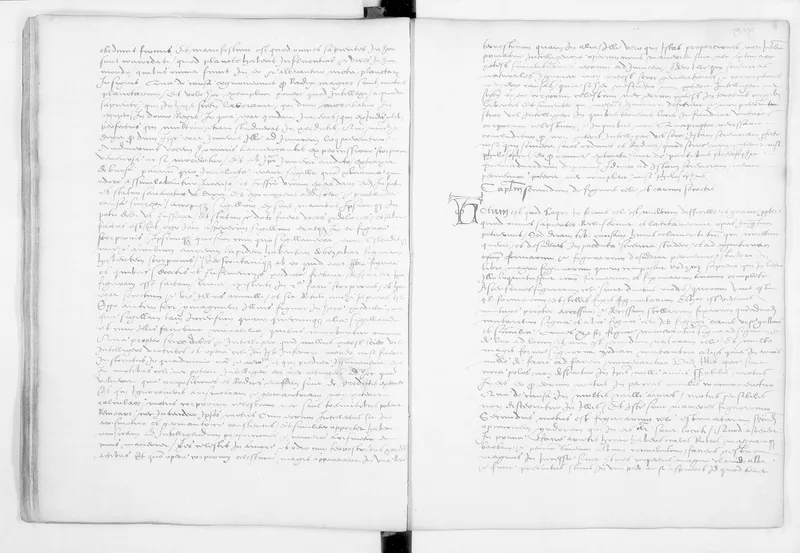
- 1463: Marsilio Ficino completes his Latin translation of the Corpus Hermeticum for Cosimo de' Medici; it is printed in 1471.
- 1486: Pico della Mirandola publishes his 900 Theses, including theses on magic and Kabbalah. In the same years the Malleus maleficarum appears (1486–87).
- 1489: Ficino publishes De vita, whose third book is a treatise on astral and spiritual magic, discussed in Ficino's Three Books on Life.
- 1494 and 1517: Johannes Reuchlin publishes De verbo mirifico and De arte cabalistica, founding Christian Kabbalah in Germany.
- 1533: Cornelius Agrippa's Three Books of Occult Philosophy is printed in full at Cologne.
- 1556: Pietro Pomponazzi's naturalistic treatise on incantations is printed posthumously at Basel, as described in Pomponazzi's De incantationibus.
- 1558: Giambattista della Porta publishes the first version of Magia naturalis.
- 1564: John Dee publishes the Monas hieroglyphica; from 1582 he records angelic conversations with Edward Kelley, the source of Enochian magic.
- 1584: Reginald Scot's Discoverie of Witchcraft attacks belief in witches and exposes conjurers' tricks.
- 1600: Giordano Bruno is burned in Rome.
Rosicrucians, Witch Trials and the New Science (1600–1780)§
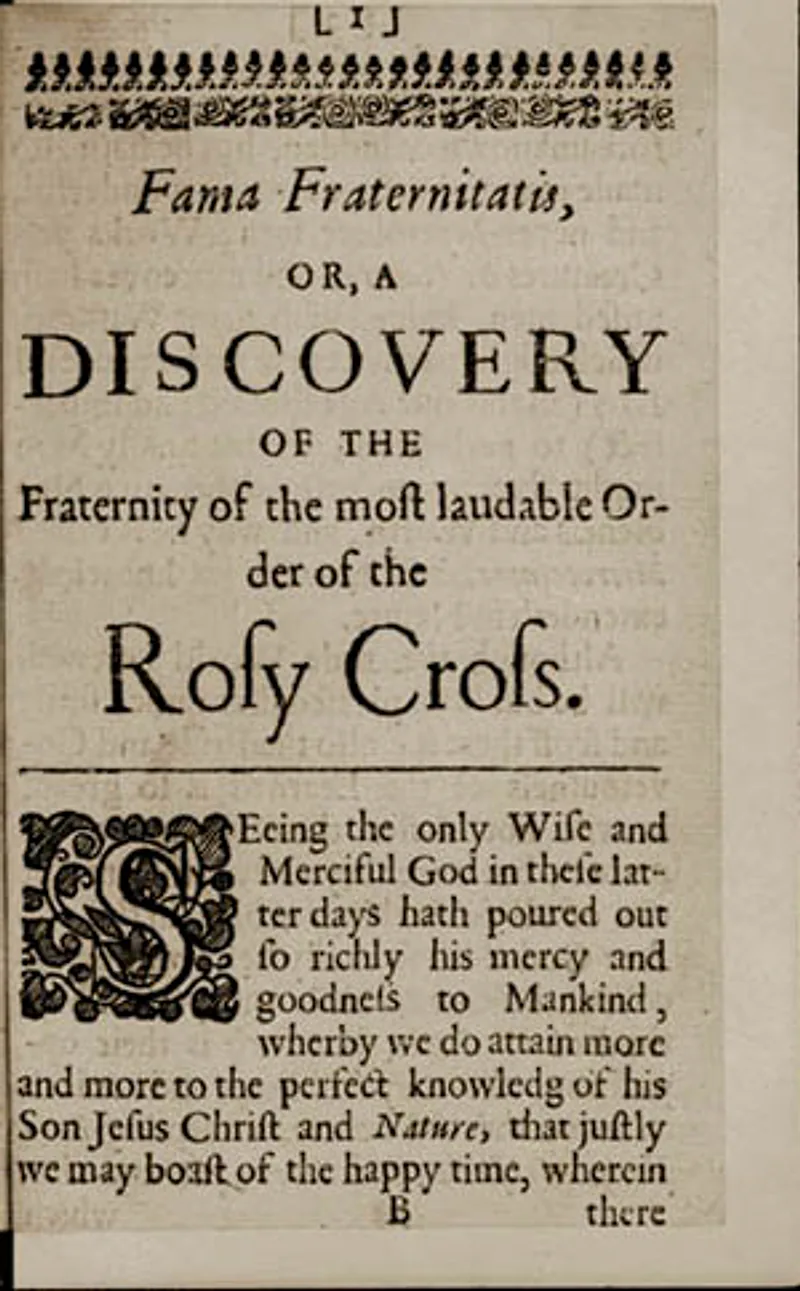
- 1614: Isaac Casaubon dates the Hermetica to the Christian era; in the same year the Fama Fraternitatis announces the Rosicrucian brotherhood.
- 1615–1616: The Confessio Fraternitatis and the Chymical Wedding of Christian Rosenkreutz follow.
- 1617–1621: Robert Fludd publishes his illustrated history of the macrocosm and microcosm.
- c. 1560–1660: The peak of the European witch trials.
- 1652–1654: Athanasius Kircher's Oedipus Aegyptiacus surveys Egyptian, Kabbalistic and Hermetic wisdom, as told in our article on Athanasius Kircher.
- 1677–1684: Christian Knorr von Rosenroth's Kabbala denudata makes Zohar material available in Latin.
- 1717: The Premier Grand Lodge of London is founded, beginning organised speculative Freemasonry.
- 1735: Britain's Witchcraft Act replaces witchcraft prosecutions with penalties for pretended magic.
- 1749–1756: Emanuel Swedenborg publishes the Arcana Coelestia.
- 1778: Franz Anton Mesmer arrives in Paris; a royal commission rejects his "animal magnetism" in 1784.
- 1781: Antoine Court de Gébelin claims that the tarot preserves Egyptian wisdom, the start of the occult history of tarot.
Mesmerism and the Birth of Modern Occultism (1780–1875)§
- 1801: Francis Barrett publishes The Magus, a compendium drawn largely from Agrippa.
- 1842: Edward Bulwer-Lytton's Zanoni popularises the Rosicrucian adept; see Bulwer-Lytton's occult novels.
- 1843: James Braid publishes Neurypnology, coining the vocabulary of hypnotism.
- 1848: The rappings of the Fox sisters at Hydesville, New York, launch modern Spiritualism.
- 1854–1856: Éliphas Lévi publishes Dogme et rituel de la haute magie, the founding text of the modern occult revival.
- 1866: The Societas Rosicruciana in Anglia is founded in London.
- 1875: Helena Blavatsky, Henry Steel Olcott and William Quan Judge found the Theosophical Society in New York.
The Occult Revival (1875–1945)§
- 1877: Blavatsky publishes Isis Unveiled.
- 1882: The Society for Psychical Research is founded in London.
- 1884: The Hermetic Brotherhood of Luxor announces itself publicly.
- 1888: The Hermetic Order of the Golden Dawn is founded in London; Blavatsky publishes The Secret Doctrine; in Paris Stanislas de Guaita founds the Kabbalistic Order of the Rose-Cross.
- 1890: W. B. Yeats is initiated into the Golden Dawn; see Yeats and the Golden Dawn.
- 1892–1897: Joséphin Péladan's Salons de la Rose+Croix exhibit Symbolist art in Paris.
- 1900: The Golden Dawn splits after the revolt against Mathers.
- 1904: Aleister Crowley receives The Book of the Law in Cairo.
- 1906: Hilma af Klint begins her abstract Paintings for the Temple.
- 1909: The Rider-Waite-Smith tarot deck is published.
- 1912–1913: Rudolf Steiner's Anthroposophical Society is established.
- 1937–1940: Israel Regardie publishes the Golden Dawn's rituals.
The Occult since 1945§
- 1945: The Nag Hammadi codices are discovered in Upper Egypt.
- 1951: The Fraudulent Mediums Act replaces the Witchcraft Act in Britain.
- 1954: Gerald Gardner publishes Witchcraft Today, launching public Wicca.
- 1964: Frances Yates publishes Giordano Bruno and the Hermetic Tradition.
- 1966: Anton LaVey founds the Church of Satan in San Francisco.
- c. 1978: Peter Carroll's Liber Null appears and the Illuminates of Thanateros are formed, giving shape to chaos magic.
- 1999: A chair in the History of Hermetic Philosophy and Related Currents is established at the University of Amsterdam.
- 2018: The Guggenheim's Hilma af Klint exhibition becomes the most visited in the museum's history.
For the present-day scene, see the occult today; the site's wider timeline of esoteric history covers every tradition.
Frequently asked questions§
When did modern occultism begin?§
Most historians date modern occultism to the mid-nineteenth century, and especially to Éliphas Lévi's Dogme et rituel de la haute magie (1854–56). Lévi recast older magic, Kabbalah and tarot as a single occult science, and his ideas shaped Theosophy and the Golden Dawn.
What is the oldest occult text?§
There is no single oldest text, since magic is attested in Egypt and Mesopotamia from very early times. For the Western occult tradition specifically, the Greek Magical Papyri and the Hermetic treatises of Roman Egypt are among the earliest major sources.
When was the Golden Dawn founded?§
The Hermetic Order of the Golden Dawn was founded in London in 1888 by William Wynn Westcott, Samuel Liddell MacGregor Mathers and William Robert Woodman. It split into rival bodies after 1900.
Sources and further reading§
- Dictionary of Gnosis and Western Esotericism — Wouter J. Hanegraaff (ed.), 2005
- Western Esotericism: A Guide for the Perplexed — Wouter J. Hanegraaff, 2013
- Access to Western Esotericism — Antoine Faivre, 1994
- The Occult World — Christopher Partridge (ed.), 2015
- A History of Magic and Experimental Science — Lynn Thorndike, 1923–1958
- The Western Esoteric Traditions: A Historical Introduction — Nicholas Goodrick-Clarke, 2008