Christianity and the Occult: Condemnation, Borrowing and Debate
Christianity and the occult from Deuteronomy and Augustine to papal bulls, Christian magi, Catholic rulings on spiritualism and today's evangelical critics.

Christianity and the occult have a long and ambivalent relationship. The churches have condemned divination, sorcery and spirit-contact from the Hebrew Bible's prohibitions through Augustine's theory of the demonic pact to modern Catholic and evangelical teaching, yet many of the most important figures in the history of Western magic, from medieval clerics to Renaissance philosophers and nineteenth-century occultists, were Christians who saw their studies as a deepening of their faith. Understanding the occult in the West means understanding this tension between condemnation and borrowing.
Biblical Prohibitions and Their Interpretation§
The foundational texts are in the Torah. Deuteronomy 18 forbids, among the practices of the nations Israel is to displace, divination, observing times, enchantment and witchcraft, and condemns "a consulter with familiar spirits, or a wizard, or a necromancer". Exodus 22 contains the stark command, in the King James wording, "Thou shalt not suffer a witch to live", which later witch-hunters quoted endlessly, although the Hebrew term probably referred to a sorceress or poisoner rather than to the witch of early modern imagination.
The New Testament added its own episodes. The magician Simon in Samaria tries to buy the power of the apostles (Acts 8), giving his name to the sin of simony and becoming in later legend the archetypal heretic-sorcerer. In Ephesus, converts burn their books of magic, worth fifty thousand pieces of silver (Acts 19). Yet the Gospel of Matthew also begins with magi from the East who follow a star to the infant Jesus, a story that later Christian astrologers and occultists cited in defence of a holy wisdom of the heavens.
Augustine, Aquinas and the Demonic Pact§
The intellectual framework for Christian judgements of magic was laid by Augustine of Hippo in the fifth century. In On Christian Doctrine he classed amulets, omens and astrological consultations as "superstitions" grounded in signs agreed with demons, a kind of covenant or pact, and in the City of God he rejected even the elevated theurgy of the Neoplatonists as commerce with deceiving spirits, a theme explored in Augustine on magic and theurgy. Church councils followed suit: the fourth-century Council of Laodicea forbade clergy to be magicians, astrologers or makers of amulets.
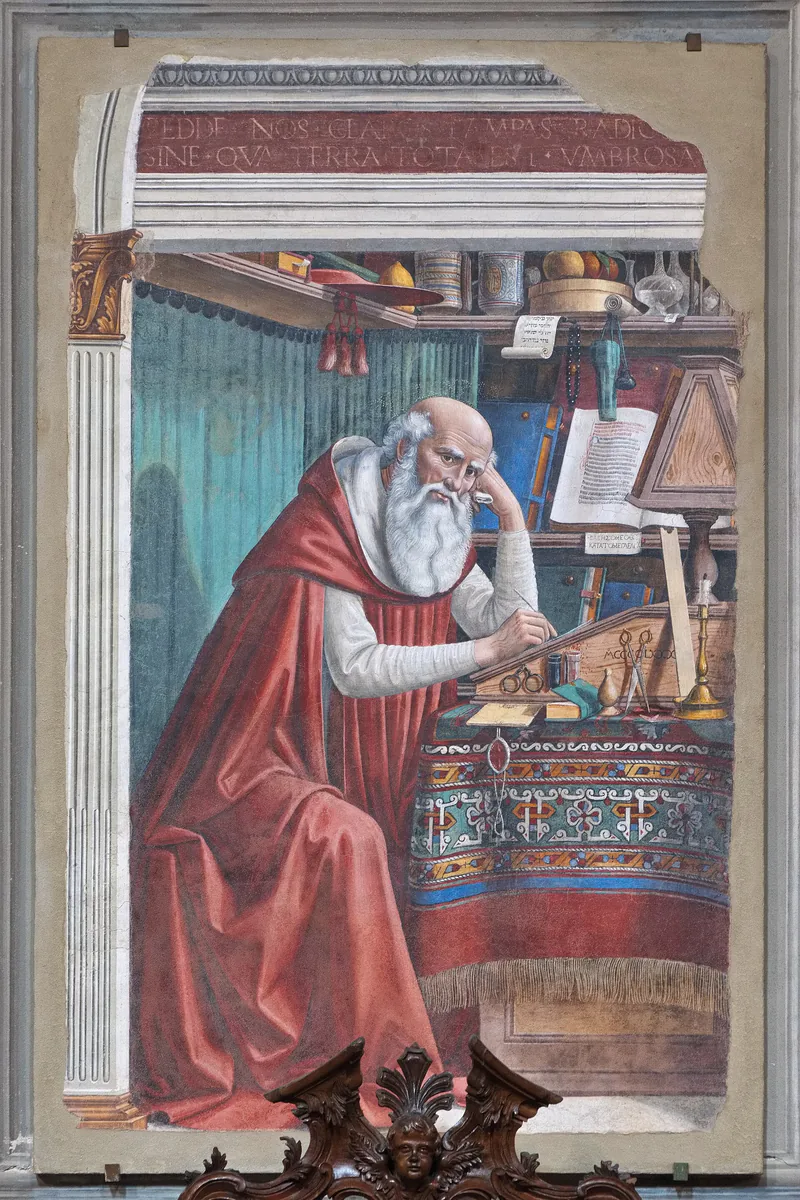
Thomas Aquinas systematised this view in the thirteenth century. In his Summa theologiae he treated superstition, divination and magical observances as sins against religion and distinguished between an explicit pact, in which a demon is knowingly invoked, and an implicit pact, in which someone uses means that have no natural power to produce the desired effect, so that any result must come from demons. Natural astrology concerning bodies, tides and weather was allowed; using the stars to predict free human acts was not. In 1398 the theology faculty of Paris, under Jean Gerson, condemned twenty-eight propositions defending magic, and the doctrine of the pact later became central to the theory of witchcraft set out in works like the Malleus maleficarum. The wider scholastic debate is traced in how theologians judged demonic magic.
Clerical Magic and the Christian Magus§
Condemnation was only half the story. Historians such as Richard Kieckhefer have shown that many medieval necromantic manuals were written and used by a "clerical underworld" of literate clergy and students, who adapted the Church's own rites of exorcism, prayer and blessing to command spirits. The Solomonic grimoires are full of psalms, saints and divine names, and their authors often regarded themselves as pious users of sacred power.
In the Renaissance, occult philosophy was developed largely by Christian clergy and devout laymen. Marsilio Ficino was a priest; the abbot Johannes Trithemius wrote on angels and ciphers; Cornelius Agrippa called his synthesis a Christian philosophy; and the Jesuit Athanasius Kircher discussed Kabbalah and Egyptian wisdom as preparations for the gospel. These men drew sharp lines between permitted natural and angelic magic and forbidden demonic magic, even when critics doubted that the lines held. Their project is described in occult philosophy and Christian Cabala.
Popes, too, set limits. Sixtus V's bull Coeli et terrae (1586) condemned judicial astrology and other forms of divination, and Urban VIII's Inscrutabilis (1631) targeted astrologers who predicted the deaths of popes and princes.
Reformation, Witch-Hunts and the Decline of Magic§
The Reformation sharpened the debate. Protestant reformers accused the Catholic Church of being itself a kind of magic, pointing to holy water, relics, exorcisms and sacramentals as superstitions no better than the cunning man's charms. Catholics answered that these were prayers whose efficacy depended on God, not on any mechanical power. Both sides, however, agreed that witchcraft and demonic magic were real and dangerous, and the great age of the European witch trials, roughly 1560 to 1660, struck Catholic and Protestant lands alike.
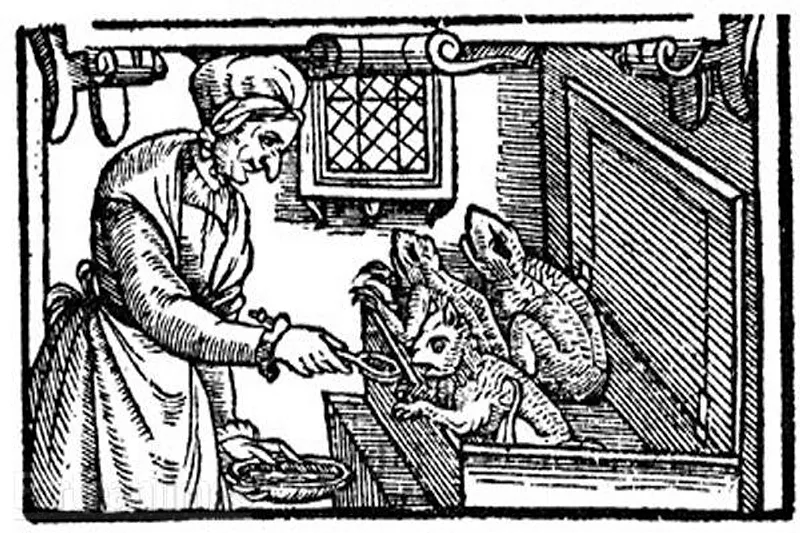
In his classic Religion and the Decline of Magic (1971), discussed in our article on Keith Thomas, the historian argued that Protestant hostility to the magical elements of medieval religion, together with new forms of science and social provision, helped bring about a long decline of magical belief in England. Later historians have qualified this picture, noting how much popular magic survived into the modern period and how Protestant providentialism kept its own sense of a world full of signs.
The Church Confronts Spiritualism and Modern Occultism§
The occult revival of the nineteenth century brought new challenges. In 1856 the Roman Congregation of the Holy Office warned bishops against abuses of animal magnetism, especially its use to summon spirits or obtain clairvoyant revelations. As Spiritualism spread from the United States in the 1850s, Catholic authorities treated séances as necromancy, and a decree of the Holy Office in 1917 forbade Catholics to take part in spiritualist sessions, even as passive observers. In 1919 the same congregation declared Theosophical doctrines incompatible with Catholic faith. The fraudulent revelations of Léo Taxil in the 1890s, which falsely portrayed Freemasons as devil-worshippers, showed how easily Catholic fears of the occult could be exploited.
The present Catechism of the Catholic Church (1992) repeats the traditional teaching: all forms of divination, including horoscopes, astrology, palm reading and recourse to mediums, are to be rejected, and magic and sorcery are condemned as attempts to tame occult powers, though the same paragraphs acknowledge legitimate medicine. Orthodox and most Protestant churches take comparable positions, while the formal ministry of exorcism, discussed in angels, demons and exorcism, continues in several denominations.
Christian Occultism and Esoteric Christianity§
Alongside official condemnation ran a current of explicitly Christian occultism. Éliphas Lévi had trained for the Catholic priesthood and was ordained a deacon before leaving the seminary, and he presented his magic as the hidden key to Catholic symbolism. Martinism, revived in Paris by Papus in the 1880s, cultivated a Christian theosophy of reintegration with God. In Britain, Anna Kingsford's Hermetic Society and later Dion Fortune's teaching on the "Christian mysteries" sought an esoteric Christianity beneath the churches, and Rudolf Steiner made the Christ event the centre of Anthroposophy.
The most remarkable product of this current is Meditations on the Tarot, a series of twenty-two letters on the major arcana written in French by the former Anthroposophist Valentin Tomberg, who had become a Roman Catholic. It was published anonymously and posthumously, in German in 1972 and in English in 1985, and has been read with respect by some Catholic theologians and monastics as well as by esotericists, an unusual meeting point between the Church and the occult tradition.
Evangelical Anti-Occultism and Today's Debates§
In the twentieth century evangelical Protestants developed a distinct literature of warning. The German evangelist Kurt Koch, from the 1950s onward, described what he saw as the spiritual and psychological damage caused by fortune-telling, charming and spiritualism, and his books were widely translated. In the 1970s and 1980s American writers linked the occult to rock music, role-playing games and fears of organised Satanism, contributing to the Satanic panic, whose central allegations investigators later found to be unfounded. Controversies over Ouija boards, Halloween and the Harry Potter books, which were among the most challenged in American libraries around 2000, continued the pattern.
Scholars of religion now study these debates as part of the history of the occult itself. The Christian boundary between religion and magic helped to define what "the occult" is, and many occultists, from Agrippa to Tomberg, worked from within that boundary rather than against it. For the wider terminology, see what is occultism.
Frequently asked questions§
What does the Bible say about the occult?§
The Hebrew Bible forbids divination, enchantment, consulting mediums and necromancy, especially in Deuteronomy 18 and Leviticus 19–20, and the New Testament describes converts burning their magic books. Christians have traditionally read these passages as a prohibition of seeking hidden knowledge or power from any source other than God.
Does the Catholic Church forbid astrology and tarot?§
Yes. The Catechism of the Catholic Church rejects all forms of divination, explicitly including horoscopes, astrology and palm reading, and condemns recourse to mediums. Tarot used for fortune-telling falls under the same prohibition.
Were there Christian occultists?§
Many. Medieval clerics wrote grimoires, Renaissance figures such as Ficino, Trithemius and Agrippa presented occult philosophy as Christian, and modern movements from Martinism to the author of Meditations on the Tarot sought an esoteric Christianity.
What is a demonic pact in Christian theology?§
It is the idea, developed by Augustine and Aquinas, that magic works only through an agreement with demons. An explicit pact involves deliberate invocation; an implicit pact is assumed whenever someone uses means with no natural power to cause the intended effect.
Sources and further reading§
- Religion and the Decline of Magic — Keith Thomas, 1971
- Magic in the Middle Ages — Richard Kieckhefer, 1989
- The Rise of Magic in Early Medieval Europe — Valerie I. J. Flint, 1991
- Thinking with Demons: The Idea of Witchcraft in Early Modern Europe — Stuart Clark, 1997
- Grimoires: A History of Magic Books — Owen Davies, 2009
- Meditations on the Tarot: A Journey into Christian Hermeticism — Anonymous (Valentin Tomberg), 1985