Liber XXIV · Satanism · Chapter IV: Satanic Panic
Léo Taxil and the Palladium Hoax: Satanism and Freemasonry
Léo Taxil's Palladium hoax (1885–1897): how a French anticlerical invented Satanic Freemasonry, Diana Vaughan and Luciferian lodges, then confessed in 1897.

Léo Taxil (1854–1907) was a French writer who, after years of scurrilous anticlerical journalism, staged a public conversion to Catholicism in 1885 and spent twelve years publishing invented "revelations" that Freemasonry was secretly controlled by a Luciferian cult called the Palladium. The hoax, which featured a fictional high priestess named Diana Vaughan and forged documents attributed to the American Mason Albert Pike, deceived many Catholic readers and clergy until Taxil publicly confessed in Paris on 19 April 1897. Historians regard it as the first modern Satanism scare and a template for later ones.
From Anticlerical Satirist to Catholic Convert§
Taxil was born Marie-Joseph Gabriel Antoine Jogand-Pagès in Marseille in 1854. Educated in Catholic schools, he turned against the Church as a young man and became a militant republican journalist. In Paris he ran an anticlerical bookshop and publishing house and produced a stream of mocking works, including a satirical "amusing Bible" and a scandalous fictionalised account of the private life of Pope Pius IX, which led to libel actions. In 1881 he was initiated into a Masonic lodge of the Grand Orient de France, but he was expelled at the lowest degree within a short time after disputes over his conduct.
In April 1885 Taxil announced that he had renounced his errors and returned to the Catholic Church. The timing was significant. In 1884 Pope Leo XIII had issued the encyclical Humanum genus, condemning Freemasonry as part of the kingdom of Satan opposed to the kingdom of God. A large Catholic readership in France, engaged in bitter conflict with the anticlerical Third Republic, was ready to believe the worst about the lodges. The broader history of the fraternity is outlined in Freemasonry: A Complete Guide.
The Masonic Exposés and the Invention of Palladism§
Taxil quickly began publishing a series of "complete revelations" on Freemasonry, including Les Frères Trois-Points and Le Culte du Grand Architecte (both 1885–1886) and Les Sœurs maçonnes (1886). They mixed genuine Masonic rituals, which were already available in print, with sensational claims of immorality and secret political plotting. The books sold well and won him praise from Catholic journalists and bishops, and in 1887 he was received by Leo XIII in a private audience.
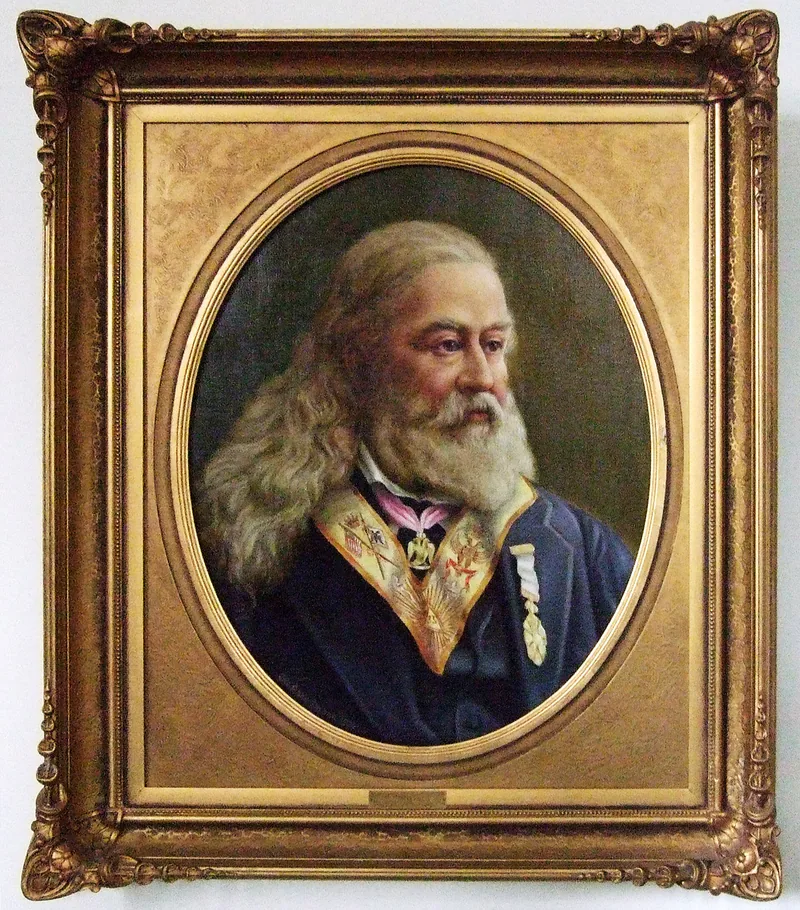
In 1891 Taxil introduced the idea that would make the hoax famous. In Y a-t-il des femmes dans la franc-maçonnerie? he described a hidden, higher Masonic rite open to women, the "Palladium", whose members worshipped Lucifer as the good god and regarded the God of Christianity, whom they called Adonai, as the principle of evil. The Palladists were said to be governed from Charleston, South Carolina, by Albert Pike, the real and influential leader of the Southern Jurisdiction of the Scottish Rite, whom Taxil styled the "sovereign pontiff" of universal Freemasonry. Their rites supposedly included the veneration of Baphomet and sacrilegious ceremonies in the style of the Black Mass.
Le Diable au XIXe siècle and Diana Vaughan§
The hoax expanded with Le Diable au XIXe siècle ("The Devil in the Nineteenth Century"), published in instalments from 1892 to 1894 under the name "Dr Bataille", in reality the ship's doctor Charles Hacks working with Taxil. Running to some two thousand pages, it described the travels of a narrator who infiltrates Satanic lodges around the world, from India to Gibraltar, and witnesses demonic apparitions, magical feats and sacrileges. The work borrowed freely from occult literature, travel writing and adventure fiction.
Its most enduring creation was Diana Vaughan, presented as an American Palladist priestess descended from the seventeenth-century alchemist Thomas Vaughan and devoted to the demon Asmodeus. In 1895 Diana was said to have converted to Catholicism, and her Mémoires d'une ex-palladiste appeared in parts until 1897, together with devotional writings published in her name that received warm letters from members of the Catholic hierarchy. Other authors joined in, among them the Italian Domenico Margiotta, who claimed that the Italian Grand Master Adriano Lemmi had succeeded Pike as head of the Satanic order after Pike's death in 1891.
Doubts, the Trent Congress and the 1897 Confession§
Not everyone was convinced. The British occultist Arthur Edward Waite published Devil-Worship in France (1896), a careful critique showing the contradictions and borrowings in the Palladist literature. Within the Catholic world, especially in Germany, journalists and clergy, including the Jesuit Hermann Gruber, asked why no one had ever seen Diana Vaughan. At the international Anti-Masonic Congress held in Trent in September 1896, demands grew for proof of her existence.
Taxil promised that Diana would appear in public. On 19 April 1897, at the hall of the Geographical Society in Paris, he instead addressed a crowded audience of journalists and clergy and announced that the Palladium, Diana Vaughan's conversion and the whole edifice of revelations had been his invention. He claimed that he had set out to expose the credulity of the Church's leaders, and that the name Diana Vaughan belonged to a typist, an employee of an American typewriter firm who had done secretarial work for him and lent her name without knowing how it would be used. The meeting ended in uproar, and Taxil left under police protection. He retired from public life and died in 1907.
Why the Hoax Mattered§
Historians such as Eugen Weber and Massimo Introvigne have shown that the Taxil affair was more than a practical joke. It drew on a long tradition of anti-Masonic conspiracy theory going back to the Abbé Barruel's account of the French Revolution and the legends surrounding the Bavarian Illuminati, and it exploited the bitter politics of the Third Republic. It also fed on the literary Satanism of the period: Huysmans's Là-bas (1891) had just made the Black Mass a topic of fashionable conversation, and occult controversies in Paris, described in French Occultism from Lévi to Papus, gave the claims a plausible backdrop.
Introvigne identifies the 1890s campaign as the first wave of a recurring pattern in modern "Satanism scares": a hidden hierarchy of Satan-worshippers is said to control respectable institutions; the evidence comes from converts and former insiders who claim to have escaped; and the absence of independent proof is explained as part of the conspiracy. The same structure, with different villains, would return in the American Satanic Panic of the 1980s, when testimonies of alleged survivors played the role once played by Diana Vaughan.
The Afterlife of the Palladium Forgeries§
Despite the 1897 confession, Taxil's inventions never disappeared. A fabricated set of "instructions" attributed to Albert Pike, dated 1889 and declaring that the Masonic religion was the Luciferian doctrine, first appeared in anti-Masonic writing of Taxil's circle in the 1890s and was repeated through the twentieth century in conspiracy books, often without any mention of its origin. Later forgeries, such as a supposed letter from Pike to the Italian revolutionary Giuseppe Mazzini predicting three world wars, extended the legend. Masonic historians and scholars of conspiracy theories have repeatedly demonstrated that these documents have no basis in Pike's papers or published works, including his Morals and Dogma (1871).
The affair has also entered literature, most notably in Umberto Eco's novel The Prague Cemetery (2010), where Taxil and Diana Vaughan appear alongside the forgers of the Protocols of the Elders of Zion. The wider family of such narratives is described in Conspiracy Myths: A Complete Guide. For historians of Satanism, the Palladium is a reminder that, for most of modern history, organised Satanism existed far more vividly in the imagination of its opponents than in reality, as noted in Theistic Satanism and Luciferianism.
Frequently asked questions§
What was the Taxil hoax?§
It was a twelve-year deception (1885–1897) in which Léo Taxil, pretending to be a Catholic convert, published fabricated accounts of a Lucifer-worshipping Masonic rite called the Palladium. He revealed it as a hoax at a public meeting in Paris on 19 April 1897.
Was Diana Vaughan a real person?§
No. Diana Vaughan, the supposed Palladist priestess who converted to Catholicism, was Taxil's invention. He said the name belonged to a typist he had employed, who had nothing to do with the stories published under it.
Did Albert Pike say Freemasonry worships Lucifer?§
No authentic writing by Pike says so. The often-quoted "Luciferian" instructions attributed to him originated in the Taxil-era anti-Masonic literature of the 1890s and are recognised by historians as forgeries.
Why did Taxil create the hoax?§
Taxil said he wanted to expose the credulity of the Catholic hierarchy and its readiness to believe anything against Freemasonry. Commercial success and his taste for provocation also played a part; historians debate how far he planned the whole affair from the start.
Sources and further reading§
- Satan franc-maçon: la mystification de Léo Taxil — Eugen Weber, 1964
- Devil-Worship in France, or The Question of Lucifer — Arthur Edward Waite, 1896
- Satanism: A Social History — Massimo Introvigne, 2016
- Children of Lucifer: The Origins of Modern Religious Satanism — Ruben van Luijk, 2016
- Morals and Dogma — Albert Pike, 1871
- Warrant for Genocide — Norman Cohn, 1967
- The Prague Cemetery — Umberto Eco, 2010