Liber XXIV · Satanism · Chapter VI: Theistic Satanism & Luciferianism
Theistic Satanism and Luciferianism: History and Beliefs
Theistic Satanism and Luciferianism explained: Lucifer the light-bearer, Romantic and Gnostic roots, early Luciferian groups and modern currents and debates.

Theistic Satanism is the umbrella term for forms of Satanism that regard Satan as a real being, deity or spiritual force rather than merely a symbol, while Luciferianism is a related current that venerates Lucifer, the "light-bearer", as a principle or god of enlightenment, knowledge and self-illumination. Both are small, decentralised and diverse movements that took organised shape mainly in the twentieth century and grew through publishing and the internet from the 1990s onward.
Lucifer: The Morning Star and Its History§
The name Lucifer is Latin for "light-bringer", a name for the planet Venus as the morning star. In Isaiah 14:12 the prophet mocks a fallen Babylonian king as a "Day Star, son of the Dawn"; the Latin Vulgate rendered this as lucifer, and the King James Version kept it: "How art thou fallen from heaven, O Lucifer, son of the morning!" Christian interpreters from Origen onwards read the passage as describing the fall of Satan, and so Lucifer became one of the devil's names. That development is traced in The History of Satan and the Devil.
The word kept positive meanings too. The Vulgate uses lucifer in 2 Peter 1:19 for the morning star rising in believers' hearts, and the Easter hymn Exsultet applies it to Christ himself, the morning star that never sets. A fourth-century bishop was called Lucifer of Cagliari. Modern Luciferians often point to this ambiguity to argue that Lucifer is a figure of light and enlightenment rather than of evil.
Gnostic and Romantic Roots§
Luciferian and theistic Satanist writers frequently claim the ancient Gnostics as forerunners. According to their heresiological opponents, some Gnostic groups, labelled Ophites and Cainites, revered the serpent of Eden as a bringer of knowledge who freed humanity from an ignorant creator. These accounts come from hostile sources such as Irenaeus and Epiphanius, and their accuracy is disputed, but they have inspired modern reinterpretations. The Gnostic background is explained in What Is Gnosticism? and The Demiurge.
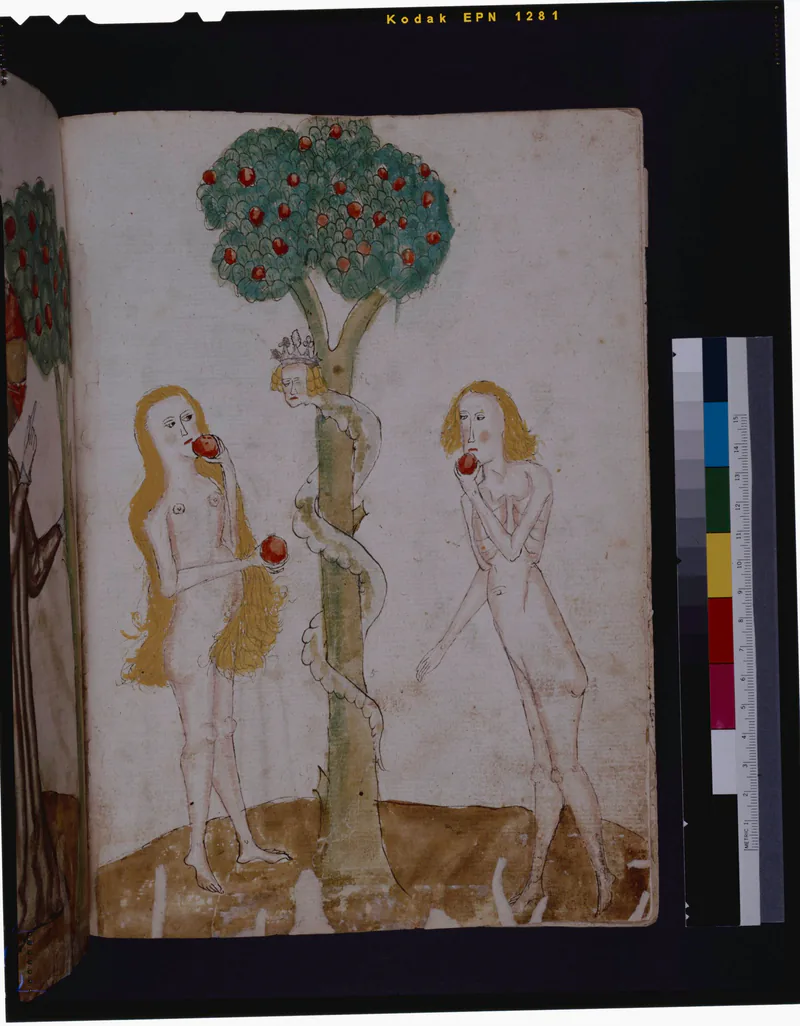
The more direct ancestor is Romantic Satanism. From Blake, Shelley and Byron to Baudelaire and Carducci, nineteenth-century writers reimagined Satan or Lucifer as a Promethean rebel and liberator. Helena Blavatsky named her London journal Lucifer (founded 1887), explaining that the name meant the light-bringer, and the Theosophical Secret Doctrine (1888) presented Lucifer as a bearer of spiritual wisdom. Per Faxneld has shown how feminist writers also cast Lucifer as the liberator of women. None of these figures worshipped Satan, but they made a positive Lucifer culturally available.
Early Luciferian and Satanic Groups§
Before the twentieth century, claims of organised Satan-worship were mostly accusations or hoaxes. The most notorious was Léo Taxil's campaign of the 1880s and 1890s, which invented a "Palladian" Luciferian rite supposedly practised by Freemasons and even fabricated quotations attributed to the American Mason Albert Pike, before Taxil confessed in 1897. These forgeries still circulate today.
Genuine early examples were few and small. The Danish occultist Carl William Hansen, known as Ben Kadosh, published a Luciferian pamphlet in 1906 that is often cited as one of the first explicitly Luciferian texts. The German lodge Fraternitas Saturni, founded in 1928, developed a Saturnian gnosis in which Lucifer played an important role. In Paris, Maria de Naglowska's circle in the 1930s combined Satanic and sexual mysticism. Ruben van Luijk's history of religious Satanism concludes that these scattered phenomena, rather than any secret ancient tradition, form the true prehistory of theistic Satanism.
Modern Theistic Satanism§
Organised theistic Satanism became visible mainly after the founding of the atheistic Church of Satan in 1966, partly in reaction to it. The Temple of Set, founded in 1975, regarded Set as a real metaphysical principle, though Setians do not consider themselves Satanists in the conventional sense. From the 1990s, websites and online forums allowed small theistic groups and solitary practitioners to find one another. Their beliefs vary widely: some venerate Satan as a liberating god or as the true creator; some practise demonolatry, honouring a pantheon of demons drawn from grimoires; others combine Satan with pagan deities or with Gnostic cosmologies.

Some theistic currents have been associated with extremism. Joy of Satan Ministries, founded around 2002, mixes theistic Satanism with neo-Nazi and conspiratorial ideas, and the Order of Nine Angles network has been linked by researchers to violent extremist groups; most other Satanists reject them. In Sweden, the Misanthropic Luciferian Order of the mid-1990s, linked to members of the black metal scene, promoted an anti-cosmic Satanism. Such groups attract attention out of proportion to their size, and scholars warn against treating them as representative.
Contemporary Luciferianism§
Contemporary Luciferianism generally presents itself as distinct from Satanism. Luciferians tend to emphasise light rather than darkness, knowledge rather than rebellion, and self-illumination as a spiritual path. Some understand Lucifer as a literal being; others as an archetype or the higher potential of the self. Since the 2000s the American author Michael W. Ford has been a prominent voice, writing on Luciferian magic and and co-founding the Greater Church of Lucifer, which opened in Texas in 2015 amid local protests. Other Luciferians draw on Theosophy, Gnosticism or Western ceremonial magic.
Many Luciferians and theistic Satanists regard themselves as followers of the left-hand path, sharing its aims of self-deification and individual sovereignty. The relationship between these currents and the larger Satanic milieu is outlined in What Is Satanism? and in the account of LaVeyan Satanism.
Common Misconceptions§
Several misconceptions surround these movements. First, they are not ancient: despite claims of hidden continuity, scholarship finds no organised Satanic religion before modern times. Second, the Yezidis of Iraq and Syria, who venerate the angel Melek Taus, the Peacock Angel, are often wrongly called "devil worshippers"; their religion has its own distinct theology and has suffered persecution partly because of this misreading. The catalogue entry on The Peacock Angel gives further background. Third, the claims of widespread Satanic ritual crime that fuelled the Satanic Panic of the 1980s were investigated and found to lack evidence.
Frequently asked questions§
What is the difference between Satanism and Luciferianism?§
Satanism generally focuses on Satan as the adversary, a symbol or being of rebellion, carnality and opposition. Luciferianism focuses on Lucifer as the light-bearer, emphasising enlightenment, knowledge and self-illumination. Many people use both names, and the boundary is fluid.
Do theistic Satanists believe Satan is evil?§
Usually not in the Christian sense. Most theistic Satanists see Satan as a liberating, misunderstood or creative deity rather than as the embodiment of evil, and they interpret Christian accounts of him as biased.
Is Lucifer the same as Satan in the Bible?§
The Hebrew Bible does not identify them. Isaiah 14 speaks of a fallen king as the "Day Star", translated "Lucifer" in Latin. Christian interpreters later read the passage as a description of Satan's fall, and the names merged.
Are theistic Satanist groups large?§
No. They are small and fragmented, consisting mostly of solitary practitioners and small online or local groups. No reliable global figures exist, but scholars agree that atheistic Satanism is far larger.
Sources and further reading§
- Children of Lucifer: The Origins of Modern Religious Satanism — Ruben van Luijk, 2016
- The Devil's Party: Satanism in Modernity — Per Faxneld and Jesper Aagaard Petersen (eds), 2013
- Satanic Feminism: Lucifer as the Liberator of Woman in Nineteenth-Century Culture — Per Faxneld, 2017
- Satanism: A Social History — Massimo Introvigne, 2016
- The Invention of Satanism — Asbjørn Dyrendal, James R. Lewis and Jesper Aagaard Petersen, 2016
- The Origin of Satan — Elaine Pagels, 1995
- Lucifer: The Devil in the Middle Ages — Jeffrey Burton Russell, 1984
- The Secret Doctrine — H. P. Blavatsky, 1888
- Lords of the Left-Hand Path: A History of Spiritual Dissent — Stephen E. Flowers, 1997
- Peacock Angel: Being Some Account of Votaries of a Secret Cult and Their Sanctuaries — E. S. Drower, 1941