The Satanic Temple: History, Seven Tenets and Activism
The Satanic Temple explained: its 2013 founding, the Seven Tenets, church-state campaigns, After School Satan and how it differs from the Church of Satan.

The Satanic Temple (TST) is a non-theistic religious organisation founded in the United States in 2013 by Lucien Greaves and Malcolm Jarry. It regards Satan as a literary symbol of rebellion against arbitrary authority rather than as a real being, and it is best known for campaigns that test the separation of church and state, such as its proposed Baphomet monument and its After School Satan clubs. Headquartered in Salem, Massachusetts, it was recognised as a church by the US Internal Revenue Service in 2019.
Founding and Early Actions (2013–2014)§
The Satanic Temple first came to public attention in January 2013 with a rally on the steps of the Florida State Capitol in Tallahassee. Its participants, in black robes, ironically "praised" Governor Rick Scott for signing a law allowing student-led "inspirational messages" at school events, pointing out that the law would also allow Satanist students to speak. The event was widely covered as a prank, and its organisers used pseudonyms: Lucien Greaves, the name taken by co-founder Douglas Mesner, and Malcolm Jarry.
In July 2013 the group staged a "Pink Mass" at the Mississippi grave of the mother of Fred Phelps, leader of the anti-gay Westboro Baptist Church, declaring that the ritual had turned her gay in the afterlife, a satirical inversion of the church's own beliefs about the dead. These early actions combined performance, satire and media strategy, and critics wondered whether the group was a religion at all or an art and activism project. Over the following years TST built a structure of local chapters, later called congregations, and developed a body of doctrine, ritual and community practice. Joseph Laycock, whose study of the movement is the main academic account, describes how what began partly as satire became a religion for thousands of members.
The Seven Tenets and Non-Theistic Satanism§
The Satanic Temple's beliefs are summarised in its Seven Tenets. In paraphrase, they hold that one should act with compassion and empathy towards all creatures; that the struggle for justice is ongoing and should override laws and institutions; that one's body is inviolable and subject to one's own will alone; that the freedoms of others, including the freedom to offend, should be respected; that beliefs should conform to the best scientific understanding of the world; that people are fallible and should make amends for their mistakes; and that each tenet is a guide to noble action and thought rather than a rigid rule.

TST's Satan is a metaphor. Drawing on the literary tradition described in Romantic Satanism, its leaders cite Milton's rebel angel and especially Anatole France's novel The Revolt of the Angels (1914), in which Satan leads a revolt against a tyrannical heaven and then declines to become a new tyrant. Satan thus stands for the "eternal rebel" against arbitrary authority, for scepticism and for personal sovereignty. Members hold rituals, such as unbaptisms and ceremonies of affirmation, and meet in local communities, but they do not believe in supernatural beings. Their position within the wider spectrum of Satanism is outlined in What Is Satanism?.
Monuments, Invocations and the Separation of Church and State§
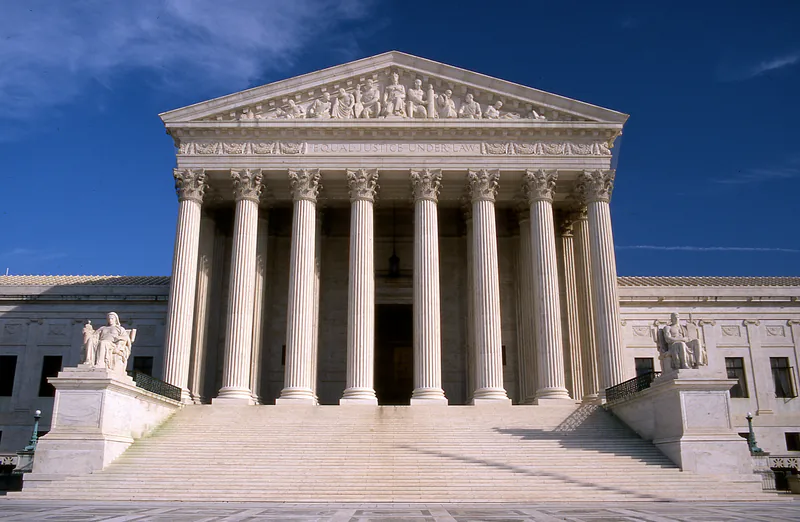
TST's most visible campaigns concern religious displays and practices on public property. When Oklahoma placed a privately donated Ten Commandments monument at its State Capitol, TST applied in 2013–2014 to install a monument of its own on the same terms and commissioned the bronze Baphomet statue unveiled in Detroit in 2015. After the Oklahoma Supreme Court ordered the Ten Commandments removed on state constitutional grounds, the statue went on to Arkansas and elsewhere; its history is told in The Satanic Temple's Baphomet Statue.
The group has followed the same principle in other settings: requesting space for holiday displays alongside nativity scenes in state capitols, and seeking to deliver invocations at city council meetings where religious prayers are offered. Some of these efforts succeeded and others were rejected or lost in court. A Satanic display in the Iowa State Capitol in December 2023 was destroyed by a visitor, who was later prosecuted. TST's argument in each case is that the government must either keep religion out of public institutions or admit all religions on equal terms.
After School Satan, Grey Faction and Reproductive Rights§
In 2016 TST launched After School Satan clubs in public schools that hosted evangelical Good News Clubs. Relying on court rulings that schools opening their premises to one religious club must open them to others, it offered activities focused on science, art and critical thinking rather than on Satanic doctrine. Several school districts resisted, and in 2023 a federal court ruled in TST's favour against a Pennsylvania district that had refused to allow a club.
Grey Faction, a TST campaign, opposes the revival of claims about Satanic ritual abuse and the use of recovered-memory techniques in therapy, which it sees as a continuing legacy of the Satanic Panic of the 1980s. Its members lobby professional associations and expose practitioners who promote such claims. Another long-running campaign concerns reproductive rights. Invoking its tenet of bodily autonomy, TST describes a "Satanic abortion ritual" and has argued, in several lawsuits, that religious freedom laws should exempt members from state-mandated waiting periods and counselling; most of these suits have failed. In 2023 it opened a telehealth abortion service in New Mexico.
Recognition, Growth and Internal Debates§
In April 2019 the Internal Revenue Service recognised TST as a church with tax-exempt status, a step its leaders presented as confirmation that Satanism is a religion entitled to the same treatment as any other. The same year the documentary Hail Satan?, directed by Penny Lane, brought the group to a wide audience. TST reports a very large membership, much of it through free online registration; independent figures are not available, and active participation is concentrated in local congregations.
Growth has brought conflicts. In 2018 TST sued the producers of a television series for using a statue closely resembling its Baphomet, a dispute that was settled. In the late 2010s several chapters left or were expelled after disagreements over governance, political positions and the leadership's authority, and some formed independent Satanic groups. Scholars note that tensions between central leadership and local activism, and between satire and sincere religious identity, are recurrent themes in the organisation's history.
The Satanic Temple and the Church of Satan Compared§
TST and the Church of Satan, founded by Anton LaVey in 1966, are both non-theistic and both treat Satan as a symbol. Their differences are substantial. The Church of Satan's philosophy, set out in The Satanic Bible, emphasises self-interest, social Darwinism and elitism, and the Church generally avoids political campaigning. TST stresses compassion, justice and pluralism and engages openly in activism, often aligned with progressive causes. TST has no initiatory degree system comparable to the Church of Satan's graded priesthood, though it has developed its own ordained ministry, and draws on a different reading of the Satanic tradition.
The two groups have criticised each other publicly. Church of Satan leaders have described TST as a political activist group borrowing Satanic imagery, while TST members regard LaVeyan Satanism as outdated in some of its social views. Historians of religion such as Laycock and the authors of The Invention of Satanism treat both as authentic forms of modern religious Satanism, representing two different answers to the question of what a Satanist religion without a literal Satan should do in the world.
Frequently asked questions§
Do members of The Satanic Temple worship Satan?§
No. TST is non-theistic: its members do not believe in Satan or other supernatural beings. Satan is a symbol of rebellion against tyranny, of free inquiry and of personal autonomy.
What are the Seven Tenets of The Satanic Temple?§
They are seven guiding principles covering compassion, justice, bodily autonomy, respect for others' freedoms, scientific understanding, acknowledgement of fallibility, and the idea that the tenets guide noble action rather than serving as rigid commandments.
Is The Satanic Temple a real religion?§
The US Internal Revenue Service recognised it as a church in 2019, and scholars such as Joseph Laycock argue that it functions as a religion with its own beliefs, rituals and communities. Critics still debate the role of satire in its origins.
What is the difference between The Satanic Temple and the Church of Satan?§
Both are non-theistic, but the Church of Satan (1966) emphasises individualism and avoids politics, while The Satanic Temple (2013) emphasises compassion and justice and is known for church-state activism. The two organisations are separate and often critical of each other.
Sources and further reading§
- Speak of the Devil: How The Satanic Temple Is Changing the Way We Talk about Religion — Joseph P. Laycock, 2020
- The Invention of Satanism — Asbjørn Dyrendal, James R. Lewis and Jesper Aagaard Petersen, 2016
- Children of Lucifer: The Origins of Modern Religious Satanism — Ruben van Luijk, 2016
- Satanism: A Social History — Massimo Introvigne, 2016
- The Revolt of the Angels — Anatole France, 1914
- The Satanic Bible — Anton Szandor LaVey, 1969
- Satan's Silence: Ritual Abuse and the Making of a Modern American Witch Hunt — Debbie Nathan and Michael Snedeker, 1995