Catalogue · Texts & Manuscripts
Western Esotericism: History & Scholarship · reference
Peacock Angel (E. S. Drower)
Peacock Angel: Being Some Account of Votaries of a Secret Cult and Their Sanctuaries
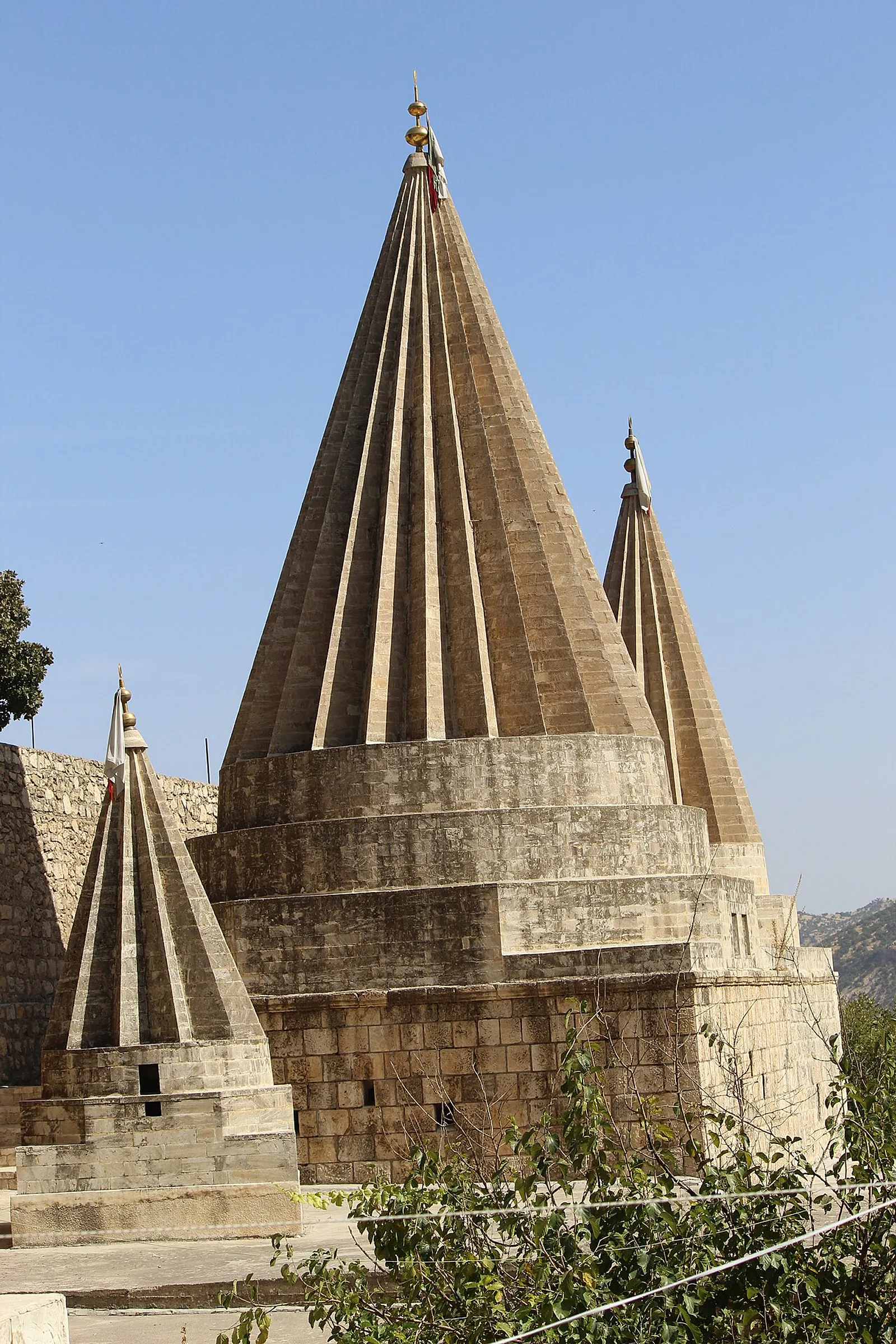
- Attribution
- E. S. Drower (Lady Ethel Stefana Drower, 1879–1972)
- Date
- London, 1941
- Language
- English
- Manuscripts & printings
- Printed London: John Murray, 1941
Peacock Angel is Lady Ethel Stefana Drower's account of the Yezidis of northern Iraq, published by John Murray in 1941. Drower, best known as the pioneering scholar of the Mandaeans, travelled in the region in the 1930s, and the book is a vivid travel narrative combined with ethnography. She describes Yezidi villages around Baashika and Bahzani, weddings, births and shrines, a visit to the Syriac Orthodox monastery on the rock, and above all the autumn pilgrimage and festival at the sanctuary of Shaikh 'Adi at Lalish, with its rites, processions and sacred spaces. A chapter on legend and doctrine summarises what she was told about Yezidi beliefs, including the figure of Melek Taus, the Peacock Angel, chief of the seven angels to whom God entrusted the world, and the reverence for Shaikh 'Adi ibn Musafir, the twelfth-century Sufi whose order lies at the origin of the community. Drower's sympathy for her hosts is evident, but the book reflects the limitations of its time, including reliance on outsider informants and the old misreading of the Yezidis as 'devil worshippers', a label the community rejects and which modern scholarship has shown to rest on a misunderstanding of Melek Taus. Since then scholars such as Philip Kreyenbroek and Khalil Jindy Rashow have documented the community's oral sacred hymns. The persecution of the Yezidis by the Islamic State in 2014 has given these older records new significance.
What it contains
- Travel narrative in Yezidi villages of northern Iraq
- Marriage and birth customs
- Shrines, snakes and sacred places
- The festival at Shaikh 'Adi's sanctuary at Lalish
- Legend and doctrine of Melek Taus
- Conversations with Yezidi hosts
Recent scholarship
Since the 2014 genocide against the Yezidis, scholars and community members have worked to record oral traditions, and studies such as Kreyenbroek and Rashow's (2005) present Yezidi religion through its own sacred texts rather than outsiders' reports.