Liber XXIV · Satanism · Chapter III: Left-Hand Path
Maria de Naglowska: Sex Magic, Satanic Mysticism and Paris
Maria de Naglowska (1883–1936): the Russian-born occultist of 1930s Paris, her Third Term of the Trinity, Golden Arrow circle and Satanic initiation.

Maria de Naglowska (1883–1936) was a Russian-born writer and occultist who led a small esoteric circle in Paris in the early 1930s. She taught a doctrine of the "Third Term of the Trinity" in which a coming age of the feminine would reconcile God and Satan, and she gave sexuality and a symbolic descent into darkness a central role in initiation. Historians count her among the earliest figures to give the language of Satanism a positive, mystical meaning within an organised group.
Early Life in Russia, Switzerland and Italy§
Maria de Naglowska was born in St Petersburg in 1883 into a family of the Russian nobility; according to biographical accounts she was orphaned at an early age. She is said to have been educated at the Smolny Institute, the prestigious school for daughters of the nobility. Against her family's wishes she married Moïse Hopenko, a Jewish violinist, and the couple moved to western Europe; the marriage later broke down, leaving her to support their children by journalism, teaching and translation.
She appears to have spent the 1910s mainly in Switzerland and much of the 1920s in Italy, where she wrote for the press and moved in literary and esoteric circles in Rome. There she came to know Julius Evola, then developing his own esoteric philosophy, who later discussed her ideas in his writings on the metaphysics of sex. Details of these years are thin and rest partly on her own later accounts and those of disciples, so historians treat the chronology with caution.
Paris, La Flèche and the Golden Arrow§
Around 1929 Naglowska settled in Paris and became a recognisable figure in the cafés of Montparnasse, where she gave public talks on religion, sexuality and magic. The setting matters: Paris still had a lively occult scene inherited from the Belle Époque, described in French Occultism from Lévi to Papus, and it was also the capital of the artistic avant-garde, with an audience of writers, émigrés and Surrealist sympathisers interested in eros and the irrational.
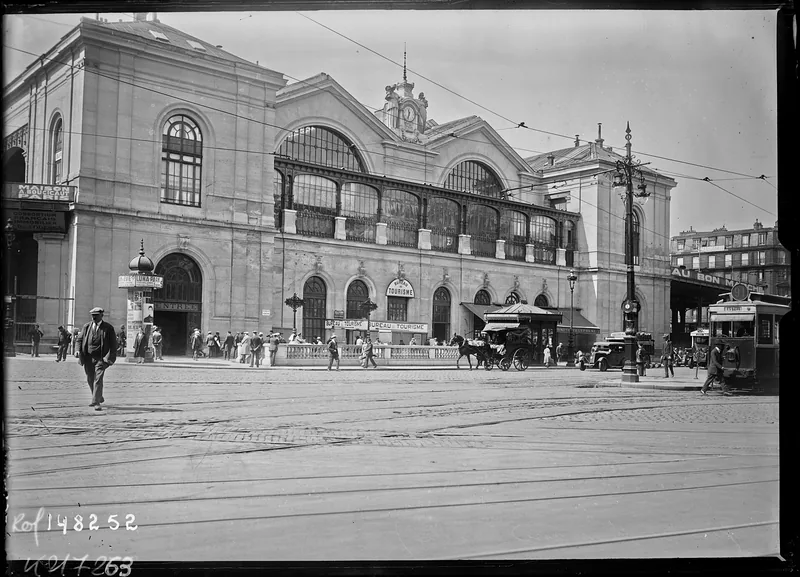
In 1930 she began publishing La Flèche, which she described as an organ of magical action and which appeared irregularly until 1933. Around it gathered a small initiatory group, the Brotherhood of the Golden Arrow (Confrérie de la Flèche d'Or). Contemporary journalists who wrote about the "little churches" of Paris described her meetings with a mixture of curiosity and irony; their reports, together with her own publications and the recollections of followers, are the main sources for the circle's activities.
Magia Sexualis and Paschal Beverly Randolph§
In 1931 Naglowska published Magia Sexualis, a French volume presented as the teaching of the American spiritualist and Rosicrucian Paschal Beverly Randolph (1825–1875). Randolph had taught that sexual union, approached with the right intention, could be a means of spiritual and magical power, and his ideas had circulated in Europe through esoteric orders. Scholars agree that Naglowska's edition combined translated material from Randolph's works with editorial reshaping and additions of uncertain origin, so that it must be read as a twentieth-century compilation rather than a straightforward translation. It became one of the most influential texts in the modern history of sex magic.
The Third Term of the Trinity§
Naglowska's own teaching was set out in Le Rite sacré de l'amour magique and La Lumière du sexe (both 1932). At its centre was a scheme of religious history in three ages. The age of the Father, associated with Judaism, had been an age of law; the age of the Son, associated with Christianity, had been an age of love achieved through sacrifice and the repression of the flesh. A third age was now beginning, the age of the "Third Term of the Trinity", which she associated with the Mother and with woman as initiator and priestess.
Historians have compared this scheme to the medieval prophecy of Joachim of Fiore, who announced a coming age of the Holy Spirit, and to Russian religious thought about divine Wisdom (Sophia). The comparison with Christian doctrine is explored in The Trinity: History of the Doctrine. Naglowska gave the scheme a distinctive twist by making sexuality, rather than its renunciation, the sacrament of the new age.
Satan in Naglowska's Theology§
The most controversial part of her doctrine concerned Satan. Naglowska taught that Satan was not an independent evil being opposed to God but a principle within the divine life itself: the force of separation, descent and resistance through which spirit enters matter and through which consciousness is tested. In the old ages this principle had been feared and repressed; in the new age it was to be recognised, passed through and reintegrated. Initiation therefore involved a symbolic descent into the realm of Satan, followed by a return transformed.
This is why historians such as Massimo Introvigne and Ruben van Luijk treat her as a significant figure in the prehistory of religious Satanism, while stressing that she was not a devil worshipper in any simple sense. Her Satan resembles the tempter-teacher of some Gnostic and Romantic traditions more than the enemy of Christian demonology, and it has parallels with the decadent Satanism of Stanisław Przybyszewski a generation earlier. Her place among later theistic currents is discussed in Theistic Satanism and Luciferianism.
Ritual: The Golden Mass and the Hanging Mystery§
Naglowska described a ritual she called the Golden Mass (Messe d'or), in which a male and a female participant enacted the union of the principles of her theology, accompanied by readings and liturgical forms adapted from Christian worship. How often and in what form it was actually performed remains uncertain, since accounts vary and some come from hostile or sensational sources.
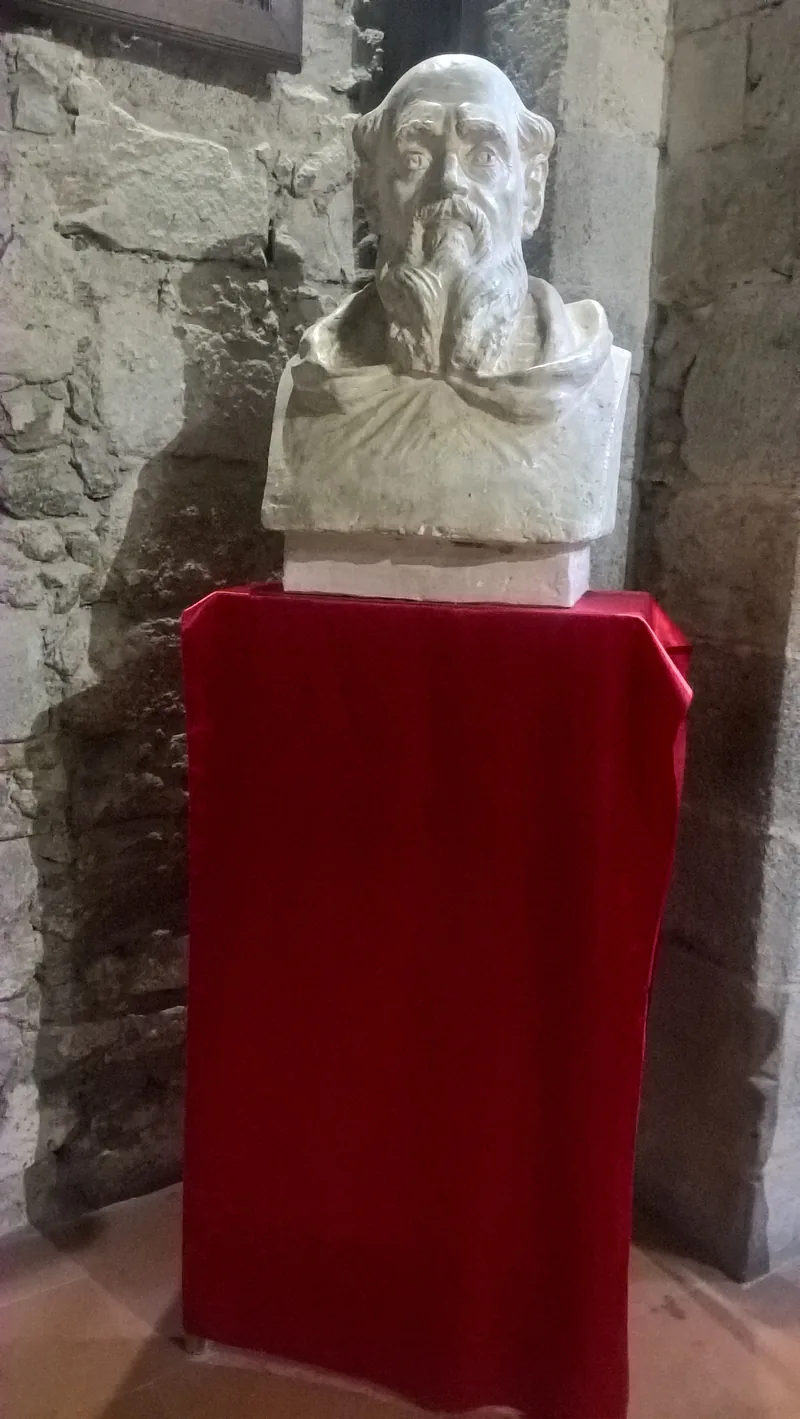
Her most notorious text, Le Mystère de la pendaison (1934), described an initiation for men involving a brief, supervised ritual suspension intended to provoke a visionary state at the threshold of death, symbolising the descent into Satan's realm. The rite is known only from her own description and from second-hand reports, and historians discuss it as an example of the extreme, death-and-rebirth symbolism of interwar esotericism. Any such practice carries an obvious risk of serious injury or death, and it is described here solely as a matter of historical record.
These rites placed Naglowska within the broader current that scholars call the left-hand path: a set of modern movements that seek liberation through transgression of conventional religious and sexual boundaries rather than through ascetic withdrawal.
Later Life, Legacy and Rediscovery§
In 1935 Naglowska withdrew from Paris, reportedly in poor health, and moved to Zurich, where she died in April 1936. Her circle dispersed, and for decades she was remembered mainly in footnotes, in French accounts of the occult underground and in Evola's writings. One of her followers, Marc Pluquet, later wrote a memoir of her that preserved details of her teaching and personality.
Interest revived from the 1990s. The historian of esotericism Hans Thomas Hakl examined her within a study of early twentieth-century sexual-magic groups, and she appears in Hugh Urban's history of modern sex magic. In 2011–2012 Donald Traxler published English translations of her main works and of Magia Sexualis, making her accessible to a new readership in contemporary occultism and in feminist interest in esoteric history.
Scholars now see Naglowska as a bridge between several worlds: nineteenth-century sexual mysticism and the twentieth-century occult revival; Russian religious thought and Parisian bohemia; and Christian, Gnostic and Satanic imagery. She is one of the few women to have led an initiatory group with explicitly Satanic language before the Second World War, and her work anticipates later currents that combine the feminine, sexuality and the rehabilitation of the Devil.
Frequently asked questions§
Was Maria de Naglowska a Satanist?§
She used Satanic language positively, but her teaching was not devil worship. Satan in her theology was a principle within God, the force of descent and separation, to be passed through and reintegrated in a coming age of the feminine; historians therefore treat her as an important forerunner of religious Satanism rather than a Satanist in the modern sense.
What is the Third Term of the Trinity?§
It was Naglowska's name for a new religious age following the ages of the Father and the Son, centred on the feminine principle and on sexuality as a sacrament. Historians compare it with Joachim of Fiore's age of the Holy Spirit and with Russian ideas of divine Wisdom.
Did Naglowska write Magia Sexualis?§
She published Magia Sexualis in 1931 as the teaching of Paschal Beverly Randolph. Scholars regard it as a compilation that combines translated Randolph material with editorial reworking, so its exact authorship is mixed.
When and where did Maria de Naglowska die?§
She died in Zurich in April 1936, about a year after leaving Paris.
Sources and further reading§
- The Light of Sex: Initiation, Magic, and Sacrament — Maria de Naglowska, 2011
- Advanced Sex Magic: The Hanging Mystery Initiation — Maria de Naglowska, 2011
- The Sacred Rite of Magical Love: A Ceremony of Word and Flesh — Maria de Naglowska, 2012
- Magia Sexualis: Sexual Practices for Magical Power — Paschal Beverly Randolph and Maria de Naglowska, 2012
- Hidden Intercourse: Eros and Sexuality in the History of Western Esotericism — Wouter J. Hanegraaff and Jeffrey J. Kripal, 2008
- Magia Sexualis: Sex, Magic, and Liberation in Modern Western Esotericism — Hugh B. Urban, 2006
- Satanism: A Social History — Massimo Introvigne, 2016
- Children of Lucifer: The Origins of Modern Religious Satanism — Ruben van Luijk, 2016