Liber III · Black & White Magic · Chapter VII: Sex Magick
Sex Magick: A History from Randolph to Chaos Magic
A historical overview of sex magick: Paschal Beverly Randolph, the O.T.O., Aleister Crowley, the Western reception of tantra, Wicca and chaos magic.

Sex magick is the modern Western esoteric idea that sexuality can be used as a spiritual and magical force, whether to empower prayer and will, to generate creative or regenerative energy, or to unite the human with the divine. As a distinct current it emerged in the mid-nineteenth century with the African American spiritualist Paschal Beverly Randolph, was organised in the early twentieth century by the Ordo Templi Orientis and Aleister Crowley, and was later reshaped by the Western reception of Indian tantra, by Wicca and by chaos magic.
Sexuality and Spirit Before Sex Magick§
Associations between sexuality and the sacred are ancient: fertility rites, divine marriages, the erotic language of mystical poetry from the Song of Songs to Sufi verse, and Christian and Gnostic speculation about the union of opposites. Alchemical texts used sexual imagery, the "chemical wedding" of king and queen, to describe the joining of sulphur and mercury. Daoist "arts of the bedchamber" and the internal alchemy described in Taoist Internal Alchemy treated sexual energy as a resource to be cultivated for health and longevity.
None of these, however, constitutes "sex magick" in the modern sense. The term and the self-conscious practice belong to the nineteenth and twentieth centuries, when spiritualism, Romantic philosophy, medical debates about sexuality and the occult revival met in Europe and North America. Historians therefore treat sex magick as a distinctively modern phenomenon, even though its practitioners often claimed ancient origins.
Paschal Beverly Randolph and the Brotherhood of Eulis§
Paschal Beverly Randolph was born in New York in 1825, of mixed African American and white ancestry, and grew up in poverty. He became a trance medium in the spiritualist movement, a physician of sorts, a lecturer and a prolific author, travelling in Europe and the Middle East and claiming initiation into Rosicrucian circles. Around 1870 he founded the Brotherhood of Eulis, and in works such as Eulis! The History of Love (1874) he taught that the moment of sexual union between loving partners was charged with spiritual power, so that a prayer or intention held at that moment could be realised.
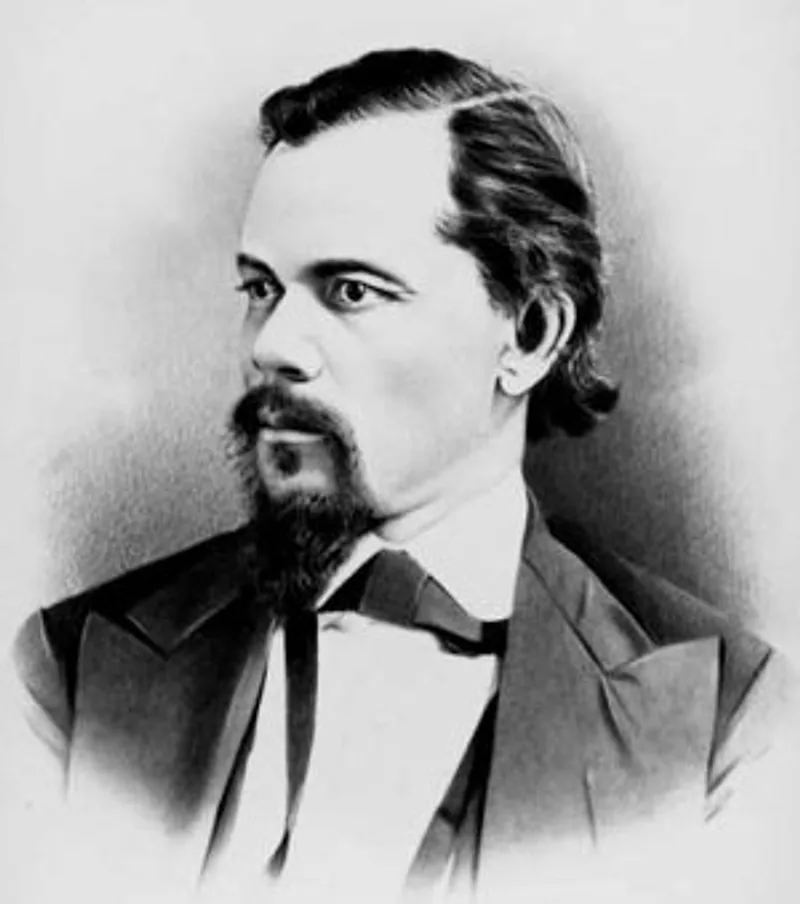
Randolph framed his teaching within marriage, spiritual hygiene and an ethics of mutual love, and he linked it to faculties he called volition, receptivity and "decretism", the ability to will an effect. His life was troubled by racism, poverty and controversy, and he died in Toledo, Ohio, in 1875. His ideas survived through the Hermetic Brotherhood of Luxor, an occult order that emerged in 1884 and transmitted adapted versions of his sexual teachings to its inner circle. In 1931, a compilation partly based on his writings, Magia Sexualis, was published in Paris in French by Maria de Naglowska. John Patrick Deveney's biography of 1997 restored Randolph to the history of Western esotericism.
Spiritual Marriage, Karezza and Nineteenth-Century Reform§
Randolph was part of a broader American culture of religious and sexual experiment. The Oneida Community, led by John Humphrey Noyes, practised what it called "male continence" and complex marriage. The physician Alice Bunker Stockham's Karezza (1896) popularised a form of slow, non-climactic marital union as a path to health and spiritual harmony. The writer Ida Craddock developed a theology of "heavenly marriage" with angelic partners and wrote marriage manuals that led to her prosecution under the Comstock obscenity laws; she died in 1902 shortly before she was to be imprisoned. These figures show that nineteenth-century sexual spirituality was bound up with debates about women's health, marriage reform, free love and censorship.
The O.T.O. and Aleister Crowley§
The Ordo Templi Orientis was formed in German-speaking Europe in the first decade of the twentieth century, associated with the industrialist Carl Kellner (d. 1905) and the singer, journalist and fringe Masonic entrepreneur Theodor Reuss. In 1912 Reuss announced in his journal Oriflamme that the order possessed the key to all Masonic and Hermetic secrets, namely the teaching of sexual magic. The details were reserved for the highest degrees.

Aleister Crowley joined the O.T.O. around 1910 and became head of its British section in 1912. He rewrote its rituals to harmonise them with his religion of Thelema, described in Thelema and the Book of the Law, and composed instructional papers for the eighth, ninth and eleventh degrees. In Crowley's system sexual magic was a sacramental technique: the union of opposites, framed by invocation and will, was held to produce a powerful "elixir" or to charge a magical aim. He recorded experiments in detailed diaries, including the "Paris Working" of 1914 with the poet Victor Neuburg, and he regarded these teachings as the supreme secret of his order. After Reuss's death in 1923 Crowley led a portion of the O.T.O.; the order's modern branches still regard the higher-degree material as confidential.
Crowley's approach was explicitly antinomian, rejecting conventional sexual morality in favour of individual will, and it attracted scandal during his lifetime. Scholars such as Henrik Bogdan and Marco Pasi have studied his sexual magic as a serious part of his religious system, while noting its exploitative dimensions as well as its liberationist rhetoric.
Naglowska, Grant and Twentieth-Century Currents§
In interwar Paris, the Russian-born Maria de Naglowska (1883–1936) led a small circle and published works such as La Lumière du sexe (1932), teaching a mystical doctrine of the "Third Term of the Trinity" in which sexuality, death and redemption were intertwined; her rites, which she called the Golden Mass, were described by contemporaries, though much remains uncertain. In Britain, Kenneth Grant (1924–2011), once Crowley's secretary, developed a "Typhonian" current that emphasised feminine and lunar mysteries, drawing heavily on his own reading of tantra.
Gerald Gardner, whom Crowley initiated into the O.T.O. in 1947, incorporated a sacred union called the Great Rite into Wicca, as discussed in Wicca and Gerald Gardner. In most covens it is enacted symbolically, by lowering the athame into the chalice, and only rarely in private between established partners.
Tantra and Its Western Reception§
From the late nineteenth century Westerners increasingly identified sex magick with Indian tantra. Historically, tantra, explored in Tantra: History and Practice, is a vast family of Hindu and Buddhist ritual and meditative traditions concerned with mantra, deity visualisation, initiation and the subtle body. Some "left-hand" lineages included transgressive rites, among them ritual union, but these were esoteric, often interpreted symbolically, and only one element in highly complex systems.
Western audiences encountered tantra first through missionaries and orientalists who emphasised its "obscenity", then through enthusiasts. Pierre Bernard, known in the press as "Oom the Omnipotent", founded a Tantrik Order in America in the first decade of the twentieth century; Sir John Woodroffe, writing as Arthur Avalon, presented tantra as sophisticated philosophy in The Serpent Power (1919); and from the 1970s, Bhagwan Shree Rajneesh (later Osho) and the "neo-tantra" movement popularised tantra as a path of sexual liberation. Hugh Urban has shown how this image of tantra as "the cult of ecstasy" was a joint creation of Western desire and Indian reformers. The related concept of kundalini is discussed in Kundalini Yoga.
Sex Magick in Chaos Magic§
Chaos magic, which emerged in Britain in the late 1970s, inherited Austin Osman Spare's teaching that desires could be encoded in sigils and "charged" in states of emptied or heightened consciousness. Peter J. Carroll's Liber Null (1978) classified such states as forms of "gnosis", dividing them into inhibitory methods, such as meditation, and excitatory methods, among which he listed sexual arousal alongside dance, drumming and other techniques. In this framework sexuality was not a sacrament but one psychological tool among many. Groups such as Thee Temple ov Psychick Youth in the 1980s promoted personal sigil rituals, and authors such as Phil Hine discussed sexuality within a broader, experimental approach. The movement's history is told in Chaos Magick.
Ethics, Abuse and Scholarly Perspectives§
The history of sex magick includes serious ethical problems. Several esoteric groups have faced allegations of coercion and abuse by leaders who used claims of secret initiation to exploit followers, and contemporary practitioners and organisations increasingly emphasise consent, transparency and accountability. Historians such as Hugh Urban argue that modern sex magick mirrors wider modern tensions: it promised liberation from Victorian repression and religious guilt, yet often reproduced inequalities of gender and power. Studying it historically sheds light not only on esotericism but on the modern history of sexuality itself.
Frequently asked questions§
Who invented sex magick?§
No one invented it single-handedly, but Paschal Beverly Randolph is generally regarded as the first modern Western teacher of sexual magic, in the 1860s and 1870s. His ideas were later developed by the Hermetic Brotherhood of Luxor, the O.T.O. and Aleister Crowley.
Is sex magick the same as tantra?§
No. Historical tantra is a broad family of Hindu and Buddhist ritual and meditative traditions, in which sexual rites played a limited and often symbolic role. The Western equation of tantra with sex magick is largely a modern reinterpretation.
What was the O.T.O.'s secret?§
In 1912 Theodor Reuss announced that the O.T.O.'s highest secret was a teaching of sexual magic. Crowley developed this material in instructions for the order's upper degrees, which remain confidential in the modern O.T.O.
Does Wicca involve sex magick?§
Gardnerian Wicca includes the Great Rite, a sacred union of the God and Goddess. In most covens it is performed symbolically with the athame and chalice; its actual enactment is rare and restricted to private settings.
Sources and further reading§
- Magia Sexualis: Sex, Magic, and Liberation in Modern Western Esotericism — Hugh B. Urban, 2006
- Tantra: Sex, Secrecy, Politics, and Power in the Study of Religion — Hugh B. Urban, 2003
- Paschal Beverly Randolph: A Nineteenth-Century Black American Spiritualist, Rosicrucian, and Sex Magician — John Patrick Deveney, 1997
- The Hermetic Brotherhood of Luxor: Initiatic and Historical Documents of an Order of Practical Occultism — Joscelyn Godwin, Christian Chanel and John P. Deveney, 1995
- Aleister Crowley and Western Esotericism — Henrik Bogdan and Martin P. Starr (eds), 2012
- Aleister Crowley and the Temptation of Politics — Marco Pasi, 2014
- The Light of Sex: Initiation, Magic, and Sacrament — Maria de Naglowska, 2011
- Karezza: Ethics of Marriage — Alice Bunker Stockham, 1896
- The Serpent Power — Arthur Avalon (Sir John Woodroffe), 1919
- Liber Null and Psychonaut — Peter J. Carroll, 1987