Liber XXIV · Satanism · Chapter II: The Devil in History
The Hellfire Clubs: Wharton, Dashwood and the Medmenham Monks
The Hellfire Clubs of 18th-century Britain and Ireland: Wharton's club, Dashwood's Medmenham monks, the rumours of devil worship and what the evidence shows.

The Hellfire Clubs were private societies of wealthy men in eighteenth-century Britain and Ireland that cultivated blasphemy, drinking and sexual libertinism behind a mock-religious façade. The best known were the Duke of Wharton's London club of around 1719, the Dublin club of the 1730s and Sir Francis Dashwood's "Monks of Medmenham" in the 1750s and 1760s. Rumours of devil worship and Black Masses grew up around them, but historians find little evidence of anything beyond irreverent parody, convivial excess and political networking.
The Original Hell-Fire Club of the Duke of Wharton§
Clubs were a defining institution of eighteenth-century British life. Coffee houses and taverns hosted hundreds of societies devoted to politics, literature, science, drinking and wit, and some cultivated deliberately shocking reputations. The phrase "Hell-Fire Club" was first attached to a society founded around 1719 by Philip Wharton (1698–1731), a brilliant, erratic young aristocrat who had been created Duke of Wharton in 1718.
Contemporary reports, many of them hostile, describe members who adopted the names of devils or biblical villains, drank toasts to the Devil and mocked the doctrines of the Church of England. Whether such meetings involved anything more than drunken blasphemy is unclear; the club left no records of its own. Its reputation was enough to alarm the authorities. In April 1721 King George I issued an order against "blasphemous" clubs, and the government associated the Hell-Fire Club with impiety and political disaffection. Wharton protested his innocence and the club dissolved.
Wharton's later career shows how porous the boundaries of respectable society were. In 1722–1723 he served as Grand Master of the newly formed Grand Lodge of England, the body that shaped modern Freemasonry, before drifting into Jacobite politics and exile. He died in Spain in 1731.
The Irish Hell-Fire Club and Montpelier Hill§
A second famous club was founded in Dublin around 1735 by Richard Parsons, first Earl of Rosse, together with the painter James Worsdale and other gentlemen. It reportedly met at the Eagle Tavern on Cork Hill, near Dublin Castle. Like its London predecessor, it was associated with heavy drinking, blasphemous toasts and a deliberately scandalous reputation.
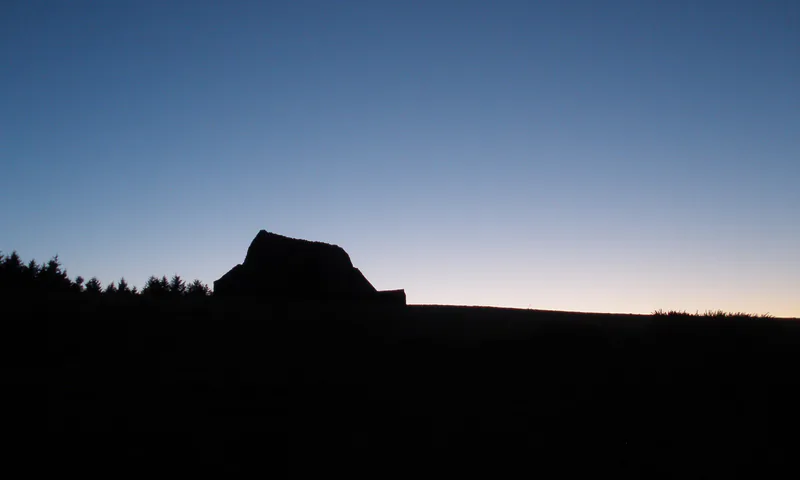
The Irish club's name later became attached to a ruined stone hunting lodge on Montpelier Hill in the Dublin mountains, built in the 1720s by the politician William Conolly. Local folklore tells of the Devil appearing at a card game with a cloven hoof, of animals burned in mock sacrifices and of the building's roof being torn off by supernatural forces. None of these stories can be traced to contemporary evidence, and the link between the club and the lodge itself is uncertain, but the ruin is still popularly known as the Hell Fire Club. It illustrates how quickly legend gathered around such societies.
Sir Francis Dashwood and the Monks of Medmenham§
The most famous of the clubs was never officially called a Hellfire Club. Sir Francis Dashwood (1708–1781), later Baron Le Despencer, was a wealthy landowner, politician and connoisseur who had travelled widely in Italy and the Ottoman world and helped found the Society of Dilettanti, a club for lovers of classical art. In the late 1740s or early 1750s he gathered a circle of friends into the "Order of the Friars of St Francis of Wycombe", a name that punned on his own Christian name and parodied Catholic religious orders.
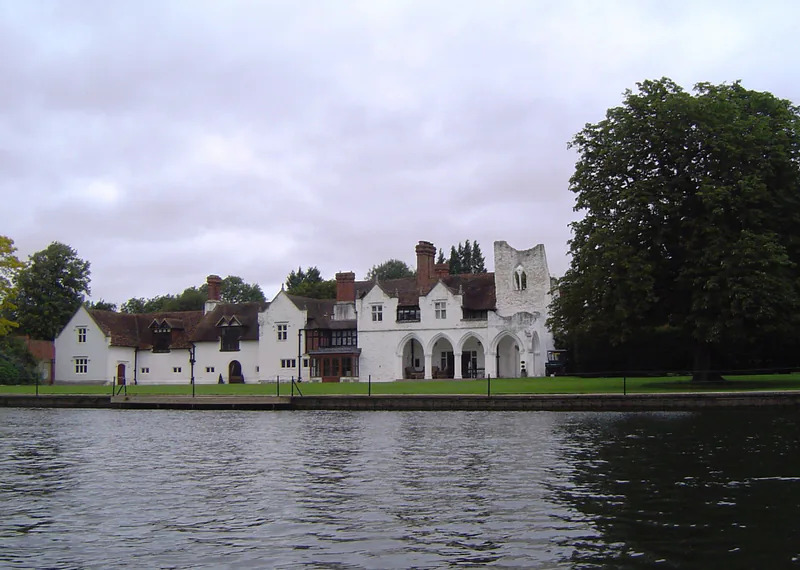
From around 1751 the brotherhood met at Medmenham Abbey, the remains of a Cistercian house on the Thames that Dashwood leased and remodelled in a Gothic style. Over the entrance he placed the motto Fay ce que voudras, "Do what you will", taken from the Abbey of Thélème in François Rabelais's Gargantua (1534), a comic utopia whose only rule was freedom. Rooms were reportedly decorated with erotic and classical imagery, and members wore monastic costume.
Members of the Order§
Accounts of the membership vary, and lists compiled later include doubtful names. Figures who are usually accepted as members include the radical politician John Wilkes, John Montagu, fourth Earl of Sandwich, the poet Paul Whitehead, who acted as the order's steward, and the politician George Bubb Dodington. Benjamin Franklin stayed with Dashwood at West Wycombe in the 1770s and collaborated with him on an abridged version of the Book of Common Prayer, but there is no reliable evidence that he belonged to the order.
Rites, Rumours and the Evidence§
What actually happened at Medmenham is hard to establish, because the order's records were not preserved and many early descriptions are satirical. The most influential source is Charles Johnstone's novel Chrysal, or the Adventures of a Guinea (1760–1765), a series of scandalous sketches told by a coin passing from hand to hand. Its chapters on a society of "monks" include a mock-religious ceremony and the famous story that Wilkes released a baboon dressed as the Devil to terrify a fellow member. Historians treat these episodes as fiction loosely based on gossip, not as reportage.
The imagery that can be documented points in a different direction from Satanism. Dashwood's interests were classical and erotic: his gardens at West Wycombe included temples to Venus and Bacchus, and William Hogarth's portrait of him, painted in the 1750s, shows him dressed as a friar adoring a statue of Venus, not the Devil. The "Hellfire Caves" at West Wycombe, dug in the 1740s and 1750s partly to supply chalk for a new road, were later associated with the order's meetings, though evidence for their use is limited. Most historians conclude that the order combined Protestant mockery of monasticism, Enlightenment anticlericalism, libertine sexuality and classical revivalism, rather than any worship of Satan.
This matters for the history of the Black Mass. In the nineteenth and twentieth centuries writers increasingly claimed that the Hellfire Clubs had celebrated Black Masses. The claim has no contemporary documentation, and it reflects later fascination with Satanic ritual more than eighteenth-century practice.
Politics, Scandal and the End of the Order§
The order's notoriety owed much to politics. Several members held office in the early 1760s, and Dashwood himself served briefly as Chancellor of the Exchequer in 1762–1763 under Lord Bute, a tenure remembered chiefly for an unpopular cider tax. When Wilkes turned against the government in his paper The North Briton, the private friendships of Medmenham collapsed into public enmity.
In November 1763 Sandwich read to the House of Lords extracts from An Essay on Woman, an obscene parody of Alexander Pope privately printed by Wilkes, and denounced it as blasphemous. The spectacle of a former fellow "monk" condemning Wilkes for impiety struck the public as hypocrisy, and Sandwich acquired the nickname "Jemmy Twitcher", after a treacherous character in John Gay's The Beggar's Opera. The episode exposed the brotherhood to ridicule and suspicion, and meetings at Medmenham seem to have dwindled during the 1760s.
The Hellfire Clubs in Satanist and Occult Memory§
After the members had died, the clubs passed into legend. Victorian moralists cited them as proof of Georgian depravity, popular writers embroidered stories of Satanic orgies, and the West Wycombe caves were opened to visitors in the twentieth century as a tourist attraction. Novels and films used the clubs as a ready-made setting for aristocratic devil worship.
Modern esoteric movements have drawn on them in their own ways. Aleister Crowley adopted the same Rabelaisian motto as Dashwood, and his community at Cefalù was called the Abbey of Thelema, although Crowley's use of Rabelais derived from his own reading rather than from Medmenham. Anton LaVey and later Satanist writers counted the Hellfire Clubs among the historical precursors of Satanism, part of what Per Faxneld calls a "secret lineage" of figures who embodied pride and indulgence without calling themselves Satanists. Historians such as Evelyn Lord and Massimo Introvigne place the clubs instead within the history of libertinism and Enlightenment satire, a context described in Esotericism in the Enlightenment.
Seen in that light, the Hellfire Clubs belong to the long history in which accusations of devil worship and real behaviour influenced each other. Their members used the Devil as a joke against the Church; their enemies and later admirers took the joke at face value. The pattern resembles the wider evolution of Satan from theological adversary to cultural symbol traced in History of Satan and the Devil.
Frequently asked questions§
Did the Hellfire Clubs worship Satan?§
There is no reliable evidence that they did. Contemporary sources describe blasphemous toasts and mock-religious costume, but the documented imagery at Medmenham was classical and erotic, and stories of Satanic rites come mainly from satire and later legend.
Who founded the first Hell-Fire Club?§
Philip, Duke of Wharton, founded the first society known as the Hell-Fire Club in London around 1719. It dissolved after King George I's order against blasphemous clubs in 1721.
What does "Fay ce que voudras" mean?§
It is Old French for "Do what you will". Dashwood took it from the Abbey of Thélème in Rabelais's Gargantua and placed it over the entrance of Medmenham Abbey; Aleister Crowley later adopted the same idea for Thelema.
Was Benjamin Franklin a member of the Hellfire Club?§
Franklin was a friend of Sir Francis Dashwood and stayed at West Wycombe, but there is no reliable evidence that he belonged to the Medmenham order.
Sources and further reading§
- The Hell-Fire Clubs: Sex, Satanism and Secret Societies — Evelyn Lord, 2008
- The Hell-Fire Clubs: A History of Anti-Morality — Geoffrey Ashe, 2000
- Sir Francis Dashwood: An Eighteenth-Century Independent — Betty Kemp, 1967
- Chrysal, or the Adventures of a Guinea — Charles Johnstone, 1760
- British Clubs and Societies 1580–1800: The Origins of an Associational World — Peter Clark, 2000
- Gargantua — François Rabelais, 1534
- Satanism: A Social History — Massimo Introvigne, 2016