Liber XXIV · Satanism · Chapter V: Temple of Set
The Temple of Set and the Left-Hand Path: History and Ideas
The Temple of Set and the left-hand path: Aquino's 1975 split, Set and Xeper, theistic Satanism, Luciferianism, The Satanic Temple and the Tantric term.

The "left-hand path" is a term used in Western esotericism for spiritual systems that aim at the strengthening, preservation and deification of the individual self, in contrast to "right-hand path" systems that seek union with God or dissolution of the ego. Its best-known organised expression is the Temple of Set, founded in 1975 by Michael A. Aquino after a split from the Church of Satan, which reveres the Egyptian god Set as the archetype of isolate consciousness. The left-hand path also includes theistic Satanism and Luciferianism, while groups such as The Satanic Temple use Satanic symbolism in a non-theistic, activist way.
Origins of the Term in Tantra§
The phrase "left-hand path" comes from Indian religion. In some Hindu Tantric traditions, a distinction is drawn between dakṣiṇācāra, the "right-hand practice", and vāmācāra, the "left-hand practice". Left-hand practice involved ritual use of substances and acts that orthodox Brahmanical religion considered impure, most famously the "five Ms" (pañcamakāra): wine, meat, fish, parched grain and sexual union. In right-hand interpretations these were often understood symbolically or replaced by substitutes. The point of transgressive practice, in its own context, was to transcend the distinction between pure and impure and realise the identity of the self with the divine. The history of these traditions is discussed in Tantra: history and practice.
The term was imported into Western esotericism in the late nineteenth century, particularly by Helena Blavatsky and the Theosophical Society, who used "left-hand path" pejoratively to mean black magic or selfish occultism. Aleister Crowley used related language, speaking of a "Black Brother" who refuses to surrender the ego at the Abyss. In the twentieth century, some occultists reclaimed the phrase. Scholars note that the Western usage reverses or ignores much of the Tantric meaning: Indian left-hand Tantra generally aims at union with Śiva or the Goddess, not at the preservation of an isolate ego. The Western left-hand path is therefore a modern esoteric category with an Indian name.
Michael Aquino and the 1975 Split from the Church of Satan§
Michael A. Aquino (1946–2019) was a US Army officer specialising in psychological operations, who held a doctorate in political science. He joined the Church of Satan in 1969 and rose to become one of its senior priests, editing the church's newsletter The Cloven Hoof and working closely with Anton LaVey, whose movement is described in LaVeyan Satanism and the Church of Satan.

In 1975 LaVey restructured the church, dissolving the grotto system and, according to Aquino and other dissenting members, indicating that higher degrees of initiation could be obtained through financial or material contributions. Aquino and a number of other members regarded this as a betrayal of the church's spiritual purpose. He also differed from LaVey on a basic theological issue: Aquino held that the Prince of Darkness was a real entity rather than merely a symbol.
According to the Temple of Set's own account, Aquino performed a ritual invocation on the summer solstice of 1975 seeking guidance from the Prince of Darkness, and received in response a text he called The Book of Coming Forth by Night. In it, the being identified itself as Set, the ancient Egyptian god, and declared the "Age of Satan" inaugurated by LaVey to be superseded by an "Aeon of Set". On this basis Aquino incorporated the Temple of Set in California in 1975 as a non-profit religious organisation. LaVey and the Church of Satan rejected these claims, and the two groups have remained separate.
Set and the Concept of Xeper§
In Egyptian religion Set (or Seth) was a complex deity: a god of the desert, storms, foreigners and disorder, who murdered his brother Osiris in the most famous myth but also defended the sun god Ra against the serpent Apep. His reputation declined in the later periods of Egyptian history, and Greek writers associated him with the monster Typhon.
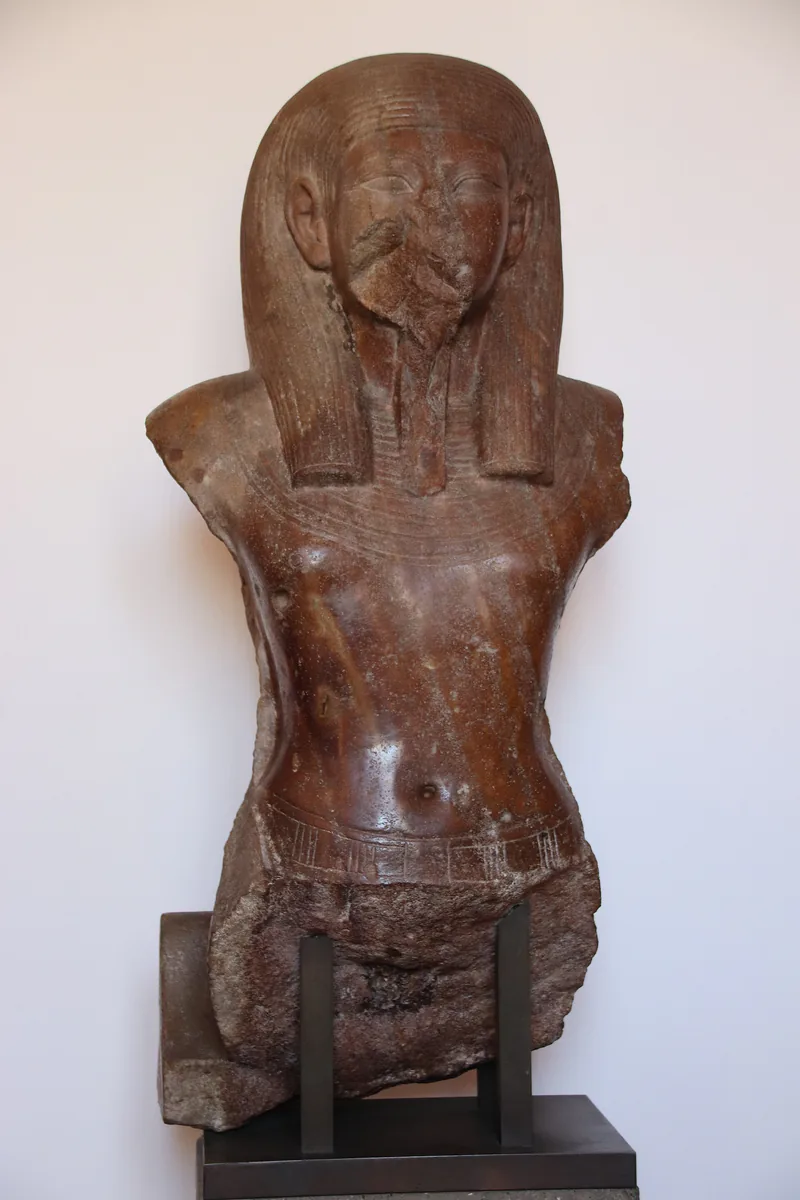
The Temple of Set does not claim to reconstruct Egyptian religion. It understands Set as the principle of isolate intelligence: the self-aware consciousness that stands apart from the natural universe, which members call the "objective universe". In this view humanity's capacity for self-awareness, will and independent judgement is a gift of Set. Setians generally do not worship Set; rather, they regard him as an exemplar and, for some, as a real being with whom one can have a relationship of respect and friendship.
The Temple's central concept is Xeper (pronounced roughly "khefer"), from the Egyptian verb ḫpr, "to come into being" or "to become", which is associated with the scarab beetle god Khepri. In Setian usage Xeper means the conscious, self-directed evolution of the individual psyche: the process of becoming more fully and powerfully oneself. The ultimate goal is often described as self-deification, or the attainment of a conscious existence that is not dependent on the physical body.
Initiation and Structure§
The Temple of Set is organised as an initiatory school. Members progress through degrees, beginning as Setian (first degree) and then Adept (second degree), with higher degrees of Priest or Priestess, Magister or Magistra, Magus or Maga, and Ipsissimus or Ipsissima, a scheme partly derived from the grades of the A∴A∴ established by Aleister Crowley. Specialised groups within the Temple, called Orders, focus on particular interests, such as Germanic magic, Egyptian religion or vampiric symbolism, and regional groups called Pylons provide local association. Members are encouraged to study widely across philosophy, history and science, and the Temple maintains extensive internal reading lists.
Aquino served as High Priest for most of the Temple's first two decades. Later leaders have included the writer Don Webb, and the Temple has continued under a succession of High Priests and Priestesses. During the Satanic panic, Aquino was publicly accused in connection with an investigation into alleged abuse at a US Army day-care centre in San Francisco; the investigations did not lead to any charges against him, and he consistently denied the allegations. He later withdrew from the Temple and died in 2019.
Initiatory Left-Hand Path Philosophy§
The Temple of Set and allied groups articulate left-hand path philosophy in several recurring ideas. First, the self is regarded as eternal or potentially eternal, and its preservation and empowerment is the aim of practice, as opposed to its surrender or dissolution. Second, the individual is responsible for their own development and for the consequences of their actions; there is no saviour. Third, magic is understood as causing change in the subjective and objective universes in accordance with will, a definition indebted to Crowley. Fourth, antinomianism, the deliberate challenge to conventional morality, is valued as a means of liberating the self from unexamined conditioning, but most initiatory groups also insist on ethical responsibility.
Don Webb's writings, such as Uncle Setnakt's Essential Guide to the Left Hand Path (1999), and Stephen Flowers's Lords of the Left-Hand Path (1997), an influential if partisan history written by an initiate, are key statements of this philosophy. Flowers also founded the Rune-Gild, a Germanic esoteric organisation. Scholars such as Kennet Granholm have analysed the "left-hand path" as a broader discursive category in contemporary esotericism, overlapping with chaos magick, Thelema and Satanism.
Theistic Satanism and Luciferianism§
While LaVeyan Satanism is atheistic, a range of groups and individuals describe themselves as theistic Satanists. They believe Satan exists as a real spiritual being, or at least relate to him as such, though conceptions vary widely: Satan may be seen as a liberating deity, a pagan god misrepresented by Christianity, an impersonal force, or an archetype with real effects. Most such groups are small and loosely organised, and much of theistic Satanism exists online. Scholars such as Petersen and Dyrendal treat theistic Satanism as a distinct, internally diverse current, and caution against equating it with crime or violence, which the vast majority of practitioners reject.
Luciferianism focuses on Lucifer as a bringer of light, knowledge and enlightenment, drawing on the Latin name discussed in the history of Satan and the Devil. Some Luciferians are theistic; others regard Lucifer as a symbol of reason and self-illumination. Many Luciferians distinguish their position from Satanism, emphasising enlightenment and creativity rather than opposition or indulgence. Various organisations, such as the Greater Church of Lucifer in Texas, have attempted to give the movement an institutional form.
The Order of Nine Angles: A Distinct Case§
The Order of Nine Angles (ONA or O9A), which emerged in Britain in the 1970s, is sometimes grouped with left-hand path movements but is widely treated as a separate phenomenon. It promotes a deliberately extreme and transgressive ideology and has been linked by researchers and security agencies to neo-Nazi and violent extremist networks. Mainstream left-hand path organisations, including the Temple of Set and the Church of Satan, have repudiated it. Scholars such as Jacob Senholt and Connell Monette have studied the group, and its relationship to the wider Satanic milieu remains contested.
The Satanic Temple: Non-Theistic Activism§
The Satanic Temple (TST) was founded in 2013 by Lucien Greaves and Malcolm Jarry, both public pseudonyms. Like the Church of Satan, it is non-theistic: it does not believe in a literal Satan. Its use of Satan draws on the Romantic and literary tradition of the rebel against arbitrary authority. Unlike the Church of Satan, it is explicitly engaged in public and political activism, particularly concerning the separation of church and state, religious pluralism and bodily autonomy in the United States.
The Satanic Temple became widely known for campaigns such as its proposal to place a statue of Baphomet on state capitol grounds where Ten Commandments monuments had been installed, and for After School Satan clubs offered in schools that host other religious clubs. Its Seven Tenets emphasise compassion, justice, bodily inviolability, freedom to offend, scientific understanding, the correction of mistakes and nobility of action. In 2019 the IRS recognised it as a church for tax purposes. The Church of Satan has criticised TST as a political organisation using Satanic imagery, while TST argues that it represents a more humane and socially engaged Satanism. Scholars treat both as legitimate subjects of study within the diversity of modern Satanism.
Frequently asked questions§
What is the left-hand path?§
In Western esotericism, the left-hand path refers to spiritual approaches that seek to strengthen and preserve the individual self rather than dissolve it into a divine whole. The term originated in the Sanskrit vāmācāra, a category of Tantric practice involving ritual transgression of purity rules. Its Western meaning differs considerably from its Indian origin.
Do members of the Temple of Set worship Set?§
Generally not. Setians regard Set as the principle or archetype of isolate, self-aware consciousness, and some see him as a real being, but the Temple emphasises self-development rather than worship. The goal is Xeper, the conscious process of becoming.
What is the difference between Satanism and Luciferianism?§
Satanism, especially in its LaVeyan form, uses Satan as a symbol of the carnal, rebellious and individual self. Luciferianism emphasises Lucifer as a light-bearer and source of knowledge and enlightenment. Both include theistic and non-theistic forms, and many Luciferians do not consider themselves Satanists.
Is The Satanic Temple the same as the Church of Satan?§
No. The Church of Satan was founded by Anton LaVey in 1966 and focuses on his philosophy of individualism. The Satanic Temple was founded in 2013 and focuses on activism for religious pluralism and the separation of church and state. The two organisations are independent and have publicly disagreed.
Sources and further reading§
- Lords of the Left-Hand Path: A History of Spiritual Dissent — Stephen E. Flowers, 1997
- Uncle Setnakt's Essential Guide to the Left Hand Path — Don Webb, 1999
- Contemporary Religious Satanism: A Critical Anthology — Jesper Aagaard Petersen (ed.), 2009
- The Devil's Party: Satanism in Modernity — Per Faxneld and Jesper Aa. Petersen (eds.), 2013
- The Invention of Satanism — Asbjørn Dyrendal, James R. Lewis and Jesper Aa. Petersen, 2016
- Dark Enlightenment: The Historical, Sociological, and Discursive Contexts of Contemporary Esoteric Magic — Kennet Granholm, 2014
- Tantra in Practice — David Gordon White (ed.), 2000