Liber XXII · Occultism · Chapter VI: Occult Literature & Art
Occult Literature and Art: From Zanoni to Hilma af Klint
Occult literature and art from Gothic novels and Zanoni to Yeats, the Rose+Croix salons, Kandinsky, Hilma af Klint and the Surrealists' search for magic.

Occult literature and art are the novels, poems, paintings and other works that draw on magic, secret societies and esoteric doctrine, either as subject matter or as a hidden key to their meaning. From the Gothic novel and Bulwer-Lytton's Zanoni (1842) to the poetry of W. B. Yeats, the Symbolist salons of Paris and the abstract canvases of Wassily Kandinsky and Hilma af Klint, occult ideas supplied modern writers and artists with images of initiation, unseen worlds and spiritual evolution. In return, literature and art carried those ideas to audiences far larger than any occult order ever reached.
Gothic and Romantic Magi§
The modern literary occult begins in the late eighteenth century, when the Gothic novel discovered the dramatic potential of forbidden knowledge. Horace Walpole's The Castle of Otranto (1764) and Matthew Lewis's The Monk (1796) filled their pages with spectres, sorcery and diabolic bargains, while William Godwin's St. Leon (1799) told of a man burdened by the elixir of life and the philosopher's stone. Goethe's Faust, whose first part appeared in 1808, transformed the old chapbook necromancer into the restless modern seeker, and Mary Shelley's Frankenstein (1818) gave its hero an education in Agrippa and Paracelsus before he turned to modern chemistry.
Romanticism also absorbed esoteric philosophy more seriously. William Blake built a visionary mythology in which echoes of Swedenborg, Boehme and Hermetic thought are unmistakable, and in France Honoré de Balzac's Séraphîta (1834–1835) dramatised Swedenborg's doctrine of the angelic being. Gérard de Nerval's Aurélia (1855) described a descent through dreams and madness in language soaked in Kabbalah and the mysteries. These writers did not belong to occult orders, which hardly existed yet, but they created the literary atmosphere into which the occult revival was born.
Bulwer-Lytton and the Victorian Occult Novel§
No single novelist influenced nineteenth-century occultism more than Edward Bulwer-Lytton. Zanoni (1842) portrayed two immortal Rosicrucian adepts, one serene in his wisdom and one fatally drawn back into human love, and introduced the "Dweller of the Threshold", a terrifying guardian met by the unprepared initiate. A Strange Story (1862) dealt with mesmerism and the elixir of life, and The Coming Race (1871) imagined a subterranean people who commanded an all-pervading energy called vril. Bulwer-Lytton met Éliphas Lévi when the French magus visited London in 1854, and Helena Blavatsky drew freely on his imagery. Later readers sometimes mistook fiction for disguised teaching; the vril of The Coming Race, a satire as much as a fantasy, was taken up as a real force by several later occult writers.
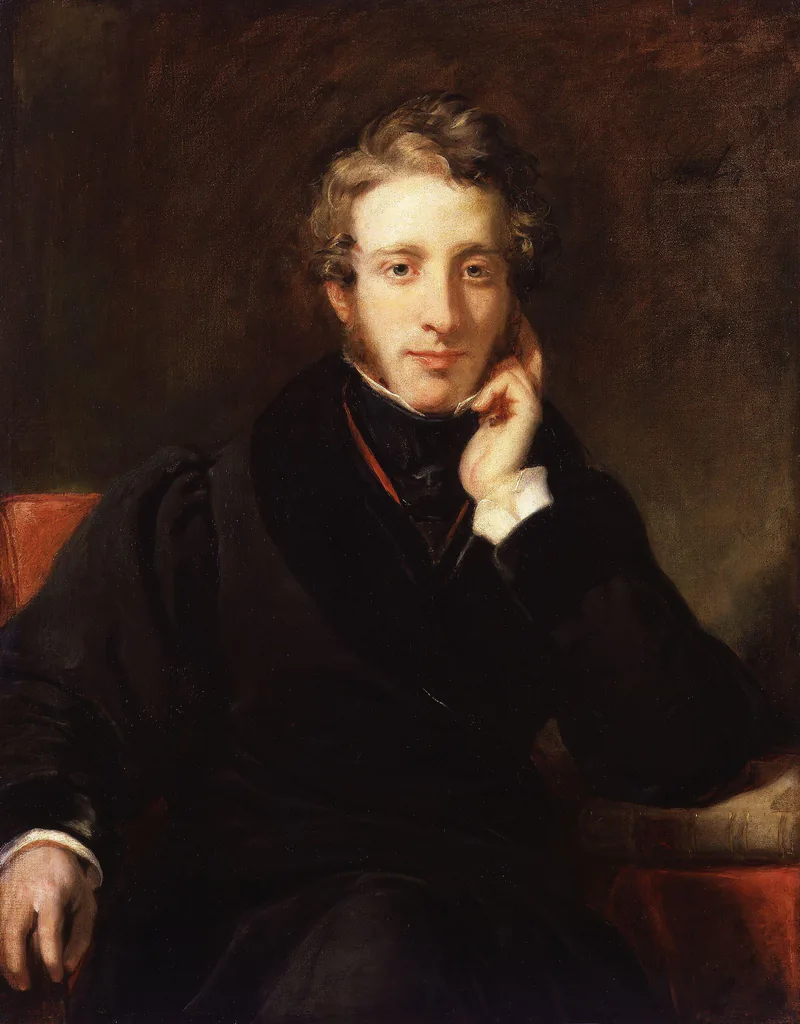
By the end of the century the occult novel had become a popular genre. Marie Corelli's A Romance of Two Worlds (1886), with its electrical theory of the soul, was a bestseller, and adventure stories set among Tibetan adepts or Egyptian priests multiplied. Such works popularised the vocabulary of astral bodies, karma and hidden masters long before most readers encountered the Theosophical writings behind them.
Symbolism, Decadence and the Salons of the Rose+Croix§
In France occultism and avant-garde literature were closely intertwined. Charles Baudelaire's sonnet "Correspondances", in Les Fleurs du mal (1857), recast the Swedenborgian idea of correspondences as a theory of poetic symbolism in which perfumes, colours and sounds answer one another. The Symbolist poets of the 1880s made it a programme. Villiers de l'Isle-Adam's drama Axël (1890) staged a Rosicrucian initiation, and Joris-Karl Huysmans's Là-bas (1891) brought the fashionable world of Parisian occultism, including a lurid depiction of a black mass, into the mainstream novel.
The visual arts followed. The writer Joséphin Péladan, who styled himself "Sâr", organised the Salons de la Rose+Croix in Paris between 1892 and 1897, exhibitions devoted to idealist, mystical and mythological art. Painters such as Fernand Khnopff, Jean Delville and Carlos Schwabe showed there, and Erik Satie composed music for Péladan's order. Odilon Redon and Gustave Moreau, though not Péladan's followers, were admired in the same circles for their dreamlike, symbolic imagery. For the occult milieu behind these salons, see what is occultism.
The Golden Dawn Writers and Occult Fiction§
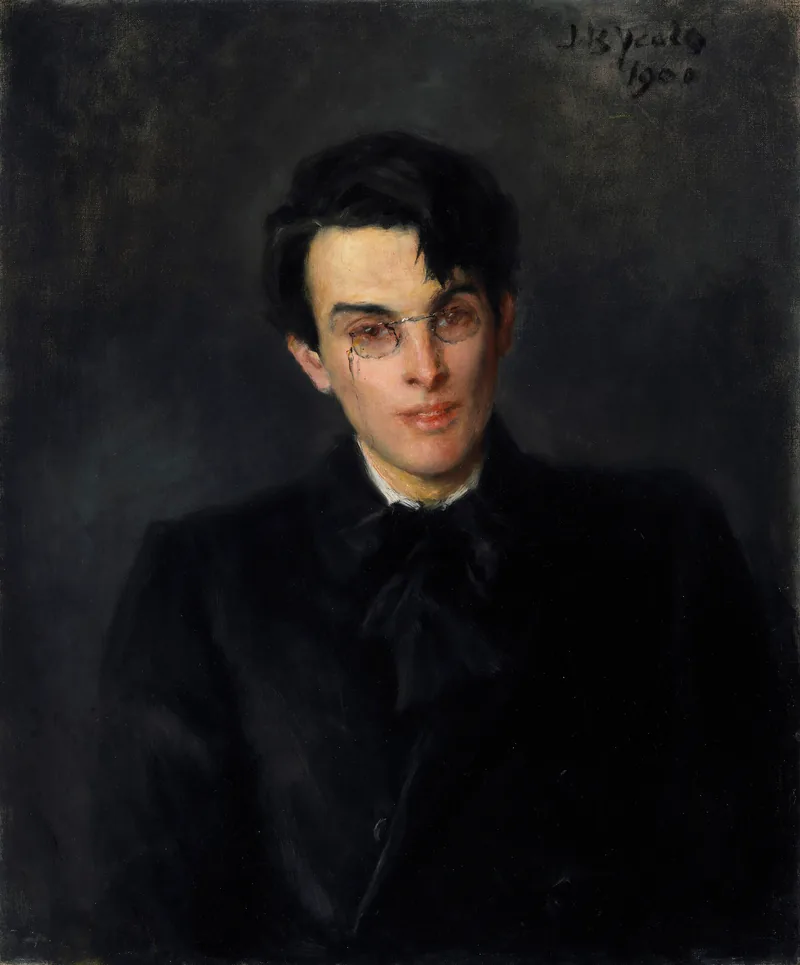
The Hermetic Order of the Golden Dawn, founded in London in 1888, counted a remarkable number of writers among its members. W. B. Yeats joined in 1890 and remained involved in its successor bodies for some three decades; occult symbolism runs through his poetry, and A Vision (1925, much revised in 1937) set out a system of history and personality developed from the automatic writing of his wife, George, begun soon after their marriage in 1917. Arthur Machen, author of The Great God Pan (1894), joined around 1900, as did Algernon Blackwood, whose John Silence stories (1908) featured a "psychic doctor". Persistent claims that Bram Stoker was a member are not supported by the order's records. The order's own history is told in the Hermetic Order of the Golden Dawn.
Occultists also became characters. W. Somerset Maugham's The Magician (1908) caricatured Aleister Crowley, who replied with a scathing review and later wrote his own occult novel, Moonchild (1929). Dion Fortune used fiction, especially The Sea Priestess (1938), to present her teachings on sacred sexuality and the goddess. In the weird fiction of H. P. Lovecraft, the invented grimoire Necronomicon, first mentioned in his stories of the early 1920s, became so famous that later authors published books under its name; Dennis Wheatley's thrillers, beginning with The Devil Rides Out (1934), fixed a sensational image of Satanic magic in the popular mind.
Theosophy and the Birth of Abstract Art§
The most consequential meeting of occultism and art took place in painting. Theosophists taught that thoughts and emotions possess visible forms and colours on subtle planes, and the illustrated book Thought-Forms by Annie Besant and C. W. Leadbeater, developed from an article of 1896, showed them as luminous abstract shapes. Several pioneers of abstraction read such material closely. Wassily Kandinsky's Concerning the Spiritual in Art, published at the end of 1911, cites Blavatsky and describes colour as a direct vibration of the soul; Piet Mondrian joined the Theosophical Society in the Netherlands in 1909; and František Kupka had worked as a Spiritualist medium.
The Swedish painter Hilma af Klint (1862–1944) went further. With four women friends, known as "The Five", she held séances from the 1890s, and between 1906 and 1915 she produced the Paintings for the Temple, a cycle of nearly two hundred works, many entirely abstract, which she understood as commissioned by spiritual guides. She also met Rudolf Steiner, whose ideas she later studied. Af Klint asked that the series not be shown until long after her death; after its rediscovery her work was included in the exhibition The Spiritual in Art: Abstract Painting 1890–1985 at Los Angeles in 1986, and a major retrospective at the Guggenheim Museum in New York in 2018–2019 drew record crowds. Art historians, beginning with Sixten Ringbom's studies of Kandinsky, have made the esoteric roots of abstraction a major field of research. The doctrines behind it are summarised in What Is Theosophy?.
Surrealism, Tarot and the Modern Arts§
The Surrealists of the 1920s took a different path to the occult. André Breton borrowed automatic writing from the séance and from the psychical researchers, though he rejected the idea that spirits guided the hand, and he admired the alchemists and the visionary tradition. His Arcane 17 (1945), named after the tarot trump of the Star, marked a turn to esoteric myth, and the painter Kurt Seligmann's The Mirror of Magic (1948) offered a sympathetic history of magic for artists and general readers. Leonora Carrington and Remedios Varo, working in Mexico from the 1940s, filled their paintings with alchemical laboratories, tarot imagery and initiatory journeys.
Occult art also emerged from within the orders. Pamela Colman Smith designed the images of A. E. Waite's tarot deck (1909), and Lady Frieda Harris painted Crowley's Thoth tarot between 1938 and 1943, two of the most influential works in the history of tarot. The London draughtsman Austin Osman Spare developed a personal system of sigils and automatic drawing that later inspired chaos magic. In the later twentieth century occult themes ran through underground film, rock music and the visual culture of the counterculture, and since the 1990s museum exhibitions and academic studies have treated the relation between esotericism and modern art as a central, rather than an embarrassing, part of its history.
Frequently asked questions§
What is the most influential occult novel?§
Edward Bulwer-Lytton's Zanoni (1842) is usually singled out, because Victorian occultists, Theosophists and members of the Golden Dawn treated its portrait of Rosicrucian adepts and the "Dweller of the Threshold" as a model. Huysmans's Là-bas and the novels of Dion Fortune have also been widely read for their occult content.
Was Hilma af Klint the first abstract painter?§
Her abstract paintings for the Paintings for the Temple date from 1906 onward, several years before Kandinsky's first abstract works, and many scholars now include her among the pioneers of abstraction. Because she did not exhibit these works publicly, however, they had no influence on the movement in her lifetime, and the question of "firsts" remains debated.
Which famous writers were members of the Golden Dawn?§
W. B. Yeats, Arthur Machen and Algernon Blackwood were initiated into the order, and the actress Florence Farr and the novelist Evelyn Underhill were associated with it or its offshoots. Aleister Crowley joined in 1898. Claims about Bram Stoker and Arthur Conan Doyle are not supported by the surviving records.
Sources and further reading§
- Zanoni — Edward Bulwer-Lytton, 1842
- Là-bas — Joris-Karl Huysmans, 1891
- A Vision — W. B. Yeats, 1925
- Concerning the Spiritual in Art — Wassily Kandinsky, 1911
- The Mirror of Magic — Kurt Seligmann, 1948
- The Sounding Cosmos — Sixten Ringbom, 1970
- Yeats's Golden Dawn — George Mills Harper, 1974
- The Spiritual in Art: Abstract Painting 1890–1985 — Maurice Tuchman, 1986
- Surrealism and the Occult — Tessel M. Bauduin, 2014