Liber XXII · Occultism · Chapter VI: Occult Literature & Art
Bulwer-Lytton's Occult Novels: Zanoni, Vril and the Dweller
Edward Bulwer-Lytton's occult fiction, from Zanoni's Rosicrucian adepts to The Coming Race and vril, and how novels became sources for Victorian occultism.

Edward Bulwer-Lytton (1803–1873) was one of the most popular English novelists of the nineteenth century and the author of three works that shaped the modern occult imagination: Zanoni (1842), a romance of immortal Rosicrucian adepts; A Strange Story (1862), a tale of mesmerism and the elixir of life; and The Coming Race (1871), which described a subterranean people wielding an all-powerful energy called vril. Occultists from Éliphas Lévi and Helena Blavatsky to the Golden Dawn treated these novels as veiled teaching, and the "Dweller of the Threshold" and vril passed from fiction into occult doctrine and modern myth.
A Victorian Celebrity with Occult Interests§
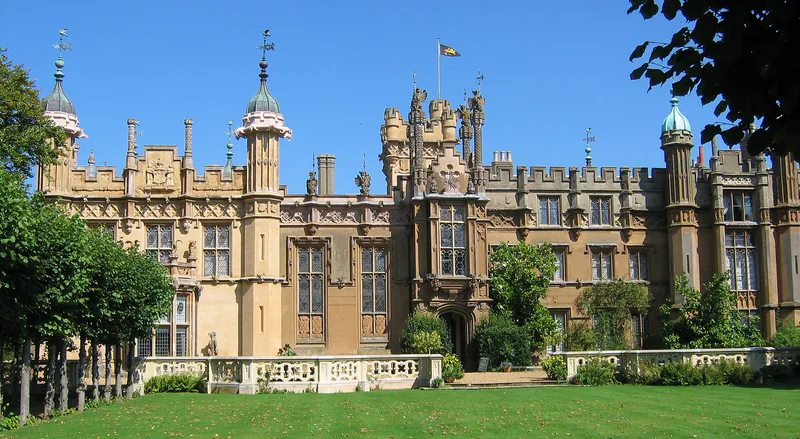
Edward George Earle Lytton Bulwer was born in London in 1803, the youngest son of a general, and grew up surrounded by books at his mother's family seat of Knebworth in Hertfordshire. After Cambridge he turned to writing and became one of the best-known authors of his age with novels such as Pelham (1828), Paul Clifford (1830), which begins with the much-parodied "It was a dark and stormy night", and The Last Days of Pompeii (1834). His play Richelieu (1839) gave English the phrase "the pen is mightier than the sword". He also sat in Parliament, served briefly as Colonial Secretary in 1858–59, and was raised to the peerage as Baron Lytton in 1866.
Alongside this public career ran a sustained private interest in the occult. Bulwer-Lytton read widely in Neoplatonism, alchemy and the literature of the Rosicrucians, experimented with astrology, attended mesmeric demonstrations and séances, and collected books and stories about magic. His correspondence shows a man who was neither a credulous believer nor a mocker, but an enquirer who thought that the ancient sciences might contain truths about mind and nature that the materialism of his day ignored. That ambivalence is the key to his occult fiction, which presents magic as real within the story while leaving its ultimate meaning open.
Zanoni and the Rosicrucian Adept§
Zanoni, published in 1842 and developed from an unfinished tale called Zicci (1838), is the founding work of the Victorian occult novel. Its introduction tells how the narrator, browsing in a London bookshop that specialised in old works of alchemy and magic, met an aged gentleman who left him a manuscript in cipher; the novel is presented as the decoded result. Readers have often identified the shop with the occult bookseller John Denley of Covent Garden.
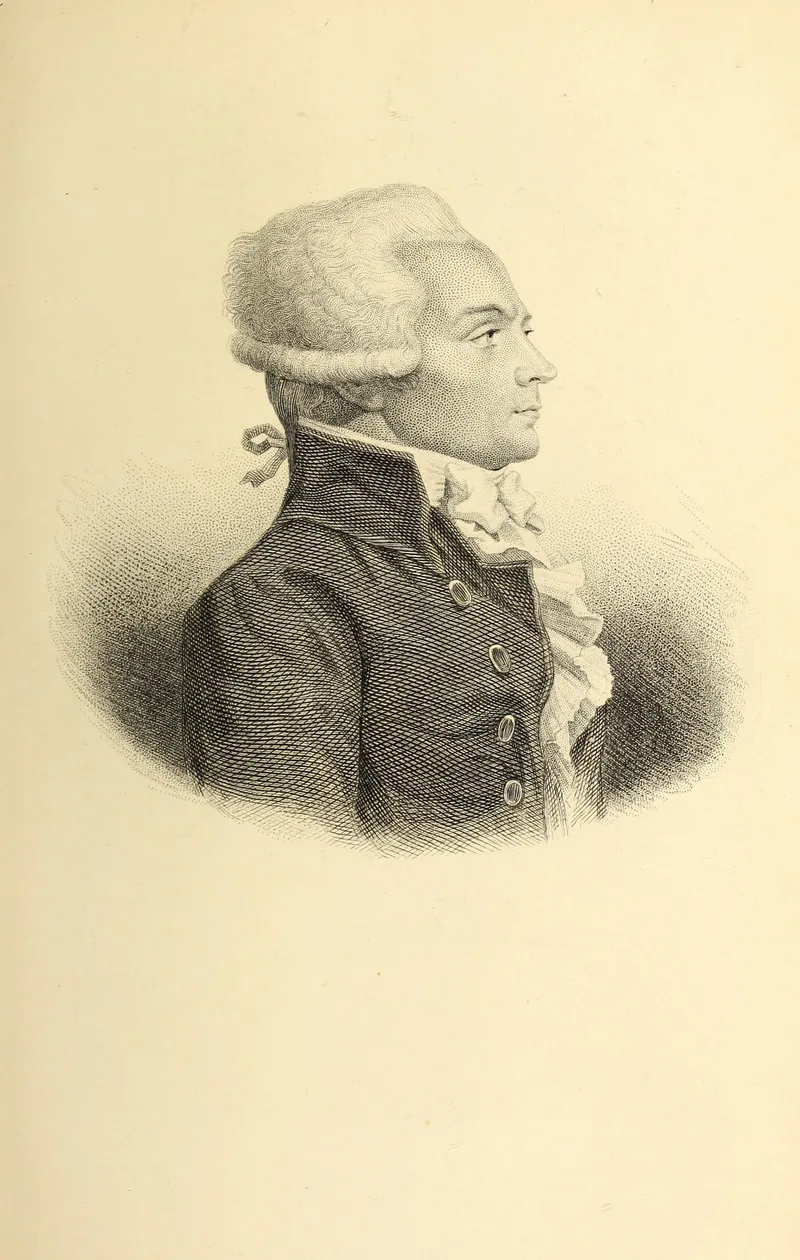
The story turns on two members of an ancient brotherhood descended from Chaldaean sages, which Bulwer-Lytton connected with the Rosicrucians. Mejnour is an immortal of pure intellect, untouched by passion; Zanoni, equally ancient, is drawn back into human life by his love for Viola Pisani, a Neapolitan opera singer. An ambitious young Englishman, Clarence Glyndon, seeks initiation from Mejnour but disobeys his instructions, and in the forbidden chamber he encounters the Dweller of the Threshold, a nameless, horrifying presence that haunts every unready seeker. The novel ends in Paris during the Terror of 1794, where Zanoni gives up his immortality and dies on the guillotine to save Viola and their child.
The Dweller of the Threshold§
The Dweller became one of Bulwer-Lytton's most lasting inventions. Within the novel it embodies the fear and unpurified desire that confront anyone who tries to pass beyond ordinary consciousness without preparation. Occultists read it as a description of a real psychological or astral ordeal. Helena Blavatsky used the term in Theosophical writings, and Rudolf Steiner's later teaching on the "Guardian of the Threshold" was developed in a milieu where Bulwer-Lytton's image was familiar. In the language of twentieth-century magic, the "dweller on the threshold" became shorthand for the shadow-side of the self met in initiation.
A Strange Story and Victorian Science§
A Strange Story, serialised in Charles Dickens's magazine All the Year Round in 1861–62, approaches the occult from the opposite side. Its narrator, Dr Allen Fenwick, is a confident materialist physician whose certainties are undermined by the mysterious Margrave, a charismatic young man who is in fact an ancient being seeking the elixir of life. Mesmerism, clairvoyance, spirit-projection and a final alchemical ritual in the Australian bush are all part of the plot.
The novel's preface defended the use of the supernatural in fiction, and its argument pitted scientific naturalism against the claims of soul and spirit at the very moment that Darwin's Origin of Species (1859) was being debated. An earlier tale, The Haunted and the Haunters; or, The House and the Brain (1859), had already offered a quasi-scientific ghost story in which hauntings are produced by the will of a living magician acting through a device concealed in a sealed room. Both works show Bulwer-Lytton trying to imagine a science of the occult rather than a simple return to superstition, a theme examined more widely in occultism and science.
The Coming Race and the Invention of Vril§
The Coming Race, published anonymously in 1871, is narrated by an American who descends through a mine shaft into a vast subterranean world inhabited by the Vril-ya. They have mastered vril, a single energy that can heal, destroy, illuminate and move matter, and which has made war among them unthinkable and government almost unnecessary. Their women, the Gy-ei, are taller and stronger than the men and take the lead in courtship. The narrator escapes when it becomes clear that the Vril-ya will one day emerge to replace surface humanity.
The book is in large part a satire, aimed at contemporary debates over evolution, democracy, women's rights and progress, and its utopia is shown to be both admirable and chilling. Yet its central idea caught on at once. "Vril" became a byword for vital energy; the meat extract Bovril, launched in the 1880s, took the second half of its name from it, and a "Vril-Ya Bazaar" was held in London in 1891.
Bulwer-Lytton and the Occult Revival§
Occultists took Bulwer-Lytton seriously. Éliphas Lévi met him during his visit to London in 1854, when Lévi performed his famous evocation of Apollonius of Tyana, and the two remained in contact. In England, the founders of the Societas Rosicruciana in Anglia, established in 1866, honoured him as a patron, though Bulwer-Lytton appears to have kept his distance from any organised society. Helena Blavatsky drew repeatedly on his work, citing Zanoni in Isis Unveiled (1877) and, in The Secret Doctrine (1888), treating vril as a fictional echo of a real force known to the ancients. The Hermetic Order of the Golden Dawn, whose members included many of his readers, inherited his picture of a secret brotherhood of adepts guarding the knowledge of immortality.
The result was a characteristic feature of the occult revival: the blurring of the boundary between fiction and doctrine. Bulwer-Lytton's adepts became a model for the Theosophical Masters, his ordeals for the trials of initiation, and his romance of hidden wisdom for the self-image of the new occult orders.
The myth of the Vril Society§
In the twentieth century vril acquired a darker afterlife. In 1947 the science writer Willy Ley, who had left Germany in the 1930s, recalled hearing of a small Berlin group interested in vril. Louis Pauwels and Jacques Bergier's bestseller Le Matin des magiciens (1960) enlarged this into a "Vril Society" said to have influenced the Nazi leadership, and later writers added stories of flying saucers and contact with subterranean races. Historians, notably Nicholas Goodrick-Clarke, have found no evidence that any such influential society existed; the "Vril Society" is a postwar myth built on a Victorian novel. It is discussed further in our article on German occultism.
Frequently asked questions§
Was Bulwer-Lytton a Rosicrucian?§
There is no reliable evidence that he belonged to any Rosicrucian society, although he wrote sympathetically about the legendary brotherhood and the Societas Rosicruciana in Anglia honoured him. His fiction did more than any organisation to popularise the image of the Rosicrucian adept in Victorian Britain.
What is vril?§
Vril is a fictional universal energy in The Coming Race (1871), used by an underground people to heal, destroy and power their civilisation. It has no basis in physics, but occult and conspiracy writers later claimed it was a real force.
What is the Dweller of the Threshold in Zanoni?§
It is a terrifying presence that confronts the would-be initiate Glyndon when he oversteps his preparation. Occultists later interpreted it as the fear and unpurified desires of the self that must be faced in any genuine initiation.
Sources and further reading§
- Zanoni — Edward Bulwer-Lytton, 1842
- A Strange Story — Edward Bulwer-Lytton, 1862
- The Coming Race — Edward Bulwer-Lytton, 1871
- The Theosophical Enlightenment — Joscelyn Godwin, 1994
- Gothic Immortals: The Fiction of the Brotherhood of the Rosy Cross — Marie Mulvey-Roberts, 1990
- Bulwer Lytton: The Rise and Fall of a Victorian Man of Letters — Leslie Mitchell, 2003
- Black Sun: Aryan Cults, Esoteric Nazism, and the Politics of Identity — Nicholas Goodrick-Clarke, 2002