Liber XII · Hermeticism · Chapter I: Astral Magic
Picatrix (Ghayat al-Hakim): The Classic Handbook of Astral Magic
The Picatrix explained: the Arabic Ghayat al-Hakim, its Andalusian author, its books on talismans and planetary prayers, and its Latin translation.

The Picatrix is the Latin name of the Ghāyat al-Ḥakīm ("The Goal of the Sage"), an Arabic encyclopedia of astral magic composed in al-Andalus in the tenth century. It explains magic as the art of drawing down the spiritual power of the stars into talismans, and it gathers planetary images, the mansions of the moon, prayers to the planets and lore attributed to Hermes and other ancient sages. Translated for Alfonso X of Castile in the thirteenth century, it became the most important single source of planetary magic in medieval and Renaissance Europe.
What the Picatrix Is§
The Ghāyat al-Ḥakīm is not a single treatise but a compilation. Its author explains that he spent years gathering material from more than two hundred books, and the result is a sprawling work that moves between philosophy, astrology, ritual and pharmacology. Its central claim is that magic (siḥr) is a branch of knowledge resting on the science of the heavens. Everything in the lower world is formed and moved by the celestial spheres; the sage who understands those influences can capture them at the right moment in a suitable material, producing a talisman (ṭilasm), which the author famously defines as a spirit placed in a body.
The work presents itself as part of a philosophical education. Magic is the "goal" because it is reached only after the study of mathematics, natural philosophy and metaphysics, and it is meant for the sage who has purified his intellect. This framing distinguished it, in its author's eyes, from vulgar sorcery, and it explains why the book has interested historians of philosophy as well as of magic. For the background see our guide to astral magic.
Authorship and Date§
Medieval and modern readers long attributed the work to Maslama ibn Ahmad al-Majriti (d. c. 1007), a celebrated astronomer and mathematician of Córdoba. This attribution is now widely rejected. Studies by Maribel Fierro, Godefroid de Callataÿ and others have argued that the author was Maslama ibn Qasim al-Qurtubi (d. 964), a Cordoban scholar and traveller interested in Hadith, esoteric philosophy and the occult sciences. The same author is credited with the Rutbat al-Ḥakīm ("The Rank of the Sage"), an alchemical companion work, and the two books are designed as a pair.
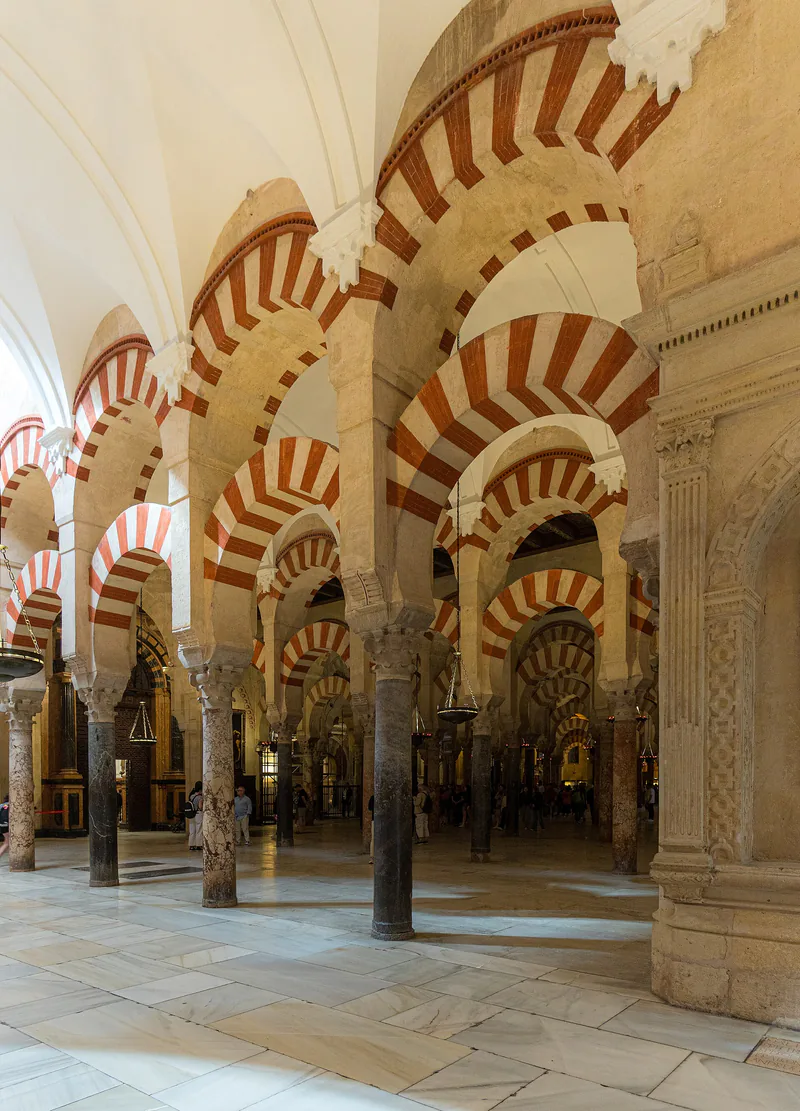
The text appears to have been composed in the 950s and reflects the intellectual climate of Umayyad Córdoba. It draws heavily on the Epistles of the Brethren of Purity (Rasāʾil Ikhwān al-Ṣafāʾ), a tenth-century philosophical encyclopedia with Ismaili affinities, as well as on the writings attributed to Jabir ibn Hayyan, al-Kindi's theory of celestial rays, and the Nabataean Agriculture of Ibn Wahshiyya. Hermetic, Sabian, Indian, Persian and Greek materials are woven together, often under the names of legendary authorities. The work belongs to the larger history of the Islamic occult sciences.
The Four Books and Their Contents§
The work is divided into four books (maqālāt), a structure kept in the Latin.
- Book I introduces the nature of magic, the heavens and their relation to the lower world, and gives the first series of talismanic images, including images for the twenty-eight mansions of the moon.
- Book II treats the astrological principles of talismans: the planets, signs and their faces or decans, the fixed stars, and the theory of how celestial forms are received by matter.
- Book III describes the properties of each planet, the materials, colours, animals and places under its rule, and the prayers and rites addressed to the planetary spirits, including long invocations attributed to the Sabians and to ancient sages.
- Book IV gathers further rituals, the conditions required of the practitioner, accounts of the Nabataean and Indian sages, and a large miscellany of compounds, fumigations and marvels.
Throughout, theory and practice alternate. A discussion of the soul and its relation to the cosmos may be followed by a list of stones engraved with images of Jupiter or Venus, which in turn leads into an anecdote about Hermes. The author's aim is less a manual than a summa of the learned tradition as he received it.
Talismans, Lunar Mansions and Planetary Prayers§
The best-known practical sections describe talismans for each planet and for each of the twenty-eight mansions of the moon, the segments of the moon's monthly path used in Arabic astrology. For each mansion the text gives its name, its general character and the kinds of undertaking it was thought to favour or hinder, such as journeys, building, reconciliation or protection. Talismans were to be engraved in particular materials at moments when the moon occupied the mansion and was well aspected.
The prayers in Book III are among the most striking texts in the history of Western magic. They address each planet as a spiritual being, praising its qualities and asking for its influence, and they are accompanied by instructions on clothing, incense, offerings and timing. These passages show the survival of late antique planetary cult in learned Arabic culture. Some rituals and compounds in Book IV involve animal offerings or toxic substances; historians treat these as evidence of religious and medical practices of their time, and they are mentioned here only as part of that history.
Spirit, image and the practitioner§
The Picatrix insists that success depends not only on the timing and materials but on the operator's intention, purity and faith. The spirit of the planet must find a fitting vessel in both the talisman and the soul of the practitioner. Renaissance readers found this union of psychological and cosmological ideas especially suggestive.
Perfect Nature and the City of Adocentyn§
Two Hermetic legends in the Picatrix have attracted particular attention. The first concerns "Perfect Nature" (al-ṭibāʿ al-tāmm), the guardian spirit of the philosopher. Hermes relates that, seeking hidden wisdom, he entered a dark underground chamber where a lamp could not stay lit in the wind; a figure appeared and told him to set the lamp in a glass, to dig for a talisman and the books of the ancients, and identified itself as his Perfect Nature. The idea of a personal celestial double who mediates wisdom recurs in Persian and Arabic philosophy and has interested historians of Islamic esotericism.
The second is the description, in Book IV, of a city built by Hermes in eastern Egypt, called Adocentyn in the Latin. It had a castle with four gates guarded by images, a tower on which a light changed colour each day of the week, and statues whose power kept the inhabitants virtuous and healthy. Frances Yates suggested that this image influenced Tommaso Campanella's utopia The City of the Sun (1602), with its painted walls and astral religion. The legend also illustrates how the Arabic tradition remembered Hermes Trismegistus as a builder and lawgiver.
Translation at the Court of Alfonso X§
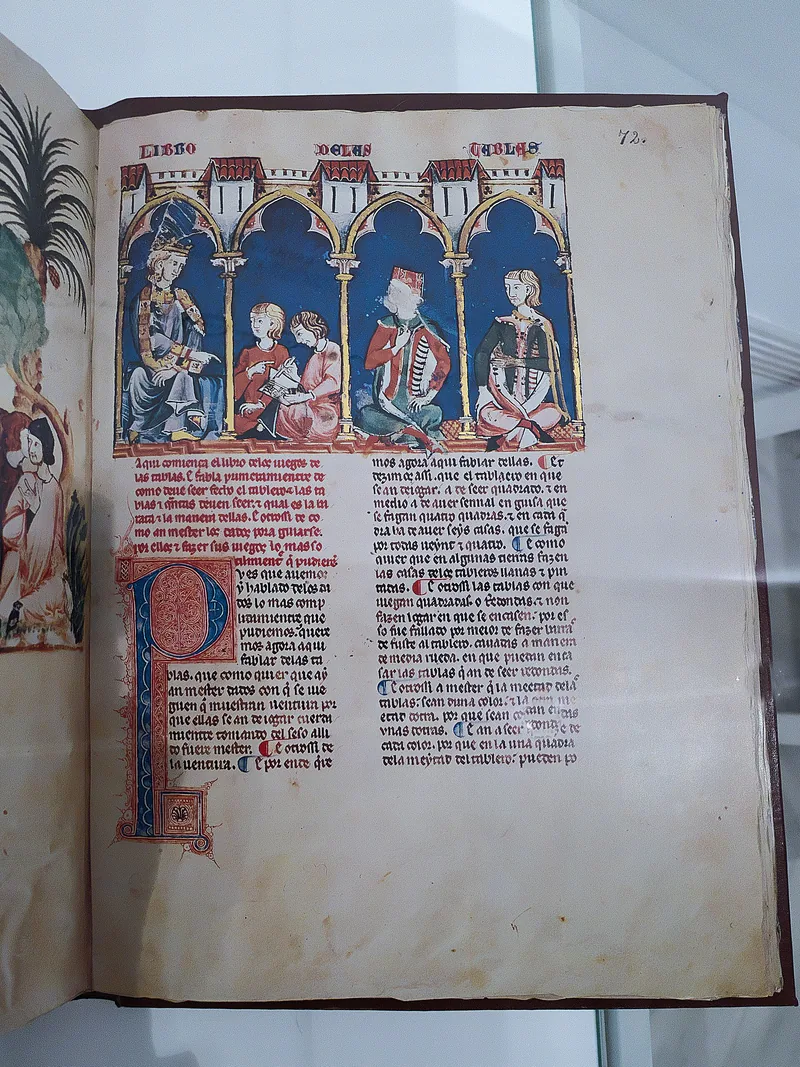
The Latin Picatrix derives from a Castilian translation made at the court of Alfonso X "the Wise" of Castile, whose circle produced versions of numerous Arabic scientific and astrological works. The prologue of the Latin version dates the Castilian translation to 1256. Only a fragment of the Castilian survives, but the Latin version, made from it shortly afterwards, circulated widely in manuscript. The origin of the name "Picatrix" is unknown; the Latin presents it as the name of the author.
The Latin text abridged and adapted the Arabic, omitting some philosophical passages and Islamic references while retaining the images and rites. It circulated in manuscripts of the fourteenth and fifteenth centuries, often in the collections of physicians and astrologers, and was later translated into vernaculars, including French and Italian. It was never printed before the modern era, which contributed to its reputation as a secret book (the catalogue entry is the Picatrix).
Reception, Censorship and Modern Editions§
Renaissance writers on magic knew the Picatrix even when they avoided naming it. Its theory of planetary spirit and images informs the third book of Marsilio Ficino's Three Books on Life (1489), and later writers on natural and celestial magic used its material. At the same time it had a sinister reputation. In his Third Book (1546) François Rabelais mocked "the reverend father in the devil, Picatris", whom he made rector of a faculty of diabolology at Toledo, a sign that the name had become proverbial for forbidden lore.
Modern scholarship began with the Arabic edition of Hellmut Ritter (1933) and the German translation by Ritter and Martin Plessner (1962). David Pingree edited the Latin version in 1986, and English translations have since appeared, including the Latin-based version by John Michael Greer and Christopher Warnock and the scholarly translation by Dan Attrell and David Porreca (2019). Liana Saif and others have emphasised the work's place in Arabic philosophy, and it is now studied as a key text for the transmission of amulets and talismans between the Islamic and Christian worlds.
Frequently asked questions§
What does Picatrix mean?§
The Arabic title, Ghāyat al-Ḥakīm, means "The Goal of the Sage". The Latin name "Picatrix" was treated as the author's name in the Latin version, but its origin is unclear and it does not correspond to any known Arabic name with certainty.
Who wrote the Picatrix?§
It was long attributed to the Cordoban astronomer Maslama al-Majriti, but most scholars now attribute it to Maslama ibn Qasim al-Qurtubi, who died in 964. The work is a compilation drawing on many earlier Arabic, Greek, Persian and Indian sources.
Is the Picatrix a grimoire?§
It is better described as an encyclopedia of astral magic than as a grimoire of spirit conjuration. It focuses on talismans, planetary influences and prayers to the planets within a philosophical framework, although it includes ritual material that later grimoires also drew upon.
When was the Picatrix translated into Latin?§
A Castilian translation was made at the court of Alfonso X, dated in its prologue to 1256, and the Latin version followed soon afterwards. The Latin circulated in manuscript and was not printed until modern times.
Sources and further reading§
- Picatrix: A Medieval Treatise on Astral Magic — Dan Attrell & David Porreca, 2019
- Picatrix: The Latin Version of the Ghayat al-Hakim — David Pingree, 1986
- Picatrix: Das Ziel des Weisen von Pseudo-Magriti — Hellmut Ritter & Martin Plessner, 1962
- The Picatrix: Liber Rubeus Edition — John Michael Greer & Christopher Warnock, 2011
- The Arabic Influences on Early Modern Occult Philosophy — Liana Saif, 2015
- Islamic Occultism in Theory and Practice — Liana Saif, Francesca Leoni, Matthew Melvin-Koushki & Farouk Yahya, 2021
- Giordano Bruno and the Hermetic Tradition — Frances A. Yates, 1964