Liber XII · Hermeticism · Chapter VI: Renaissance Magic
Tommaso Campanella: City of the Sun, Magic and Prophecy
Tommaso Campanella (1568–1639): Dominican philosopher, prisoner of Naples, author of The City of the Sun, natural magician and astrologer to Urban VIII.

Tommaso Campanella (1568–1639) was a Calabrian Dominican friar, philosopher and poet who spent twenty-seven years in Neapolitan prisons and wrote there The City of the Sun, the most famous utopia of the late Renaissance. He taught that all things possess sense and that the world is a living whole, defended a natural magic based on these sympathies, and in 1628 performed astrological rites with Pope Urban VIII to protect him from the influence of eclipses. With Giordano Bruno he is often regarded as the last great representative of the Renaissance magical philosophy that began with Marsilio Ficino.
Early Life, Telesio and the Inquisition§
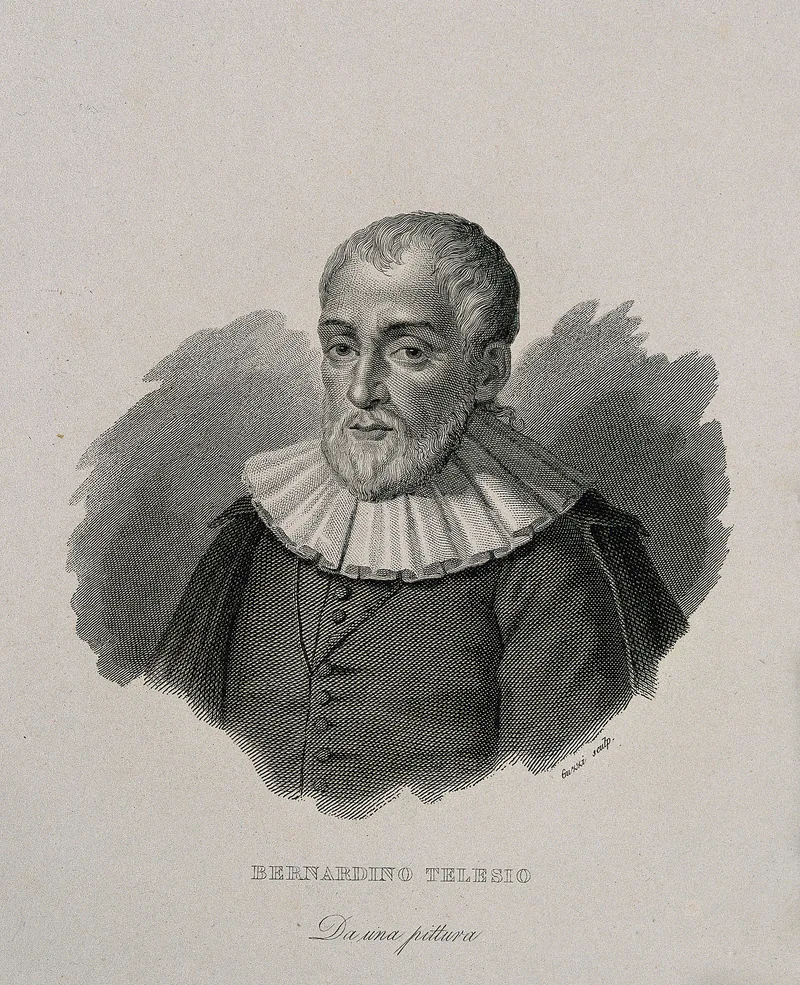
Campanella was born at Stilo, in the far south of Italy, on 5 September 1568, the son of a poor shoemaker. Baptised Giovan Domenico, he entered the Dominican order at about fourteen and took the name Tommaso in honour of Thomas Aquinas. Brilliant and restless, he soon rejected the Aristotelian philosophy taught in the schools in favour of the new natural philosophy of Bernardino Telesio of Cosenza, who explained nature through the active principles of heat and cold acting on passive matter and insisted on knowledge gained through the senses. Campanella's first book, Philosophia sensibus demonstrata (1591), defended Telesio against his critics.
In Naples he moved in circles interested in natural secrets and met Giambattista della Porta, the author of Natural Magic. His unorthodox views quickly drew the attention of the Inquisition. Tried in Naples in 1592, he travelled north to Florence, Bologna and Padua, where he met Galileo, and was arrested again in 1594 and taken to Rome. He was made to abjure in 1595 and spent several years under restriction before returning to Calabria in 1598.
The Calabrian Conspiracy and Twenty-Seven Years in Prison§
Back in Calabria, Campanella became the centre of a movement that combined political grievances against the Spanish viceroys of Naples with prophetic and astrological expectation. Reading signs in the heavens and in recent events, he announced that great changes were due around 1600 and that a reformed, just commonwealth would follow. Friars, nobles and outlaws joined in plans for an uprising. The plot was betrayed in 1599 and Campanella was arrested, accused both of rebellion and of heresy.
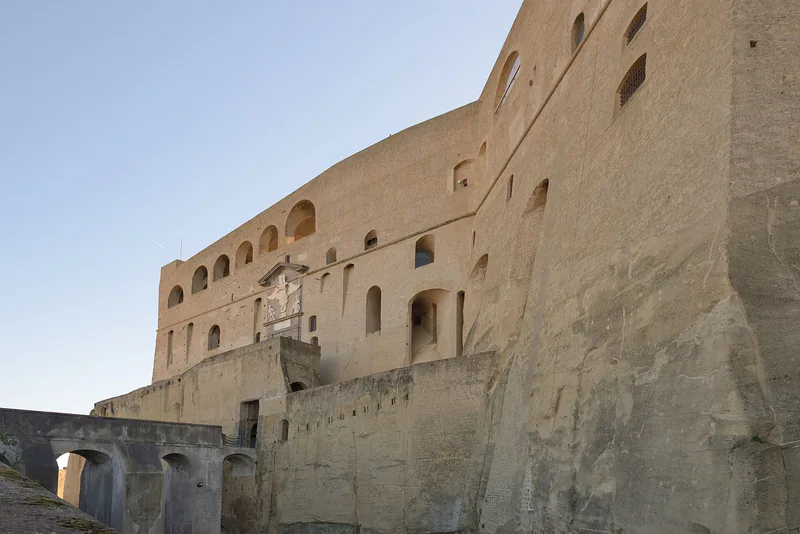
To escape the death penalty he feigned madness, since the insane could not be executed. In 1601 he was subjected to the veglia, a torture lasting about thirty-six hours, without abandoning the pretence; his survival saved his life, and he was sentenced to perpetual imprisonment. For the next twenty-seven years he was held in the fortresses of Naples, sometimes in harsh underground cells, sometimes in milder conditions that allowed visitors and writing.
Prison became his workshop. He composed philosophical, theological, political and poetic works, among them The City of the Sun, the Metaphysica, the Atheismus triumphatus, treatises on the Spanish and messianic monarchies and, in 1616, a defence of Galileo. A German admirer, Tobias Adami, carried manuscripts north and published several of them at Frankfurt in the 1620s, which made Campanella famous across Europe while he was still behind bars.
The City of the Sun§
The City of the Sun (La città del Sole), written in Italian in 1602 and published in Latin as Civitas Solis in 1623, is a dialogue between a Grand Master of the Knights Hospitaller and a Genoese sea captain who describes a city he has visited on the island of Taprobana (Sri Lanka). The city stands on a hill and is built in seven concentric rings named after the seven planets. On the summit is a round temple with a domed roof painted with the stars, globes of heaven and earth on the altar, and seven lamps named after the planets.
The walls of the rings are covered with paintings that present the whole of knowledge: mathematical figures, maps of the world, minerals, plants, animals, the mechanical arts and the inventors of laws and sciences. Children learn by walking the walls with their teachers. This painted encyclopaedia has often been compared to the Renaissance art of memory, in which knowledge is stored in ordered images.
The city is governed by a priest-ruler called Hoh or Sol, the Metaphysician, assisted by three princes named Pon, Sin and Mor, that is Power, Wisdom and Love, the three "primalities" of Campanella's metaphysics. Property is held in common, work is shared and limited to a few hours a day, and marriages and births are arranged by officials and astrologers to produce healthy offspring at favourable moments.
Frances Yates argued that the City of the Sun was inspired in part by the description in the Picatrix of Adocentyn, a magical city built by Hermes with planetary images that kept its inhabitants virtuous and healthy. The comparison is suggestive rather than proven, but the city clearly expresses an astral and Hermetic ideal: a society ordered by the heavens and governed by philosophers who understand them.
Natural Magic and the Sense of Things§
Campanella's natural philosophy is set out most fully in De sensu rerum et magia ("On the Sense of Things and on Magic"), written in Italian and Latin versions in the 1590s and 1600s and published by Adami in 1620. Its central claim is that everything has sense. Developing Telesio's idea of a subtle, hot spirit present in all bodies, Campanella argued that stones, plants, the elements and the heavens all perceive and respond, in their own degree, to what is good or harmful to them. The world is a great living animal, and sympathy and antipathy are forms of feeling.
Magic follows from this view. If all things feel, then the wise can act on them through the things they love and hate, through sounds, scents, colours, images and the imagination, which moves the spirit. Campanella distinguished divine magic, worked by God and the saints, from diabolical magic, which he condemned, and from natural magic, which uses the hidden properties of things and is a legitimate science.
This philosophy links Campanella to Marsilio Ficino, whose Three Books on Life had explained how to draw on celestial influences through the spirit, and to Giordano Bruno, with whom he shared a vision of a living, animated universe. Unlike Bruno, however, Campanella remained a Catholic friar who wished to reform the Church rather than leave it, and he presented his philosophy as the foundation of a renewed Christian world order.
Astral Magic for Pope Urban VIII§
Released in 1626 and transferred to Rome, Campanella found an unexpected patron in Pope Urban VIII (Maffeo Barberini), who was deeply interested in astrology. Hostile astrologers had predicted the Pope's death at the time of eclipses expected in 1628 and after. According to Campanella's own account, he and the Pope performed rites to counteract the harmful influence. They closed a room against the outside air, sprinkled it with rose vinegar and other fragrant waters, burned aromatic woods such as laurel, myrtle and rosemary, and hung it with white silk and branches. Two lamps and five torches represented the seven planets, so that a favourable miniature heaven replaced the darkened sky; music associated with Jupiter and Venus was played, and stones, plants and colours of benign planets were used.
Campanella described these procedures in De siderali fato vitando ("On Avoiding the Fate Decreed by the Stars"), printed at Lyon in 1629 as the seventh book of his Astrologicorum libri, reportedly without his permission. The publication embarrassed both Campanella and the Pope, and in 1631 Urban VIII issued a bull forbidding astrological predictions about the lives of popes. The episode is the best-documented case of Ficinian astral magic being practised at the highest level of the Church, and D. P. Walker made it the culminating example of his study of "spiritual and demonic magic".
Paris, Last Years and Legacy§
In 1634 a new conspiracy in Naples, led by one of his former disciples, endangered Campanella again, and with the help of the French ambassador he fled to France. There he was received by Louis XIII and Cardinal Richelieu, granted a pension and lodged in the Dominican convent of the rue Saint-Honoré in Paris, where he prepared editions of his works. When the future Louis XIV was born in 1638, Campanella wrote a poem celebrating the birth and predicting a glorious reign. He died in Paris on 21 May 1639; an often repeated account says that he feared an eclipse due that year.
Campanella's legacy is wide. Political philosophers read The City of the Sun beside Thomas More's Utopia and Francis Bacon's New Atlantis; historians of science study his defence of Galileo and his sensualist natural philosophy; and historians of esotericism see in him the end of the line of Renaissance magi. Frances Yates gave him a central place in Giordano Bruno and the Hermetic Tradition (see Frances Yates and Giordano Bruno), and later scholars such as John Headley and Germana Ernst have emphasised his ambition to reform the whole of Christian society on the basis of a renewed philosophy of nature.
Frequently asked questions§
What is The City of the Sun about?§
It describes an ideal city on the island of Taprobana built in seven planetary rings whose walls are painted with all knowledge. The city is ruled by a priest-philosopher with three ministers of Power, Wisdom and Love, and its life is ordered by reason, common property and astrology.
Why was Campanella imprisoned?§
He was arrested in 1599 for leading a conspiracy against Spanish rule in Calabria, inspired by prophetic and astrological expectations, and was also accused of heresy. He escaped execution by feigning madness and remained in prison in Naples until 1626.
Did Campanella practise magic?§
He defended natural magic as a legitimate science and, by his own account, performed astrological rites with Pope Urban VIII in 1628 to protect him from the effects of eclipses. He rejected demonic magic and presented his practices as natural and compatible with Catholic faith.
Sources and further reading§
- The City of the Sun: A Poetical Dialogue — Tommaso Campanella, 1981
- De sensu rerum et magia — Tommaso Campanella, 1620
- Spiritual and Demonic Magic from Ficino to Campanella — D. P. Walker, 1958
- Giordano Bruno and the Hermetic Tradition — Frances A. Yates, 1964
- Tommaso Campanella and the Transformation of the World — John M. Headley, 1997
- Tommaso Campanella: The Book and the Body of Nature — Germana Ernst, 2010