Liber V · Chaos Magick · Chapter IV: Sigils
Icelandic Magical Staves: Galdrastafir, Vegvísir and Ægishjálmur
Icelandic galdrastafir explained: the Galdrabók and Huld manuscripts, the Vegvísir and Ægishjálmur, the witch trials and whether the staves are Viking.

Galdrastafir ("magic staves") are the magical signs of early modern Iceland, recorded in manuscripts from the late sixteenth to the nineteenth century for purposes such as protection, finding one's way, winning at wrestling, catching fish or causing harm. The two most famous, the Vegvísir ("way-finder") and the Ægishjálmur ("helm of awe"), are now widely presented as Viking symbols, but they are known from relatively late Icelandic sources that mix Norse memory, Christian prayer and Continental grimoire magic.
Galdur and Galdrastafir§
The Old Norse word galdr originally meant an incantation, something sung or chanted (from gala, "to crow, to chant"), and in medieval Icelandic literature it refers to spoken or sung spells. Over time galdur came to mean sorcery in general, and galdrastafur (plural galdrastafir) a magical sign drawn or carved for a purpose. The broader world of Norse magical practice is described in Norse and Germanic Religion and Runes.
A typical stave is a symmetrical figure built from a central point or circle with radiating arms, each ending in tridents, crosses, hooks or small circles. Some staves incorporate runes or bind-runes, others resemble the abstract characters of European grimoires. They were drawn on paper, wood, skin or the body, carved on objects, or written with particular substances, and they usually came with short instructions and sometimes an accompanying formula. In this respect they belong to the broad family of magical signs discussed in Sigils: History from Solomonic Seals to Spare.
The Manuscripts: Galdrabók, Huld and Other Collections§
Most of what is known about Icelandic staves comes from a small number of manuscripts called galdrakver ("magic booklets") and from the records of trials.
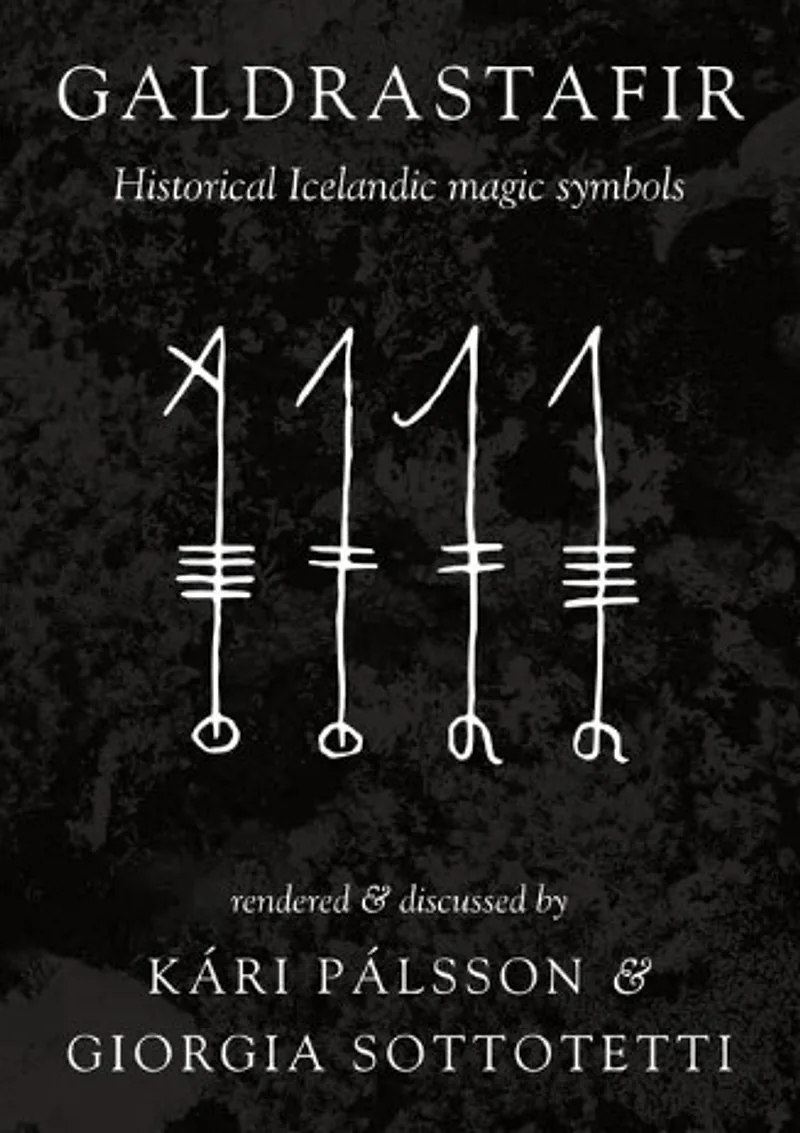
The Galdrabók§
The Galdrabók ("book of magic") is a small manuscript compiled by several hands, probably beginning in the later sixteenth century and continuing into the seventeenth. It was first edited by the Swedish scholar Natan Lindqvist in 1921, and translated into English by Stephen Flowers in 1989. It contains some forty-seven items: staves, charms and prayers for protection, for love, for success in disputes and against thieves, as well as spells to harm or frighten. Its invocations mix the Christian Trinity and Christ with Solomon, demons such as Satan and Beelzebub, and the names of old Norse gods, a combination that reflects the mixed religious world of post-Reformation Iceland rather than an unbroken pagan tradition.
The Huld manuscript§
The Huld manuscript (ÍB 383 4to in the National Library of Iceland) was compiled around 1860 by Geir Vigfússon of Akureyri, a collector of folk learning. It brings together dozens of staves with their names and uses, and it is the earliest known source for the Vegvísir. Other nineteenth-century compilations, often copies of older books, added further staves, and the folklore collector Jón Árnason recorded beliefs about sorcerers and their signs in his Íslenzkar þjóðsögur og æfintýri (1862–64).
Kinds of staves§
The manuscripts list staves for many everyday needs. Examples include the wrestling staves Ginfaxi and Gapaldur, said to be carried in the shoes; Kaupaloki, a stave for good trading; dream staves (draumstafir) to produce meaningful dreams; and staves for good fishing or for finding thieves. Hostile staves to frighten, cause illness or make cattle sicken also appear. They are recorded here as historical material, not as instructions.
The Vegvísir, or Way-Finder§
The Vegvísir ("sign-post", "way-shower") is a figure of eight arms radiating from a centre, each arm ending in a different terminal. The Huld manuscript says, in substance, that whoever carries the sign will not lose their way in storms or bad weather, even when the road is unknown. In a country of sudden weather, mountain passes and long winter journeys, such a sign answered an obvious need, and its intent is protective.
The Vegvísir is not known from any medieval source. Its first attestation is the mid-nineteenth-century Huld, and a related design appears in a few other late manuscripts. Its striking shape and its meaning made it, in the late twentieth and twenty-first centuries, one of the most popular of all "Norse" symbols, often called a "Viking compass". The Spellbook entry Vegvísir: Drawing the Icelandic Wayfinder Stave describes how it was used, and the travel blessings in the Spellbook, such as the Anglo-Saxon journey charm, offer comparisons from neighbouring traditions.
The Ægishjálmur, or Helm of Awe§
The name ægishjálmr is much older than the stave. In the Eddic poem Fáfnismál, preserved in the thirteenth-century Codex Regius and translated in The Poetic Edda, the dragon Fáfnir boasts of wearing the ægishjálmr, before which all creatures flee; after Sigurd kills him, he takes it from the dragon's hoard. The first element comes from agi or ægir, "terror", not from the sea-god Ægir, and the original "helm of terror" seems to have been a terrifying power or object rather than a drawn sign.
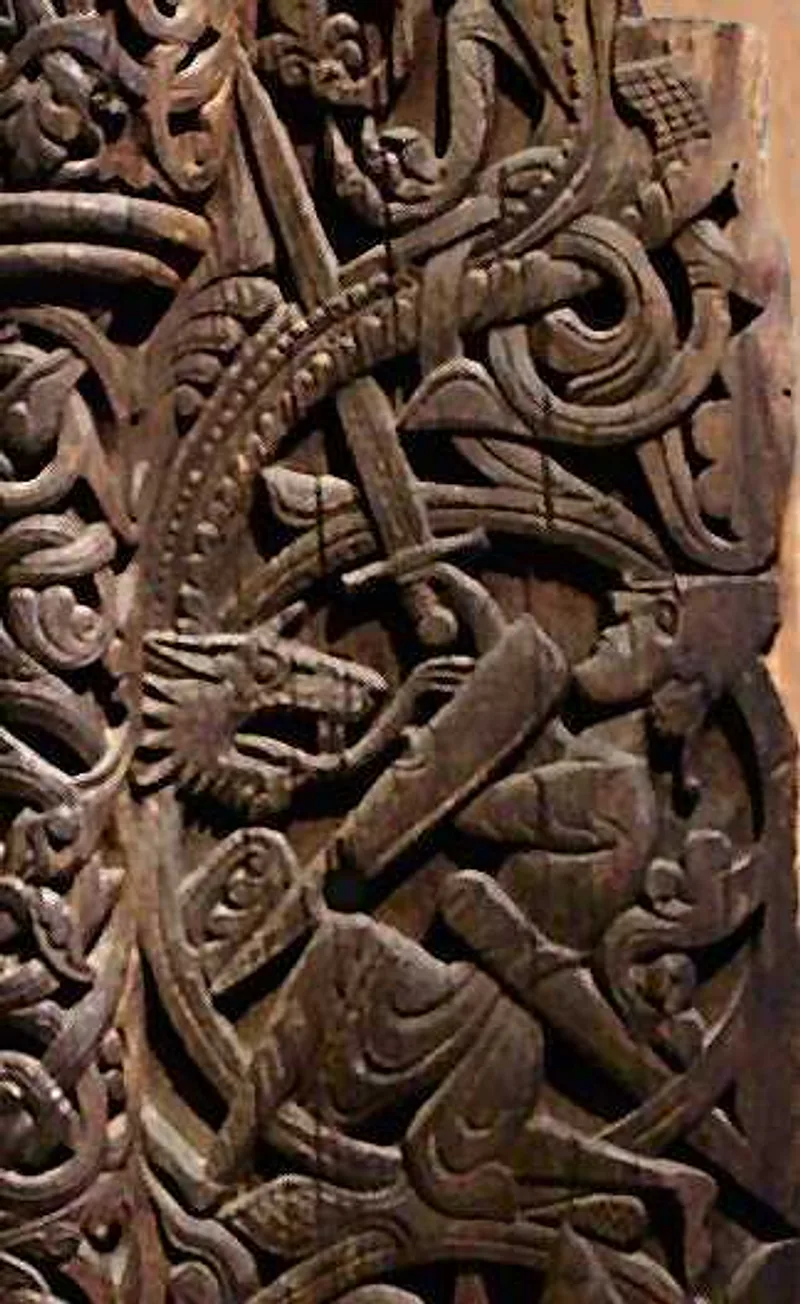
In early modern Iceland the name was attached to a stave: typically four, six or eight arms ending in tridents, radiating from a central circle. Manuscripts associate it with protection, with victory in disputes and with inspiring fear in enemies, and some versions describe it as drawn or pressed on the forehead. Several different staves bear the name in different books. The Spellbook's Ægishjálmur: The Helm of Awe as a Protective Stave gives the protective reading. Like other folk practices of protection discussed in Protective Magic, the stave expressed hopes for safety; it was no substitute for practical precautions, then or now.
Magic and the Icelandic Witch Trials§
Iceland's witch persecution, sometimes called the brennuöld ("burning age"), ran mainly from 1625 to 1685. Some twenty people were burned, and many more were flogged or outlawed. Unlike much of continental Europe, where most of the accused were women (see The European Witch Trials), almost all those executed in Iceland were men, and the charges often concerned the possession and use of written magic: staves, runes and magic books rather than pacts with the Devil.
The first burning, in 1625, was of Jón Rögnvaldsson, accused of causing harm and found with papers bearing runic characters. In the 1650s the minister Jón Magnússon of Eyri accused a father and son of afflicting him by sorcery; both were burned in 1656, and the minister's own account, the Píslarsaga ("passion story"), is a vivid record of his sufferings and fears. Trials of this kind show that staves were feared as real instruments of harm, which partly explains why so many magical manuscripts were destroyed and why those that survive are relatively late.
Modern Revival and the Question of Viking Origins§
In the twentieth century, and especially since the 1990s, Icelandic staves became emblems of Icelandic heritage and of the wider revival of Norse religion described in Heathenry and the Runes. The Museum of Icelandic Sorcery and Witchcraft (Strandagaldur) at Hólmavík, opened in 2000, presents the manuscripts and trial records to visitors. The Vegvísir and Ægishjálmur appear on jewellery, tattoos, clothing and souvenirs, and in popular culture as "Viking runes".
Scholars such as Stephen Mitchell, who has studied Nordic magic in the Middle Ages, and Stephen Flowers, who edited the Icelandic sources, stress the distance between these staves and the Viking Age. No Viking-age object shows a Vegvísir or the later Ægishjálmur stave, and the manuscripts are Christian-era documents shaped by Latin and German grimoire traditions as well as by Icelandic memory. Some features, such as the use of runes and the idea of the "helm of terror", do connect with older Norse culture, and it is possible that some staves preserve older practice in altered form. The cautious conclusion is that Icelandic staves are a genuine and fascinating folk magical tradition of early modern Iceland, not a direct legacy of the Vikings. They also offer an interesting comparison with bind-runes and rune casting in modern practice.
Frequently asked questions§
Is the Vegvísir a Viking symbol?§
No Viking-age source shows it. The Vegvísir is first recorded in the Huld manuscript, compiled in Iceland around 1860, though it may draw on older traditions of protective staves.
What does Ægishjálmur mean?§
It means "helm of terror" or "helm of awe". In the Eddic poem Fáfnismál it is a terrifying power worn by the dragon Fáfnir; in early modern Icelandic magic the name was given to a protective stave with radiating arms.
What is the Galdrabók?§
The Galdrabók is an Icelandic manuscript of magic compiled by several hands from about the late sixteenth to the seventeenth century. It contains staves, charms and prayers that mix Christian, demonic and Norse names.
Why were men the main victims of Iceland's witch trials?§
In Iceland, magic was associated with written staves, runes and books, skills linked with literate men. The accusations therefore fell mostly on men, unlike the pattern in much of continental Europe.
Sources and further reading§
- The Galdrabók: An Icelandic Grimoire — Stephen E. Flowers (ed.), 1989
- Icelandic Magic: Practical Secrets of the Northern Grimoires — Stephen E. Flowers, 2016
- Witchcraft and Magic in the Nordic Middle Ages — Stephen A. Mitchell, 2011
- The Viking Way: Magic and Mind in Late Iron Age Scandinavia — Neil Price, 2002
- The Poetic Edda — Carolyne Larrington (trans.), 1996
- Grimoires: A History of Magic Books — Owen Davies, 2009