Liber III · Black & White Magic · Chapter VI: Protective Magic
Protective Magic: Apotropaic Charms, Amulets and Witch Bottles
Protective magic explained: apotropaic images, the evil eye, Jewish, Christian and Islamic protective texts, witch bottles, house marks and the magic circle.

Protective magic, often called apotropaic magic from the Greek apotrepein, "to turn away", is the use of objects, images, words and rituals to ward off harm: demons, the evil eye, witchcraft, disease, storms, thieves and misfortune. It is probably the most widespread and least controversial form of magic in human history, found in the earliest Egyptian and Mesopotamian sources, in all the major religions and in folk custom to the present day.
Turning Away Evil: The Logic of Apotropaic Magic§
Protective magic rests on a simple idea: dangers can be blocked, frightened off, deceived or trapped before they strike. Several strategies recur across cultures. An image may confront the danger with a fiercer power, as a gorgon's head or a monstrous demon does. A boundary may be drawn that evil cannot cross, such as a circle, a threshold or a sealed doorway. A sacred name or text may place the protected person under divine authority. A decoy may draw harm away, as a bright bead attracts the evil eye. And a trap may capture or destroy hostile magic, as in many devices against witchcraft.
Because protection seemed defensive and beneficial, clergy were often more willing to accept it than other forms of magic, especially if it used approved prayers or blessed objects. The line between permitted protection and forbidden superstition was nonetheless debated in every period. Harmful magic and its counter-measures are examined in Maleficium, Curses and Protective Magic; this article concentrates on protection itself.
Ancient Near Eastern and Egyptian Protection§
Mesopotamian households hung clay plaques and bronze heads of the wind demon Pazuzu to drive away the demoness Lamaštu, who threatened mothers and infants. Figurines of protective spirits were buried under thresholds and in the corners of rooms, and exorcists drew protective figures around beds. These rites are described in Mesopotamian Magic.
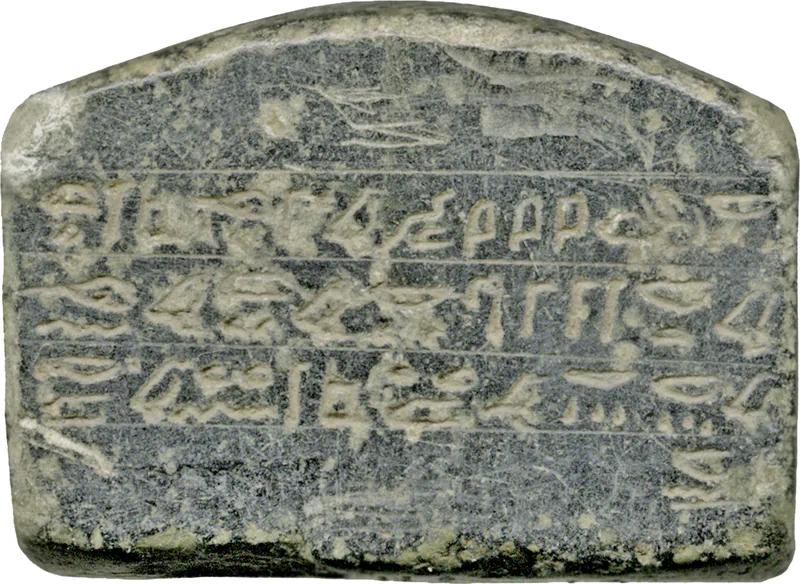
In Egypt, protection was everywhere. Middle Kingdom ivory "apotropaic wands", curved objects incised with fierce protective beings, were probably used to draw protective circles around mothers and babies. The dwarf god Bes and the hippopotamus goddess Taweret guarded births and sleep. Stelae known as cippi, showing the child Horus standing on crocodiles and grasping snakes, were inscribed with spells against stings and bites; water poured over them was believed to absorb their power. The wide array of Egyptian amulets is surveyed in Amulets and Talismans.
The Evil Eye and Its Remedies§
Belief in the evil eye, the idea that envious or admiring looks can cause harm, is attested from ancient Mesopotamia and Greece through the Roman Empire and remains alive across the Mediterranean, the Middle East, South Asia and Latin America. Children, livestock, brides and anything beautiful or prosperous were thought most at risk. Romans used the fascinum, a phallic amulet, to distract or repel the eye, and mosaics at house entrances showed the eye attacked by animals and weapons. Today, blue glass eye beads (nazar), the hand-shaped hamsa and red threads serve the same purpose.
Removal of the evil eye has long been the work of local specialists, often women, who use olive oil dropped into water, prayers, salt or smoke to diagnose and lift it. These customs belong to the wider world described in Folk Magic.
Sacred Words: Jewish, Christian and Islamic Protection§
The Abrahamic religions protected people with scripture and divine names. Jewish households fix a mezuzah to the doorpost, a parchment with verses from Deuteronomy; rabbinic authorities insisted that it was a commandment rather than an amulet, but popular belief has long credited it with protective power. Medieval and later Jewish childbirth amulets invoked the angels Sanoi, Sansanoi and Semangelof against Lilith, a tradition linked to the medieval Alphabet of Ben Sira. Aramaic incantation bowls from late antique Mesopotamia, buried upside down under floors, were meant to trap demons.
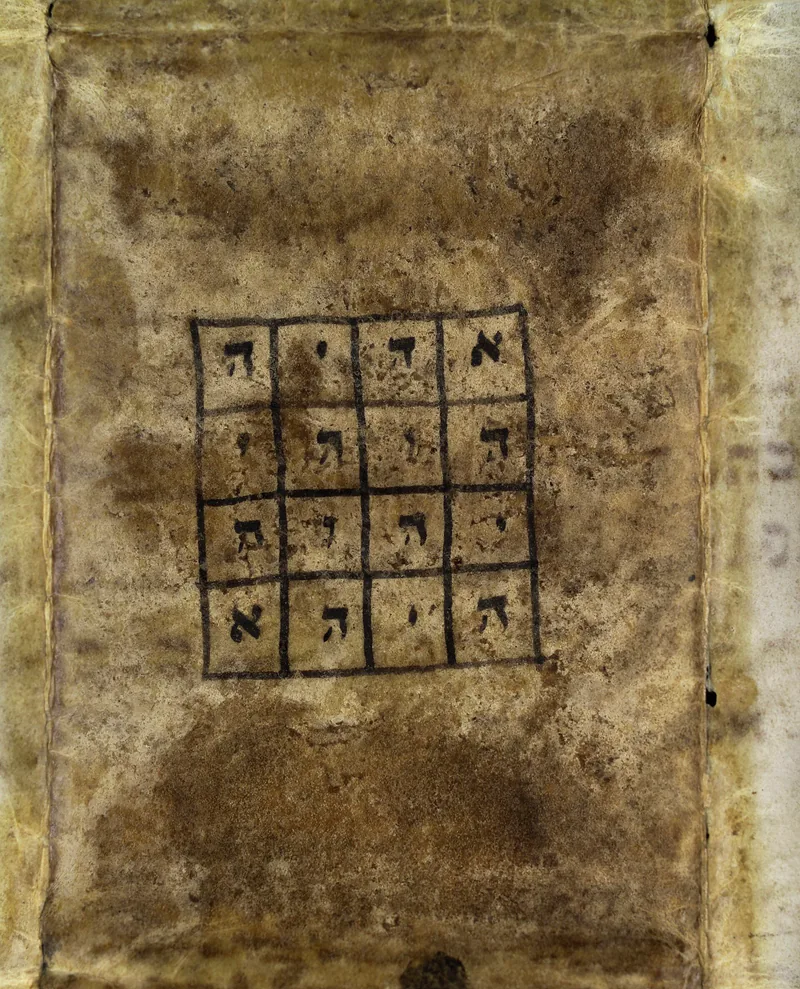
Christians used the sign of the cross, holy water, blessed candles and salt, relics, the opening verses of John's Gospel and Psalm 91, which promises that "the pestilence that walketh in darkness" shall not prevail (KJV). Church bells were rung against storms, and the word square SATOR AREPO TENET OPERA ROTAS, found as early as Pompeii, was later used as a charm against fire and illness. Muslims recite the two final suras of the Qurʾan, known as al-muʿawwidhatayn ("the two seeking refuge"), and the Throne Verse (2:255) for protection, and inscribe verses and names of God on amulets and houses. The seal of Solomon, discussed in Solomon's Ring and Seal, appears in all three traditions.
Protecting the House: Witch Bottles, Shoes and Marks§
Early modern Britain, and to a lesser extent Europe and colonial North America, has left remarkable archaeological evidence of protective magic hidden in buildings. Witch bottles, usually stoneware jugs of the seventeenth century filled with pins, nails, urine and sometimes hair or nail clippings, were buried under hearths and thresholds. Contemporary writers such as the astrologer Joseph Blagrave (1671) describe their use against witches: the bottle was thought to torment the witch until the spell was lifted.
Worn shoes concealed in walls, chimneys and roof spaces have been found in thousands of buildings; Northampton Museum maintains an index of them, though their purpose is not recorded in documents and is inferred. Dried cats, horse skulls and written charms have also been discovered. Carved and burned marks, including compass-drawn "daisy wheels" or hexafoils, interlinked V's often read as invoking the Virgin Mary, and scorch marks on beams, are now recognised as probable protective symbols placed near doors, windows and fireplaces, the openings through which evil might enter. Horseshoes over doors, rowan sprigs and holed "hag stones" belong to the same culture.
The Magician's Circle and Ritual Protection§
Learned ritual magic placed great emphasis on protection. Medieval and early modern grimoires such as the Key of Solomon and the Lesser Key of Solomon instruct the operator to stand within a consecrated circle inscribed with divine names, wear protective pentacles and lamens and hold consecrated instruments, so that summoned spirits cannot harm him. The circle drew on ancient precedents and on Christian ideas of holy space.
In the nineteenth and twentieth centuries the Hermetic Order of the Golden Dawn developed banishing rituals using the pentagram, divine names and archangels to clear a space before work. Similar ideas pervade later traditions, from Wiccan circle casting to the psychological "banishings" of chaos magick. Modern practitioners usually describe protection in psychological or energetic terms as much as literal ones.
Protective Magic Today§
Protective practice remains part of ordinary life for millions of people: evil eye beads on babies' clothes, blessed medals in cars, Qurʾanic verses on walls, horseshoes on doors and red threads on wrists. It is often practised by people who would not consider themselves magicians at all. For historians, protective magic offers a window onto everyday fears, especially of illness, infant death, envy and unseen malice, and onto the creative ways people drew on religion to manage them. The wider framework of these practices is discussed in What Is Magic?
Frequently asked questions§
What does apotropaic mean?§
Apotropaic comes from the Greek apotrepein, "to turn away". It describes objects, images, words or rituals intended to ward off evil, such as an eye bead, a gorgon's head or a protective inscription over a door.
What is a witch bottle?§
A witch bottle is a sealed container, usually a seventeenth-century stoneware jug, filled with items such as pins, nails and urine and hidden in a house. Contemporary sources say it was meant to counteract a witch's spell by tormenting the witch.
Why were shoes hidden in old buildings?§
Concealed shoes are found in walls and chimneys across Britain and beyond, mostly from the sixteenth to nineteenth centuries. No contemporary text explains them, but most historians interpret them as protective deposits placed at vulnerable points in the house.
Is protective magic accepted in religion?§
Many religions accept protective prayers, blessed objects and sacred texts while condemning practices seen as superstitious or relying on unknown powers. Where the boundary lies has varied between traditions and periods.
Sources and further reading§
- Religion and the Decline of Magic — Keith Thomas, 1971
- Cunning-Folk: Popular Magic in English History — Owen Davies, 2003
- The Materiality of Magic: An Artefactual Investigation into Ritual Practices and Popular Beliefs — Ceri Houlbrook and Natalie Armitage (eds), 2015
- Magic in Ancient Egypt — Geraldine Pinch, 1994
- Ancient Jewish Magic: A History — Gideon Bohak, 2008
- The Evil Eye: A Casebook — Alan Dundes (ed.), 1992
- Spellbound: Magic, Ritual and Witchcraft — Sophie Page and Marina Wallace (eds), 2018
- Magic in the Middle Ages — Richard Kieckhefer, 1989
- Demons, Gods and Sacred Symbols of Ancient Mesopotamia — Jeremy Black and Anthony Green, 1992