Liber XIX · Judaism · Chapter IV: Jewish Folklore & Magic
The Dybbuk: Spirit Possession and Exorcism in Jewish Tradition
The dybbuk in Jewish tradition: the wandering soul that clings to the living, its roots in Safed Kabbalah, exorcism accounts, Ansky's play and scholarship.

In Jewish folklore a dybbuk is the restless soul of a dead person that "clings" to a living body, speaking through its victim until it is expelled by a rabbi or holy man. The belief took shape among the kabbalists of sixteenth-century Safed, who connected it with the doctrine of the transmigration of souls, and spread through Hebrew and Yiddish accounts of exorcisms in early modern Europe. S. Ansky's play The Dybbuk (1920) turned it into one of the best-known images of Jewish culture.
What Is a Dybbuk? Name, Meaning and Belief§
The Yiddish word dibek and the Hebrew dibbuk derive from a root meaning "to cleave" or "adhere" — the same root as devekut, the mystic's cleaving to God. Early modern texts speak of a dibbuk me-ruach ra'ah, "a cleaving of an evil spirit", or of a dibbuk min ha-chitzonim, "from the outer forces"; only later did dybbuk become the name for the spirit itself. In the developed belief, the dybbuk is the soul of a person who died in grave sin, often unconfessed, and who is denied rest. Pursued by punishing angels and unable to enter either paradise or the purifying fires of Gehinnom, it seeks refuge in a living body.
Possession was described in strongly physical terms: the victim fell ill or into fits, spoke in a strange voice, sometimes in languages they did not know, revealed hidden sins of the community and resisted holy objects. The spirit was usually questioned about its name, its sins and its origin, and its story served as a moral lesson. The dybbuk thus belongs to the larger world of Jewish belief about souls and spirits described in Jewish magic and folklore, alongside Lilith, demons and the golem.
Evil Spirits in the Bible, Second Temple Literature and the Talmud§
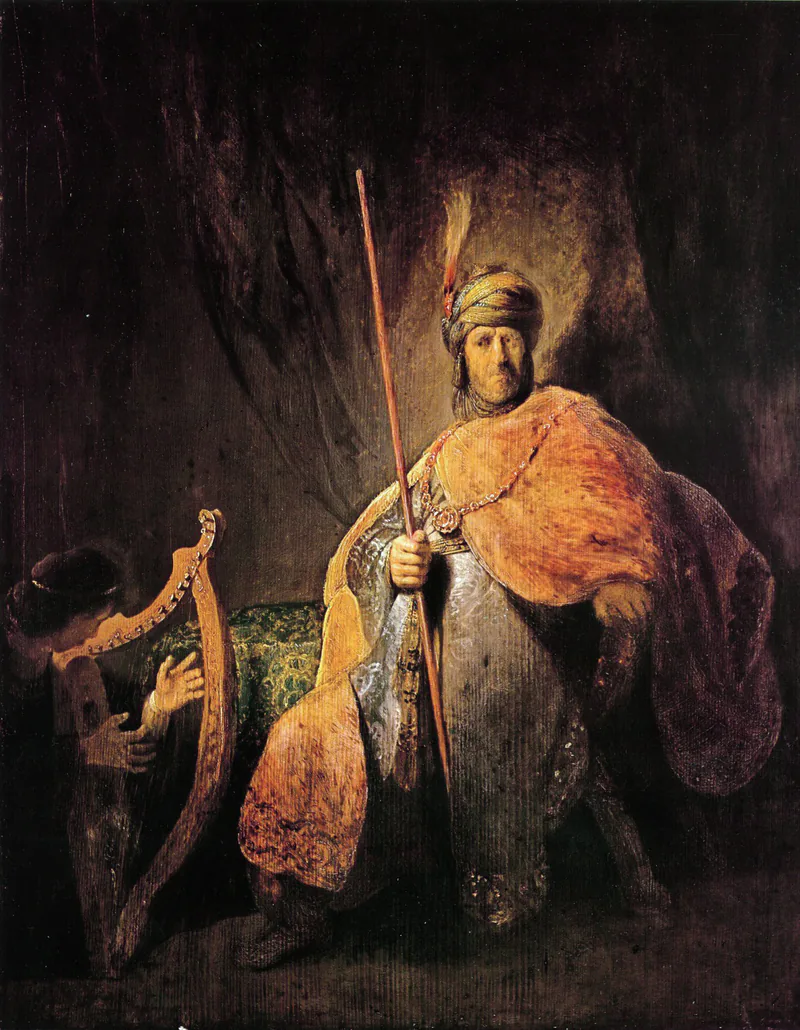
The Hebrew Bible already speaks of "an evil spirit from the Lord" troubling King Saul, which departed when David played the lyre (1 Samuel 16). In the Second Temple period exorcism became a recognised skill. The Book of Tobit tells how the demon Asmodeus was driven away by the smoke of a fish's heart and liver; the Dead Sea Scrolls include psalms against demons; and Josephus reports that a Jew named Eleazar drew a demon out through a possessed man's nostrils, in the presence of Vespasian, with a ring and incantations attributed to Solomon (see Solomon the exorcist). The Gospels describe Jesus as a Galilean exorcist, and exorcism is prominent in early Christianity, as described in angels, demons and Christian exorcism.
Rabbinic literature has much to say about shedim (demons) and ruach ra'ah (an evil spirit) as causes of illness and danger, and the Talmud tells of a demon that entered a Roman emperor's daughter and was cast out by Rabbi Shimon bar Yochai. But it does not describe the souls of dead human beings taking possession of the living. That idea required a new understanding of the fate of souls.
Safed, Gilgul and the First Dybbuk Narratives§
The new understanding was supplied by Kabbalah. Medieval kabbalists developed the doctrine of gilgul, the transmigration of souls from one body to another to atone for sins or complete unfulfilled tasks, and in sixteenth-century Safed it was elaborated by Isaac Luria and his disciples (see Lurianic Kabbalah). Alongside gilgul, which begins at birth, the kabbalists described ibbur, "impregnation": a righteous soul could temporarily join a living person to help them fulfil a commandment. The dybbuk is the dark counterpart of ibbur — a sinful soul attaching itself to a living one without consent.
Detailed Jewish accounts of possession by the dead first appear in this milieu. Hayyim Vital, Luria's chief disciple, recorded several cases in his Book of Visions, and hagiographical stories of Luria tell of him diagnosing and freeing a possessed person. Accounts from Italy and the Ottoman lands followed. The Safed kabbalist Joseph Karo, meanwhile, recorded the words of a heavenly mentor, a maggid identified with the personified Mishnah, which spoke through his own mouth — a form of holy possession valued rather than feared. Scholars such as J. H. Chajes have noted that the Jewish dybbuk narrative emerged in the same period as a great wave of possession and exorcism in Catholic Europe, especially Italy, and that the two cultures shared many motifs.
Exorcism Accounts from the Seventeenth to the Nineteenth Century§
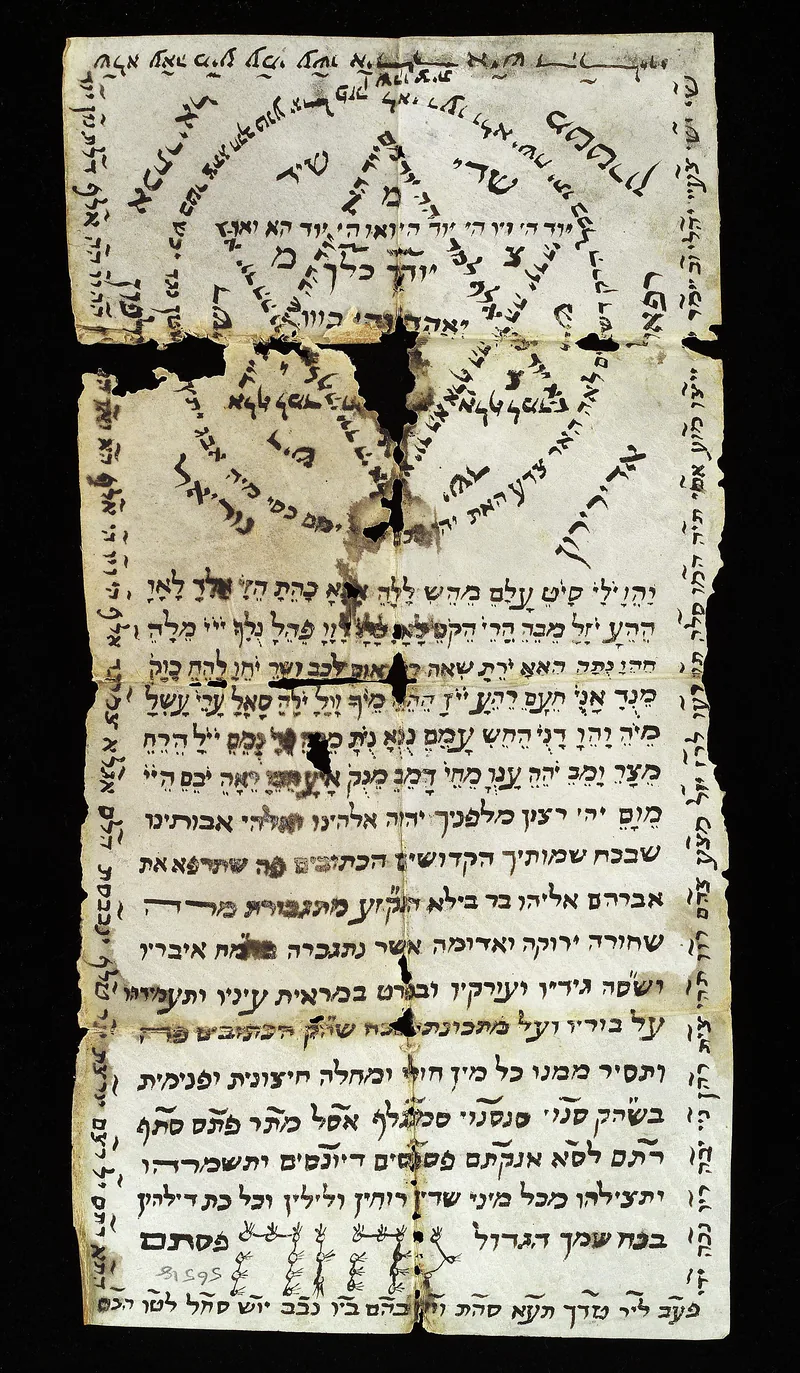
From the late seventeenth century, Hebrew and Yiddish pamphlets reported dybbuk cases from Central and Eastern Europe, and collections of wonder tales repeated them. Their accounts follow a recognisable pattern, which historians reconstruct as a social drama rather than a technique. A respected rabbi or ba'al shem — a "master of the Name", a practitioner of practical Kabbalah — was called. A quorum of ten men gathered, sometimes wrapped in prayer shawls, and psalms, notably Psalm 91, were recited. The exorcist questioned the spirit, which typically confessed its sins and the reason it could not rest; he then commanded it to leave by the power of divine names, with blasts of the shofar and sometimes threats of excommunication. Many accounts end with the spirit departing through the little toe, leaving a tiny wound, and with the community promising prayers or study for the dead soul's repair (tikkun).
In Eastern Europe these stories were taken up by Hasidism. The Praises of the Ba'al Shem Tov, printed in 1814, includes tales of the movement's founder confronting spirits, and later Hasidic rebbes were credited with similar powers (see Hasidism and the Baal Shem Tov). The maskilim of the Jewish Enlightenment mocked such beliefs as superstition, and they faded in modernising communities, though not everywhere: reports of exorcisms performed by kabbalist rabbis have occasionally appeared in the Israeli press since the late twentieth century.
Ansky's The Dybbuk and the Dybbuk in Modern Culture§
The dybbuk's modern fame owes most to the writer and ethnographer S. Ansky (Shloyme Zanvl Rappoport, 1863–1920). Between 1912 and 1914 he led the Jewish Ethnographic Expedition through the towns of Volhynia and Podolia, collecting tales, songs, photographs and objects. From this material he wrote the play Between Two Worlds, known as The Dybbuk, about Leah, a young woman possessed on her wedding day by the soul of Khonen, the yeshiva student she loved and who died after dabbling in Kabbalah; a Hasidic rebbe exorcises him, and Leah dies to join him. Ansky died before it was staged; the Vilna Troupe premiered it in Yiddish in Warsaw in December 1920, and the Habima theatre's Hebrew production in Moscow in 1922, directed by Yevgeny Vakhtangov, in a translation by Hayim Nahman Bialik, became legendary.
A Yiddish film of The Dybbuk was made in Poland in 1937, and the story has inspired operas, Leonard Bernstein's ballet Dybbuk (1974) and many literary reworkings, from Isaac Bashevis Singer's stories onward. In popular culture the dybbuk has also entered horror films and internet legend, such as the "dybbuk box" sold online in 2003, which owe little to the tradition beyond the name. Within Jewish literature, by contrast, the figure often serves as a metaphor for memory and loss — the voices of a destroyed world that cling to the living.
How Scholars Interpret Dybbuk Possession§
Historians and anthropologists have offered several readings, which are not mutually exclusive. Gershom Scholem and his successors placed the dybbuk within the history of kabbalistic ideas about the soul. Chajes reads the early modern cases as a shared Jewish and Christian phenomenon, in which possession stories reinforced communal norms and the authority of the exorcist. Rachel Elior and others have stressed that most of the possessed were women, and that possession gave voice to those otherwise silenced, if only within a script controlled by men. The Israeli anthropologist Yoram Bilu interpreted possession in psychological and cultural terms, as a way in which forbidden desires and conflicts could be expressed and resolved by the community.
Today, conditions once attributed to possession are understood by clinicians in medical and psychological terms, and most rabbis who encounter such complaints advise professional care. The dybbuk remains, however, an important window onto Jewish beliefs about sin, death and the bonds between the living and the dead, discussed more broadly in reincarnation and the afterlife.
Frequently asked questions§
What is a dybbuk in Judaism?§
A dybbuk, in Jewish folklore and kabbalistic tradition, is the wandering soul of a dead sinner that attaches itself to a living person, speaking through them until it is driven out. The belief is not a matter of Jewish law or creed, and many Jews regard it as folklore.
What is the difference between a dybbuk and an ibbur?§
Both describe a soul joining a living person. An ibbur is a righteous soul that temporarily joins someone to help them, with their spiritual consent, while a dybbuk is a sinful, tormented soul that clings to its host against their will.
Is The Dybbuk based on a true story?§
Ansky's play is a work of fiction, but it is built from folk tales, songs and beliefs he collected among Jews of Ukraine before the First World War. Its themes — the broken promise of a marriage, the possessed bride and the exorcism by a Hasidic rebbe — all draw on that folklore.
Sources and further reading§
- Between Worlds: Dybbuks, Exorcists, and Early Modern Judaism — J. H. Chajes, 2003
- Spirit Possession in Judaism: Cases and Contexts from the Middle Ages to the Present — Matt Goldish (ed.), 2003
- Dybbuks and Jewish Women in Social History, Mysticism and Folklore — Rachel Elior, 2008
- The Dybbuk and Other Writings — S. Ansky, 1992
- The Dybbuk and the Yiddish Imagination: A Haunted Reader — Joachim Neugroschel (ed.), 2000
- Jewish Magic and Superstition: A Study in Folk Religion — Joshua Trachtenberg, 1939