Liber XX · Kabbalah · Chapter III: Hasidism
Hasidism and the Baal Shem Tov: Origins, Teachings and Tales
Hasidism and the Baal Shem Tov explained: Israel ben Eliezer, devekut, the tzaddik, the Mitnagdim and Vilna Gaon, Hasidic tales, Buber, and Idel's work.

Hasidism is a Jewish pietistic and mystical movement that emerged in eighteenth-century Podolia and Volhynia (in present-day Ukraine) around the charismatic healer and teacher Israel ben Eliezer, known as the Baal Shem Tov ("Master of the Good Name"). Drawing on Kabbalah, especially the Lurianic system, it emphasised devekut (cleaving to God) in all activities, joyful worship, and the spiritual leadership of the tzaddik or rebbe. Fiercely opposed at first by rabbinic authorities, it grew into one of the major streams of Orthodox Judaism.
Eastern Europe Before Hasidism§
Eighteenth-century Polish-Lithuanian Jewry was a large, diverse population with established institutions of rabbinic learning and community self-government. It had also known upheaval: the massacres of the Khmelnytsky uprising of 1648–1649, the messianic hopes and disappointment surrounding Sabbatai Zevi in 1665–1666, and the later Frankist movement led by Jacob Frank in the 1750s. Lurianic Kabbalah had spread widely through printed books and ascetic pietists, who practised fasting and penance and studied the Zohar in small circles.
Alongside rabbis and scholars there was a class of popular practitioners called ba'alei shem ("masters of the name"), who used divine names, amulets and folk medicine to heal illness and protect against demons. The Baal Shem Tov belonged to this world before he became the founding figure of a movement.
Israel ben Eliezer, the Baal Shem Tov§
Reliable historical information about the Baal Shem Tov is limited. He was born around 1700, probably in the region of Okopy in Podolia, and he died in 1760 in Międzybóż (Medzhybizh), where he lived from around 1740; community records show that he occupied a house provided by the community free of tax. Moshe Rosman's Founder of Hasidism (1996) used such Polish records to show that he was a recognised and respected figure in his town, not a marginal wanderer.
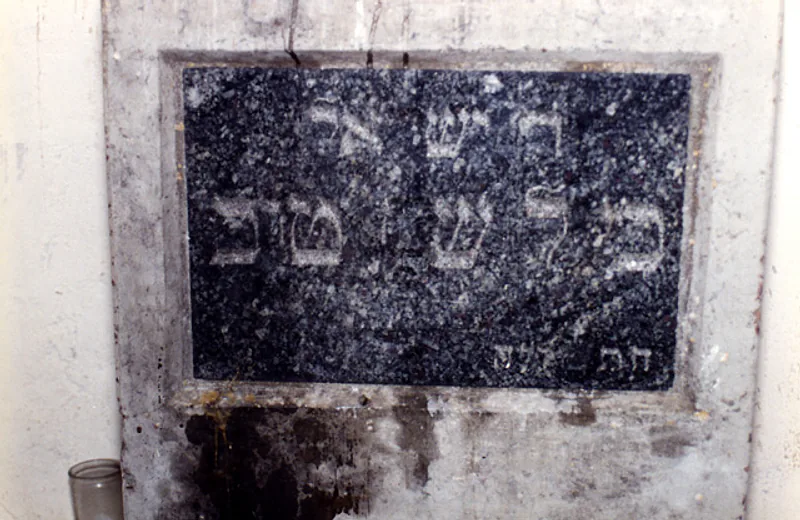
Most traditional knowledge of the Besht comes from Shivhei ha-Besht ("In Praise of the Baal Shem Tov"), a collection of tales first printed in Kopys in 1814–1815, more than fifty years after his death. These stories describe his humble origins, his years of hidden study in the Carpathian mountains, his "revelation" as a spiritual master around the age of thirty-six, and his miracles. A letter attributed to him, known as the Iggeret ha-Kodesh ("Holy Epistle"), describes an ascent of his soul to heaven on Rosh Hashanah 1746 in which he asked the Messiah when he would come, and was told: when your teachings spread. Historians debate the transmission of this letter, but most accept that it reflects the Besht's own visionary self-understanding.
The Besht wrote no books. His teachings were preserved by students, especially Jacob Joseph of Polonne, whose Toledot Ya'akov Yosef (1780) was the first Hasidic book printed and contains hundreds of sayings introduced with "I heard from my teacher".
Core Teachings: Devekut, Joy and Worship in Corporeality§
Devekut: cleaving to God§
Devekut, from the verb "to cleave" (as in Deuteronomy 11:22), had earlier been an ideal for the elite few in Kabbalah. In Hasidism it became central for every Jew. The Besht taught that God's presence fills all things, and that a person should remain mindful of God in every act, not only in prayer and study. Gershom Scholem argued that Hasidism transformed devekut into the supreme value of religious life; Moshe Idel and others have shown that devekut also had magical and ecstatic components, including the drawing down of divine energy.
Joy and the rejection of excessive asceticism§
Early Hasidism was critical of the extreme self-mortification practised by some kabbalistic pietists. It held that sadness and despair obstruct the service of God, and taught that worship should be performed in joy. Song, dance and wordless melodies (niggunim) became characteristic of Hasidic prayer, which could be loud and physically animated.
Avodah be-gashmiyut: worship through the material§
Building on the Lurianic doctrine that divine sparks are scattered throughout creation, the Besht and his disciples taught that sparks can be raised through ordinary activities such as eating, conversing and working, if done with proper intention. This is called avodah be-gashmiyut ("worship through corporeality"). Hasidic teachers also spoke of "uplifting strange thoughts" (ha'alat mahashavot zarot): distracting or improper thoughts arising in prayer were not simply to be suppressed but traced back to their divine root.
The reinterpretation of Kabbalah§
Hasidism did not reject Kabbalah but internalised it. The sefirot of the Tree of Life and the Lurianic drama of contraction and repair were increasingly read as describing the human soul and its relationship with God. Scholars often describe this as a shift from theosophy (speculation about the divine structure) to psychology and devotion, though the shift was neither total nor uniform, and kabbalistic study of the Zohar and Lurianic writings continued within Hasidic courts.
The Tzaddik and the Rebbe§
The most distinctive institution of Hasidism is the tzaddik ("righteous one") or rebbe. After the death of the Besht, leadership passed to Dov Ber, the Maggid ("preacher") of Mezhirech (died 1772), a learned kabbalist who gathered a remarkable group of disciples. They spread the movement across Ukraine, Poland, Belarus and Lithuania, establishing local "courts".
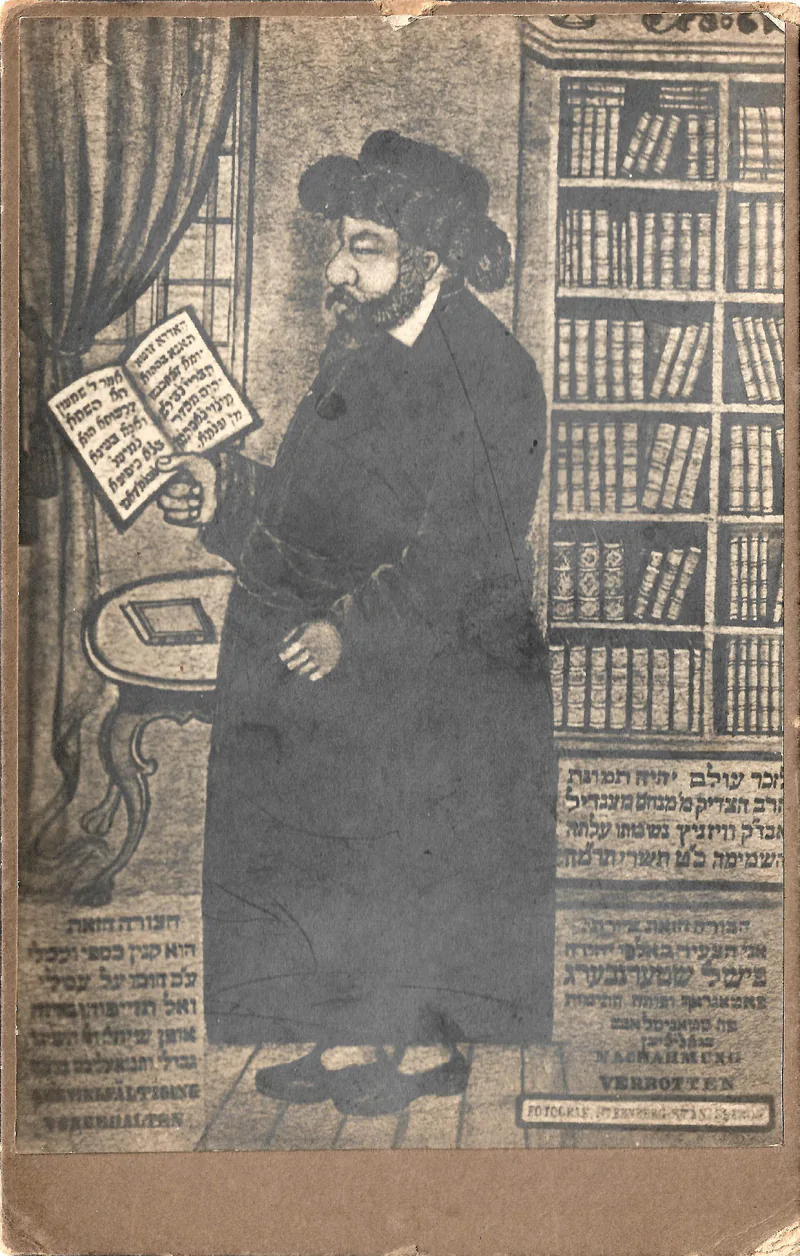
The tzaddik was understood as a channel between heaven and earth, associated with the sefirah Yesod ("the righteous is the foundation of the world"). Through his devekut he could draw down blessing (shefa) for his followers and raise their prayers. Elimelech of Lizhensk (1717–1787), in his No'am Elimelekh, developed a strong doctrine of the tzaddik's role, which became especially influential in Galicia and Poland. Followers visited the rebbe for blessings, advice and teaching, and sat at his table on the Sabbath. Over time many rebbes established dynasties that continue today, among them Chabad-Lubavitch, Satmar, Belz, Ger and Breslov.
Different schools developed different emphases. Shneur Zalman of Liadi (1745–1812), founder of Chabad, wrote the Tanya (1796), a systematic and intellectual presentation of Hasidic thought, and minimised the miracle-working role of the rebbe. Nahman of Bratslav (1772–1810), a great-grandson of the Besht, taught a passionate, paradoxical faith and composed the celebrated Sippurei Ma'asiyot ("Tales").
Opposition: The Mitnagdim and the Vilna Gaon§
Hasidism provoked fierce opposition. Its critics, known as the Mitnagdim ("opponents"), were led by Elijah ben Solomon Zalman, the Gaon of Vilna (1720–1797), the most revered Talmudic authority of his time and himself a serious kabbalist. In 1772 the leaders of Vilna and other communities issued bans (herem) against the Hasidim, renewed in later years. The pamphlet collection Zemir Aritsim ve-Harvot Tsurim (1772) set out the opposing case.
The objections were varied. Opponents criticised Hasidic changes to prayer times and the adoption of the Lurianic prayer rite, the use of specially sharpened knives for ritual slaughter, perceived neglect of Talmud study in favour of prayer and enthusiasm, the authority of the tzaddik, and theological statements about God's presence in all things that seemed to verge on pantheism. Some feared a renewal of Sabbatean antinomianism. Hasidim were denounced to the Russian authorities, and Shneur Zalman of Liadi was imprisoned in St Petersburg in 1798 and again in 1800 before being released.
By the mid-nineteenth century the conflict had largely subsided. Both groups united against the Jewish Enlightenment (Haskalah) and modern secularisation, and Hasidim and Mitnagdim came to be seen as two branches of traditional Orthodoxy. Chaim of Volozhin, the Gaon's student, founded the Volozhin yeshiva in 1803, a model of Lithuanian learning that partly responded to the Hasidic challenge.
Hasidic Tales and Modern Interpretation§
Stories are central to Hasidic culture. Tales about the Besht, the Maggid and later rebbes were told at Sabbath tables and in study houses long before they were printed. Telling a story about a tzaddik was itself considered a religious act.
Martin Buber§
The philosopher Martin Buber (1878–1965) did more than anyone to bring Hasidism to a non-Jewish and secular Jewish readership. His retellings, Die Geschichten des Rabbi Nachman (1906), Die Legende des Baalschem (1908) and, later, Tales of the Hasidim (1947–1948), presented Hasidism as a living spirituality of encounter and the hallowing of everyday life, closely related to his dialogical philosophy of I and Thou. Scholem criticised Buber for privileging the tales over the theoretical literature and for reading Hasidism through his own existentialism; their debate remains a classic in the study of mysticism.
Scholem, Idel and later scholarship§
Scholem saw Hasidism as a response to the dangers exposed by Sabbateanism, "neutralising" messianism by redirecting energy toward personal devekut. Moshe Idel's Hasidism: Between Ecstasy and Magic (1995) challenged this account. Idel argued that Hasidism should be understood less as a reaction to Sabbateanism and more as a synthesis of several earlier models: the ecstatic tradition stemming from Abraham Abulafia, the theosophical Kabbalah of the Zohar and Luria, and a "magical" model in which the tzaddik, through mystical union, draws down divine power to benefit the community. Idel called this the "mystico-magical" model, and he emphasised the importance of the Besht's background as a ba'al shem.
More recent historians, such as Immanuel Etkes, Moshe Rosman, David Assaf and the authors of Hasidism: A New History (2018), have stressed social history, archival evidence and the gradual, uneven formation of the movement. Comparative scholars have also noted parallels between Hasidic devotion and other mystical traditions, such as the master-disciple relationship and ecstatic music in Sufism, without implying direct influence. For the larger context, see What Is Kabbalah?.
Frequently asked questions§
Who was the Baal Shem Tov?§
Israel ben Eliezer (c. 1700–1760), known as the Baal Shem Tov or the Besht, was a healer, mystic and teacher in Podolia who is regarded as the founder of Hasidism. He wrote no books; his teachings and legends were preserved by disciples and in later collections such as Shivhei ha-Besht.
What is devekut?§
Devekut means "cleaving" or attachment to God. In Hasidism it refers to maintaining constant awareness of and union with God in prayer, study and everyday activities, and it is often considered the movement's central religious ideal.
Why did the Vilna Gaon oppose Hasidism?§
The Vilna Gaon and the Mitnagdim objected to Hasidic changes in prayer and ritual practice, a perceived devaluation of Talmud study, the authority of the tzaddik, and theological statements that seemed to blur the distinction between God and the world. They issued bans against the movement starting in 1772.
Is Hasidism the same as Kabbalah?§
Not exactly. Hasidism is a religious movement that drew deeply on Kabbalah, especially Lurianic Kabbalah, but reinterpreted its ideas in devotional and psychological terms and created new institutions such as the rebbe's court. Some Hasidic groups also study classic kabbalistic texts intensively.
Sources and further reading§
- Shivhei ha-Besht (In Praise of the Baal Shem Tov) — trans. Dan Ben-Amos and Jerome R. Mintz, 1970
- Founder of Hasidism: A Quest for the Historical Ba'al Shem Tov — Moshe Rosman, 1996
- Hasidism: Between Ecstasy and Magic — Moshe Idel, 1995
- Hasidism: A New History — David Biale, David Assaf, Benjamin Brown, Uriel Gellman, Samuel Heilman, Moshe Rosman, Gadi Sagiv and Marcin Wodziński, 2018
- The Besht: Magician, Mystic, and Leader — Immanuel Etkes, 2005
- Tales of the Hasidim — Martin Buber, 1947–1948
- Major Trends in Jewish Mysticism — Gershom Scholem, 1941
- Tanya (Likkutei Amarim) — Shneur Zalman of Liadi, 1796