Liber XX · Kabbalah · Chapter III: Hasidism
Rabbi Nachman of Breslov: Life, Tales and Teachings
Rabbi Nachman of Breslov (1772–1810): the Baal Shem Tov's great-grandson, his journey to Israel, Likkutei Moharan, hitbodedut, the thirteen tales and Uman.
Rabbi Nachman of Breslov (1772–1810), also called Nahman of Bratslav, was a Hasidic master from Ukraine, a great-grandson of the Baal Shem Tov, and one of the most original religious thinkers and storytellers in Jewish history. He taught a path of simple faith, joy, solitary prayer in one's own words (hitbodedut) and attachment to the true tzaddik, and he told thirteen enigmatic tales that are still read as both literature and Kabbalah. The Breslov movement he founded has had no living rebbe since his death, yet it is one of the most vital forms of Hasidism today.
Childhood in Medzhybizh and the Legacy of the Baal Shem Tov§
Nachman was born on 1 Nisan 5532 (April 1772) in Medzhybizh in Podolia, the town where Israel ben Eliezer, the Baal Shem Tov, had lived and taught. His mother, Feiga, was a granddaughter of the Baal Shem Tov through his daughter Udel, and his father's father, Nachman of Horodenka, had been one of the Besht's companions. He grew up surrounded by the memory of the founder of Hasidism, and later spoke of praying at his great-grandfather's grave.
According to the accounts of his disciples, the young Nachman was intensely and secretly devout, given to fasting, solitary prayer in the fields and an acute sense of distance from God. He married at about thirteen and lived with his in-laws in the village of Ossatin, where he spent long hours alone in the surrounding forests and on the river. By around 1790 he had moved to Medvedevka and begun to attract followers. These early experiences of struggle, seclusion and longing became themes of his teaching.
Journey to the Land of Israel§
In 1798 Nachman undertook a journey to the Land of Israel, then under Ottoman rule, accompanied by a single follower. The voyage coincided with Napoleon's campaign in Egypt and Syria, and the travellers faced danger at sea and in the ports. Nachman reached Haifa around Rosh Hashanah 1798 and visited Tiberias and Safed, where he met Hasidic leaders who had settled there, before returning in 1799 by a difficult route.
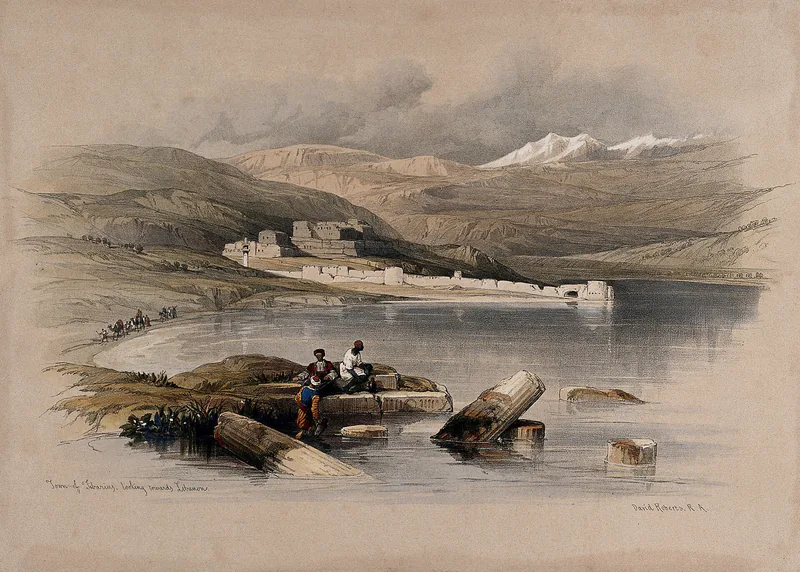
For Nachman the journey had a mystical meaning. He later said that before it he knew nothing, and that afterwards he attained a new level of understanding; he taught that every step in the Land of Israel brings holiness and that the land is a key to faith. Arthur Green, in his biography Tormented Master (1979), saw the journey as a turning point in Nachman's sense of a special mission, which included hopes connected with the messianic redemption.
Bratslav, Reb Noson and the Making of a Community§
On his return Nachman settled in Zlatopol, where he became embroiled in a bitter conflict with the elderly Hasidic leader Aryeh Leib of Shpola, known as the Shpoler Zeide, who accused him of arrogance and possibly of Sabbatean tendencies. In 1802 he moved to the town of Bratslav (Breslov) in Podolia, which gave his movement its name. There he met Nathan Sternhartz of Nemirov (1780–1844), who became his closest disciple and scribe.
Reb Noson recorded Nachman's teachings, organised his followers and, after his death, published and expanded his works. The main collection, Likkutei Moharan ("Collected Teachings of Our Teacher Rabbi Nachman"), appeared in a first part in 1808 and a second part in 1811. Nathan also wrote biographical accounts and his own vast commentaries. Nachman's life in Bratslav was marked by suffering: his young son died, his first wife died of tuberculosis in 1807, and he himself contracted the disease. In 1808 he travelled to Lemberg (Lviv) for treatment. During this period he ordered one of his manuscripts burned, the so-called "Burned Book", whose contents remain unknown.
Teachings: Faith, Joy, Hitbodedut and the True Tzaddik§
Nachman's teachings combine the Kabbalah of the Zohar and Isaac Luria with an intensely personal religious psychology. He insisted on simple faith (emunah) and warned against philosophy and against the Jewish Enlightenment, which he saw as leading to doubt. Yet he took doubt seriously. In a famous teaching (Likkutei Moharan I:64) he reinterpreted the Lurianic doctrine of tzimtzum, described in Lurianic Kabbalah: the "empty space" left by God's withdrawal is the source of questions that have no answer, which can be crossed only by faith and silence, not by reasoning.
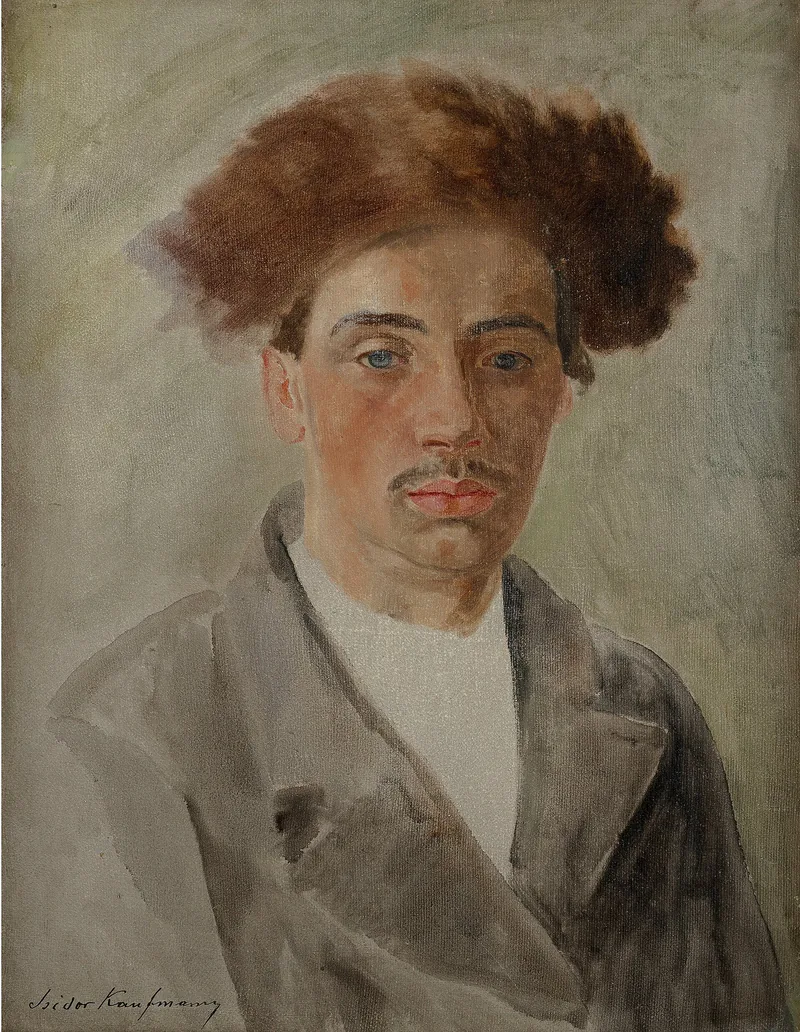
He taught that despair is the greatest danger and that "it is a great commandment to be always joyful" (Likkutei Moharan II:24), to be pursued even through deliberate silliness and dance when one feels low. His central practice was hitbodedut, "self-seclusion": a daily period, ideally at night and in a field or forest, of speaking to God in one's own language, pouring out one's heart, sorrows and hopes, without fixed formulae. Nachman also composed the Tikkun ha-Kelali ("General Remedy"), a sequence of ten Psalms that he taught as a spiritual rectification, and spoke of the power of melody and of each blade of grass having its own song. These practices are often discussed today in relation to meditation, though Nachman framed them as prayer.
At the centre of his community stood the figure of the true tzaddik, the righteous leader through whom the soul is healed. Nachman spoke of himself in elevated terms, and scholars have discussed his messianic self-understanding. This emphasis, combined with his criticism of other Hasidic leaders, made him a controversial figure in his lifetime.
The Thirteen Tales and Rabbi Nachman as Storyteller§
From 1806 Nachman began telling stories, saying that in a time when people were spiritually asleep, stories could awaken them. Reb Noson recorded thirteen principal tales, published in Hebrew and Yiddish as Sippurei Ma'asiyot in 1815 or 1816. They begin with "The Lost Princess", in which a king's viceroy searches for years for a princess carried off to "the place of the not-good", and end with "The Seven Beggars", an unfinished story within stories, told at a wedding, in which each beggar's apparent defect hides a mystical perfection.
The tales use the forms of folk and fairy tales but are layered with kabbalistic symbolism: the lost princess has been read as the exiled Shekhinah, and the viceroy as the soul or the tzaddik who seeks her. Their dreamlike structure and open endings have drawn comparisons with modern literature. Martin Buber's German retellings (1906) made Nachman known in Western Europe, and Arnold Band's annotated translation (1978) and Aryeh Kaplan's translation with commentary (1983) are standard English versions.
Death in Uman and the Pilgrimage That Followed§
In 1810 Nachman moved to Uman, a town associated with the massacre of Jews and Poles during the Haidamak uprising of 1768. He said that he wished to be buried among the martyrs and to rectify their souls. He died there on 18 Tishrei 5571 (October 1810), during the festival of Sukkot, and was buried in the old cemetery. He named no successor, and his followers, mocked as "the dead Hasidim", continued to regard him as their living rebbe.
Nachman had told his followers that whoever came to his grave, gave charity and recited the Tikkun ha-Kelali, he would help, and he urged them to be with him for Rosh Hashanah. Reb Noson organised an annual gathering in Uman, which continued with interruptions through the Soviet period, when it became clandestine and dangerous. Since the end of the Soviet Union it has grown into a gathering of tens of thousands of pilgrims from Israel and the wider Jewish world. In the twentieth century a branch associated with Rabbi Yisrael Ber Odesser and the chant "Na Nach Nachma Nachman Me'Uman" added a distinctive, exuberant style to the movement.
Frequently asked questions§
Who was Rabbi Nachman of Breslov?§
Rabbi Nachman (1772–1810) was a Hasidic master and great-grandson of the Baal Shem Tov who founded the Breslov movement. He is known for his teachings on faith, joy and private prayer, his collection Likkutei Moharan and his thirteen symbolic tales.
What is hitbodedut?§
Hitbodedut means "self-seclusion". In Breslov teaching it is a daily practice of speaking to God alone in one's own words, ideally outdoors at night, expressing whatever is in one's heart. Nachman considered it one of the most important religious practices.
Why do people go to Uman on Rosh Hashanah?§
Rabbi Nachman is buried in Uman, in Ukraine, and he asked his followers to be with him on Rosh Hashanah. Since his death, Breslov Hasidim and many other Jews have made the pilgrimage to his grave for the New Year.
Does Breslov have a rebbe?§
No. Rabbi Nachman named no successor, and Breslov Hasidim consider him their only rebbe. The movement is led by teachers and communities rather than by a dynasty.
Sources and further reading§
- Tormented Master: The Life and Spiritual Quest of Rabbi Nahman of Bratslav — Arthur Green, 1979
- Nahman of Bratslav: The Tales — Arnold J. Band (trans.), 1978
- Rabbi Nachman's Stories — Aryeh Kaplan (trans.), 1983
- Outpouring of the Soul — Aryeh Kaplan (trans.), 1980
- Mysticism and Madness: The Religious Thought of Rabbi Nachman of Bratslav — Zvi Mark, 2009
- Tales of the Hasidim — Martin Buber, 1947
- Hasidism: A New History — David Biale et al., 2018