Liber XX · Kabbalah · Chapter V: Lurianic Kabbalah
Sabbateanism: Sabbatai Zevi and the Messianic Crisis of 1666
Sabbateanism explained: Sabbatai Zevi, Nathan of Gaza, the messianic year 1665–1666, the conversion to Islam, the Dönme, Frankism and Scholem's thesis.

Sabbateanism was the messianic movement that formed around Sabbatai Zevi (1626–1676), a kabbalist from Smyrna who was proclaimed the Messiah in 1665 and who, to the shock of the Jewish world, converted to Islam in 1666. It was the largest messianic movement in Jewish history after antiquity, reaching communities from Yemen to Amsterdam, and it survived its leader's apostasy in secret groups for more than a century. Its theology drew on Lurianic Kabbalah, and its aftermath shaped Jewish attitudes to mysticism for generations.
Sabbatai Zevi in Smyrna: The Early Years§
Sabbatai Zevi was born in Smyrna (modern Izmir), on the Aegean coast of the Ottoman Empire, in 1626, according to tradition on the fast of the Ninth of Av, the anniversary of the Temple's destruction. His father was a merchant who acted as an agent for English traders. Sabbatai received a rabbinic education, was ordained young, and turned to the study of Kabbalah, especially the Zohar, practising asceticism and ritual immersions.
From early adulthood he experienced alternating states of exaltation and depression, which Gershom Scholem, his great biographer, interpreted as a manic-depressive condition; later historians have been more cautious about retrospective diagnosis. In his states of "illumination" he performed "strange acts" that broke religious law. In about 1648 he pronounced the Tetragrammaton, the divine name forbidden to be spoken, and in the early 1650s the rabbis of Smyrna expelled him. He wandered through Salonica, where he staged a wedding ceremony with a Torah scroll, Constantinople, Jerusalem and Cairo, where in 1664 he married Sarah, a refugee from the Khmelnytsky massacres in Poland about whom many legends circulated.
Nathan of Gaza and the Messianic Year of 1665–1666§
The movement began not with Sabbatai but with a young scholar, Abraham Nathan ben Elisha Hayyim Ashkenazi, known as Nathan of Gaza (1643–1680). In the spring of 1665 Nathan, a gifted student of Lurianic Kabbalah, experienced a prophetic vision in which he saw Sabbatai Zevi as the Messiah. When Sabbatai came to Gaza seeking a cure for his soul, Nathan convinced him of his calling, and on 17 Sivan (late May) 1665 Sabbatai declared himself the Messiah.
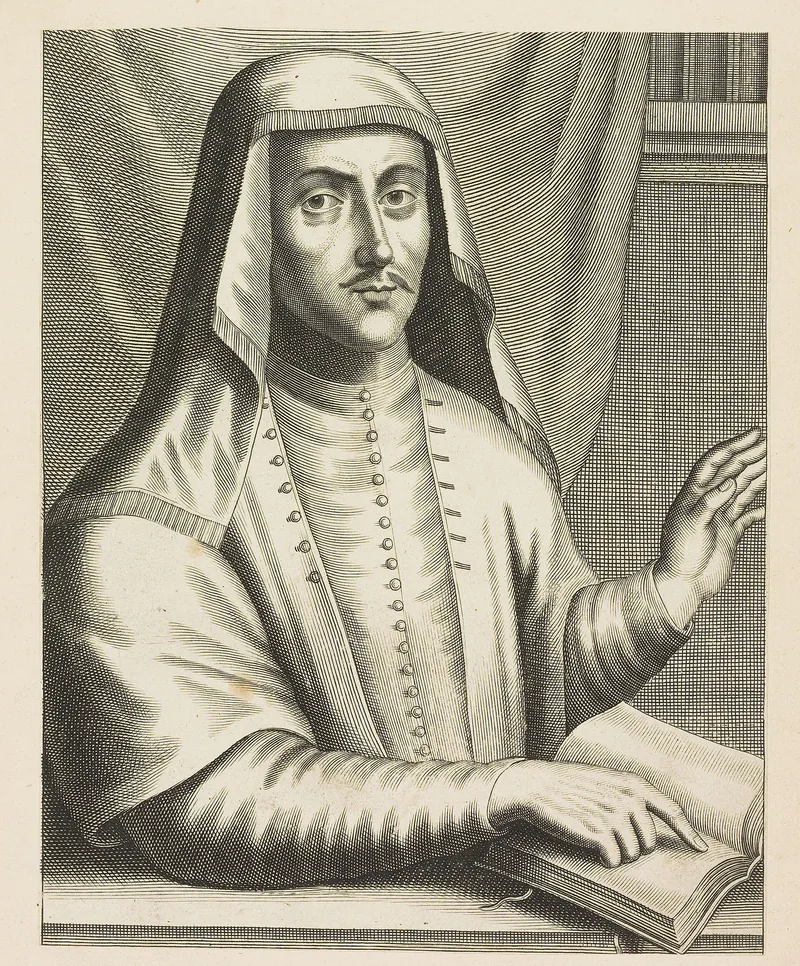
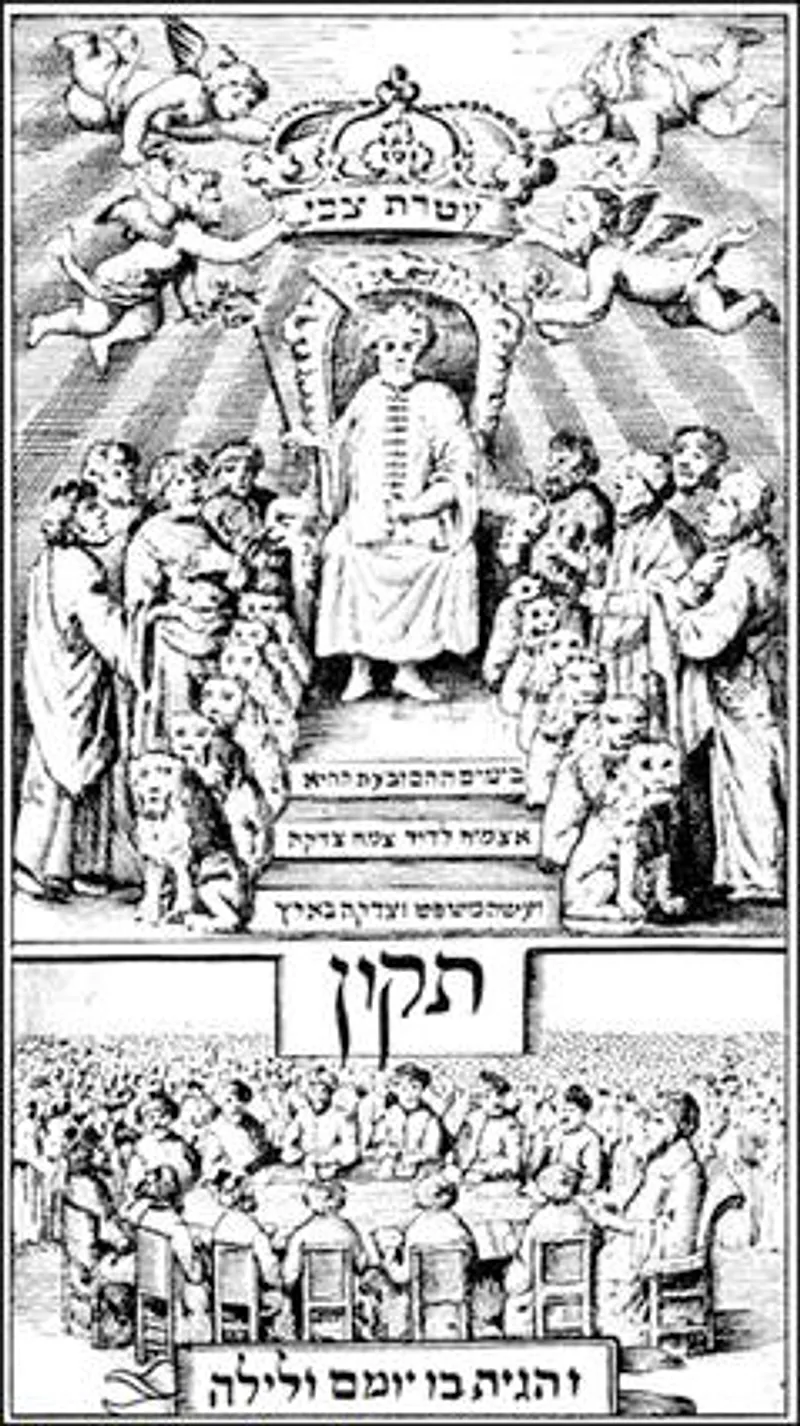
Nathan became the movement's prophet and theologian. His letters announced that the redemption was imminent and called for intense repentance: fasting, immersions, self-mortification and new liturgies based on Lurianic tikkunim. The news travelled through the trade and rabbinic networks of the Mediterranean and beyond. Communities in the Ottoman Empire, Italy, the Netherlands, Germany, Poland and North Africa were swept up in excitement; some people sold their property in preparation for the journey to the Holy Land. The memoirs of Glückel of Hameln recall her father-in-law in Hamburg packing barrels of provisions to be ready to leave.
In December 1665 Sabbatai returned to Smyrna in triumph, took over the Portuguese synagogue, and distributed the kingdoms of the world among his followers. Early in 1666 he sailed to Constantinople, apparently expecting to take the Sultan's crown. Instead he was arrested and held in the fortress of Gallipoli, where he lived in state, received delegations from across Europe and abolished the fasts of the Seventeenth of Tammuz and the Ninth of Av, turning them into feasts.
The Apostasy in Adrianople§
The crisis came in September 1666. A Polish kabbalist, Nehemiah ha-Kohen, after meeting Sabbatai in Gallipoli, denounced him to the Ottoman authorities. Sabbatai was brought before the Sultan's council at Edirne (Adrianople). Faced, according to the usual account, with the choice between death and conversion, he put on a Muslim turban and took the name Aziz Mehmed Efendi. He received a court pension and the title of a palace doorkeeper. His wife and a number of followers also converted.
The apostasy devastated the movement. Many believers returned shamefaced to normal life, and rabbinic authorities moved to suppress the memory of the affair, destroying documents and banning Sabbatean writings. Yet a substantial minority refused to abandon faith in him. Sabbatai continued to live as a Muslim while teaching his followers in secret, sometimes observing Jewish rites. In 1672 he was arrested again and in 1673 exiled to Dulcigno (modern Ulcinj, in Montenegro), where he died in 1676, by tradition on the Day of Atonement.
The Theology of the Apostate Messiah§
The survival of the movement depended on Nathan of Gaza's theology, which used the categories of Lurianic Kabbalah to give meaning to the scandal. In Luria's teaching, the divine light had been shattered at creation and sparks of holiness had fallen into the kelippot, the "husks" of the realm of evil, to be raised by the commandments and prayers of Israel. Nathan argued that the Messiah's soul had been entangled in the realm of the husks from the beginning, and that the Messiah's task was to descend into evil itself and liberate the last and most deeply buried sparks. The apostasy was therefore not betrayal but the final and most painful stage of redemption.
Nathan's treatise on the "dragons" and later Sabbatean writings developed a distinctive cosmology of two lights within the Infinite: a "light containing thought", which willed creation, and a "thoughtless light", which resisted it. Some radical Sabbateans drew the conclusion that the Messiah's age abolished the commandments of the Torah, and that holiness could be achieved through transgression, a doctrine later summed up in the paradoxical phrase "a commandment fulfilled through a sin". Scholem's famous essay "Redemption through Sin" (1937), collected in The Messianic Idea in Judaism, analysed this antinomian strand.
After 1666: The Dönme, Crypto-Sabbateans and Frankism§
After Sabbatai's death, several hundred families in Salonica followed him into Islam around 1683, forming the community known in Turkish as the Dönme ("converts"), who called themselves ma'aminim ("believers"). Outwardly Muslim, they preserved secret prayers, Ladino and Hebrew texts and a distinctive calendar, and divided into subgroups, including the followers of Jacob Querido, brother of Sabbatai's last wife. They played a notable role in the commercial and political life of Salonica until the population exchange of 1923 moved them to Turkey. Marc David Baer's The Dönme (2010) traces their later history.
Within Judaism, crypto-Sabbatean circles persisted in Italy, Germany, Bohemia and Poland. Suspicion of Sabbateanism provoked bitter controversies: over the kabbalist Nehemiah Hayon in 1713–1714, over the young Moses Hayyim Luzzatto in the 1730s, and above all the Emden–Eybeschütz dispute of the 1750s, in which Jacob Emden accused Jonathan Eybeschütz, a leading rabbi, of writing amulets containing veiled references to Sabbatai Zevi. The most radical heir was Jacob Frank (1726–1791), whose followers in Podolia, after clashes with rabbinic authorities and a public disputation at Lwów in 1759, converted to Catholicism. Paweł Maciejko's The Mixed Multitude (2011) is the standard study of the Frankist movement.
Why It Happened: Scholem and His Critics§
Gershom Scholem's monumental Sabbatai Sevi: The Mystical Messiah (Hebrew 1957, English 1973) argued that the movement's success could not be explained by persecution or local suffering alone, since it spread equally in prosperous and oppressed communities. Its cause, he proposed, was the dissemination of Lurianic Kabbalah, which had made the expectation of cosmic repair and imminent redemption part of popular piety. Scholem also saw Sabbateanism as a hidden bridge to Jewish modernity, through its erosion of rabbinic authority.
Later historians have qualified each element. Moshe Idel, in Messianic Mystics (1998), questioned how widely Lurianic Kabbalah had actually spread before 1665 and pointed to other messianic traditions. Others emphasised the effect of the Khmelnytsky massacres of 1648, the role of Christian millenarian hopes centred on the year 1666, the communications networks of Sephardi merchants, and Sabbatai's own charisma. The link between Sabbateanism and the Jewish Enlightenment is now widely regarded as unproven. The movement's legacy is clearer in its effects: a lasting suspicion of popular Kabbalah and messianism, which shaped the early reception of Hasidism and the rabbinic restrictions on Kabbalah study described in what Kabbalah is.
Frequently asked questions§
Who was Sabbatai Zevi?§
Sabbatai Zevi (1626–1676) was a kabbalist from Smyrna who was proclaimed the Messiah in 1665 and won a vast following across the Jewish world. In 1666 he converted to Islam before the Ottoman Sultan's court. He died in exile in Dulcigno in 1676.
Why did Sabbatai Zevi convert to Islam?§
According to most accounts, he was given a choice between death and conversion after being denounced to the Ottoman authorities. His followers, led by Nathan of Gaza, interpreted the conversion as a deliberate mystical descent into the realm of evil to redeem the sparks of holiness trapped there.
Who are the Dönme?§
The Dönme were descendants of Sabbatai Zevi's followers who converted to Islam, mainly in Salonica, from the late seventeenth century. They lived outwardly as Muslims while preserving secret Sabbatean beliefs and practices. Most moved to Turkey after the 1923 population exchange.
What was the connection between Sabbateanism and Kabbalah?§
Nathan of Gaza used the concepts of Lurianic Kabbalah, such as the shattering of the vessels, the sparks and the kelippot, to explain the Messiah's mission and later his apostasy. After the movement's collapse, many rabbis became suspicious of the popular spread of Kabbalah.
Sources and further reading§
- Sabbatai Sevi: The Mystical Messiah, 1626–1676 — Gershom Scholem, 1973
- The Messianic Idea in Judaism — Gershom Scholem, 1971
- Sabbatai Zevi: Testimonies to a Fallen Messiah — David J. Halperin, 2007
- Messianic Mystics — Moshe Idel, 1998
- The Dönme: Jewish Converts, Muslim Revolutionaries, and Secular Turks — Marc David Baer, 2010
- The Mixed Multitude: Jacob Frank and the Frankist Movement, 1755–1816 — Paweł Maciejko, 2011
- Sabbatean Heresy: Writings on Mysticism, Messianism, and the Origins of Jewish Modernity — Paweł Maciejko (ed.), 2017