Liber XX · Kabbalah · Chapter VI: Merkavah & Hekhalot
3 Enoch (Sefer Hekhalot): Enoch, Metatron and the Palaces
3 Enoch or Sefer Hekhalot explained: Rabbi Ishmael's ascent, Enoch's transformation into Metatron, the lesser YHWH, Elisha ben Abuyah, dating and influence.

3 Enoch, known in Hebrew manuscripts as Sefer Hekhalot ("The Book of the Palaces"), is a Hebrew work of late antique Jewish mysticism in which Rabbi Ishmael ascends to heaven and is guided by the angel Metatron, who reveals that he was once the human patriarch Enoch. It is the most "apocalyptic" of the Hekhalot texts: less a manual of adjurations than a guided tour of the heavenly court, the angelic hierarchy and the secrets of history. Its portrait of a man transformed into the highest angel shaped later Kabbalah and almost all subsequent lore about Metatron.
What 3 Enoch Is: Title, Language and Manuscripts§
The book belongs to the Hekhalot ("palaces") literature, the body of Hebrew and Aramaic texts that describe ascent through seven heavenly palaces to the divine chariot-throne, surveyed in Merkavah and Hekhalot mysticism. Manuscripts call it Sefer Hekhalot, and some copies give it other titles, such as "The Book of Rabbi Ishmael the High Priest". Modern scholars named it "3 Enoch" or the "Hebrew Book of Enoch" to set it beside the Ethiopic 1 Enoch and the Slavonic 2 Enoch, with which it shares the figure of the antediluvian patriarch but not a direct literary line.
The Swedish scholar Hugo Odeberg published the first critical edition with an English translation in 1928, dividing it into forty-eight chapters with appended fragments; his numbering is still used. Philip Alexander's translation in the first volume of The Old Testament Pseudepigrapha (1983) became the standard English version. Peter Schäfer's synoptic edition of the Hekhalot manuscripts (1981) showed that the boundaries of these texts are fluid: copyists combined, expanded and rearranged units, so that "3 Enoch" is better imagined as a cluster of related passages than as a fixed book with a single author.
The Ascent of Rabbi Ishmael and the Seven Palaces§
The narrative opens with Rabbi Ishmael, the second-century sage often styled high priest in Hekhalot literature, describing his ascent to the chariot. He passes through six palaces, one inside another, and at the gate of the seventh the angelic guardians threaten him. He prays, and the Holy One sends "his servant Metatron, the Prince of the Presence", who takes him by the hand and brings him before the Throne of Glory.
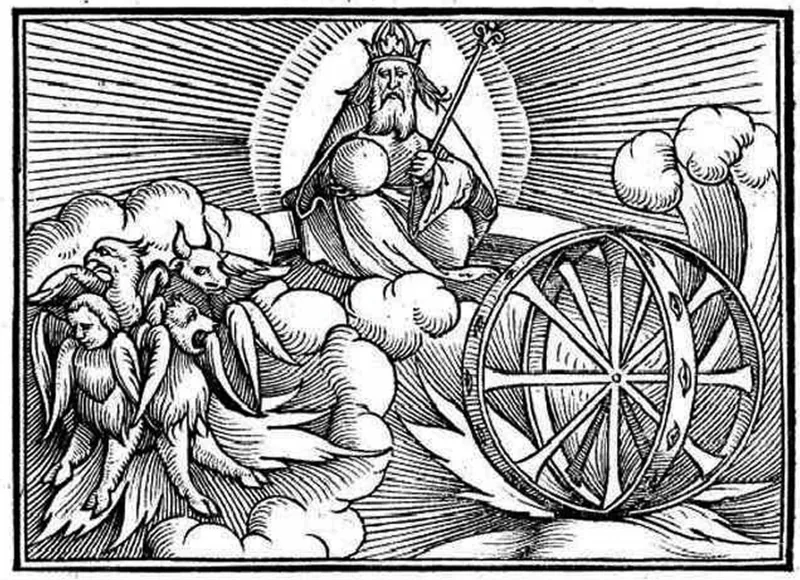
The angels question Ishmael's right to be there, and Metatron answers that he is of Israel, the people chosen to receive the Torah. From this point the book becomes a dialogue: Ishmael asks, Metatron answers, and the questions move from Metatron's own identity to the structure of heaven and finally to the hidden course of history. Unlike Hekhalot Rabbati, with its passwords and seals for each gate, 3 Enoch gives little technique; its interest lies in revelation rather than procedure, which is why scholars place it closer to the apocalyptic genre.
Enoch Becomes Metatron: The Heart of the Book§
The best-known chapters explain who Metatron is. Asked why he bears so many names, Metatron answers that he is Enoch, son of Jared, the figure of whom Genesis 5 says only that he "walked with God: and he was not; for God took him". According to 3 Enoch, God took Enoch up in the generation of the Flood as a witness against his corrupt contemporaries. The angels objected that a man born of woman should not ascend to the heights, but God set them aside.
Enoch's body is then transformed. His flesh becomes flame, his sinews fire, his bones glowing coals; his eyes become lightning and his size is increased until it fills the world. He receives seventy-two wings and a vast number of eyes. God makes him a throne like the Throne of Glory, spreads over him a garment of light, and places on his head a crown engraved with the letters by which heaven and earth were created. All the angelic princes bow before him.
The "lesser YHWH"§
The climax of this section is God's naming of Metatron as "the lesser YHWH" (YHWH ha-qatan), with an allusion to Exodus 23: "my name is in him". The idea of a chief angel who bears the divine name, a vice-regent of God, has parallels in earlier Jewish texts about the angel Yahoel, in Philo's Logos, and in the exalted figures of apocalyptic literature. It also had obvious theological risks.
Elisha ben Abuyah and the "two powers"§
The text itself addresses those risks. It tells how Elisha ben Abuyah, the sage who became the archetypal heretic (called Aher, "the Other"), ascended and saw Metatron seated on his throne like a king. Elisha exclaimed that there must be "two powers in heaven". At once Metatron was taken from his throne and struck with sixty lashes of fire, to show that he is not a second god. A closely related story appears in the Babylonian Talmud (Hagigah 15a). Alan Segal's study Two Powers in Heaven (1977) placed these episodes within a wider rabbinic polemic against beliefs, Jewish and Christian, in a second divine figure.
Angelic Hierarchy, the Heavenly Court and the Curtain§
A long middle section catalogues the angelic world. Metatron names the princes who govern the seven heavens, the angels set over the sun, moon, stars, fire, hail and winds, and the great princes nearest the throne. Ranks of angels bow to those above them in a carefully described order, each removing its crown before a superior. The heavenly court sits in judgement every day; books are opened before the Holy One, and angelic scribes record the deeds of the world.
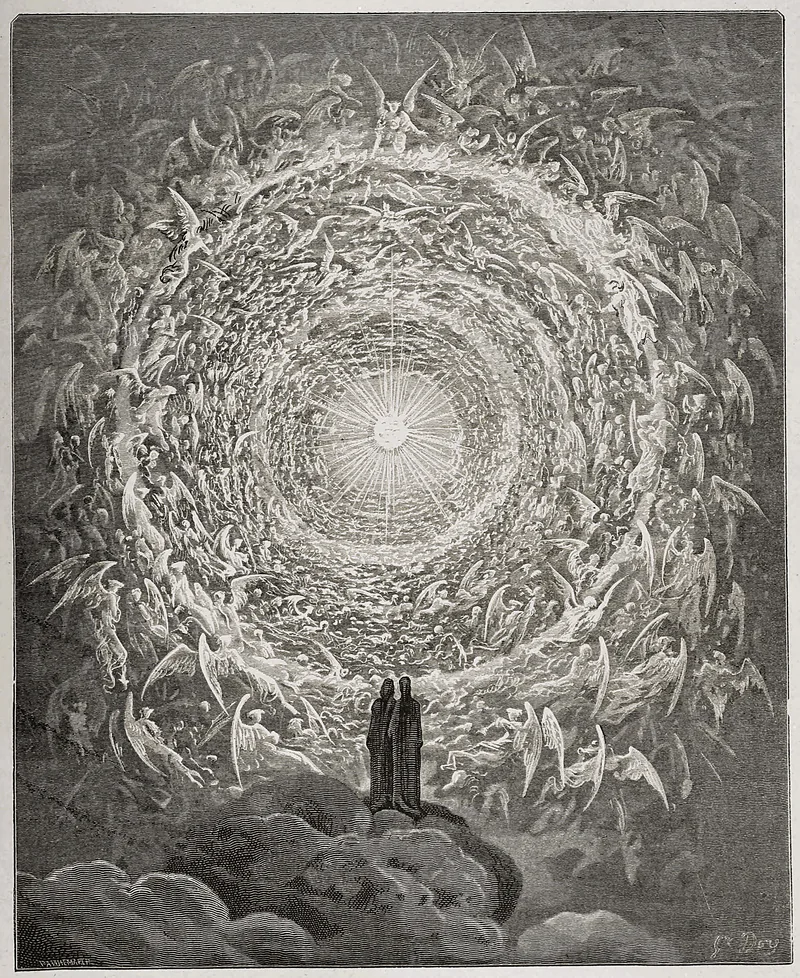
The section also describes the qedushah, the angelic chant of "Holy, holy, holy" from Isaiah 6. The angels may sing only after Israel has sung below, a link between heavenly worship and the synagogue liturgy discussed in Jewish prayer and the synagogue. Much of this angelology passed into later angel lore and magical books such as Sefer Raziel; see angels and spirits.
The curtain of the Throne§
In the final chapters Metatron shows Ishmael the letters by which heaven and earth were created, the storehouses of souls, and the pargod, the curtain before the Throne on which all generations and their deeds are woven, from Adam to the wars of the Messiah at the end of days. History appears as already written before God, and Ishmael's ascent ends not in union but in knowledge of its hidden plan. Appended fragments list the seventy names of Metatron, continuing the book's interest in the power of names developed in later speculation on the 72 names of God.
Dating 3 Enoch and Its Place Among the Enoch Books§
The date of 3 Enoch is disputed. Odeberg proposed the third century, believing much of the material to be early. Philip Alexander argued that the book reached its final form in Babylonia in the fifth or sixth century, though it incorporates older Palestinian traditions. Other scholars place the final editing later, as late as the eighth or ninth century, noting its dependence on the Babylonian Talmud and the late attestation of the manuscripts, most of which are medieval.
All three Enoch books develop the brief verse in Genesis, and 2 Enoch already describes Enoch's transformation into a glorious being. Most scholars think 3 Enoch did not use these books directly but drew on a shared stream of Enoch traditions that survived among Jews long after the older books ceased to be read. Martha Himmelfarb's Ascent to Heaven in Jewish and Christian Apocalypses (1993) set 3 Enoch within this longer history of heavenly journeys.
Influence on Kabbalah and Western Angel Lore§
Through the Hekhalot collections copied by the German Pietists of the twelfth and thirteenth centuries, 3 Enoch passed into the medieval mystical tradition. The Zohar and later kabbalists identify Metatron with Enoch, speak of him as "the youth" (na'ar) and the Prince of the Presence, and in some systems associate him with the lower world of formation or with the sefirah Malkhut; see the Zohar and what Kabbalah is. Metatron also appears in amulets and magical texts, invoked as the highest of the angelic princes.
Christian and Hermetic writers took up the figure as well. Renaissance Christian Cabalists listed Metatron among the angels of the divine names, and the Hermetic Order of the Golden Dawn assigned him to Kether, the first sefirah, in its tables of archangels. Many modern popular ideas about Metatron derive ultimately from 3 Enoch, though often filtered through these later systems. The Elizabethan magician John Dee's interest in the "Book of Enoch" belongs to a different, Christian strand of Enoch legend, described in Enochian magic.
Frequently asked questions§
Is 3 Enoch part of the Bible?§
No. 3 Enoch is not part of the Jewish or any Christian biblical canon. It is a Hebrew mystical text from late antiquity or the early Middle Ages, belonging to the Hekhalot literature. The number "3" is a modern scholarly label distinguishing it from 1 Enoch and 2 Enoch.
Who is Metatron in 3 Enoch?§
Metatron is the Prince of the Presence, the highest angel in the heavenly court. 3 Enoch identifies him with the patriarch Enoch, who was taken up to heaven and transformed into fire and light. He is called "the lesser YHWH" because the divine name is in him, but the book insists that he is not a second god.
Who wrote 3 Enoch?§
The book is anonymous and pseudepigraphic: it is narrated by Rabbi Ishmael, a sage of the second century, but was not written by him. Most scholars think it was compiled and edited over time, reaching its final form in Babylonia between the fifth and ninth centuries.
How is 3 Enoch different from 1 Enoch?§
1 Enoch is an older collection, largely from the third to first centuries BCE, preserved in full in Ethiopic, focused on the Watchers, astronomy and judgement. 3 Enoch is a Hebrew Hekhalot text centred on Metatron, the angelic hierarchy and Rabbi Ishmael's ascent. They share the figure of Enoch but come from different periods and settings.
Sources and further reading§
- 3 Enoch or the Hebrew Book of Enoch — Hugo Odeberg, 1928
- The Old Testament Pseudepigrapha, vol. 1: Apocalyptic Literature and Testaments — James H. Charlesworth (ed.), 1983
- The Hidden and Manifest God: Some Major Themes in Early Jewish Mysticism — Peter Schäfer, 1992
- The Origins of Jewish Mysticism — Peter Schäfer, 2009
- Two Powers in Heaven: Early Rabbinic Reports about Christianity and Gnosticism — Alan F. Segal, 1977
- Ascent to Heaven in Jewish and Christian Apocalypses — Martha Himmelfarb, 1993
- Jewish Gnosticism, Merkabah Mysticism, and Talmudic Tradition — Gershom Scholem, 1960
- Major Trends in Jewish Mysticism — Gershom Scholem, 1941