Liber XXXIII · Theosophy · Chapter VIII: Reincarnation & the Afterlife
Reincarnation and the Afterlife: Beliefs Across Traditions
Reincarnation and the afterlife through history: Greek metempsychosis, Hindu and Buddhist rebirth, Kabbalistic gilgul, Theosophy and past-life research.

Reincarnation is the belief that a soul or stream of consciousness is reborn in a new body after death, often in a cycle governed by moral cause and effect. It is central to Hinduism, Buddhism, Jainism and Sikhism, was taught by Pythagoras and Plato in ancient Greece, appears in Jewish Kabbalah, Druze religion and several medieval Christian dissident movements, and was popularised in the modern West by Spiritism and Theosophy. Other traditions envisage a single life followed by judgement, a heavenly realm, or a shadowy underworld.
Ancient Conceptions of the Afterlife§
The oldest written afterlife beliefs come from Egypt and Mesopotamia. Egyptian funerary literature, from the Pyramid Texts to the New Kingdom Book of the Dead, describes the deceased passing through dangers of the underworld and the judgement in which the heart is weighed against the feather of Maat. Mesopotamian texts, by contrast, describe a gloomy "land of no return" where the dead eat dust. Early Israelite religion spoke of Sheol, a shadowy realm of the dead, while ideas of resurrection and judgement emerged later, in texts such as the Book of Daniel.
Homer's underworld, visited by Odysseus in the eleventh book of the Odyssey, is similarly bleak. Against this background, a few Greek religious movements taught something radically different: that the soul is immortal, divine in origin, and passes through many bodies.
Metempsychosis in Greek Philosophy§
The Greek doctrine of metempsychosis (transmigration of souls) is associated with Orphic religion and above all with Pythagoras (sixth century BCE), who was said to remember his previous lives and to have recognised the soul of a dead friend in the cry of a beaten dog. Empedocles, in the fifth century, wrote that he had once been "a boy and a girl, a bush and a bird, and a leaping fish in the sea".

Plato gave the doctrine its most influential literary form. In the Phaedo he argued for the soul's immortality; in the Phaedrus he described souls falling from the vision of the Forms and returning through many lives; and in the Myth of Er at the end of the Republic he told of souls choosing their next lives before drinking from the river of forgetfulness. Later Platonists, including Plotinus, kept the doctrine, though some debated whether human souls could enter animals.
Rebirth in Hinduism, Buddhism and Jainism§
In India, the doctrines of rebirth (punarjanma) and karma appear clearly in the early Upanishads, roughly the middle of the first millennium BCE. The self (ātman) passes from body to body within saṃsāra, the cycle of birth and death, its future shaped by its actions. The Bhagavad Gita compares the soul's change of bodies to a person putting on new clothes. The goal is mokṣa, liberation from the cycle.
Buddhism accepted rebirth and karma while denying a permanent self (anattā). What continues is a stream of causally linked mental processes, reborn among six realms of existence until the attainment of nirvana. Tibetan Buddhism describes an intermediate state, the bardo, between death and rebirth; the text known in the West as the Tibetan Book of the Dead, published in English in 1927, guides the dead through it. Jainism teaches that the soul (jīva) is weighed down by karmic matter and can be freed through strict ethical discipline. Sikhism also teaches rebirth and liberation through devotion to God. For the role of these ideas in Indian esoteric practice, see tantra.
Gilgul and Christian Dissent: Rebirth in the Abrahamic World§
Mainstream Judaism, Christianity and Islam teach a single earthly life followed by resurrection and judgement. Nevertheless, rebirth appears at their edges. In Jewish mysticism the doctrine of gilgul (rolling, transmigration) appears in the twelfth-century Sefer ha-Bahir and became central in the sixteenth-century Kabbalah of Isaac Luria, whose disciple Hayyim Vital explored the roots and reincarnations of souls in his Sha'ar ha-Gilgulim (see Lurianic Kabbalah). The Druze, an offshoot of Ismaili Islam, teach immediate rebirth of the soul in another human body.
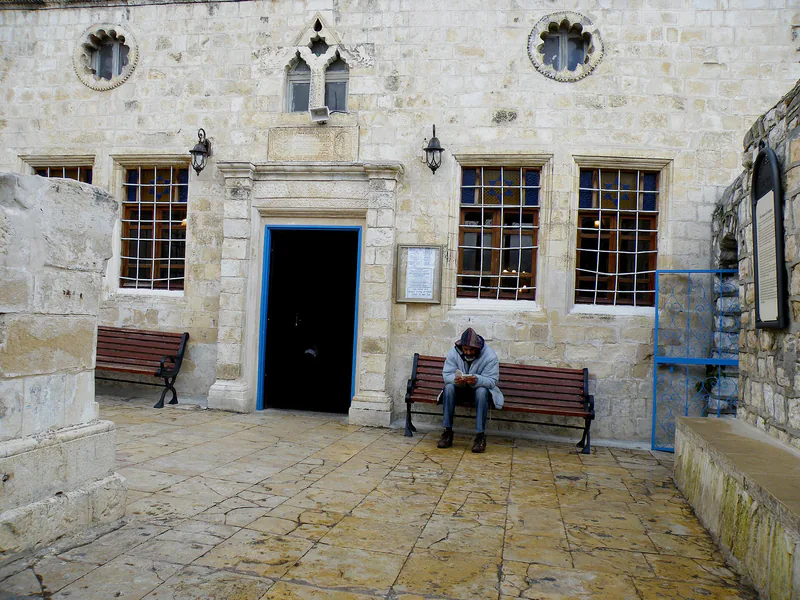
In Christianity, the third-century theologian Origen taught the pre-existence of souls, a view later condemned in anathemas associated with the Second Council of Constantinople (553), though historians debate exactly what was condemned. The medieval Cathars taught that souls were angelic spirits trapped in successive bodies until released.
Modern Western Reincarnation: Spiritism and Theosophy§
Reincarnation entered modern Western religion mainly through two movements. Allan Kardec's Spiritism, founded in France in 1857, taught that spirits reincarnate to make moral progress, and became a large movement in Brazil (see Spiritualism). Theosophy, from the 1870s, popularised karma and rebirth as a universal law of spiritual evolution. Unlike most Indian traditions, which saw rebirth as a cycle to escape, Theosophists usually presented it as an upward school of the soul. Rudolf Steiner, the American psychic Edgar Cayce and many New Age teachers developed the idea further.
Western afterlife imagery was also shaped by Emanuel Swedenborg's Heaven and Hell (1758) and by the Spiritualist "Summerland". Surveys in the United States and Europe have found that a substantial minority, often between a fifth and a third of adults, say they believe in reincarnation.
Past-Life Regression and Reincarnation Research§
In 1956 the businessman Morey Bernstein published The Search for Bridey Murphy, describing a Colorado woman who, under hypnosis, seemed to recall life as an Irishwoman in the nineteenth century. Newspaper investigations suggested that details may have come from forgotten childhood memories, a phenomenon called cryptomnesia. Psychologists have since shown that hypnosis readily produces confident but false memories, and most regard past-life regression as unreliable evidence.
A more cautious line of research was pursued by the psychiatrist Ian Stevenson (1918–2007) at the University of Virginia, who collected thousands of cases of young children who reported memories of previous lives, beginning with Twenty Cases Suggestive of Reincarnation (1966); his work has been continued by Jim Tucker. Critics such as the philosopher Paul Edwards have argued that such cases can be explained by cultural expectation, parental influence and selective reporting. Studies of near-death experiences, popularised by Raymond Moody's Life After Life (1975), raise related questions. The prevailing scientific view is that none of this research demonstrates survival of consciousness after death.
Frequently asked questions§
Which religions believe in reincarnation?§
Hinduism, Buddhism, Jainism and Sikhism all teach rebirth, as do the Druze and some Jewish Kabbalistic traditions. In the modern West, Spiritism, Theosophy, Anthroposophy and much of the New Age movement also teach reincarnation.
What is the difference between reincarnation and resurrection?§
Reincarnation means the soul is reborn in a new body in a further earthly life. Resurrection, as taught in Judaism, Christianity and Islam, means the dead will be raised once, usually at the end of time, for judgement and eternal life.
Does Buddhism believe in a soul that reincarnates?§
Buddhism teaches rebirth but denies a permanent, unchanging self. What passes from one life to the next is a continuity of causes and mental tendencies, often compared to a flame lit from another flame. For this reason many scholars prefer the term "rebirth" to "reincarnation" for Buddhism.
Sources and further reading§
- Phaedo — Plato, c. 380 BCE
- Republic — Plato, c. 375 BCE
- The Tibetan Book of the Dead — W. Y. Evans-Wentz (ed.), 1927
- Heaven and Hell — Emanuel Swedenborg, 1758
- The Spirits' Book — Allan Kardec, 1857
- Twenty Cases Suggestive of Reincarnation — Ian Stevenson, 1966
- Life After Life — Raymond A. Moody, 1975
- Reincarnation: A Critical Examination — Paul Edwards, 1996
- Heaven: A History — Colleen McDannell and Bernhard Lang, 1988
- Karma and Rebirth in Classical Indian Traditions — Wendy Doniger O'Flaherty (ed.), 1980