Liber XIV · Hinduism · Chapter VI: Shaivism
Kashmir Shaivism: Abhinavagupta, Trika and Recognition
Kashmir Shaivism explained: the Shiva Sutras, Trika and Pratyabhijna, Abhinavagupta's Tantraloka, the 36 tattvas, the means of liberation and modern revival.

Kashmir Shaivism is the modern name for the non-dual traditions of Shaiva Tantra that flourished in Kashmir between roughly the ninth and twelfth centuries, above all the Trika, Krama and Pratyabhijna ("Recognition") schools. Its thinkers, culminating in Abhinavagupta (c. 975–1025), taught that reality is one free and self-aware consciousness, identical with Shiva, which manifests the universe as its own play, and that liberation is the recognition that one's own self is that consciousness.
What Is Kashmir Shaivism? Names, Schools and Scope§
The term "Kashmir Shaivism" was popularised by J. C. Chatterji's book of that title in 1914, and it can mislead in two ways. First, not all Shaivism in Kashmir was non-dual: the dualist Shaiva Siddhanta was strong in the valley, and its Kashmiri theologians, such as Sadyojyoti and Ramakantha, were important opponents of the non-dualists. Second, the label groups together several distinct but interwoven currents:
- Trika, "the triad," centred on the worship of three goddesses, Para, Parapara and Apara, and on the Malinivijayottara Tantra, which Abhinavagupta treated as its root scripture.
- Krama, "the sequence," a tradition of the worship of Kali in a series of phases corresponding to the cycle of cognition, from emission to dissolution.
- Spanda, "vibration," the teaching that consciousness is not static but a subtle, ceaseless pulsation.
- Pratyabhijna, "recognition," the philosophical school that argued for non-dualism using the methods of formal Indian philosophy.
These schools developed within the broader world of Shaiva Tantra described in Shaivism and Tantra in Hinduism. Historians, above all Alexis Sanderson, have shown how the Kashmiri writers drew on older tantric cults of the cremation ground and gave them a learned, often internalised form acceptable to householders.
The Scriptural Roots: Tantras, the Shiva Sutras and the Spanda Karikas§
Behind the philosophers lies a large body of revealed scripture. The Bhairava Tantras, texts in which Shiva in his fierce form Bhairava teaches the Goddess, including the Svacchanda Tantra and the Malinivijayottara Tantra, provided ritual, yoga and doctrine. The short Vijnanabhairava Tantra, which offers 112 methods of contemplation for entering the state of Bhairava, has become one of the most widely read Shaiva texts in modern times.
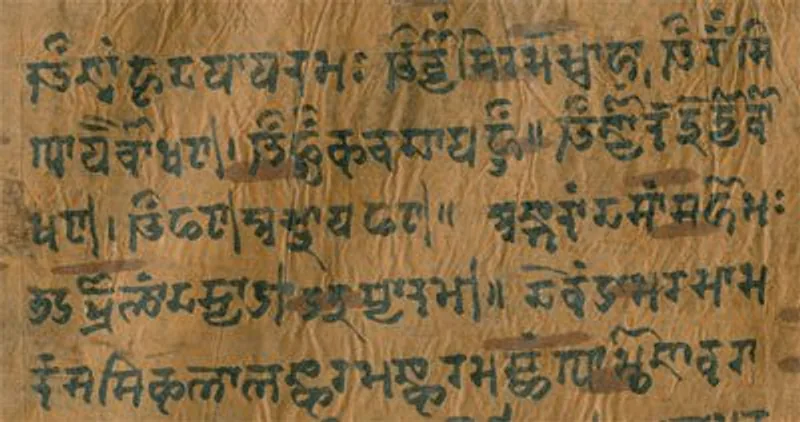
The founding document of the Kashmiri tradition is the Shiva Sutras, seventy-seven terse aphorisms that, according to tradition, were revealed to the sage Vasugupta in the ninth century; one account says Shiva directed him in a dream to a rock on Mahadeva mountain on which the sutras were inscribed. The first sutra declares that the self is consciousness (chaitanyam atma). The Spanda Karikas, attributed either to Vasugupta or to his pupil Kallata, expanded the teaching of vibration.
The Philosophers: Somananda, Utpaladeva and Abhinavagupta§
Somananda and Utpaladeva§
The philosophical school of Recognition begins with Somananda (early tenth century), whose Shivadrishti, "the vision of Shiva," argued that everything is Shiva. His pupil Utpaladeva gave the system its classic form in the Ishvarapratyabhijna Karika, "verses on the recognition of the Lord," with his own commentaries. Utpaladeva debated chiefly with Buddhist philosophers of the school of Dharmakirti, who denied a permanent self; he argued that memory, recognition and the unity of experience require a single, self-aware subject.
Abhinavagupta§
Abhinavagupta, active in the late tenth and early eleventh centuries, was the tradition's greatest figure. He studied with many teachers across lineages and wrote, by tradition, more than forty works. His masterpiece, the Tantraloka, "light on the Tantras," is a vast synthesis of Trika doctrine and ritual in thirty-seven chapters; he also wrote a shorter summary, the Tantrasara, two commentaries on Utpaladeva's verses and a commentary on the Paratrishika, a short Trika text on the supreme goddess and the energies of the Sanskrit alphabet. Legend says that at the end of his life he walked into a cave near Srinagar with his disciples and was not seen again.
Abhinavagupta was also one of India's greatest literary theorists. In his commentaries on Bharata's Natyashastra and on Anandavardhana's theory of suggestion (dhvani), he argued that aesthetic experience (rasa) is a moment of absorbed, impersonal delight akin to, though not identical with, the bliss of liberation, and he defended tranquillity (shanta) as a distinct aesthetic mood.
His pupil Kshemaraja wrote the Pratyabhijnahridaya, "the heart of recognition," a compact introduction still widely studied, and commentaries on the Shiva Sutras and Spanda Karikas. The thirteenth-century commentator Jayaratha explained the Tantraloka in detail.
Core Teachings: Consciousness, Freedom and the Thirty-Six Tattvas§
Prakasha and Vimarsha§
For the Kashmiri non-dualists, reality is consciousness. But consciousness is not a passive mirror, as they read the Advaita Vedanta of Shankara to imply; it has two inseparable aspects. Prakasha is its light, the fact that anything appears at all. Vimarsha is its reflexive awareness, the capacity of consciousness to know itself as "I" (aham) and to act. Vimarsha is identified with Shakti, the Goddess, and with the absolute freedom (svatantrya) by which Shiva manifests the universe within himself, as a city appears in a mirror without being separate from it. Comparison with other schools is offered in The Six Schools of Hindu Philosophy.
The Thirty-Six Tattvas§
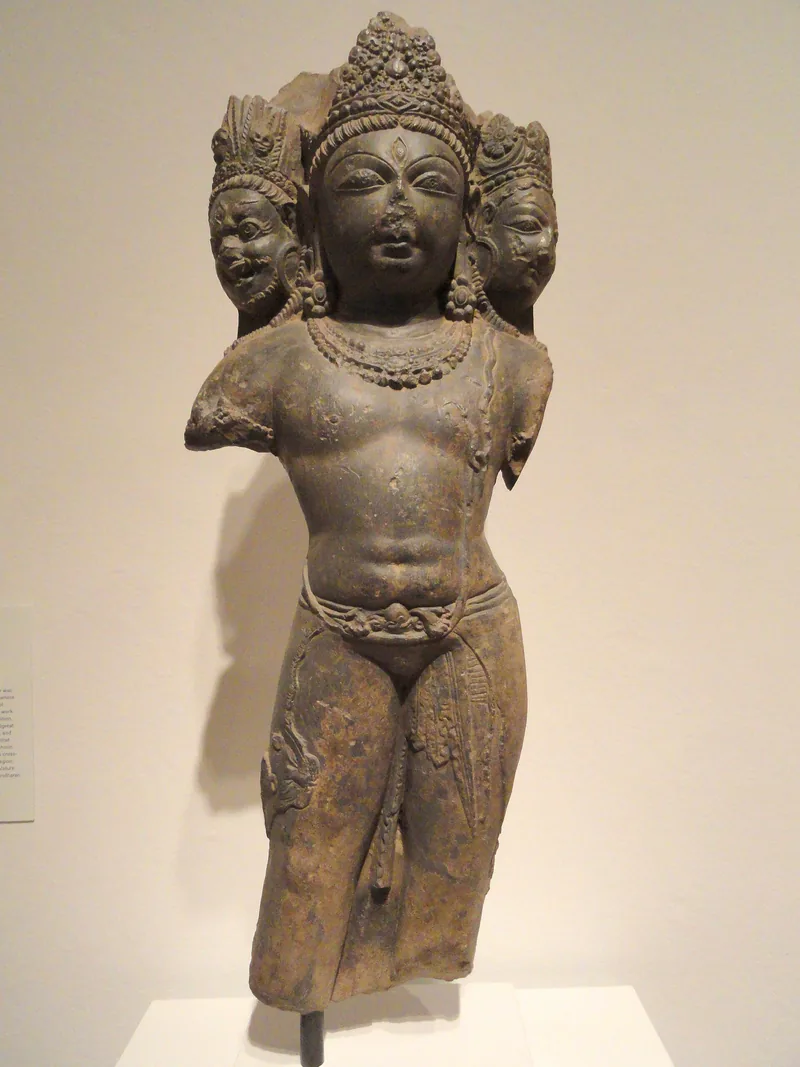
The tradition expanded the twenty-five principles (tattvas) of Samkhya into a hierarchy of thirty-six. At the top are five pure principles: Shiva, Shakti, Sadashiva, Ishvara and pure knowledge. Below them, maya and its five "sheaths" (kanchukas) limit the infinite powers of consciousness in time, space, knowledge, action and desire, producing the individual soul. The familiar Samkhya categories of spirit, matter, mind, senses and elements follow. The world is thus not an illusion to be escaped, but consciousness itself in contracted form.
Bondage and Recognition§
Bondage results from three impurities (malas): the sense of being small and incomplete, the sense of difference, and the residues of action. Since the soul is already Shiva, liberation is not the acquisition of something new but the recognition (pratyabhijna) of what was always the case, as a woman might recognise that the man before her is the lover she has long heard praised.
The Paths to Liberation: Grace, Initiation and the Upayas§
Abhinavagupta classified the means (upaya) to liberation according to the aspirant's capacity. The highest, sometimes called the "non-means," is sudden realisation through grace alone. The shambhava means works through pure will and awareness; the shakta means through purified thought and contemplation; the anava means through the "individual" supports of breath, meditation on places in the body, mantra and ritual. All depend on the descent of Shiva's grace (shaktipata), which varies in intensity.
Initiation (diksha) by a qualified guru was central, and the Tantraloka sets out complex rites of worship, mandalas and mantras based on the phonemes of the Sanskrit alphabet. Its twenty-ninth chapter discusses the esoteric Kaula rites of the lineage, which historically included transgressive substances and sexual union with a consort as a means of realising non-duality; Abhinavagupta reserved them for a qualified few and stressed their inner meaning. These rites are treated historically in Tantra: History and Practice. The Krama worship of a series of Kalis, discussed in Kali, belongs to the same world.
Decline, Survival and Modern Revival§
After the twelfth century the creative period ended. The establishment of Muslim rule in Kashmir in the fourteenth century and the later sufferings of the Hindu community reduced patronage, although Shaiva texts and practices survived in the families of Kashmiri Pandits. Kashmiri teachings also travelled south: Shri Vidya theologians in south India drew on Kashmiri ideas, and Kshemaraja's works were studied far from the valley.
The modern revival began with the Kashmir Series of Texts and Studies, published from 1911 by the Research Department of the princely state of Jammu and Kashmir, which edited the major works. Swami Lakshmanjoo (1907–1991), a Kashmiri teacher regarded as the last living master of an unbroken oral lineage, taught Indian and Western students in Srinagar. Scholars such as Jaideva Singh, Lilian Silburn, André Padoux, Alexis Sanderson and Mark Dyczkowski translated and analysed the texts, and K. C. Pandey wrote the first major study of Abhinavagupta in 1935. Through Swami Muktananda's Siddha Yoga movement and through modern yoga teachers, ideas of the Recognition school have reached a wide Western audience, sometimes in simplified forms that scholars distinguish from the historical tradition.
Frequently asked questions§
What is the difference between Kashmir Shaivism and Advaita Vedanta?§
Both are non-dual, but Advaita Vedanta tends to regard the world as an appearance superimposed on a changeless Brahman, while Kashmir Shaivism regards the world as the real self-expression of a dynamic, free consciousness. For the Kashmiri thinkers, Shiva's power of action is as real as his awareness.
Who was Abhinavagupta?§
Abhinavagupta (c. 975–1025) was a Kashmiri philosopher, tantric master and literary theorist, the most important author of the Trika tradition. His Tantraloka synthesised Shaiva Tantra, and his writings on rasa shaped Indian aesthetics.
What are the Shiva Sutras?§
The Shiva Sutras are seventy-seven aphorisms said to have been revealed to the sage Vasugupta in the ninth century. They teach that the self is consciousness and set out the means to realise identity with Shiva, and they became a foundational text of the Kashmiri tradition.
Sources and further reading§
- The Doctrine of Vibration: An Analysis of the Doctrines and Practices of Kashmir Shaivism — Mark S. G. Dyczkowski, 1987
- The Triadic Heart of Śiva: Kaula Tantricism of Abhinavagupta in the Non-Dual Shaivism of Kashmir — Paul Eduardo Muller-Ortega, 1989
- Abhinavagupta: An Historical and Philosophical Study — K. C. Pandey, 1935
- Pratyabhijñāhṛdayam: The Secret of Self-Recognition — Jaideva Singh (trans.), 1963
- Kashmir Shaivism: The Secret Supreme — Swami Lakshmanjoo, 1985
- Tantra Illuminated: The Philosophy, History, and Practice of a Timeless Tradition — Christopher D. Wallis, 2012