Liber XIV · Hinduism · Chapter VI: Shaivism
Shaivism: The Worship of Shiva, Its History and Schools
Shaivism explained: the worship of Shiva from Vedic Rudra to the linga and Nataraja, the Nayanars, Shaiva Siddhanta, Kashmir Shaivism and the Lingayats.

Shaivism is the Hindu tradition that worships Shiva as the supreme God, the creator, preserver and destroyer of the universe who is also the great ascetic and lord of yoga. One of the oldest and most widespread forms of Hinduism, it ranges from the temple religion of south India and the devotional poetry of the Tamil saints to ascetic orders, the philosophical schools of Kashmir and the reformist Lingayat community, and its central object of worship is the linga, the aniconic emblem of Shiva.
From Rudra to Shiva: The Origins of Shaivism§
The name Shiva, "auspicious," first appears as an epithet of Rudra, a fierce god of the Rigveda who brings disease and healing, rules wild places and is propitiated so that he will keep his arrows away from people and cattle. The Yajurveda's litany of his hundred names (Shatarudriya) praises him as lord of beasts, thieves, mountains and healing herbs. In the Shvetashvatara Upanishad, usually dated to the last centuries BCE, Rudra-Shiva is already the one Lord who creates and dissolves the worlds and who is known through yoga and grace. Claims that a seal from the Indus civilisation depicts a "proto-Shiva" seated in yogic posture have been influential but remain speculative.
By the turn of the Common Era Shiva worship was well established. One of the earliest surviving lingas, from Gudimallam in Andhra Pradesh, is usually dated to around the second or first century BCE and carries a figure of Shiva carved on its shaft. The Mahabharata and the Puranas, described in The Puranas, gave Shiva his rich mythology: the destruction of Daksha's sacrifice, his marriage to Parvati, the burning of Kama, the god of desire, with a glance of his third eye, and his drinking of the poison churned from the ocean.
Shiva in Myth and Image§
Shaivism holds together apparent opposites. Shiva is the naked, ash-smeared yogi who meditates on Mount Kailasa and haunts cremation grounds, and also the ideal husband and father of a divine family with Parvati and their sons Ganesha and Skanda. He is both destroyer and benefactor, terrifying and gentle. Theologians explain this through his "five acts" (panchakritya): creation, preservation, dissolution, the concealment of his nature and the bestowal of grace that liberates souls.
The Linga§
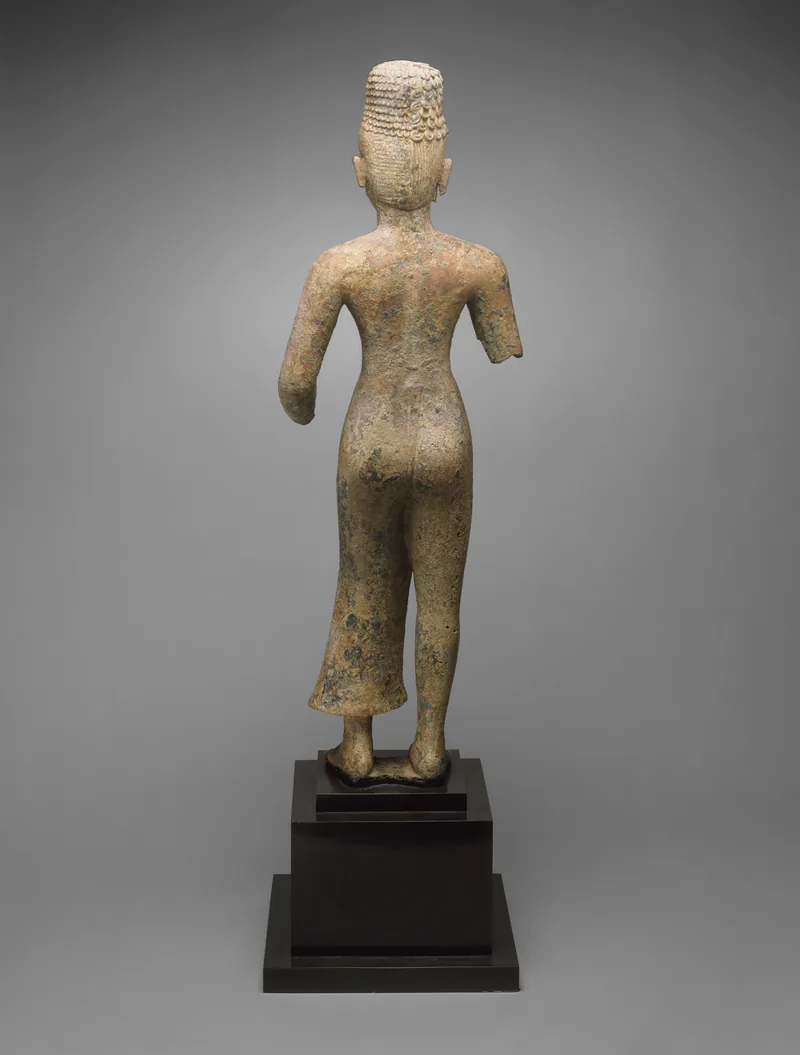
The linga, usually a smooth stone pillar set in a base (pitha or yoni), is Shiva's principal form in temples and homes. Its symbolism has been explained in many ways: as the pillar of fire without beginning or end that appeared before Brahma and Vishnu, as the formless God taking a minimal form, and as the union of Shiva and his power, Shakti. Its origin as a phallic emblem is acknowledged in early texts and sculpture, though most Shaiva theology emphasises its cosmic and transcendent meaning. Worshippers pour water, milk and other substances over it (abhisheka) and offer leaves of the bilva tree.
Nataraja, Ardhanarishvara and Other Forms§
The image of Shiva as Nataraja, dancing within a ring of fire, was perfected in the bronzes of the Chola dynasty of Tamil Nadu (ninth to thirteenth centuries); it is especially associated with the temple of Chidambaram and expresses the rhythm of creation and destruction. Ardhanarishvara, half Shiva and half Parvati, shows the unity of the divine masculine and feminine. Dakshinamurti is Shiva as teacher, seated under a banyan tree; Bhairava is his terrifying aspect, worshipped as guardian of temples and cities. His emblems include the crescent moon, the river Ganga flowing from his matted hair, the trident, the hourglass drum, the serpent, the third eye and the bull Nandi. For his place in the wider pantheon, see Hindu Gods and Goddesses.
Early Shaiva Ascetics and the Tantric Schools§
The earliest organised Shaiva movement known to historians is the Pashupata, traditionally founded by Lakulisha, perhaps in the second century CE. Pashupata ascetics smeared themselves with ash, lived near temples and cremation grounds, and deliberately courted public contempt by behaving like madmen in order to burn away their bad karma. Related orders such as the Lakulas and Kalamukhas followed. The Kapalikas, "skull-bearers," who imitated Shiva's penance for the sin of beheading Brahma, are known mostly from the hostile portraits of Sanskrit drama and from inscriptions.
From about the fifth or sixth century a new body of scripture, the Shaiva Tantras or Agamas, transformed the religion. These texts taught initiation (diksha) by a guru, mantras and elaborate ritual as the means to liberation and power, and they were organised by later scholars into a "path of mantras" open to householders as well as ascetics. For several centuries Shaivism enjoyed extensive royal patronage across India and Southeast Asia, a period the scholar Alexis Sanderson has called "the Shaiva age." The tantric dimension of this history is explored in Tantra in Hinduism and, for its esoteric practice, in Tantra: History and Practice.
Shaiva Siddhanta and Kashmir Shaivism§
Shaiva Siddhanta§
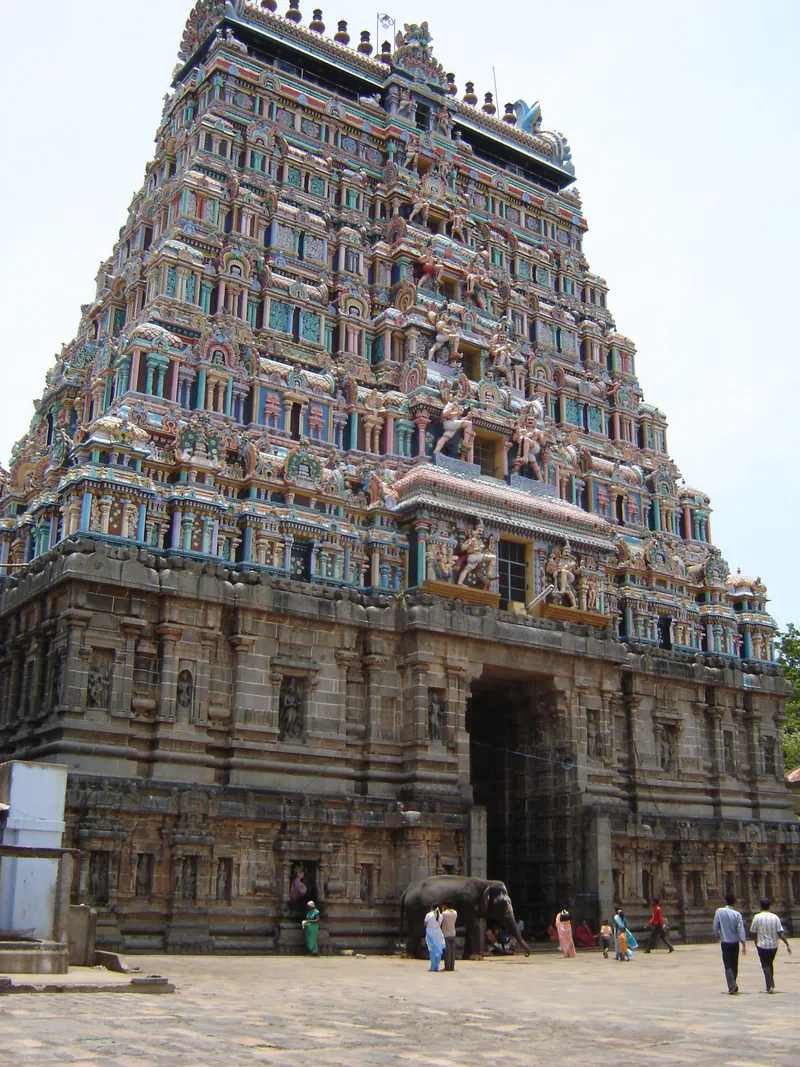
Shaiva Siddhanta, the most widespread of the tantric Shaiva schools, is dualist. It holds that there are three eternal realities: the Lord (pati), souls (pashu, literally "cattle") and the bonds (pasha) that bind them, above all a beginningless impurity (mala). Liberation comes through initiation and ritual, which God's grace makes effective, after which the soul becomes equal to Shiva but remains distinct from him. The tradition flourished in Kashmir and central India and survived above all in Tamil Nadu, where its Sanskrit theology fused with Tamil devotion; Meykandar's Shivajnanabodham (thirteenth century) became its foundational Tamil text. Its Agamas still govern the rituals of many great south Indian temples.
The Non-Dual Shaivism of Kashmir§
In Kashmir, between roughly the ninth and eleventh centuries, a line of philosophers developed a non-dual interpretation. For Somananda, Utpaladeva and above all Abhinavagupta (c. 975–1025), reality is a single, free consciousness that is Shiva, which manifests the world through its own power and conceals and reveals itself in play; liberation is the recognition (pratyabhijna) that one's own self is Shiva. This school, often called Kashmir Shaivism or Trika, has been revived in the twentieth century, notably by Swami Lakshmanjoo, and is widely read in the West.
Devotion, Reform and Yoga: Nayanars, Lingayats and Naths§
Between about the sixth and ninth centuries the sixty-three Nayanars, the Tamil poet-saints of Shiva, came from every social class, from Brahmins to a hunter and an untouchable labourer. The hymns of Appar, Sambandar and Sundarar, collected as the Tevaram, and Manikkavachakar's Tiruvachakam are still sung daily in Tamil temples, and Sekkizhar's twelfth-century Periya Puranam tells the stories of all sixty-three. Their devotion is part of the wider movement described in The Bhakti Movement.
In twelfth-century Karnataka, Basava (Basavanna), a minister at the court of Kalyana, inspired the Virashaiva or Lingayat movement. Its poet-saints composed short vernacular poems called vachanas that rejected caste, temple ritual and sacrifice; every Lingayat wears a small personal linga on the body and worships it daily. Whether Lingayats form a separate religion or a Shaiva tradition within Hinduism remains a live public debate in Karnataka.
The Nath yogis, who trace their lineage to Matsyendranath and Gorakhnath (perhaps eleventh to thirteenth centuries), combined Shaiva devotion with the bodily disciplines of hatha yoga. The Dashanami order of renouncers, traditionally founded by Shankara, is also closely linked with Shiva, and the Aghoris, who practise in cremation grounds, preserve something of the ancient Kapalika ideal of transcending purity and impurity.
Shaiva Worship, Pilgrimage and Festivals§
Shaivas mark the forehead with three horizontal lines of sacred ash (tripundra), often with a red dot, and wear beads of rudraksha seeds. The five-syllable mantra namah shivaya, "homage to Shiva," is the core of daily prayer. Twelve shrines of the "linga of light" (jyotirlinga), including Somnath in Gujarat, Kashi Vishvanath in Varanasi and Kedarnath in the Himalaya, are among the holiest places of pilgrimage, along with Chidambaram, the ice linga of the Amarnath cave and Mount Kailash in Tibet. Pashupatinath in Kathmandu is the principal Shiva temple of Nepal.
The great festival is Maha Shivaratri, "the great night of Shiva," on the fourteenth night of the dark fortnight in late winter, when devotees fast and keep vigil worshipping the linga through the night. During the monsoon month of Shravana, many north Indian pilgrims carry water from the Ganga on foot to pour over Shiva lingas. For temple worship in general, see Hindu Temples, Rituals and Festivals.
Frequently asked questions§
What does the Shiva linga represent?§
Shaiva theology describes the linga as the formless God taking a minimal form, the infinite pillar of fire of Puranic myth, and the union of Shiva with his power, Shakti. Early sources also acknowledge its phallic origin as a symbol of creative power. For worshippers it is above all the living presence of Shiva.
What is the difference between Shaiva Siddhanta and Kashmir Shaivism?§
Both derive from the Shaiva Tantras, but Shaiva Siddhanta is dualist, holding that souls remain eternally distinct from Shiva even in liberation, and emphasises ritual. Kashmir Shaivism is non-dualist, teaching that the self is Shiva and that liberation is the recognition of this identity.
Who are the Lingayats?§
The Lingayats, or Virashaivas, are a community founded on the twelfth-century teaching of Basava in Karnataka. They worship Shiva in a small linga worn on the body, reject caste distinctions and temple ritual in principle, and treasure the vernacular poems known as vachanas.
Sources and further reading§
- The Presence of Śiva — Stella Kramrisch, 1981
- Asceticism and Eroticism in the Mythology of Śiva — Wendy Doniger O'Flaherty, 1973
- Speaking of Śiva — A. K. Ramanujan (trans.), 1973
- Poems to Śiva: The Hymns of the Tamil Saints — Indira Viswanathan Peterson, 1989
- Kashmir Shaivism: The Secret Supreme — Swami Lakshmanjoo, 1985
- An Introduction to Hinduism — Gavin Flood, 1996