Liber III · Black & White Magic · Chapter I: Black Magic
Black Magic History: From Goeteia to the Left-Hand Path
A history of black magic: Greek goeteia, Roman maleficium law, Augustine's demonic pact, medieval nigromancy, grimoires, witch trials and modern critiques.
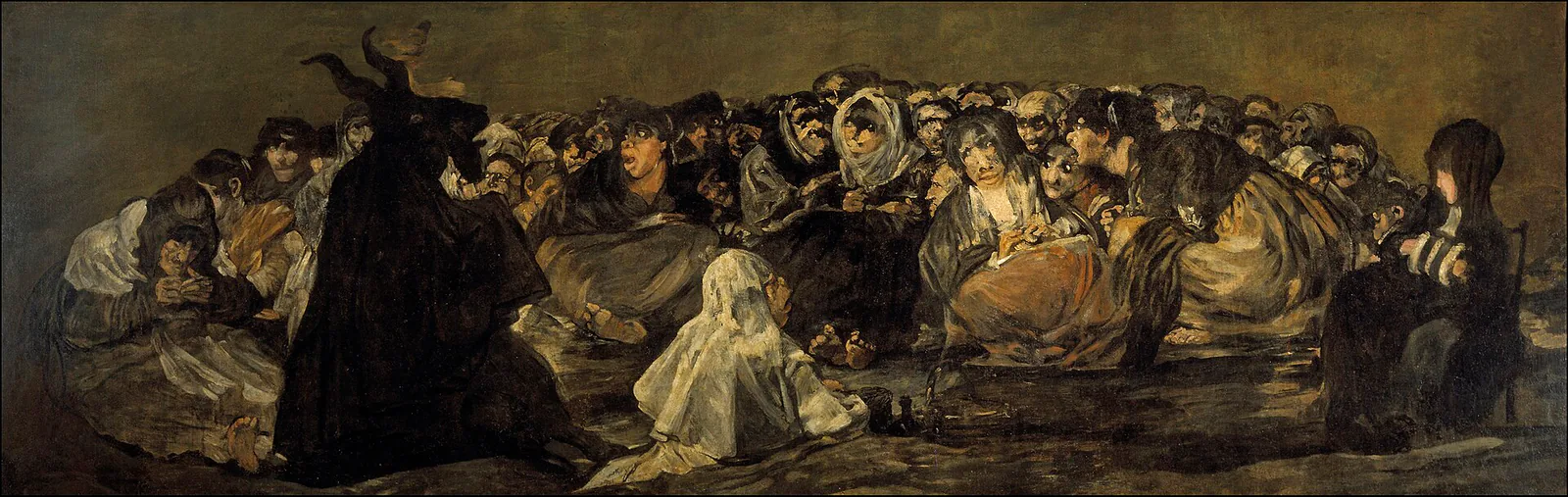
"Black magic" is not a single tradition but a shifting label that cultures have applied to magic they regarded as harmful, illicit or demonic. In the ancient Mediterranean it overlapped with goeteia and with Roman crimes of poisoning and harmful incantation; in medieval Europe it became nigromantia, the "black art" of conjuring demons; and in the modern period it has been used by occultists, novelists, anthropologists and journalists, often in ways that scholars now regard as loaded with moral and racial assumptions.
Goeteia and Mageia: Harmful Magic in Ancient Greece§
The Greek vocabulary of magic was rich and overlapping. The word magos originally named a member of a Persian priestly caste, described by Herodotus in the fifth century BCE as ritual specialists and interpreters of dreams. Within a generation, however, magos and its abstract noun mageia were being used in Greek to denote private ritual experts of dubious standing. The Hippocratic treatise On the Sacred Disease groups magoi with purifiers, mendicant priests and charlatans who claimed to cure epilepsy with charms, and accuses them of impiety.
The older and more pejorative term was goēs, a word perhaps originally connected with lamentation (goos) for the dead. By the classical period goēteia meant something close to sorcery or trickery: the art of the enchanter who beguiles and binds. The sophist Gorgias, in his Encomium of Helen, names goēteia and mageia together, a pairing that shows how freely the categories mixed.
Plato offers the clearest picture of what Athenians feared. In the Republic he describes itinerant priests and seers who offer wealthy clients to harm an enemy with spells and binding charms. In the Laws he distinguishes harm done to the body through substances from harm done through incantations and the binding figures people found at doorways, crossroads and tombs. He proposes penalties while doubting whether such techniques work; what mattered was the intent to harm and the fear that sorcery caused. The physical evidence for this fear, in the form of lead curse tablets, is discussed in our article on maleficium, curses and protective magic.
Late antique Platonists such as Iamblichus later contrasted theourgia, divine work raising the soul toward the gods, with goēteia, a lower art compelling daemons for material ends, a remote ancestor of the white/black language explored in our article on the history of white magic.
Roman Law: Veneficium, Maleficium and the Malum Carmen§
Rome legislated against harmful magic from an early date. Fragments of the Twelve Tables, the law code traditionally dated to around 450 BCE and quoted by later authors such as Pliny the Elder, refer to anyone who "enchants away" another's crops and to the chanting of a malum carmen, an evil song or spell. Whether the latter originally meant defamatory verse or a curse is debated, but Roman writers came to read it as a prohibition on harmful incantation.
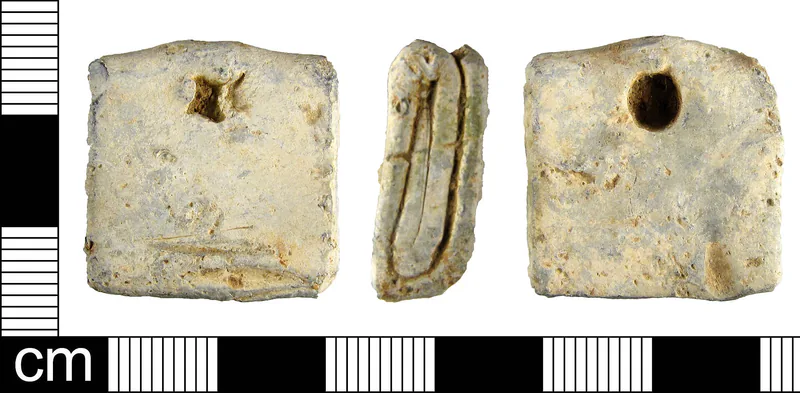
The key statute of the late Republic was Sulla's lex Cornelia de sicariis et veneficis of 81 BCE, against assassins and venefici. Veneficium covered both poisoning and harmful potions and charms, since the boundary between a toxic substance and a magical one was not drawn as we draw it. Under the empire jurists extended the law to nocturnal sacrifices and the possession of magical books. The most famous Roman magic trial, that of the philosopher Apuleius around 158–159 CE, survives in his defence speech, the Apologia.
By the fourth century the term maleficium, literally "evil-doing," had become the standard legal word for harmful magic, and malefici the word for its practitioners. A law of Constantine preserved in the Theodosian Code made an important distinction: those who used magic to harm others or to lead minds into lust were to be punished, but remedies sought for the body and rural rites to protect harvests from storms and hail were not to be prosecuted. This is one of the earliest legal formulations of a line between harmful and tolerated magic, though later emperors tightened the rules again.
Augustine and the Theory of the Demonic Pact§
The decisive Christian contribution was theological rather than legal. Augustine of Hippo (354–430), in the second book of On Christian Doctrine, argued that amulets, charms, divinatory signs and similar practices work, when they work at all, because they function as a kind of language agreed between humans and demons. Such superstitions rest on "pacts" or contracts, whether made consciously or not. In The City of God he rejected the Platonist claim that theurgy could be separated from base sorcery, insisting that both alike dealt with deceptive demons.
This theory collapsed all magic into one suspect category and moved the essence of the offence from harm to apostasy: the sin lay in the relationship the magician had entered with the enemies of God. Thomas Aquinas later refined it into a distinction between an "express" pact, knowingly made, and a "tacit" pact implied by using signs whose power could only come from demons.
From Necromantia to Nigromantia: The Medieval Black Art§
In antiquity nekromanteia meant divination by consulting the dead, and Isidore of Seville's seventh-century Etymologies still defined necromancers as those whose incantations appear to raise the dead to answer questions. In medieval Latin, however, the word was frequently spelled nigromantia, as if derived from niger, "black," rather than from Greek nekros, "corpse." The respelling reflects both a folk etymology and a change in meaning. By the high Middle Ages nigromantia referred less to ghosts than to the conjuration of demons through elaborate ritual, and English writers spoke of "nigromancy" and "the black art." Edmund Spenser's Faerie Queene is often cited as an early English source for the phrase "black magic" itself.
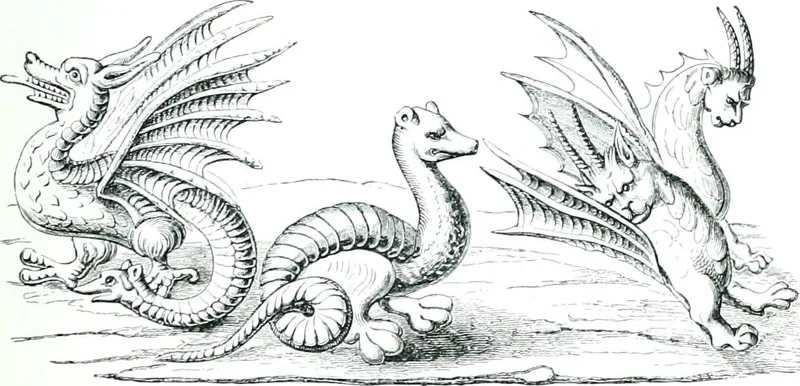
Richard Kieckhefer has shown that medieval necromancy required Latin, familiarity with liturgy and exorcism, and access to books. He described its milieu as a "clerical underworld" of priests, monks, students and men in minor orders, whose training in conjuring demons out of the possessed could be turned to conjuring them in. The surviving manuals, such as the fifteenth-century Munich handbook he edited, and the wider landscape of medieval demonic magic are examined in our article on necromancy in the Middle Ages.
Theologians rejected the necromancers' claim to command demons by God's names. Books of necromancy were condemned at Paris in 1277, Pope John XXII's bull Super illius specula (around 1326) equated demonic invocation with heresy, and in 1398 the Paris theology faculty under Jean Gerson condemned twenty-eight propositions defending ritual magic.
Grimoires, the Witch's Pact and the Sabbath§
The textual heart of learned black magic was the grimoire. Manuscripts such as the Key of Solomon and the seventeenth-century Lesser Key of Solomon, whose first part catalogues the seventy-two spirits of the Ars Goetia, presented their operations as pious and divinely sanctioned, framed by prayer, fasting and the names of God. Later French chapbook grimoires such as the Grand Grimoire and the Grimorium Verum more openly described agreements with infernal spirits and helped fix the popular image of the pact signed in blood, an idea with literary roots in the legend of Theophilus and the Faust chapbook of 1587.
In the fifteenth century the learned image of the pact merged with older fears of village maleficium. Sources from the western Alps in the 1430s, including the anonymous Errores Gazariorum and Johannes Nider's Formicarius, describe a new kind of witch: a member of a sect that renounced Christ, paid homage to the Devil and gathered at night for feasts and the murder of children. Scholars such as Norman Cohn, Carlo Ginzburg and Michael Bailey have traced how this "cumulative concept" of the sabbath fused heresy accusations, demonology and folklore. The Malleus maleficarum (1486) gave it wide circulation.
Witchcraft so defined was a crime against neighbours and against God at once. The Holy Roman Empire's Constitutio Criminalis Carolina of 1532 prescribed death by fire for harm caused by sorcery, while England's statutes of 1563 and 1604 punished invoking spirits and killing by witchcraft. The resulting prosecutions, which claimed perhaps 40,000 to 60,000 lives, are surveyed in our article on the European witch trials. Sceptics such as Johann Weyer (1563) and Reginald Scot (1584) questioned whether witches had any real power, and by the late seventeenth century some states had redefined witchcraft as fraud, as in France's edict of 1682 and Britain's Witchcraft Act of 1736.
Black Magic Among the Nineteenth-Century Occultists§
When the occult revival of the nineteenth century reclaimed magic as a respectable subject, its writers needed to distance themselves from diabolism. Éliphas Lévi, whose Dogme et rituel de la haute magie appeared in 1854–1856, presented "high magic" as a science of the will and the astral light, and described black magic as its perversion: the same forces bent toward selfish or destructive ends. His dramatic chapters on bewitchment and the sabbath, and his famous image of Baphomet, nonetheless supplied much of the imagery later associated with black magic.
Arthur Edward Waite took a more sceptical, bibliographic approach. His The Book of Black Magic and of Pacts (1898), reissued in 1911 as The Book of Ceremonial Magic, summarised the Solomonic texts and the French pact books while presenting their contents as debased. Joris-Karl Huysmans' novel Là-bas (1891), with its Black Mass in Paris, gave the theme a fashionable literary afterlife.
Modern Usage, the Left-Hand Path and Anthropological Distinctions§
Theosophical and occult writers adopted the terms "right-hand path" and "left-hand path," borrowed loosely from the Tantric distinction between dakṣiṇācāra and vāmācāra. Helena Blavatsky and later Dion Fortune associated the left-hand path with "black lodges" of selfish adepts. From the 1960s some groups embraced the label positively for traditions emphasising the autonomy and self-deification of the individual, the sense used by the Temple of Set and other left-hand path movements. Many Satanists and chaos magicians reject the black/white scheme altogether.
Anthropology offered a different vocabulary. In Witchcraft, Oracles and Magic among the Azande (1937), E. E. Evans-Pritchard distinguished witchcraft (mangu), which the Azande of central Africa understood as an inherited substance in the body that could cause harm without conscious intent, from sorcery, the deliberate use of "bad medicines" to injure. Later anthropologists found the distinction does not hold neatly everywhere, but Evans-Pritchard showed that judgements about harmful magic are bound up with social relations, accusation and the explanation of misfortune.
The Scholarly Critique of the Black/White Binary§
Historians of religion now treat "black magic" less as a type of practice than as a label of disapproval. Paola Zambelli's studies of Renaissance magic showed how the same operations could be defended as natural or condemned as diabolical depending on the author's purposes. Randall Styers and Wouter Hanegraaff have argued that the very category of "magic" was constructed in Western thought as a foil to legitimate religion and science, and that "black magic" sharpens this into a moral weapon.
The colour symbolism also carries a modern racial charge. The medieval nigro- spelling arose from a confusion of Latin and Greek words and from an older symbolism of darkness, not from ideas about race. In colonial and post-colonial settings, however, "black magic" became a stock description of African and African diasporic religions. British Caribbean laws against obeah, beginning with Jamaica's legislation of 1760, and popular images of "voodoo" in film and journalism cast Black religious practice as sinister sorcery. Scholars such as Yvonne Chireau and Diana Paton have documented how such framings served legal and racial control. Many writers therefore prefer terms such as harmful or malefic magic, while recognising that some languages have their own indigenous equivalents, such as the Hindi kālā jādū, whose local meanings deserve study on their own terms.
Frequently asked questions§
What is the historical difference between black magic and necromancy?§
Originally necromancy meant divination through the dead. In medieval Latin it was often spelled nigromantia and reinterpreted as the "black art," meaning the ritual conjuration of demons. "Black magic" in English grew out of this later sense rather than the ancient one.
Did the ancient Greeks have a concept of black magic?§
Not in those words, but Greek writers distinguished disreputable sorcery (goēteia) from respected religious rites, and Plato proposed punishments for those who used binding spells and incantations to harm others. Later Neoplatonists contrasted theurgy with goetia in a way that anticipates the black/white distinction.
Why did Christians associate magic with demons?§
Augustine argued that magical signs and charms work only through agreements with demons, so that all magic implied a pact. This made magic a question of religious loyalty as well as of harm, an idea that shaped medieval theology and, later, the witch trials.
Is the term "black magic" racist?§
The term did not originate in racial thinking; the medieval spelling nigromantia came from confusion between Greek and Latin words and from the symbolism of darkness. In modern usage, however, it has often been applied to African and African diasporic religions in ways that scholars regard as racialised, which is why many prefer more precise terms.
Sources and further reading§
- On Christian Doctrine and The City of God — Augustine of Hippo, early fifth century
- Witchcraft, Oracles and Magic among the Azande — E. E. Evans-Pritchard, 1937
- The Book of Black Magic and of Pacts — Arthur Edward Waite, 1898
- Dogme et rituel de la haute magie — Éliphas Lévi, 1854–1856
- Magic in the Middle Ages — Richard Kieckhefer, 1989
- Magic in the Ancient World — Fritz Graf, 1997
- Europe's Inner Demons — Norman Cohn, 1975
- White Magic, Black Magic in the European Renaissance — Paola Zambelli, 2007
- Making Magic: Religion, Magic, and Science in the Modern World — Randall Styers, 2004
- Black Magic: Religion and the African American Conjuring Tradition — Yvonne P. Chireau, 2003
- The Cultural Politics of Obeah — Diana Paton, 2015