Liber XXVIII · Solomonic Magic · Chapter I: Demonic Magic & Pacts
Munich Manual of Demonic Magic: A Necromancer's Handbook
The Munich Manual of Demonic Magic (Clm 849): a 15th-century Latin necromancer's handbook, its experiments, its liturgical language and its users.
The Munich Manual of Demonic Magic, also called the Munich Handbook, is a fifteenth-century Latin manuscript in the Bavarian State Library (Clm 849) containing several dozen "experiments" for summoning demons to create illusions, gain knowledge and control other people's minds. Edited by Richard Kieckhefer in Forbidden Rites (1997), it is the fullest surviving example of the working book of a medieval necromancer, and the clearest evidence that demonic magic was practised by clerics who adapted the Church's own rites of exorcism and blessing.
The manuscript Clm 849§
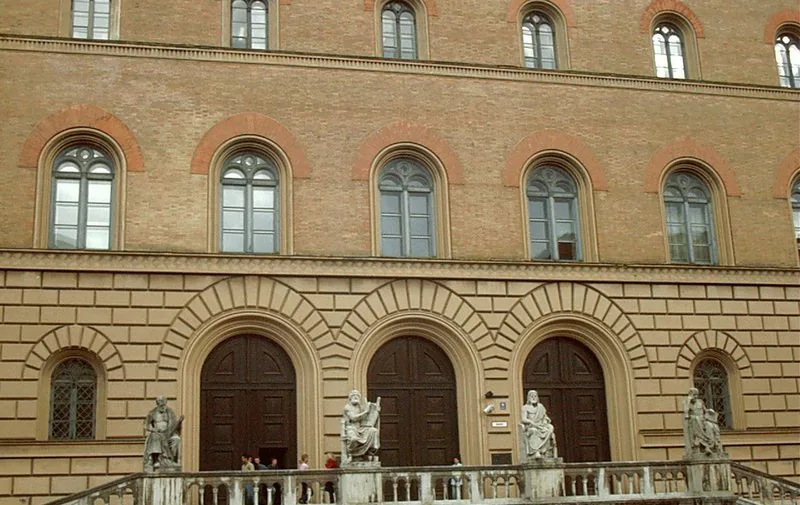
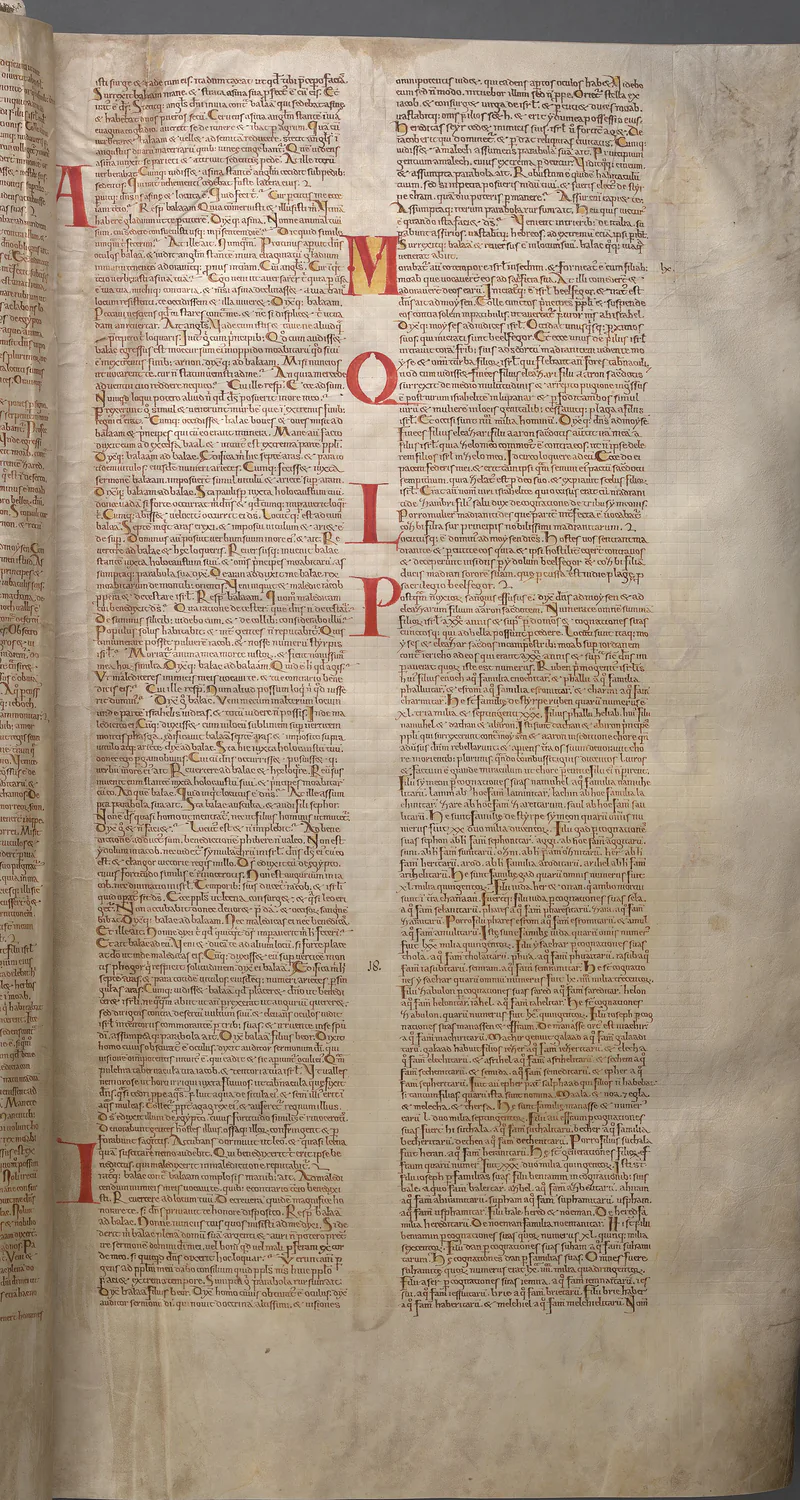
The manuscript belongs to the Bayerische Staatsbibliothek in Munich, where it carries the shelfmark Clm 849 (Codex latinus monacensis). It is a modest book in Latin, written in the fifteenth century in a practical hand and illustrated with diagrams of circles and seals. Its first part appears to be missing, so the work begins abruptly, and there is no title, author or colophon to tell us who compiled it. Linguistic clues, including occasional German words, and the history of the collection point to an origin in the German-speaking lands, probably southern Germany or Austria.
The book is a compilation rather than a single treatise. It gathers experimenta — the necromancers' own term for their operations — from different sources, sometimes repeating similar procedures with variations. This makes it a working collection: the kind of book that a practitioner put together for his own use, copying what he had found or been taught. The title by which it is now known was given by modern scholars.
Kieckhefer's edition and its significance§
Before the 1990s the manuscript was known mainly to specialists. Richard Kieckhefer, a historian of medieval religion at Northwestern University, published a transcription of the Latin text with a long analytical study under the title Forbidden Rites: A Necromancer's Manual of the Fifteenth Century (1997). He had already argued in Magic in the Middle Ages (1989) that medieval necromancy was largely the work of a "clerical underworld" of literate men; the Munich manuscript gave him the evidence to show what such men actually wrote and did on parchment.
The edition transformed the field. Until then, discussions of medieval demonic magic relied heavily on the accusations of theologians and inquisitors and on later printed grimoires. The Munich Manual allowed historians to see the practitioner's side: his assumptions, his liturgical skill, his goals and his fears. It became the starting point for a wave of studies of ritual magic by scholars such as Claire Fanger, Frank Klaassen and Sophie Page. The broader context appears in necromancy in the Middle Ages.
What the experiments promise§
Kieckhefer grouped the experiments into three broad categories.
Illusionist experiments§
Some experiments aim to produce apparitions: a banquet that appears for guests, a castle that rises where none existed, a horse that carries the operator over great distances, or a boat. Medieval theologians had long held that demons could deceive the senses and move bodies, and these experiments take that belief at face value. They also reflect a fascination with spectacle familiar from romance literature, where enchanters conjure castles and feasts.
Psychological experiments§
A second group seeks to act on other people: to win the love or favour of a particular person, to gain honour at court, to cause enmity between friends, or to deprive someone of reason. Several are aimed at bringing a woman to the operator. Historians read these experiments as revealing the desires and resentments of their milieu — a world of ambitious, often frustrated men bound by clerical celibacy and dependent on patrons — rather than as evidence that such effects were ever achieved.
Divinatory experiments§
The third group seeks hidden knowledge: the identity of a thief, the location of stolen goods, future events. Many use a reflective surface — a mirror, a polished fingernail, a crystal or a bowl — in which spirits are to appear, and many require a young boy, a virgin, to act as the seer. This technique of child scrying is very old, with parallels in the Greek magical papyri, and it remained widespread in late medieval and early modern Europe.
The manuscript also contains material of a more general kind, including a lengthy rite intended to consecrate and sanctify the operator and his book, and a short list of named spirits with their offices.
Liturgy turned towards demons§
The most striking feature of the Munich Manual is its religious language. Its rites are full of psalms, litanies of saints, invocations of the Trinity and the Virgin, passages from the Gospels and the divine names. The operator fasts, confesses, hears Mass and prays for God's help before addressing the spirits. The structure of many conjurations closely follows that of exorcism: the spirit is adjured by the power of Christ's passion, by the names of God and by the saints, and is threatened with torment if it refuses to obey.
Kieckhefer argued that this reflects the education of its users. Clerics in minor orders, including the order of exorcist, learned the formulae for commanding demons as part of their training. The necromancer's art was in a sense an inverted exorcism: instead of commanding a demon to depart, he commanded it to appear and serve. He did not regard himself as a worshipper of demons but as a Christian using divine power over them. The book also contains elements that theologians regarded as unmistakably idolatrous, however, such as offerings to spirits, and the line between command and homage was the central issue in how theologians and inquisitors judged demonic magic. For the Church's own rite of exorcism, see angels, demons and exorcism in Christian tradition.
The clerical underworld of fifteenth-century Germany§
The Munich Manual fits well into what is known of fifteenth-century southern Germany. In 1456 Johannes Hartlieb, physician to Duke Albrecht III of Bavaria, completed his Book of All Forbidden Arts, which describes nigromancy as the worst of the seven forbidden arts, explains that it is practised with sacrifices and conjurations of devils, and speaks of such books with evident familiarity. Hartlieb's portrait of necromancers as learned, ambitious and dangerously close to princes matches the world implied by the manuscript.
Similar handbooks survive elsewhere, including English collections of the fifteenth and sixteenth centuries studied by Frank Klaassen and Sharon Hubbs Wright, and the Solomonic manuscripts that later fed into the Key of Solomon. Together they show that demonic magic was a recognisable textual tradition with its own vocabulary and techniques, transmitted through copying among a literate minority. The penalties could be severe: clerics found with such books faced imprisonment, loss of office or worse, which helps explain why so few manuscripts survive.
Reading the Munich Manual today§
Historians use the Munich Manual as evidence, not as a key to secret powers. It shows how a late medieval practitioner understood the spiritual world, how he combined authority from the Bible, the liturgy and Solomonic tradition, and how far his goals were shaped by his social position. It also illustrates how the theologians' fears were not pure invention: there really were clerics conjuring demons, even if the witches later accused of devil-worship were mostly not of that kind.
At the same time, the manuscript should not be over-read. It is a single collection, it is incomplete, and we cannot know how often, if ever, its owner performed any of its experiments. Its value lies in its rarity and in the window it gives onto a hidden culture, which historians of demonic magic continue to explore.
Frequently asked questions§
Where is the Munich Manual of Demonic Magic kept?§
It is in the Bayerische Staatsbibliothek (Bavarian State Library) in Munich, catalogued as Clm 849. The library has digitised the manuscript.
Who wrote the Munich Manual?§
Its compiler is unknown. The Latin, the liturgical expertise and the content point to a cleric, probably in the German lands in the fifteenth century, collecting experiments for his own use.
What is Forbidden Rites?§
Forbidden Rites: A Necromancer's Manual of the Fifteenth Century (1997) is Richard Kieckhefer's edition and study of the Munich manuscript. It contains the Latin text, translations of selected experiments and an extended analysis of medieval necromancy.
Is the Munich Manual a Solomonic grimoire?§
Not in the strict sense. It does not present itself as Solomon's work, although it shares techniques and assumptions with the Solomonic tradition, such as circles, divine names and the command of spirits by God's power.
Sources and further reading§
- Forbidden Rites: A Necromancer's Manual of the Fifteenth Century — Richard Kieckhefer, 1997
- Magic in the Middle Ages — Richard Kieckhefer, 1989
- Conjuring Spirits: Texts and Traditions of Medieval Ritual Magic — Claire Fanger, 1998
- The Transformations of Magic: Illicit Learned Magic in the Later Middle Ages and Renaissance — Frank Klaassen, 2013
- The Magic of Rogues: Necromancers in Early Tudor England — Frank Klaassen and Sharon Hubbs Wright, 2021
- Magic in the Cloister: Pious Motives, Illicit Interests, and Occult Approaches to the Medieval Universe — Sophie Page, 2013