Liber III · Black & White Magic · Chapter II: Maleficium & Curses
Image Magic: Wax Figures, Poppets and Effigies in History
Image magic in history: Egyptian execration figures, Greek wax kolossoi, medieval plots against popes and kings, witch-trial poppets and the voodoo doll myth.

Image magic is the use of a figure made in the likeness of a person, of wax, clay, cloth, lead or wood, so that what is done to the image is believed to happen to the person it represents. It is one of the most widely attested forms of magic in history, found in Egyptian execration rites, Greek love spells, medieval conspiracies against popes and kings, and the early modern witch trials, where such figures were called "pictures", "poppets" or "mommets". The popular "voodoo doll" is largely a modern image built on this European tradition rather than on Haitian practice.
What Is Image Magic?§
The basic idea of image magic is that a representation shares in the nature of what it represents. An image may be melted, pierced, bound, buried or burned, and the action is meant to pass to its target; it may equally be bathed, anointed or kept safe for the person's benefit. Practitioners often strengthened the link by naming the image, writing the name on it, or incorporating something that had belonged to the person, such as hair or a scrap of clothing. In Frazer's terms, this joined imitative magic with contagious magic, the belief that things once in contact continue to affect each other; the wider debate about these categories is set out in theories of magic.
The vocabulary varies with time and place. Greek sources speak of kolossoi, ritual figures of no particular size; Latin of imagines and simulacra; medieval records of imagines cereae, wax images. In English witch-trial records an image is usually a "picture", while "poppet" and "mommet" are older words for a small doll or puppet. In the Scottish Highlands the clay figure was the corp creadh, "body of clay". Because images also served in religion, as votive offerings, funerary figures and devotional statues, deciding whether a given figure was magical depends on its context and treatment.
Egypt and Mesopotamia: Execration Figures and Wax Crocodiles§
The oldest evidence comes from Egypt. From the Old and Middle Kingdoms, sets of clay or stone figurines representing bound captives were inscribed with the names of foreign rulers, rebels and hostile forces, then broken and buried; the practice is described in Egyptian execration texts and rituals. These were state rites performed by priests to protect the king and the order of the world, rather than private curses.
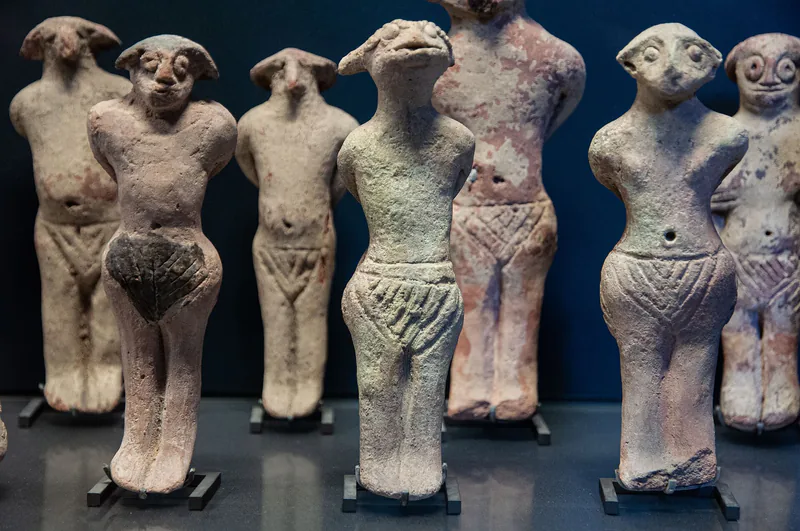
Egyptian literature also imagined the power of images. In a story preserved in the Westcar Papyrus, a lector-priest makes a small wax crocodile that turns into a real one and seizes his wife's lover. Images appear in a real political crisis in the trial records of the conspiracy against Ramesses III in the twelfth century BC, which report that some conspirators obtained magical writings and made figures of wax to work against the king and his household. In Mesopotamia, figurines represented both victims and attackers: the great anti-witchcraft ritual Maqlû burned images of the unknown witch so that her power would be destroyed, an example of image magic used as defence.
Greek and Roman Figurines, Kolossoi and Love Spells§
In the Greek world figurines of lead, clay and wax were often deposited with binding curses, their arms tied behind their backs or their limbs twisted, as described in the article on curse tablets. Christopher Faraone has shown that many such figures served defensive purposes, binding a hostile force or an enemy's power to act. Images could also enforce oaths: an inscription from Cyrene in North Africa records that its founding settlers swore an oath while melting wax figures, invoking the same fate on anyone who broke it.
Plato's Laws mentions wax images found at doors, at crossroads or on the tombs of parents, and observes that they frighten people whatever their real power; he recommends penalties for those who make them. Poets used the motif repeatedly. In Theocritus' second Idyll the abandoned Simaetha melts wax so that her lover will melt with desire, and Virgil adapted the scene in his eighth Eclogue, where clay hardens and wax softens in the same fire. Horace describes the witch Canidia with a figure of wool and one of wax, and Ovid's Hypsipyle accuses Medea of piercing wax images. The best-known surviving object, a clay female figure pierced with thirteen pins and found in Roman Egypt with a lead tablet, closely follows a love spell in the Greek magical papyri; it shows that the poets were drawing on real practice.
Political Image Magic in Medieval Europe§
In the later Middle Ages image magic became a weapon in high politics, or at least an accusation readily made against rivals. In 1317 Hugues Géraud, bishop of Cahors, was condemned and burned for conspiring against Pope John XXII with poison and wax images; the pope, who feared such attacks throughout his reign, encouraged the theological view that image magic involved demons, traced in how theologians judged demonic magic. In France, Guichard, bishop of Troyes, was accused in 1308 of killing Queen Joan of Navarre with an image, and charges of wax-image sorcery against members of Enguerrand de Marigny's household contributed to his execution in 1315. Robert of Artois was later accused of similar plots against King Philip VI.
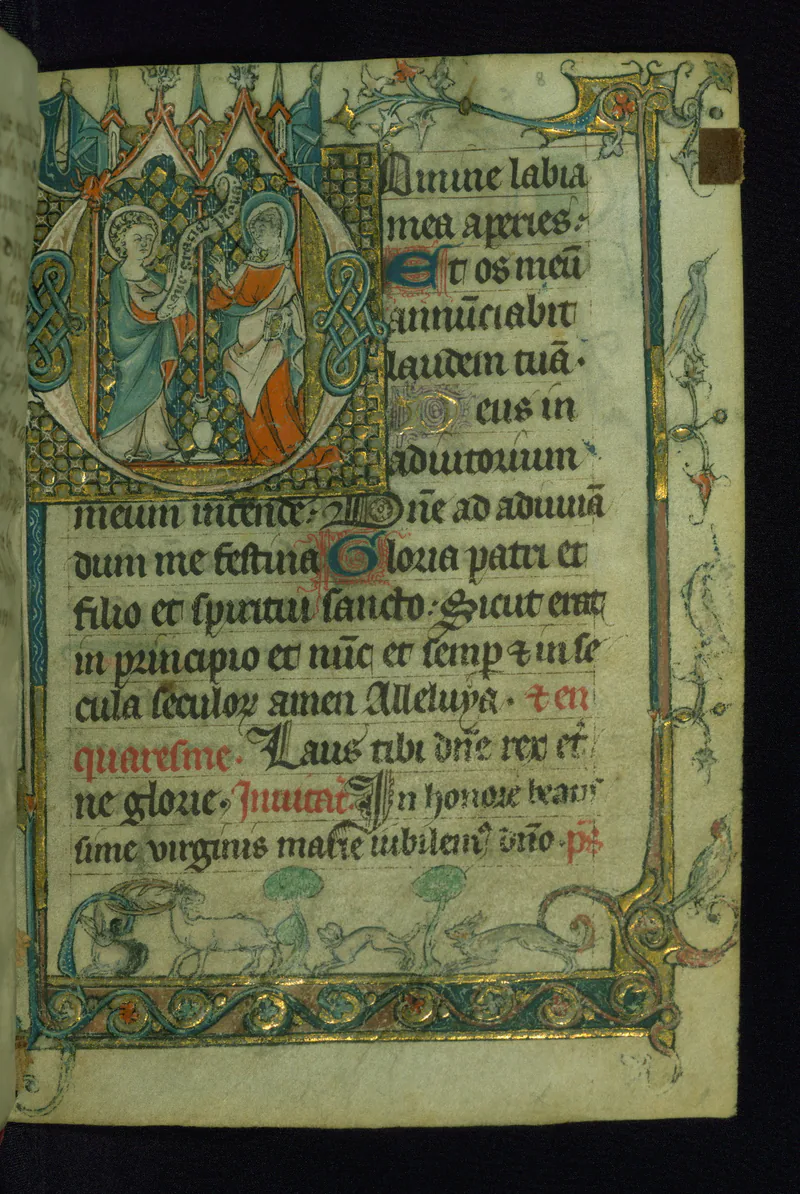
England produced well-documented cases. In 1324 a group of Coventry townsmen were accused of hiring a necromancer, John of Nottingham, to kill Edward II, the Despensers and the local prior by means of wax images; it was alleged that a trial on a figure of one Richard de Sowe made the man fall ill. In 1441 Eleanor Cobham, duchess of Gloucester, was accused with the clerk Roger Bolingbroke and the cunning woman Margery Jourdemayne of seeking the death of Henry VI by astrology and, it was said, a wax image; Jourdemayne was burned, Bolingbroke executed and Eleanor imprisoned for life. Richard Kieckhefer and other historians note that such cases mixed the learned necromancy of clerics with older folk practice.
Clay Pictures and Poppets in the Witch Trials§
During the era of the European witch trials, images featured prominently in accusations and confessions. In 1578 wax figures, one apparently representing Elizabeth I and pierced with a pin, were found in Lincoln's Inn Fields in London; the Privy Council consulted John Dee, who performed a counter-rite to neutralise them. The North Berwick trials of 1590–91 in Scotland produced claims that the accused had passed a wax image of James VI from hand to hand before melting it, a story printed in the pamphlet Newes from Scotland and reflected in James's own Daemonologie.
In England, the Pendle witch trial of 1612 recorded testimony about clay "pictures" made to cause their victims to waste away, and similar allegations appear in many lesser cases. Such evidence is difficult to assess: images were sometimes found and produced in court, but confessions were often shaped by interrogators who already knew what witches were supposed to do. Sceptics such as Reginald Scot ridiculed the belief that a figure could harm anyone. The custom persisted locally for a long time; the Scottish corp creadh was still described by folklorists in the nineteenth century, and examples are preserved in museum collections, including the Museum of Witchcraft and Magic at Boscastle.
From Poppets to the "Voodoo Doll"§
The pin-stuck doll familiar from films and souvenir shops owes more to European image magic and to twentieth-century popular culture than to Haitian religion. In Haitian Vodou dolls and figures do appear, for example in shrines or hung at sites associated with the spirits, but they are not principally instruments for harming individuals. The image of the "voodoo doll" developed through sensational writing about Haiti in the early twentieth century, horror films, and the tourist trade of New Orleans, discussed in Louisiana Voodoo.
In modern Paganism and witchcraft, poppets are mostly presented as tools for healing, protection or self-work, with a cloth figure standing for a person who has asked for help. This reflects the long history of positive image magic, from votive wax limbs offered at healing shrines to the astrological images of learned astral magic. Historians emphasise that the same technique has served opposite intentions, and that the fear of image magic, more than its use, shaped its legal history as one of the classic forms of maleficium.
Frequently asked questions§
What is a poppet in witchcraft?§
A poppet is a small doll or figure, of cloth, wax, clay or other material, made to represent a person in magic. In early modern England "poppet" and "mommet" meant a doll or puppet, while trial records usually called magical figures "pictures". Modern witches use poppets mainly in healing and protective rites.
Are voodoo dolls part of Haitian Vodou?§
Not in the way popular culture suggests. The pin-stuck doll used to harm an enemy derives mainly from European image magic and from twentieth-century films and tourist souvenirs. Haitian Vodou is a religion centred on the service of the lwa, in which harmful dolls play no central part.
What was the oldest form of image magic?§
The earliest well-documented examples are Egyptian execration figures from the third and early second millennia BC, inscribed with the names of enemies and broken in state rituals. Mesopotamian rituals of the same broad period also used figurines to represent and destroy witches.
Was image magic punished by law?§
Yes. Plato proposed penalties for making harmful wax images, and in medieval and early modern Europe accusations of image magic led to executions, from the bishop of Cahors in 1317 to victims of the witch trials. Later law treated such claims as superstition or fraud.
Sources and further reading§
- Ancient Greek Love Magic — Christopher A. Faraone, 1999
- Magic in the Middle Ages — Richard Kieckhefer, 1989
- The Archaeology of Ritual and Magic — Ralph Merrifield, 1987
- Witchcraft and Magic in Europe: Ancient Greece and Rome — Valerie Flint, Richard Gordon, Georg Luck & Daniel Ogden, 1999
- The Witch: A History of Fear — Ronald Hutton, 2017