Liber III · Black & White Magic · Chapter VIII: Theories of Magic
Theories of Magic: From Frazer and Mauss to Modern Scholarship
How scholars explain magic: Tylor and Frazer's sympathetic magic, Mauss, Malinowski, Evans-Pritchard, Tambiah, and magic as a contested modern category.

Theories of magic are the explanations that philosophers, anthropologists, sociologists, psychologists, historians and magicians themselves have offered for what magic is, why people practise it and how it differs from religion and science. The classic nineteenth-century view of Edward Tylor and James Frazer treated magic as a mistaken primitive science; twentieth-century scholars reinterpreted it as social action, emotional expression or performative speech; and many historians today regard "magic" itself as a polemical Western category whose meaning has to be reconstructed in each context.
Ancient and Medieval Explanations§
Theories of magic are as old as magic itself. Plato and the Hippocratic writers treated magicians as impious frauds or as people who misunderstood the gods. Late antique Neoplatonists such as Plotinus explained magical effects through the sympathy that binds the cosmos into a single living being, so that a spell works as a plucked string sets another vibrating. Augustine of Hippo argued, by contrast, that magical signs work only because demons recognise them as signals, an interpretation that dominated Christian thought for over a millennium. These views underlie the history traced in Black Magic: A History.
Medieval and Renaissance authors added natural explanations, involving occult qualities, celestial rays and a world spirit, which allowed a category of natural magic to be defended as part of natural philosophy. The debate over whether a given operation was natural or demonic was, in effect, a theory of how magic worked.
Tylor and Frazer: Magic as Mistaken Science§
The modern scholarly study of magic began with Victorian anthropology. Edward Burnett Tylor, in Primitive Culture (1871), described magic as a system based on mistaking ideal connections for real ones: because people associate things in their minds, they suppose that the things are linked in reality. He regarded it as one of the most pernicious delusions that had ever vexed mankind, but also as a natural product of early human reasoning.
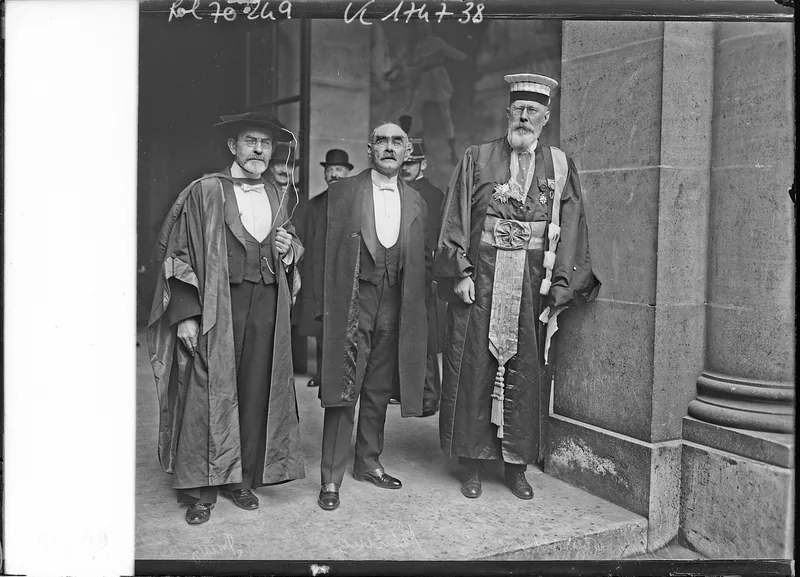
James George Frazer's The Golden Bough (first edition 1890; third edition in twelve volumes, 1906–1915) developed this into an influential scheme. "Sympathetic magic" worked by two laws: the law of similarity, giving rise to homeopathic or imitative magic (a figurine harmed to harm a person), and the law of contact or contagion, giving rise to contagious magic (hair or clothing used to affect its former owner). Frazer placed magic, religion and science in an evolutionary sequence: magic, like science, assumed regular laws of nature but misunderstood them; religion arose when people realised their failure and turned to propitiating gods; science would eventually replace both. Few scholars now accept the sequence, but Frazer's terms remain in common use.
Durkheim, Mauss and the Social Theory of Magic§
French sociology shifted attention from individual error to social structure. Henri Hubert and Marcel Mauss, in their General Theory of Magic (1902–1903), examined the magician, magical acts and magical representations, and argued that magic depended on collective beliefs, especially a notion of diffuse power they compared to the Melanesian concept of mana. Émile Durkheim, in The Elementary Forms of Religious Life (1912), drew a famous distinction: religion unites believers into a moral community, a "church", whereas "there is no church of magic"; the magician has clients, not a congregation.
This social definition, which made magic private and potentially antisocial, echoed centuries of Christian polemic. Later critics noted that it fitted European assumptions better than many ethnographic realities.
Malinowski, Evans-Pritchard and Functionalism§
Bronisław Malinowski, who did fieldwork in the Trobriand Islands, rejected the idea of magic as failed science. In Magic, Science and Religion (1925) and Coral Gardens and Their Magic (1935), he showed that Trobrianders used practical knowledge for gardening and canoe-building, and magic where outcomes were uncertain or dangerous, such as deep-sea fishing. Magic, he argued, relieved anxiety and gave confidence; it was a pragmatic response to the limits of technique, and its spells mattered as performed words.

E. E. Evans-Pritchard's Witchcraft, Oracles and Magic among the Azande (1937) went further in showing how a magical system can be internally coherent. The Azande did not deny natural causes, but asked why misfortune struck a particular person at a particular moment; witchcraft answered that question, and oracles and magic offered ways to act on it. His work fed into the "rationality debate" of the 1960s and 1970s, when philosophers such as Peter Winch asked whether Western standards of reason could judge other forms of life.
Symbol, Performance and the Power of Words§
From the 1950s, structuralist and symbolic anthropology reinterpreted magic as communication. Claude Lévi-Strauss, in essays such as "The Sorcerer and His Magic" (1949), argued that magical healing works partly through the shared belief of healer, patient and community, a social and psychological process. Stanley Tambiah, drawing on J. L. Austin's theory of speech acts, argued that magical rites are best understood as performative and persuasive acts, like a promise or a wedding vow, that achieve their effect through convention and meaning rather than mechanical causation. His Magic, Science, Religion and the Scope of Rationality (1990) surveyed the whole history of the debate.
Psychologists offered other perspectives. Sigmund Freud's Totem and Taboo (1913) linked magic to the "omnipotence of thoughts" found in children and neurosis. More recently, cognitive scientists of religion such as Jesper Sørensen have analysed magical thinking as an outgrowth of ordinary cognitive tendencies, such as the intuition that essences can be transferred by contact. Anthropologists of contemporary magic, notably Tanya Luhrmann in her study of London magicians (1989), described an "interpretive drift" through which participants gradually come to find magical explanations persuasive.
Magic as a Contested Category§
Since the 1990s, historians of religion have questioned whether "magic" can serve as a neutral analytical term at all. Jonathan Z. Smith, Randall Styers, Wouter Hanegraaff and Bernd-Christian Otto have argued that the word has always functioned to mark off illegitimate or inferior practice: pagan from Christian, Catholic from Protestant, primitive from civilised, superstition from reason. Styers's Making Magic (2004) shows how modern theorists used magic to define, by contrast, what modern religion and science were supposed to be. Max Weber's idea of the "disenchantment of the world" belongs to this story.
Some scholars respond by abandoning the term for analysis and studying instead how "magic" was used historically. Others keep it as a family-resemblance concept, a cluster of features such as ritual efficacy, practical aims and manipulation of hidden forces, while acknowledging its polemical baggage. Most agree that each period's practices must be understood in their own vocabulary first.
Magicians' Own Theories§
Practitioners have produced theories of their own. Éliphas Lévi explained magic through the trained will acting on a universal "astral light". Aleister Crowley defined magick as change in conformity with will, and the occultist Dion Fortune as changing consciousness in accordance with will. Modern authors have proposed spirit, energy, psychological and information models of magic, a classification popularised by the German chaos magician Frater U∴D∴ and discussed in What Is Chaos Magick? These "emic" theories are themselves now objects of study, since they show how magicians responded to the scientific and psychological culture of their time. For an overview of magic's history, see What Is Magic? and the account of Éliphas Lévi.
Frequently asked questions§
What is sympathetic magic?§
Sympathetic magic is James Frazer's term for magic based on supposed hidden links between things. It has two forms: homeopathic magic, based on similarity (like affects like), and contagious magic, based on former contact (a person's hair or clothing remains linked to them).
What is the difference between magic and religion according to scholars?§
Classic theorists distinguished them by aim (manipulation versus supplication), social form (private clients versus a community) or evolutionary stage. Many current scholars think no single criterion works across cultures, and that the distinction itself reflects historical polemics.
Why did Malinowski think people use magic?§
Malinowski argued that people turn to magic where practical knowledge cannot guarantee success, such as dangerous voyages or uncertain harvests. Magic provided confidence, ritual order and emotional relief in the face of chance.
Is "magic" still a useful academic term?§
Opinions differ. Some historians avoid it as a value-laden label, while others use it carefully as a convenient umbrella for related practices. Most insist that it must be defined explicitly and that ancient or non-Western terms should be studied on their own terms.
Sources and further reading§
- Primitive Culture — Edward Burnett Tylor, 1871
- The Golden Bough — James George Frazer, 1890
- A General Theory of Magic — Marcel Mauss (with Henri Hubert), 1902–1903
- The Elementary Forms of Religious Life — Émile Durkheim, 1912
- Magic, Science and Religion and Other Essays — Bronisław Malinowski, 1948
- Witchcraft, Oracles and Magic among the Azande — E. E. Evans-Pritchard, 1937
- Magic, Science, Religion and the Scope of Rationality — Stanley Jeyaraja Tambiah, 1990
- Making Magic: Religion, Magic, and Science in the Modern World — Randall Styers, 2004
- Esotericism and the Academy: Rejected Knowledge in Western Culture — Wouter J. Hanegraaff, 2012
- Persuasions of the Witch's Craft: Ritual Magic in Contemporary England — T. M. Luhrmann, 1989
- A Cognitive Theory of Magic — Jesper Sørensen, 2007