Liber XV · History & Scholarship · Chapter II: Defining Esotericism
Disenchantment and Re-enchantment: Weber, Magic and Modernity
Disenchantment and re-enchantment explained: Max Weber's thesis, the decline of magic, occultism as a modern response, and recent critiques.

The "disenchantment of the world" is Max Weber's phrase, from a lecture of 1917, for the modern belief that nothing is governed by mysterious, incalculable powers and that everything can in principle be mastered by calculation. "Re-enchantment" names the many attempts, from Romanticism and occultism to the New Age, to restore meaning, spirit and magic to such a world. For historians of Western esotericism the pair has become a central framework for asking how esoteric ideas survived, and changed, in modernity.
Max Weber and the disenchantment of the world§
The German sociologist Max Weber (1864–1920) used the expression Entzauberung der Welt, literally the "de-magicking" of the world, in his lecture "Science as a Vocation", delivered in Munich in November 1917 and published in 1919. Modern people, he argued, do not know more about the workings of their tools than earlier peoples did; what has changed is the conviction that one could find out, that there are in principle no mysterious forces at work, and that one need no longer resort to magical means to control or implore the spirits. Technical means and calculation take their place.
Weber also built the idea into the revised edition of The Protestant Ethic and the Spirit of Capitalism (1920). There disenchantment is a religious-historical process running from the ancient Hebrew prophets, who rejected magic as idolatry, to the Puritans, who denied any sacramental means of salvation. Weber was ambivalent about the result. A disenchanted world allowed science and bureaucracy to flourish, but it also left individuals in a universe without objective meaning, where the old gods returned as competing personal values. The phrase is often compared with Friedrich Schiller's lament, in his poem "The Gods of Greece" (1788), for a nature stripped of its divinities.
Protestantism, science and the decline of magic§
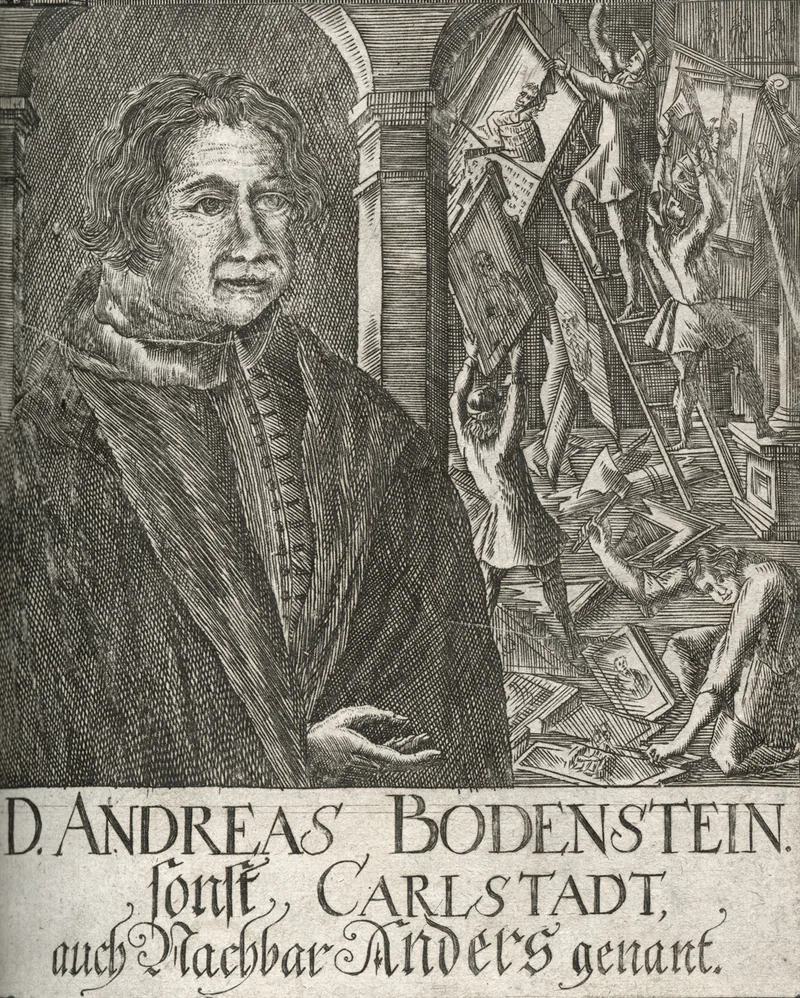
Historians gave Weber's sociology a narrative. Keith Thomas's Religion and the Decline of Magic (1971) argued that in sixteenth- and seventeenth-century England the Reformation stripped the church of its protective rituals, while the new mechanical philosophy, improved technology and insurance gradually made magical remedies seem unnecessary. By about 1700, he suggested, educated elites had abandoned astrology, witchcraft belief and magical healing, even if ordinary people kept them much longer.
This story shaped how esotericism was seen. If modernity meant disenchantment, then astrology, alchemy and magic were survivals from a premodern worldview, doomed to fade. Sociologists of the 1960s, such as Peter Berger in The Sacred Canopy (1967), extended the logic into a general secularisation thesis. Berger himself later abandoned it in the face of religion's global vitality.
Occultism as esotericism in a disenchanted world§
Historians of esotericism have answered the decline narrative by pointing to an awkward fact: the late nineteenth century, the age of positivism and Darwin, saw an explosion of spiritualism, Theosophy, ceremonial magic and astrology. Wouter Hanegraaff, in New Age Religion and Western Culture (1996), proposed that "occultism" should be understood as the form esotericism took when it tried to come to terms with a disenchanted world. Occultists no longer lived inside the living cosmos of correspondences that Renaissance magi took for granted; they had to argue for it in the language of science, evolution and psychology.
The nineteenth-century occult revival shows this clearly. Mesmerists spoke of fluids and forces, spiritualists of telegraphy with the dead, Theosophists of evolution through root-races and planes, and Aleister Crowley of "scientific illuminism" with the motto "the method of science, the aim of religion". In a later essay Hanegraaff argued that magic survived disenchantment by being transformed, increasingly reinterpreted as psychology, inner experience or a different kind of science. Our article on occultism and science traces how these claims developed.
Re-enchantment: Romantics, occulture and the New Age§
If disenchantment was a loss, re-enchantment was a programme. The early German Romantics already spoke of it: Novalis called for the world to be "romanticised" so that the ordinary would regain the dignity of the unknown. Romantic Naturphilosophie, Goethe's science of living form and the revival of interest in Jacob Boehme and Swedenborg all sought to restore meaning to nature. In the twentieth century, writers from Jung to the authors of the counterculture spoke of healing a split between reason and soul; Morris Berman's The Reenchantment of the World (1981) became a manifesto of holistic thought.

Scholars have also used the term descriptively. The British sociologist Christopher Partridge, in The Re-Enchantment of the West (2004–2005), argued that secularisation in Europe had not produced a disenchanted public but a diffuse "occulture", a reservoir of esoteric, paranormal and alternative spiritual ideas spread through popular music, film, fiction and the New Age. Alex Owen's The Place of Enchantment (2004) showed that late Victorian and Edwardian occultists such as the members of the Golden Dawn were not reactionaries but self-consciously modern people exploring a new understanding of the self.
Was the world ever disenchanted? Recent critiques§
Two recent books have reshaped the debate. Egil Asprem's The Problem of Disenchantment (2014) argued that disenchantment is best understood not as an accomplished fact but as an intellectual problem: what are the limits of knowledge, and can values and meaning be grounded in nature? Between 1900 and 1939, he showed, physicists, biologists, psychical researchers and esotericists answered that question in many ways, and the borders between scientific naturalism and esoteric discourse were far more porous than the decline story assumed.
Jason Josephson-Storm's The Myth of Disenchantment (2017) went further. He argued that most Europeans never stopped believing in spirits and magic, and that many founders of the human sciences, including figures around Weber himself, were deeply involved with occultism, spiritualism or vitalism; Weber spent time at the countercultural colony of Monte Verità near Ascona. Disenchantment, on this view, was a story that modern intellectuals told about themselves, a myth that helped define modernity, rather than a description of how people actually lived. Critics reply that Weber never claimed belief in magic had vanished, only that it had lost cultural authority, and that the institutions of science, law and medicine did become disenchanted in his sense.
Why the debate matters for the study of esotericism§
The disenchantment debate goes to the heart of how esotericism is defined. If esotericism is the "rejected knowledge" of modern Western culture, as Hanegraaff argues, then its history is bound up with the process by which certain kinds of knowledge were declared irrational, superstitious or obsolete. The Enlightenment classifications discussed in our article on esotericism in the Enlightenment were one stage in that process.
The debate also warns against two simplifications. Esoteric movements are not merely relics of a premodern past, nor are they simple rebellions against science; they have repeatedly borrowed scientific language, adapted to new media and offered their own versions of modern rationality. Charles Taylor's A Secular Age (2007), with its contrast between the "porous" self of the enchanted world and the "buffered" self of modernity, has given historians a further vocabulary for asking how such experiences of meaning remain possible.
Frequently asked questions§
What did Max Weber mean by disenchantment?§
Weber meant the modern conviction that the world is in principle calculable and contains no mysterious, incalculable forces that require magic to control. He did not claim that everyone had stopped believing in magic, but that magic had lost its place as a recognised means of mastering the world.
What is re-enchantment?§
Re-enchantment refers both to deliberate attempts to restore meaning, spirit or magic to a rationalised world, from Romanticism to the New Age, and to the scholarly observation that esoteric and spiritual ideas have spread widely in supposedly secular societies.
Is the disenchantment thesis still accepted?§
It remains influential but heavily revised. Most historians now see disenchantment as uneven, contested and partly ideological, and works by Egil Asprem and Jason Josephson-Storm have shown how closely modern science and esotericism interacted.
Sources and further reading§
- From Max Weber: Essays in Sociology — H. H. Gerth and C. Wright Mills (eds.), 1946
- Religion and the Decline of Magic — Keith Thomas, 1971
- The Reenchantment of the World — Morris Berman, 1981
- New Age Religion and Western Culture: Esotericism in the Mirror of Secular Thought — Wouter J. Hanegraaff, 1996
- The Place of Enchantment: British Occultism and the Culture of the Modern — Alex Owen, 2004
- The Re-Enchantment of the West — Christopher Partridge, 2004
- A Secular Age — Charles Taylor, 2007
- The Problem of Disenchantment: Scientific Naturalism and Esoteric Discourse, 1900–1939 — Egil Asprem, 2014
- The Myth of Disenchantment: Magic, Modernity, and the Birth of the Human Sciences — Jason Ä. Josephson-Storm, 2017