Liber IX · Gnosticism · Chapter II: Cathars & Bogomils
Montaillou and the Fournier Register: The Last Cathars on Trial
Montaillou and the Fournier Register: Jacques Fournier's inquisition, the Authié Cathar revival, Pierre Clergue, Bélibaste and Le Roy Ladurie's classic.

Montaillou is a small village in the Pyrenean county of Foix, in today's Ariège department of southern France, whose inhabitants were questioned between 1318 and 1325 by the inquisition of Jacques Fournier, bishop of Pamiers and later Pope Benedict XII. The surviving register of his tribunal records hundreds of interrogations about the last revival of Catharism in Languedoc, and in 1975 the historian Emmanuel Le Roy Ladurie used it to write Montaillou, a celebrated portrait of medieval village life. Together the register and the book are the richest window we have on what ordinary people believed and did as the Cathar faith came to an end.
Jacques Fournier and the Pamiers Inquisition§
Jacques Fournier was born in the county of Foix around 1280, became a Cistercian monk and abbot of Fontfroide, and was appointed bishop of Pamiers in 1317. By then the great age of the Cathar church in Languedoc had long passed: the Albigensian Crusade and the fall of Montségur in 1244 had broken its public organisation, and the Dominican and Franciscan inquisitors of Toulouse and Carcassonne had spent decades hunting down its remaining supporters (see Cathars and Bogomils).
Bishops had their own right to investigate heresy, and Fournier used it with unusual energy. From 1318 he set up an episcopal tribunal at Pamiers, working in cooperation with the Dominican inquisition of Carcassonne. Contemporaries and historians alike have remarked on his thoroughness: he questioned suspects repeatedly, checked their stories against one another and pursued theological details far beyond what was needed to secure a conviction. He was not a gentle judge — he could imprison suspects for long periods and handed several people over to be burned — but he was more interested in establishing what people actually believed than many of his colleagues. He became a cardinal in 1327 and was elected pope at Avignon in 1334, reigning as Benedict XII until 1342.
The Register: What Survives and How It Was Made§
Fournier's records were kept by notaries who attended the hearings. Interrogations were conducted in Occitan, the everyday language of the region, and the notaries wrote rapid minutes that were then drafted into Latin, read back to the deponents for confirmation, and finally copied into fair registers. Fournier appears to have taken at least one of these registers with him to Avignon; it passed into the papal library and is now held in the Vatican Library. Other volumes are known to have existed but are lost.
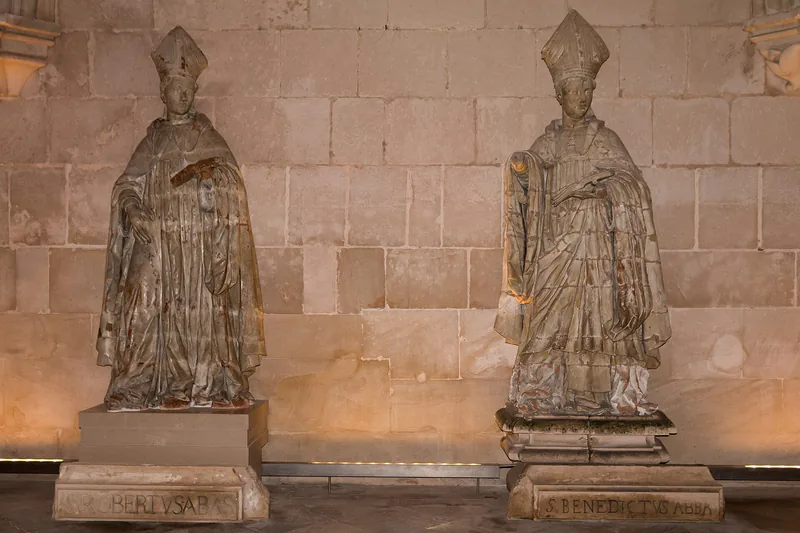
The surviving register records nearly 600 interrogations concerning about a hundred cases and more than a hundred individuals, many of them peasants, shepherds and artisans. The French scholar Jean Duvernoy published a full Latin edition in 1965 and a French translation in 1978, making the text widely accessible. Its value lies not only in its length but in its texture: suspects describe conversations at the hearth, quarrels over land and marriage, journeys across the mountains, illnesses and deaths, and they repeat in their own words what preachers had told them about God, the soul and the world.
Historians stress that the register is not a neutral recording. It was produced under the threat of punishment, filtered through translation and shaped by the questions Fournier chose to ask. Yet because he probed so deeply, it preserves an extraordinary range of voices.
The Authié Revival: The Last Cathar Mission§
Much of the testimony concerns a late revival of Catharism led by Pierre Authié (or Autier), a prosperous notary of Ax-les-Thermes, and his brother Guillaume. Around 1295–1296 the two men left their families and went to Lombardy, where Cathar communities still survived, to be trained and ordained as perfecti, the "good men" of the Cathar church. They returned to the county of Foix around 1300 and, with a handful of companions, began a clandestine mission that for some ten years revived Cathar belief in the villages of the upper Ariège and the Sabarthès.
The perfects travelled by night, sheltered in sympathetic houses, preached, blessed bread and gave the consolamentum, the Cathar rite of spiritual baptism, especially to the dying. Their preaching repeated the classic Cathar themes: two principles or two creations, a good God of spirit and an evil maker of the visible world (compare the Demiurge); human souls as fallen angels imprisoned in bodies; the rejection of the Catholic sacraments; and the hope that the good would all be saved. Some testimonies also describe the endura, a fast undertaken by a dying person after receiving the consolamentum — a practice that appears mainly in these late records.
The mission was broken by the inquisitors of Carcassonne and Toulouse. In 1308 the inquisitor Geoffroy d'Ablis arrested almost the entire adult population of Montaillou. Pierre Authié was captured in 1309 and burned at Toulouse in 1310 on the sentence of the inquisitor Bernard Gui, and most of his companions met the same fate.
Montaillou: The Clergue Family and Béatrice de Planissoles§
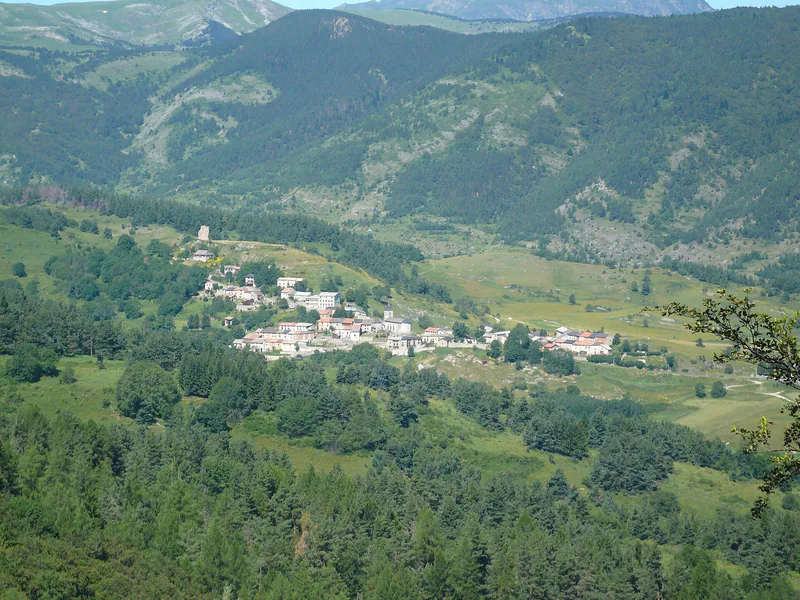
Montaillou, a village of perhaps two hundred people on a high plateau, had been deeply involved in the revival. Its most powerful family, the Clergues, were Cathar sympathisers. Pierre Clergue, the parish priest, protected believers, received the perfects and at the same time used his connections with the inquisition to settle scores with enemies; his brother Bernard was the bailiff of the count of Foix. The testimony presents Pierre as a manipulative and sexually predatory figure who had relationships with several women of the village. He was eventually arrested and died in prison around 1321.
One of those women was Béatrice de Planissoles, a noble widow of the castle's former castellan, whose long and frank deposition of 1320 is among the most remarkable documents of medieval women's lives. She described her two marriages, her affair with the priest, her fears for her daughters and her wavering between Catholic and Cathar ideas. She was sentenced to imprisonment and to wear the yellow crosses of penitent heretics, a penalty later commuted.
Pierre Maury and Guillaume Bélibaste: Shepherds in Exile§
The register also follows the shepherds of Montaillou on their seasonal migrations to Catalonia. Pierre Maury, a shepherd whom Le Roy Ladurie made the hero of his book, comes across as a generous, fatalistic man who held Cathar beliefs without fanaticism and moved freely between flocks, employers and friends on both sides of the Pyrenees.
In Catalonia Maury joined a small émigré group around Guillaume Bélibaste, a fugitive who had been ordained a perfect despite having once killed a shepherd in a quarrel. Bélibaste lived with a companion while presenting her publicly as his housekeeper, and he arranged a brief marriage between her and Maury to cover a pregnancy. The community was betrayed by Arnaud Sicre, a man from Ax who won their trust and then lured Bélibaste back across the border, where he was arrested. In 1321 Bélibaste was burned at Villerouge-Termenès, and he is often called the last Cathar perfect of Occitania. Maury was arrested a few years later and sentenced to imprisonment.
Le Roy Ladurie's Montaillou and the Birth of Microhistory§
Emmanuel Le Roy Ladurie, a leading historian of the French Annales school, published Montaillou, village occitan de 1294 à 1324 in 1975. The first part reconstructed the "ecology" of the village — houses, families, flocks and work — and the second its "archaeology" of mentalities: attitudes to sex, marriage, childhood, death, magic and the afterlife. The book became an international bestseller and appeared in English in 1978.
Montaillou inspired a wave of studies that examined small communities or individual lives in fine detail, a genre that came to be known as microhistory, alongside Carlo Ginzburg's The Cheese and the Worms (1976). It also drew sharp criticism. The medievalist Leonard Boyle and other critics pointed out that Le Roy Ladurie had relied heavily on the French translation, treated testimonies as direct speech and sometimes merged the experiences of different villages into a single portrait of Montaillou. Later historians such as John Arnold have examined how the inquisitorial process itself shaped what suspects said about themselves.
What the Register Reveals About Belief§
Beyond Catharism, the register records a striking variety of religious opinion: Waldensians, people who doubted the real presence in the Eucharist or the resurrection of the body, a few who seem to have doubted any life after death, and cases connected with the persecution of Jews and lepers in 1320–1321. It shows that in a remote Pyrenean village theology was discussed at length, and that people combined Cathar, Catholic and folk ideas in individual ways.
For the study of dualist religion, the register is invaluable because it records Cathar teaching as it was preached to and repeated by lay believers, complementing the doctrinal texts such as the Interrogatio Iohannis. It also forms part of the evidence in the modern debate over how far "Catharism" was an organised church and how far a category shaped by its persecutors — a debate that echoes the discussion of whether ancient Gnosticism was itself a coherent movement.
Frequently asked questions§
Who was Jacques Fournier?§
Jacques Fournier was a Cistercian abbot who became bishop of Pamiers in 1317 and conducted a detailed inquisition into heresy there from 1318 to 1325. He later became a cardinal and, in 1334, Pope Benedict XII at Avignon.
What is the Fournier Register?§
It is the surviving register of Fournier's tribunal at Pamiers, now in the Vatican Library. It records nearly 600 interrogations of suspected Cathars and other dissenters and is one of the richest sources for everyday life and belief in medieval Europe.
Who was the last Cathar?§
Guillaume Bélibaste, burned at Villerouge-Termenès in 1321, is usually called the last known Cathar perfect of Occitania. Cathar sympathisers survived for some years afterwards, and Cathar communities in Italy lasted somewhat longer.
Is Le Roy Ladurie's Montaillou reliable?§
It remains a brilliant and readable reconstruction, but historians have criticised its handling of the sources, especially its treatment of translated testimony as direct speech and its blending of evidence from different villages. It is best read alongside the register itself and later scholarship.
Sources and further reading§
- Le Registre d'inquisition de Jacques Fournier, évêque de Pamiers (1318–1325) — Jean Duvernoy (ed.), 1965
- Montaillou: village occitan de 1294 à 1324 — Emmanuel Le Roy Ladurie, 1975
- The Yellow Cross: The Story of the Last Cathars, 1290–1329 — René Weis, 2000
- Inquisition and Power: Catharism and the Confessing Subject in Medieval Languedoc — John H. Arnold, 2001
- The Cathars — Malcolm Lambert, 1998
- The Cheese and the Worms — Carlo Ginzburg, 1980