Liber XXXI · Taoism & Chinese Religion · Chapter V: Immortality & Inner Alchemy
Ge Hong and the Baopuzi: Alchemy and the Quest for Immortality
Ge Hong (283–343) and the Baopuzi: his life, the Inner and Outer Chapters, elixirs of gold and cinnabar, mountain talismans, merit and his legacy.

Ge Hong (283–343) was a Chinese scholar, official and seeker of immortality whose book the Baopuzi ("The Master Who Embraces Simplicity") is the most important source for early Chinese alchemy and the arts of transcendence. Its Inner Chapters argue that immortals exist and that a person can become one, above all by making and ingesting an elixir of gold and cinnabar, while its Outer Chapters set out Ge Hong's Confucian views on government and society.
The Life of Ge Hong§
Ge Hong was born in 283 in Jurong, south-east of the city that is now Nanjing, into a family that had served the southern kingdom of Wu before its conquest by the Jin dynasty in 280. His father died when he was a boy, and in the autobiographical postface to the Baopuzi Ge describes a poor and studious youth, chopping firewood to buy paper and copying books by hand. He took his sobriquet "Baopuzi", the Master Who Embraces Simplicity, from a phrase in the Tao Te Ching.
His great-uncle Ge Xuan (traditionally 164–244), later revered as the "Transcendent Duke", was said to have received alchemical scriptures from the adept Zuo Ci. Ge Xuan passed them to his disciple Zheng Yin, and Ge Hong became Zheng Yin's student as a young man, receiving the texts after years of service. He later married the daughter of Bao Jing, a governor in the far south who was himself an adept, and learned from him as well.
Ge Hong did not live as a recluse. In 303 he led troops against a rebel army and was later rewarded with a noble title; he travelled to Guangzhou and held offices under the Eastern Jin. Late in life, according to his biography in the official History of the Jin, he asked to be appointed magistrate of a district in the far south because cinnabar was produced there, but he stopped in Guangdong and retired to Mount Luofu, where he died. Tradition says that when his body was laid in the coffin it was as light as empty clothes, a sign that he had achieved "release from the corpse". The year of his death is usually given as 343, though some sources imply a later date.
The Baopuzi: Inner and Outer Chapters§
Ge Hong divided his book in two. The twenty Inner Chapters (Neipian), which he said belonged to the Taoist school, deal with transcendence: whether immortals exist, the elixirs, medicinal substances, meditation, protection from demons, and the conditions of study. The fifty Outer Chapters (Waipian), which he assigned to the Confucian school, discuss government, the selection of officials, the decline of manners, literature and the duties of a gentleman. Jay Sailey's study of the Outer Chapters shows Ge Hong as a conservative social critic, worried about luxury, flattery and the collapse of standards in his day.
The Inner Chapters are written as a series of debates. An imagined sceptic raises objections, and Baopuzi answers with arguments, anecdotes and appeals to ancient books. The book was largely complete around 317, the year the Jin court re-established itself in the south, and it was translated into English by James Ware in 1966.
The Case for Immortals§
The second chapter, "On Transcendents", argues against scepticism. Ge Hong points out that ordinary people cannot see everything that exists, that long-lived plants and animals show that life can be extended, and that the classics and historical records describe immortals. If immortality is rare, he argues, that is because the methods are difficult, secret and costly, and few people have the will to pursue them.
Ge Hong quotes a "scripture of transcendents" for three grades of attainment: heavenly transcendents, who rise bodily into the sky; earthly transcendents, who roam the famous mountains; and corpse-released transcendents, who appear to die but leave the body behind like a cicada's shell. These categories, discussed further in the article on Taoist immortality, shaped Taoist thought for centuries.
Notably, Ge Hong had little patience for the philosophical Taoism of Zhuangzi, whose teaching that life and death are equal seemed to him to undermine the whole project of transcendence. For Ge Hong the Tao was something to be grasped through practice and secret methods, not only through contemplation.
Gold, Cinnabar and the Great Clarity Elixirs§
The fourth chapter, "Gold and Cinnabar", is the heart of the book. Ge Hong states that of all the methods for extending life, the "great medicines" made from minerals are supreme, because gold does not decay and cinnabar, when heated, transforms and returns to its original state; by ingesting them a person takes on their permanence. He describes texts from the Great Clarity (Taiqing) tradition, including the Scripture of the Nine Elixirs and the Scripture of Gold Liquor, and lists the names and ingredients of many elixirs, among them the "reverted elixir" (huandan) made by repeatedly transforming cinnabar.
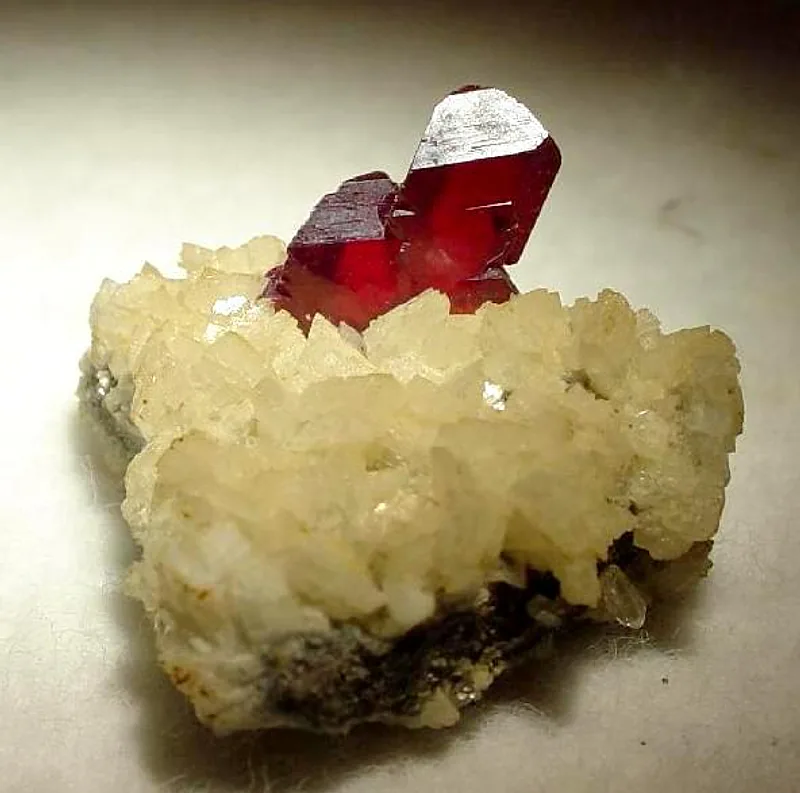
The ingredients included cinnabar (mercury sulfide), mercury, realgar and orpiment (arsenic sulfides), lead compounds and alum. Ge Hong presents the compounding of an elixir as a ritual act: it required a teacher's transmission, a period of purification, a secluded mountain site, offerings to the gods and protection from demons who might spoil the work. He admitted that poverty and the disorder of the times had prevented him from making the great elixirs himself. The sixteenth chapter, "The Yellow and the White", deals with making alchemical gold and silver.
These substances are poisonous, and Chinese history records the cost. Several Tang emperors are believed to have died from elixir poisoning, and the dangers helped drive the later turn from laboratory alchemy to internal alchemy. Ge Hong's elixirs are of historical interest only; see the guide to Chinese alchemy and the Cantong qi for the later tradition.
Mountains, Talismans and Protection from Demons§
Because elixirs had to be made in the mountains, Ge Hong devoted a long chapter, "Climbing Mountains and Crossing Rivers", to the dangers that awaited the adept there. Mountains were inhabited by spirits, and old animals and trees could take human form to deceive travellers. Ge Hong recommends carrying a mirror, in which such creatures reveal their true shapes; choosing auspicious days; wearing talismans, including the "talismans of Laozi for entering the mountains", some of which he reproduces; and possessing the True Forms of the Five Peaks, a set of sacred maps. These pages are a rich source for the history of Chinese amulets and talismans.
The nineteenth chapter, "Survey of Books", lists the library that Zheng Yin had shown him, some two hundred scriptures and dozens of talismans. Many titles are otherwise lost, which makes the list one of the earliest bibliographies of Taoist literature.
Ethics, Merit and the Lesser Arts§
Ge Hong insisted that technique alone was not enough. In the chapter "Answers to Popular Questions" he cites a rule that an aspirant must perform three hundred good deeds to become an earthly transcendent and twelve hundred to become a heavenly one, and that a single evil act cancels the account. He describes the Director of Destinies, who shortens the lifespan of wrongdoers, and the Three Corpses, spirits within the body that report a person's faults to heaven. Loyalty, filial piety, kindness and truthfulness were therefore preconditions for immortality, a blending of Taoist and Confucian ethics typical of Ge Hong.
He also discussed what he regarded as lesser arts: herbal medicines, gymnastics (daoyin), the circulation of breath, the sexual arts and the meditation of "guarding the One", the visualisation of the deities within the body. These methods, he wrote, could cure illness and prolong life, but none could on its own confer transcendence. They are described here as history, not as practices to follow.
Ge Hong's Legacy: Medicine, Hagiography and Maoshan§
Ge Hong also compiled a book of emergency medical prescriptions, the Zhouhou beiji fang ("Prescriptions to Keep Up One's Sleeve"). A remedy for intermittent fevers using the herb qinghao (sweet wormwood) caught the attention of the pharmacologist Tu Youyou in the 1970s and contributed to her discovery of artemisinin, an antimalarial for which she shared the Nobel Prize in 2015.
The Traditions of Divine Transcendents (Shenxian zhuan), a collection of lives of immortals, is attributed to Ge Hong, though the text has a complicated history; Robert Campany's study reconstructs its earliest form. Ge Hong's family remained central to Taoist history: his grand-nephew Ge Chaofu circulated the Lingbao scriptures, and the Maoshan master Tao Hongjing studied the Ge family's methods (see religious Taoism). Temples associated with him survive on Mount Luofu and on Geling Hill above West Lake in Hangzhou, and the Yuan painter Wang Meng depicted him moving his family to the mountains.
Frequently asked questions§
What does Baopuzi mean?§
Baopuzi means "The Master Who Embraces Simplicity" (or "Uncarved Block"), Ge Hong's chosen sobriquet. The phrase baopu comes from the Tao Te Ching, where the uncarved block symbolises original simplicity.
Did Ge Hong make the elixir of immortality?§
By his own account, no. He described the great elixirs in detail but said that poverty and the turmoil of his times had kept him from compounding them, and the toxic minerals they required make them dangerous rather than life-giving.
Is Ge Hong a Taoist or a Confucian?§
Both, by his own description. He assigned his Inner Chapters on immortality to the Taoist school and his Outer Chapters on government and ethics to the Confucian school, and he made Confucian virtues a condition for success in the Taoist arts.
Sources and further reading§
- Alchemy, Medicine, and Religion in the China of A.D. 320: The Nei P'ien of Ko Hung — James R. Ware, 1966
- The Master Who Embraces Simplicity: A Study of the Philosopher Ko Hung, A.D. 283–343 — Jay Sailey, 1978
- Great Clarity: Daoism and Alchemy in Early Medieval China — Fabrizio Pregadio, 2006
- To Live as Long as Heaven and Earth: A Translation and Study of Ge Hong's Traditions of Divine Transcendents — Robert Ford Campany, 2002
- Science and Civilisation in China, vol. 5, part 3: Spagyrical Discovery and Invention: Historical Survey, from Cinnabar Elixirs to Synthetic Insulin — Joseph Needham, 1976
- Taoism: Growth of a Religion — Isabelle Robinet, 1997