Liber I · Alchemy · Chapter V: History of Alchemy
Alchemical Hoaxes and Fraud: A History of Transmutation Claims
A history of alchemical fraud and transmutation claims: imitation gold, Chaucer's tricksters, court alchemists on gilded gallows, witnesses and debunkers.
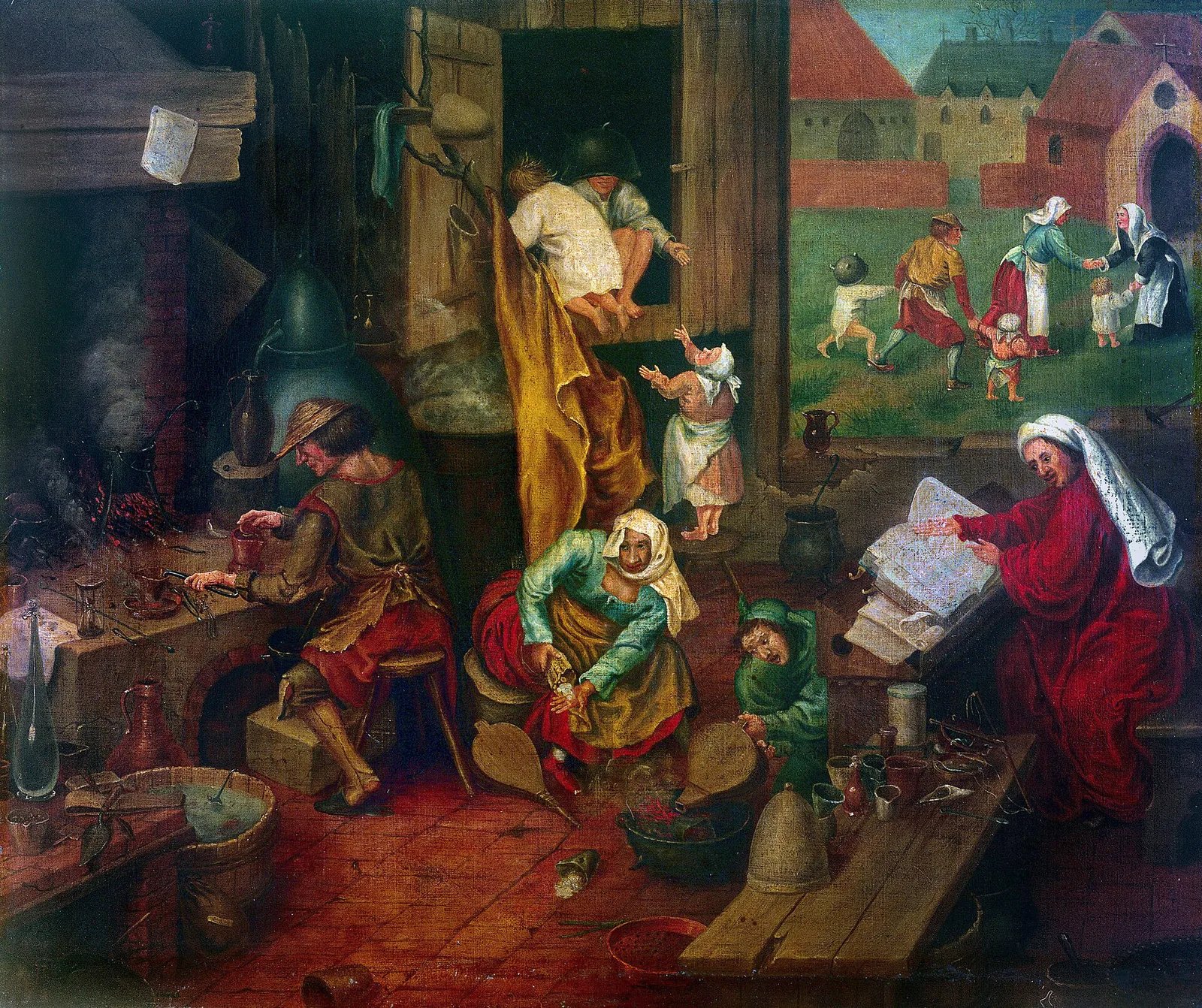
Alchemical fraud is as old as alchemy itself. From ancient recipes for imitation gold to the hollow stirring rods of Chaucer's crooked canon and the court alchemists hanged on gilded gallows, the history of transmutation is full of deception, but also of sincere practitioners, puzzled witnesses and rulers who wanted the art to be true. Historians today distinguish deliberate hoaxes from honest error and from the real chemistry that lay behind many claims, and they see the long struggle against fraud as part of how alchemy was judged and regulated.
Imitation gold in the ancient world§
The oldest surviving "alchemical" recipes are found in two Greek papyri from Egypt, the Leiden Papyrus X and the Stockholm Papyrus, usually dated to around 300 CE. They give instructions for alloying, colouring and gilding metals so that they look like gold or silver, together with recipes for dyes and imitation gems. These were craft techniques, used by goldsmiths and dyers, and imitation was not necessarily fraud; but in the wrong hands such methods could easily deceive.
According to later Byzantine sources, the emperor Diocletian, after suppressing a revolt in Egypt around 297, ordered the burning of Egyptian books on making gold and silver, so that the Egyptians could not enrich themselves and rebel again. The story may be partly legendary, but it shows that rulers already associated the art with money and power. The early history of the discipline is told in the history of Western alchemy.
Medieval suspicion: popes, kings and poets§
As Latin alchemy spread from the twelfth century, so did complaints about deceivers who promised gold and delivered counterfeit. Dante placed alchemists among the falsifiers in the lowest circles of his Inferno, where Griffolino of Arezzo and Capocchio suffer for counterfeiting metals. Around 1317 Pope John XXII issued the decretal Spondent quas non exhibent ("They promise what they do not produce"), condemning alchemists who sold false gold and silver. In England a statute of Henry IV in 1404 made the "multiplication" of gold and silver a felony, mainly to protect the coinage; yet Henry VI later granted licences to individuals to attempt transmutation in the 1440s and 1450s, hoping to pay royal debts.
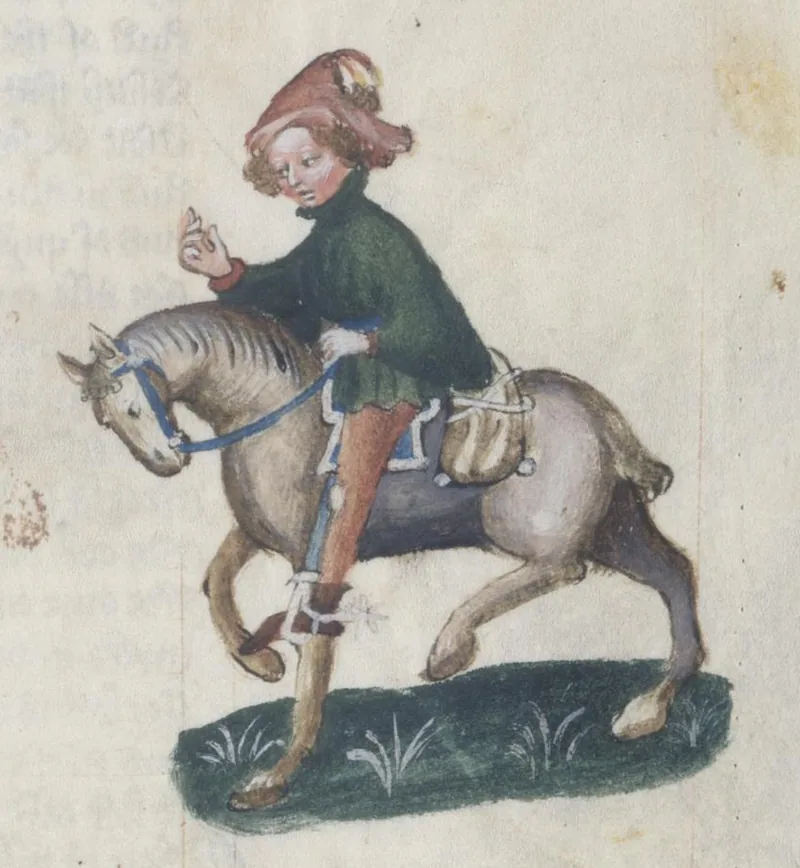
The most vivid medieval portrait of an alchemical fraud is Geoffrey Chaucer's Canon's Yeoman's Tale in The Canterbury Tales, written in the 1390s. The yeoman first describes the endless, ruinous labour of his master's laboratory, then tells of a canon who cheats a priest. In one trick the canon hides silver filings in a hollow piece of charcoal sealed with wax; when the coal burns, the silver falls into the crucible. In another, he uses a hollow stirring stick plugged with silver. The priest pays handsomely for a recipe that can never work.
The tricks of the trade§
Later writers catalogued similar deceptions. Crucibles were made with false bottoms, concealing gold beneath a layer of paste that burned away in the furnace. Gold could be hidden in coals, in rods, in wax or under the fingernails, or introduced as an amalgam of gold dissolved in mercury, which looked like ordinary quicksilver until the mercury was driven off by heat. Nails were "half transmuted" by skilfully joining a gold tip to an iron shaft. Coins and medals could be plated or alloyed so that their colour changed when treated.
Not every apparent success needed a trick. Ores and base metals often contain traces of silver or gold, which careful separation could reveal, convincing an honest operator that transmutation had begun. Assays of purity were imperfect, and colour changes in alloys could resemble the effects described in alchemical books. The line between fraud and self-deception was often unclear, as the general account of the Philosopher's Stone makes plain.
Princes, contracts and gilded gallows§
In sixteenth- and seventeenth-century Central Europe, alchemy became a court enterprise. Princes signed contracts with practitioners who promised gold, medicines or useful processes, providing them with laboratories, materials and salaries. Tara Nummedal's study of the Holy Roman Empire shows how such contracts made the charge of fraud a legal matter: an alchemist who failed to deliver could be prosecuted for breach of contract and deception.
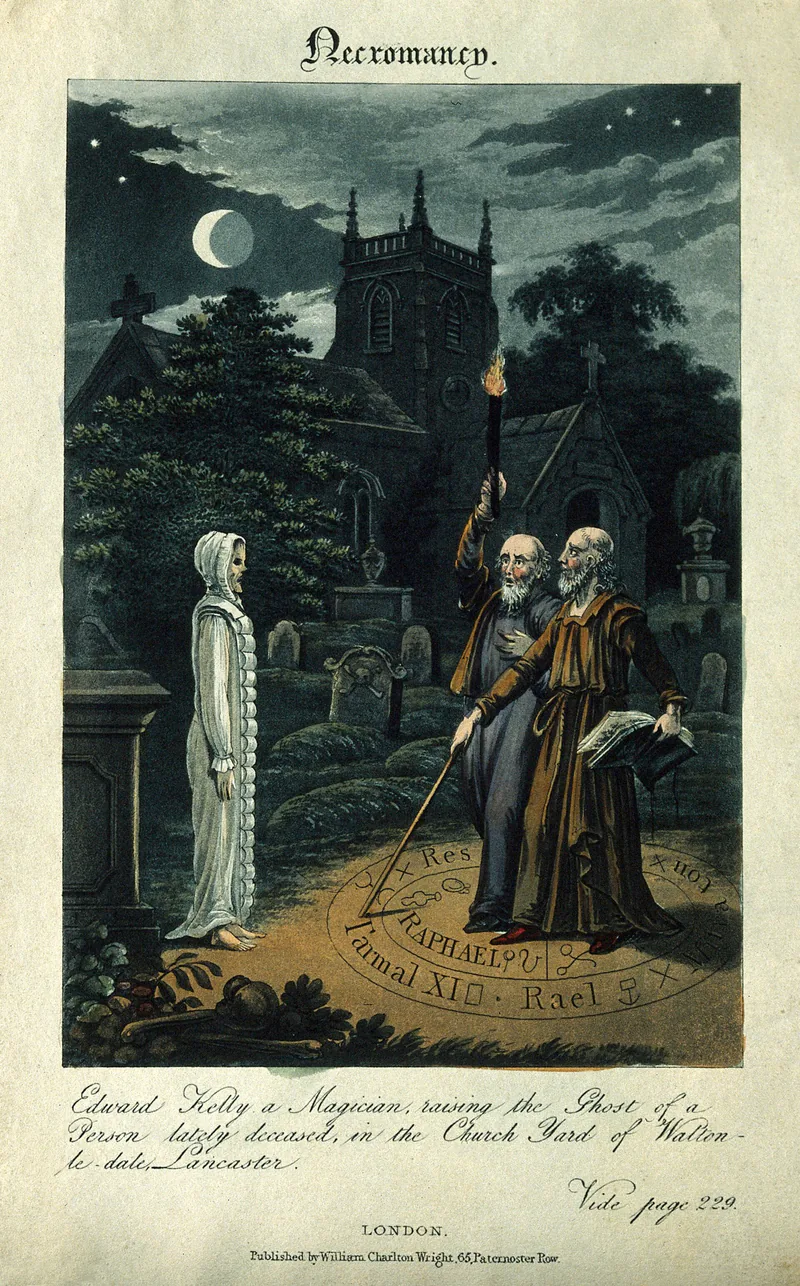
Some of these stories ended grimly. The Cypriot adventurer Marco Bragadino, who had impressed Venice with claims of transmutation, was executed in Munich in 1591 on the orders of Duke William V of Bavaria. In 1597 Duke Frederick of Württemberg had Georg Honauer hanged on an iron gallows, a mocking reference to his promise to turn iron into gold. Edward Kelley, the former associate of John Dee, rose high at the court of Emperor Rudolf II in Prague before being imprisoned; he died in custody in Bohemia around 1597–98. As late as 1709 the self-styled Count Caetano was hanged by the king of Prussia on a gallows decorated with gold leaf. One story ended more happily: the young apothecary Johann Friedrich Böttger, held captive by Augustus the Strong of Saxony after claiming to make gold, instead helped develop European hard-paste porcelain, leading to the founding of the Meissen manufactory in 1710. Kelley's earlier career is described in the article on Enochian magic and John Dee.
Witnesses who puzzled the sceptics§
Alongside obvious frauds stood reports that troubled even critical minds. The Flemish physician Joan Baptista van Helmont stated that he had transmuted mercury into gold with a small amount of powder given by a stranger. In 1667 the physician Johann Friedrich Schweitzer (Helvetius) of The Hague published his account of a mysterious visitor who showed him the Stone and of a successful transmutation he made with a crumb of it; the case was investigated by local assayers and discussed by Spinoza. In Vienna, the monk Wenzel Seiler presented Emperor Leopold I in 1677 with a large medallion said to have been partly transmuted from silver into gold; historians explain it through goldsmiths' techniques rather than alchemy.
Such episodes help explain why serious natural philosophers, including Robert Boyle and Isaac Newton, continued to believe transmutation possible. Boyle himself described in 1678 a powder that had apparently "degraded" gold, and in 1689 he helped secure the repeal of the English statute against multiplication. These figures are discussed further in Famous Alchemists.
Enlightenment exposures and modern claims§
By the early eighteenth century, chemists increasingly treated transmutation stories as fraud. In 1722 Étienne-François Geoffroy read a paper to the Paris Academy of Sciences describing the tricks used by false alchemists, from hollow rods to doctored crucibles. The last famous case in Britain was that of James Price, a young Fellow of the Royal Society who in 1782 claimed to have turned mercury into silver and gold before witnesses at Guildford. Pressed by the Society to repeat his experiments under supervision, he failed and took his own life in 1783.
Claims did not vanish. In the 1920s the Bavarian Franz Tausend attracted investors, reportedly including General Erich Ludendorff, with promises of gold from base metals, and was convicted of fraud in 1931. Around the same time, chemists in Berlin and Tokyo announced the production of gold from mercury by electrical methods, results soon traced to contamination. Genuine transmutation arrived only with nuclear physics: in 1941 physicists at Harvard produced radioactive gold isotopes by bombarding mercury with neutrons, and later experiments made traces of gold from bismuth, at costs far exceeding the value of the metal. The relationship between occult claims and science is explored in Occultism and Science.
How historians judge transmutation claims§
Modern historians resist two easy conclusions: that all alchemists were frauds, or that hidden adepts really made gold. Lawrence Principe and William Newman emphasise that most practitioners worked within a coherent theory of matter, observed real phenomena, and sometimes misread them. Nummedal and Pamela Smith show that accusations of fraud were also social and legal weapons in a world of patronage and contracts. Satirists from Chaucer to Ben Jonson, whose comedy The Alchemist (1610) mocked credulous Londoners, shaped the image of the alchemist as cheat, an image that later obscured alchemy's real contributions to chemistry. A balanced overview of the art appears in What Is Alchemy?.
Frequently asked questions§
Did any alchemist really turn lead into gold?§
There is no reliable evidence of chemical transmutation. Reported successes are explained by fraud, by traces of gold or silver already present in materials, or by misleading colour changes and imperfect assays. Nuclear reactions can change one element into another, but only in tiny amounts.
What tricks did fake alchemists use?§
Common tricks included hollow coals or rods filled with gold or silver, crucibles with false bottoms, hidden gold amalgams and plated or composite objects. Chaucer's Canon's Yeoman's Tale describes several of these methods.
Were alchemists punished for fraud?§
Yes. Some were prosecuted for breach of contract or counterfeiting, and several court alchemists were executed, including Marco Bragadino in 1591 and Count Caetano in 1709. England also outlawed the multiplication of gold and silver from 1404 to 1689.
Sources and further reading§
- Alchemy and Authority in the Holy Roman Empire — Tara Nummedal, 2007
- The Business of Alchemy: Science and Culture in the Holy Roman Empire — Pamela H. Smith, 1994
- The Secrets of Alchemy — Lawrence M. Principe, 2013
- The Aspiring Adept: Robert Boyle and His Alchemical Quest — Lawrence M. Principe, 1998
- Promethean Ambitions: Alchemy and the Quest to Perfect Nature — William R. Newman, 2004
- The Canterbury Tales — Geoffrey Chaucer, c. 1400
- The Alchemist — Ben Jonson, 1612