Birth lore · Your birthday
Gemstones · Birthstone of August and September
Peridot
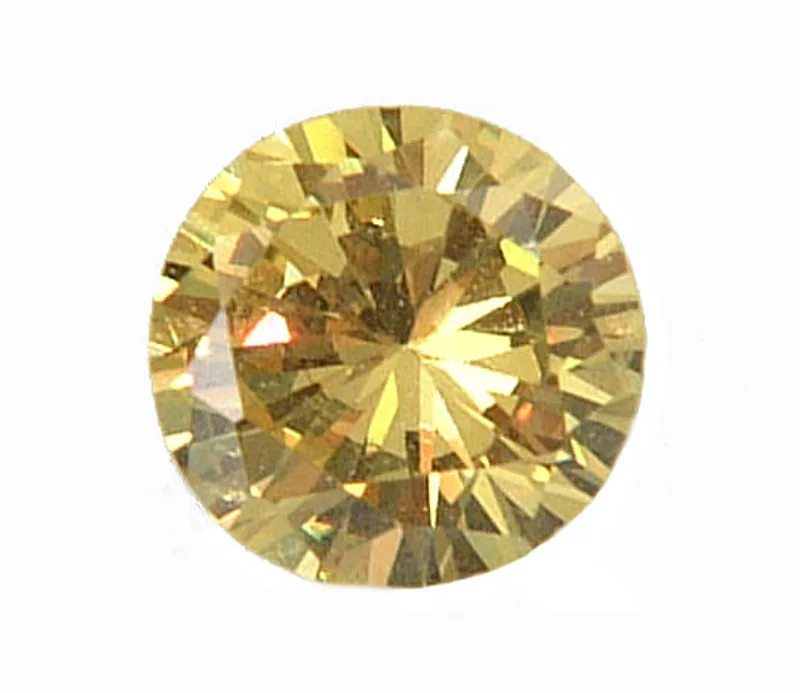
The olive-green gem of August, mined since antiquity on a Red Sea island, often confused with emerald and long sold as 'chrysolite'; it forms deep in the Earth's mantle and even arrives in meteorites.
History and lore
Peridot has been gathered for more than two thousand years on Zabargad, also called St John's Island, a small and arid island in the Red Sea off Egypt. Greek and Roman writers knew of a green gem from an island in the Red Sea, and Pliny the Elder's topazos, named after an island called Topazos, is usually identified by modern scholars as peridot, not the stone now called topaz. The origin of the word "peridot" itself is uncertain; a derivation from the Arabic faridat, "gem", is often suggested but not proven.
For much of history peridot travelled under the name chrysolite, "golden stone", a word the ancients applied to yellow gems but which later writers attached to yellowish green ones. Crusaders are said to have brought peridots back to Europe, and the stone was often mistaken for emerald; the large green stones on the Shrine of the Three Kings in Cologne Cathedral are frequently said to be peridots, though the claim is better treated as tradition than settled fact. Peridot's soft, oily green made it popular in Baroque and Victorian jewellery, and gem dealers sometimes called it "evening emerald" because its colour holds well under lamplight.
In the traditions
Revelation 21:20 names chrysolite as the seventh foundation stone of the New Jerusalem, and some scholars have suggested that the Hebrew tarshish of the High Priest's breastplate was a chrysolite; in both cases we cannot be sure the ancient stone was peridot. Medieval lapidaries treated chrysolite as a stone against night terrors and evil spirits, sometimes advising that it be set in gold and worn on the left arm.
Agrippa listed the chrysolite among the stones of the Sun, and modern Western tables continue to give peridot to the Sun and to Leo, the sign the Sun rules. Peridot is not one of the Navaratna, though some modern Vedic astrologers offer it as a substitute for emerald, the stone of Mercury.
Meaning and symbolism
The American list of 1912 placed peridot beside sardonyx in August, and it is now the usual August stone, shared since 2016 with spinel (see August). In older lists that follow the breastplate order, chrysolite stands under September (see September). Peridot symbolises light, protection, prosperity and the healing of quarrels. These are traditional meanings; scientific studies have not found that gemstones protect, heal or bring luck.
The mineral
Peridot is the gem variety of olivine, a magnesium-iron silicate that is one of the most abundant minerals of the Earth's upper mantle. It reaches the surface in basalt lavas and in rare slices of mantle rock, which is why it is found in volcanic settings such as the San Carlos Apache Reservation in Arizona, now a leading source, and the olivine sands of Hawaii. Other sources include Myanmar, Pakistan's Kohistan region (whose fine stones appeared in the 1990s), China, Vietnam and Zabargad itself. Olivine also occurs in pallasite meteorites, and gem-quality crystals have been cut from them.
Peridot comes in only one colour family, green tinged with yellow, coloured by iron. It is strongly doubly refractive, so a loupe shows the back facet edges doubled, a good test against green glass and synthetic spinel. Small black inclusions and disc-like "lily pad" fractures are typical. Peridot is moderately hard (6.5 to 7) and sensitive to acids and sudden temperature changes; clean it with warm soapy water only.
Sources and further reading
- Natural History, Book 37 — Pliny the Elder, c. 77 CE
- The Curious Lore of Precious Stones — George Frederick Kunz, 1913
- Three Books of Occult Philosophy — Heinrich Cornelius Agrippa, 1533
- Magical Jewels of the Middle Ages and the Renaissance — Joan Evans, 1922
- Gems: Their Sources, Descriptions and Identification — Robert Webster, 1962 (6th ed., ed. Michael O'Donoghue, 2006)
- Gemstones of the World — Walter Schumann, 1977 (later editions)