Birth lore · Your birthday
Gemstones · Birthstone of November
Citrine
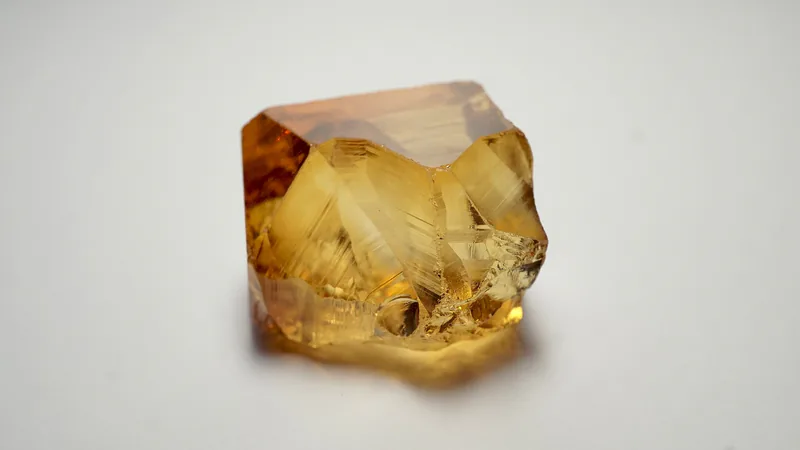
Citrine is golden quartz, named from the French word for lemon; long sold as 'topaz', it became a separate gem in the modern trade and was added as a November birthstone in 1952.
History and lore
Citrine takes its name from the French citron, "lemon", a name that describes its colour rather than any ancient tradition. Natural yellow quartz is relatively uncommon, and for most of its history it was not distinguished from other golden stones: lapidaries, jewellers and merchants sold it as "topaz", and trade names such as "Madeira topaz", "Spanish topaz" and "gold topaz" survived into the twentieth century. Yellow quartz was carved into seals and cabochons in the Hellenistic and Roman worlds, but ancient authors did not treat it as a gem in its own right.
In Scotland, smoky and yellowish quartz from the Cairngorm mountains, called "cairngorm", was set in brooches, kilt pins and the hilts of dirks and sgian-dubh, and enjoyed a fashion in the Victorian period, when the royal family's enthusiasm for the Highlands made Scottish jewellery popular. Citrine's real rise came later. When it was found that amethyst from certain Brazilian and Uruguayan deposits turned yellow to reddish-orange on heating, large clean golden stones became plentiful, and the bold cocktail jewellery of the 1930s and 1940s made generous use of them.
In the traditions
Because older writers did not separate citrine from topaz and other yellow stones, it has no secure place in the High Priest's breastplate of Exodus 28, in the foundations of Revelation 21, or in medieval lapidaries such as Marbode's; whatever those texts say about "topaz" may sometimes have been said of yellow quartz, but this cannot be shown. Its birthstone status is modern: the American Jewelry Industry Council's revision of 1952 added citrine as an alternative to topaz for November.
In Indian gem practice citrine, often called sunela, is sold as an inexpensive substitute (uparatna) for yellow sapphire, the Navaratna gem of Jupiter, which is why this entry follows modern tables in giving it to that planet. Twentieth-century crystal books call citrine the "merchant's stone" or "money stone" and recommend keeping it in a till; this is recent commercial folklore, not historical tradition, and scientific studies have not found that crystals affect fortune or health.
Meaning and symbolism
Citrine's associations are almost entirely those of its colour: sunlight, warmth, cheerfulness and abundance. Readers of alchemical literature will notice the coincidence with citrinitas, the "yellowing" stage that some alchemical writers placed between the whitening and the reddening of the Work (see Western alchemy). Both words come from the Latin for citron, but there is no evidence that alchemists had this gem in mind. In modern birthday lore the November stone is given to people described as open-handed and optimistic.
The mineral
Citrine is macrocrystalline quartz, the same species as amethyst and rock crystal, coloured by traces of iron. Natural citrine is usually pale yellow, sometimes with a smoky cast, and comes from Brazil, Bolivia, Madagascar, Zambia, Russia and elsewhere; Bolivia's Anahí mine produces ametrine, in which purple and yellow zones meet in one crystal. Heat-treated amethyst tends towards deeper orange and reddish tones, and in treated geode clusters the colour is concentrated at the crystal tips, a pattern natural citrine does not show.
With a hardness of 7 and no cleavage, citrine is durable enough for everyday rings. It can be told from topaz by its lower density and refractive index (about 1.54–1.55), and from glass by its double refraction and lack of rounded gas bubbles. Prolonged strong sunlight may fade some stones. Clean with warm soapy water; ultrasonic cleaning is generally safe for unfractured stones, but avoid sudden changes of temperature.
Sources and further reading
- Natural History, Book 37 — Pliny the Elder, c. 77 CE
- The Curious Lore of Precious Stones — George Frederick Kunz, 1913
- Gems: Their Sources, Descriptions and Identification (6th ed.) — Michael O'Donoghue (ed.), 2006
- Gemstones of the World — Walter Schumann, 1977