Scientology: L. Ron Hubbard, Dianetics and the Church History
Scientology explained: L. Ron Hubbard and Dianetics, the thetan and auditing, the Bridge to Total Freedom, church history, controversies and scholarship.

Scientology is a new religious movement founded by the American writer L. Ron Hubbard (1911–1986), who first presented a therapeutic system called Dianetics in 1950 and developed it into a religion from 1952; the first Church of Scientology was incorporated in 1954. Scientologists teach that each person is an immortal spiritual being, a thetan, and that through a counselling practice called auditing and a graded course of study, the "Bridge to Total Freedom", the individual can recover full spiritual awareness and ability. It is one of the most studied, most litigated and most disputed religions of the twentieth century.
L. Ron Hubbard: From Pulp Fiction to Dianetics§
Lafayette Ronald Hubbard was born in Tilden, Nebraska, in 1911 and travelled to Asia as a teenager while his father served in the US Navy. During the 1930s he became a prolific author of pulp adventure, western and science-fiction stories, writing for magazines edited by John W. Campbell, and he served as a naval officer during the Second World War. Official church biographies and independent biographers differ sharply over his war record, academic credentials and early life, and this disagreement is itself part of the controversy around the movement.
In 1945 and 1946 Hubbard lodged at the Pasadena house of the rocket engineer and Thelemite Jack Parsons and took part in Parsons's magical operations, an episode described in Jack Parsons and the Babalon Working. The church has said that Hubbard was sent there to investigate and break up the group; most outside historians treat the episode as one of several encounters with the occult and self-help milieu of mid-century California. Scholars such as Hugh Urban therefore situate Scientology at the meeting point of American metaphysical religion, psychotherapy, science fiction and the culture of the Cold War.
Dianetics: Engrams, the Reactive Mind and Clear§
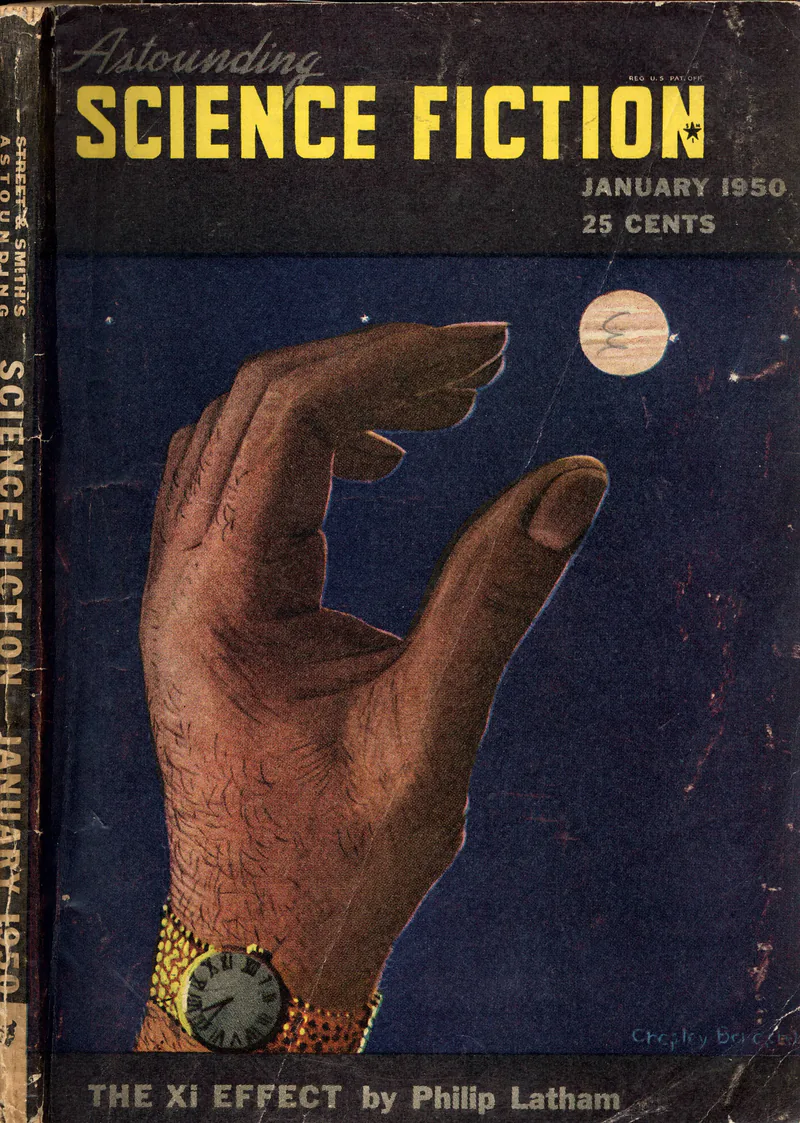
Hubbard first set out Dianetics in an article in Astounding Science Fiction in May 1950, followed the same month by the book Dianetics: The Modern Science of Mental Health, which became a bestseller. Dianetics divides the mind into the analytical mind, rational and aware, and the reactive mind, which stores engrams: recordings of moments of pain and unconsciousness, including, Hubbard claimed, events before birth. Engrams were said to act on a person later as irrational fears, compulsions and psychosomatic illnesses.
The remedy was a form of paired therapy in which an "auditor" guided a "preclear" to return to and re-experience these incidents until their charge was discharged. A person freed of the reactive mind would become a Clear, a state that Hubbard initially described in extravagant terms, including improved intelligence and health. Dianetics groups formed across the United States in 1950, and the Hubbard Dianetic Research Foundation opened in Elizabeth, New Jersey. The boom was short: medical and psychological professionals rejected the theory, the foundations fell into financial difficulty, and Hubbard lost control of the Dianetics name for a time in a dispute with a backer.
From Dianetics to the Church of Scientology§
In 1952 Hubbard introduced Scientology, a name he glossed as "knowing how to know". Its decisive new element was the thetan: the person was no longer a mind with a damaged recording system but a spiritual being who had inhabited countless bodies over vast stretches of time and had become entangled in the material universe of matter, energy, space and time ("MEST"). Past-life memories, which had already appeared in Dianetic sessions, were now integrated into a religious cosmology.
Organisations calling themselves churches were incorporated from December 1953, and the Church of Scientology of California, founded in Los Angeles in 1954, became the movement's early centre. In 1959 Hubbard moved to Saint Hill Manor in East Grinstead, England, where he refined the training programmes. In 1967 he took to the sea with a fleet of ships and founded the Sea Organization, a religious order whose members sign symbolic billion-year contracts and staff the senior institutions. From 1975 the church's spiritual headquarters, the Flag Land Base, has been in Clearwater, Florida. Hubbard withdrew from public view in 1980 and died in 1986; David Miscavige, chairman of the board of the Religious Technology Center, has led the church since the 1980s.
Core Beliefs: the Thetan, the Eight Dynamics and the Bridge§
Scientology teaches that human beings are basically good and that the thetan is the true self, not the body or the mind. The urge of existence is described through eight dynamics, concentric spheres of survival: self, family and sexuality, groups, humankind, all living things, the physical universe, spirit, and finally infinity or the Supreme Being. The church affirms a Supreme Being but leaves its nature to the individual's own realisation rather than to creed, which has led some scholars to compare it with Eastern traditions; Hubbard himself spoke of a debt to Buddhism and the Vedas.
Other key teachings include the ARC triangle (affinity, reality and communication, which together make up understanding), the Tone Scale, which charts emotional states from apathy to enthusiasm, and a strong emphasis on ethics, study technology and the exact application of Hubbard's methods, called "standard tech". Salvation in Scientology is called spiritual freedom and is pursued step by step along the Bridge to Total Freedom, a chart of auditing and training levels. Beyond Clear lie the confidential levels of Operating Thetan (OT), at which the thetan is said to regain the ability to act independently of the body. Material from the upper levels, including a cosmological narrative about catastrophic events in the remote past, entered the public record through lawsuits in the 1980s and later spread on the internet. The church regards these as confidential scriptures that are misrepresented when read out of their place in the Bridge.
Auditing, Training and Church Life§
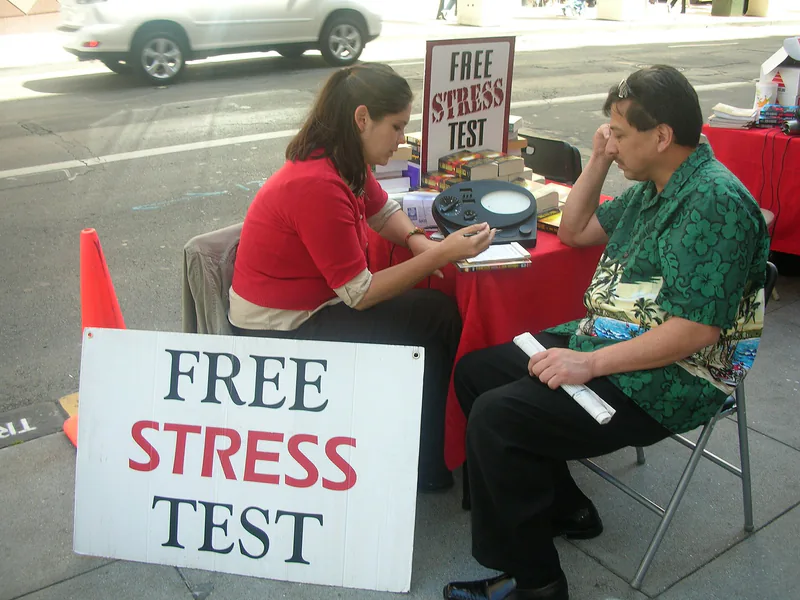
The central religious practice is auditing, a structured spiritual counselling session in which an auditor asks set questions and acknowledges the answers. Most auditing uses the E-meter, a device that measures small changes in electrical resistance passed through the body; Scientologists believe its readings indicate mental charge connected with the subject being addressed. After a 1963 seizure of E-meters by the US Food and Drug Administration and years of litigation, American courts required the devices to carry a statement that they are religious artefacts and do not diagnose or treat illness. Training teaches members to audit others and to study Hubbard's writings and recorded lectures, which form the movement's scripture.
Churches hold Sunday services, weddings, naming ceremonies and funerals, and publish a creed dating from 1954. Members are expected to keep the church's ethics codes; persons judged hostile to the church are designated "suppressive", and members may be urged to "disconnect" from them, a practice that former members strongly criticise and the church describes as a personal choice. Services are paid for through fixed donations, a model the church compares with the support of clergy in other religions and critics regard as commercial. Church-related programmes include drug rehabilitation (Narconon), educational projects based on Hubbard's study methods, and the Citizens Commission on Human Rights, founded in 1969, which campaigns against psychiatry, a long-standing target of Hubbard's teaching.
Controversy, Law and Scholarly Debate§
Few religions have spent as much time in court. In the 1970s members of the church's Guardian's Office infiltrated United States government agencies to obtain files about the church, an operation known as Snow White; after an FBI raid in 1977, eleven officials, including Hubbard's wife Mary Sue Hubbard, were convicted. Disputes with the Internal Revenue Service ended in 1993 with the church's recognition as tax-exempt. Elsewhere, Australia's High Court accepted Scientology as a religion for tax purposes in 1983, the United Kingdom's Supreme Court in 2013 allowed a Scientology chapel to register marriages, and Italian and Spanish courts and authorities recognised its religious character. Germany, by contrast, has placed the organisation under observation by its domestic intelligence services since 1997, and in France the Paris Celebrity Centre and an associated bookshop were convicted of organised fraud in 2009.
Membership figures are contested. The church speaks of millions of adherents worldwide, while national surveys have found far fewer self-identifying members, in the United States in the tens of thousands. Since the 1980s independent Scientologists, sometimes called the "Free Zone", have practised Hubbard's methods outside the official church.
Scholars remain divided over how to classify the movement. The sociologist Roy Wallis described Scientology as a classic case of a loose therapeutic "cult" turning into a tightly organised "sect" under a single authority. Others emphasise its religious claims and rituals; Hugh Urban's history treats the very question "is Scientology a religion?" as revealing how modern states define religion, and Donald Westbrook has studied members' own experience. Its emergence alongside flying-saucer movements is discussed in UFO Religions, and its place in wider debates over cults and brainwashing in Studying New Religious Movements. Like Christian Science and New Thought, it belongs to the American tradition of religions that promise mastery over mind and suffering.
Frequently asked questions§
What is the difference between Dianetics and Scientology?§
Dianetics, presented in 1950, is a therapy aimed at clearing the reactive mind of painful engrams. Scientology, introduced in 1952, places Dianetics within a religious framework centred on the thetan, the immortal spirit, and extends practice to higher spiritual levels. The church today treats Dianetics as one part of Scientology.
Do Scientologists believe in God?§
Scientology affirms a Supreme Being or infinity as the eighth dynamic of existence, but it does not define God in a creed. Members are encouraged to reach their own understanding of the divine as they progress spiritually.
What is an E-meter?§
The E-meter, or electropsychometer, is a device used in auditing that measures changes in electrical resistance through the body. Scientologists believe it helps locate areas of spiritual distress; by court order in the United States it is described as a religious instrument that does not diagnose or cure illness.
Sources and further reading§
- Dianetics: The Modern Science of Mental Health — L. Ron Hubbard, 1950
- The Road to Total Freedom: A Sociological Analysis of Scientology — Roy Wallis, 1976
- Scientology — James R. Lewis (ed.), 2009
- The Church of Scientology: A History of a New Religion — Hugh B. Urban, 2011
- Among the Scientologists: History, Theology, and Praxis — Donald A. Westbrook, 2019
- Bare-Faced Messiah: The True Story of L. Ron Hubbard — Russell Miller, 1987
- Going Clear: Scientology, Hollywood, and the Prison of Belief — Lawrence Wright, 2013