The Unification Church: Sun Myung Moon and the Divine Principle
The Unification Church explained: Sun Myung Moon, the Divine Principle, True Parents, mass Blessing weddings, the 'Moonie' controversies and the church today.

The Unification Church is a new religious movement founded in Seoul in 1954 by the Korean preacher Sun Myung Moon (1920–2012), whose followers regard him and his wife Hak Ja Han as the "True Parents" of humanity, sent to complete the mission of Jesus by establishing sinless families. Its teaching, set out in the Divine Principle, reinterprets the Bible through a Korean lens, and its mass marriage ceremonies, business empire and conservative political activity made it one of the most controversial new religions of the late twentieth century. Since 1994 its main body has been called the Family Federation for World Peace and Unification.
Sun Myung Moon and the Founding in Korea§
Sun Myung Moon was born in 1920 in a farming village in North Pyongan province, in the north of Korea, then under Japanese rule. His family became Presbyterian when he was a boy. According to Unificationist accounts, on Easter morning 1935, while praying on a hillside, he saw Jesus, who asked him to take up the task of bringing the Kingdom of Heaven on earth. Moon studied electrical engineering in Japan during the Second World War and, according to his own account, spent the following years in prayer and study to discover the hidden principles of the Bible.
After 1945 he preached in Pyongyang, a city then known for its fervent Protestant revivalism and for small messianic and spiritualist groups, including one led by Kim Baek-moon that Moon is reported to have attended. The communist authorities arrested him, and he spent more than two years in the Hungnam labour camp until United Nations forces advanced in 1950. As a refugee in Busan he gathered his first disciples, and on 1 May 1954 in Seoul he founded the Holy Spirit Association for the Unification of World Christianity, the formal name from which "Unification Church" derives. In 1960 he married Hak Ja Han, and the couple became known to members as the True Parents.
The Divine Principle: Creation, Fall and Restoration§
The church's teaching was systematised in the Divine Principle (Korean Wolli Kangron, 1966), written by the early disciple Hyo Won Eu from Moon's teaching. It is organised in three parts.
The Principle of Creation§
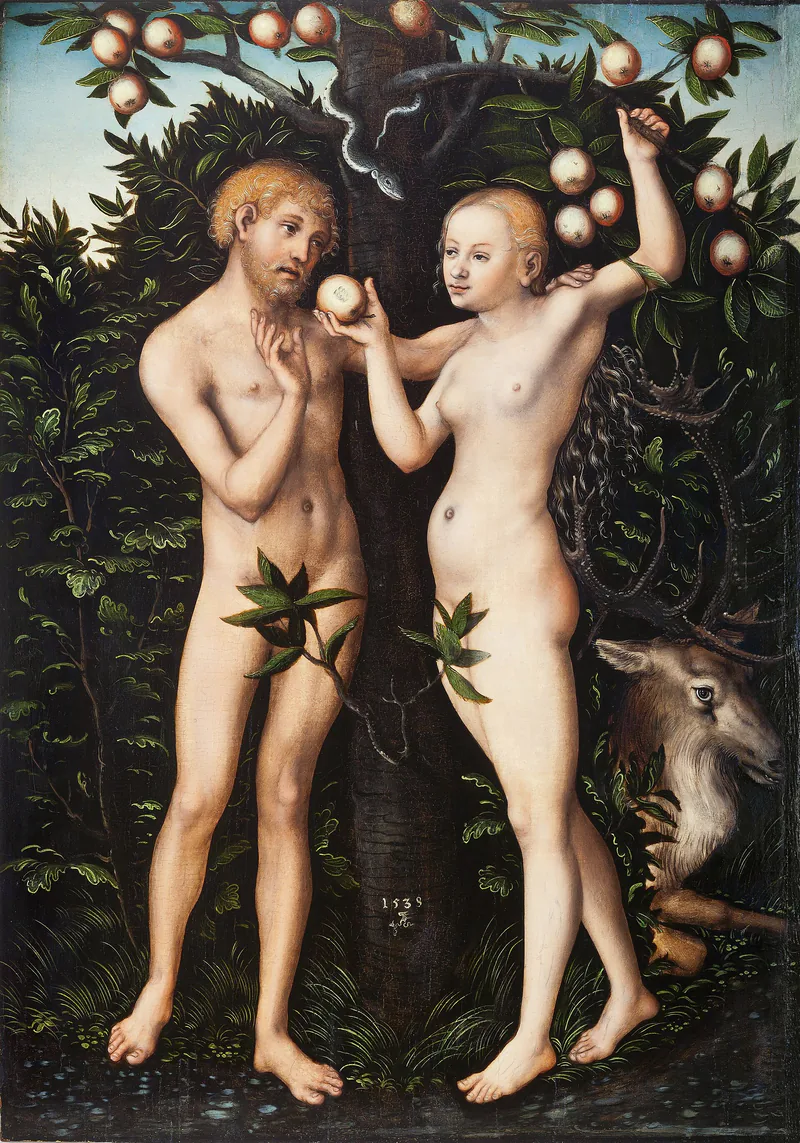
God is understood as having dual characteristics: internal character and external form, and masculinity and femininity, a polarity that many commentators compare with the yin and yang of East Asian thought. Every created being reflects this pairing. God's purpose was that Adam and Eve should mature, marry with God's blessing and form a four-position foundation of God, husband, wife and children, fulfilling the three blessings of Genesis 1:28: to be fruitful, to multiply and to have dominion.
The Fall§
The Divine Principle reads the story of Genesis 3 as an account of sexual transgression. The archangel Lucifer seduced Eve in a "spiritual fall"; Eve then united with Adam before they had reached maturity in a "physical fall". As a result humanity descends from a corrupted lineage, with Satan rather than God as its false parent. This doctrine of lineage is the key to the movement's emphasis on marriage and sexual purity.
Restoration and the Lord of the Second Advent§
History is the story of God's efforts to restore humanity through central figures who pay indemnity, conditions of sacrifice that reverse the effects of the Fall. The Divine Principle traces providential parallels between periods of Israelite and Christian history. Jesus came as the second Adam to found a sinless family, but because he was rejected and crucified before he could marry, he achieved only spiritual, not physical, salvation. A Lord of the Second Advent must therefore come, born as a man, and the text argues that he would be born in Korea in the early twentieth century. Moon did not publicly declare himself to be that figure for many years, but members widely understood him to be the Messiah, and in his later decades he said so explicitly.
The Blessing: Mass Weddings and Family§
The central rite of the movement is the Blessing, a marriage ceremony through which couples are believed to be engrafted from Satan's lineage into God's. In the movement's classic period, members asked Moon to choose their spouses, often across national and racial lines, which he presented as a way of healing historic enmities, for example between Koreans and Japanese. Engaged couples drank holy wine in a ceremony understood to change their lineage, observed a period of separation and abstinence after the wedding, and then began family life.
Mass Blessings drew public attention: 2,075 couples were married in Madison Square Garden, New York, in 1982, and some 30,000 couples in Seoul's Olympic Stadium in 1992, with many more linked by satellite. In later years the Blessing was opened to already-married couples and to non-members, and the role of the parents in choosing spouses grew. Second-generation members, born of Blessed couples, have a special status in Unification theology.
Mission to the West and the "Moonie" Controversies§
Missionaries reached the United States in 1959, and the sociologist John Lofland's study of a small group in Oregon and California, published as Doomsday Cult (1966), became a classic of conversion research. Moon moved to the United States in the early 1970s and held large rallies, including at Yankee Stadium and the Washington Monument in 1976. Young Western converts, often called "Moonies" by the press, lived communally, raised funds by street selling and recruited through weekend workshops.
The movement became a primary target of the anti-cult movement. Parents hired deprogrammers to abduct adult children, and critics accused the church of deceptive recruitment and of exploiting members' labour. The British sociologist Eileen Barker's The Making of a Moonie (1984), discussed in Studying New Religious Movements, found that only a small proportion of workshop attendees joined and that most members left within a few years, evidence widely cited against the brainwashing model. In 1982 Moon was convicted in New York of filing false tax returns and served about thirteen months in federal prison; many religious organisations, including some critics of his theology, argued that the prosecution threatened religious freedom.
The church also built a large network of businesses and institutions, including the conservative newspaper The Washington Times (founded 1982), fishing and food companies, universities and interfaith and anti-communist organisations. Scholars such as David Bromley and Anson Shupe described it as a world-transforming movement that sought to influence politics as well as private life.
Korean Roots and Theological Character§
Scholars of Korean religion have pointed out how deeply the movement draws on its homeland. Its expectation of a Korean messiah echoes earlier Korean prophetic traditions and the idea of Korea as a suffering nation chosen for a providential role. Some see in its emphasis on ancestors, spiritual lineage and communication with the spirit world an affinity with Korean shamanism and Confucian family ethics, while its biblical vocabulary comes from Korean Protestant revivalism. Christian churches generally regard Unificationism as outside Christian orthodoxy because of its teachings on the Trinity, the incomplete work of Jesus and the messianic status of Moon. Unificationists, for their part, see their faith as the fulfilment of Christianity and of all religions, a theme expressed in the many interfaith conferences the church sponsored. Its interpretation of the end times as the restoration of the family can be compared with the apocalyptic readings discussed in The Book of Revelation.
After Moon: Schism, Japan and the Church Today§
In 1994 the church adopted the name Family Federation for World Peace and Unification. After Moon's death on 3 September 2012, Hak Ja Han assumed leadership, and her teaching that she is the "only begotten daughter" of God has been central to the main body since then. Two of the couple's sons lead rival organisations: Hyun Jin Moon heads a movement focused on peace and Korean unification, and Hyung Jin Moon founded the Sanctuary Church in Pennsylvania, which rejects his mother's leadership.
Japan, where the church has long had one of its largest memberships, has become the focus of its most serious recent difficulties. Lawyers and former members had for decades accused the church of pressuring followers into very large donations and of so-called "spiritual sales" of expensive objects. After the assassination of former prime minister Shinzo Abe in July 2022 by a man who blamed the church for his family's financial ruin following his mother's donations, the church's ties with politicians became a national issue. In March 2025 the Tokyo District Court granted a government request to order the dissolution of the church's Japanese religious corporation, a decision the church contested on appeal. The church describes the case as religious persecution; its prominence in Japan sits alongside, but is distinct from, the native movements described in Japanese New Religions. Estimates of worldwide membership vary greatly, from the low hundreds of thousands suggested by scholars to the millions claimed by the church.
Frequently asked questions§
Why are Unification Church members called Moonies?§
"Moonies" is a nickname derived from Sun Myung Moon's surname that the press used from the 1970s. Many members have regarded it as derogatory, though some have used it themselves with irony; scholars generally prefer "Unificationists".
Do Unificationists believe Sun Myung Moon was the Messiah?§
Yes. Members believe that Moon and his wife Hak Ja Han are the True Parents, who completed the mission of restoring humanity to God's lineage that Jesus could not finish because of the crucifixion.
What is the Unification Church called today?§
Its main body has been called the Family Federation for World Peace and Unification since 1994. Several breakaway groups led by Moon's sons use other names, and in many countries the older name remains in common use.
Sources and further reading§
- Exposition of the Divine Principle — Holy Spirit Association for the Unification of World Christianity, 1996
- Doomsday Cult: A Study of Conversion, Proselytization, and Maintenance of Faith — John Lofland, 1966
- Moonies in America: Cult, Church, and Crusade — David G. Bromley and Anson D. Shupe, 1979
- The Making of a Moonie: Choice or Brainwashing? — Eileen Barker, 1984
- The Advent of Sun Myung Moon: The Origins, Beliefs and Practices of the Unification Church — George D. Chryssides, 1991
- The Unification Church — Massimo Introvigne, 2000