Liber XXI · New Religions · Chapter VI: Studying New Religions
Studying New Religious Movements: Cults, Conversion, Scholarship
How scholars study new religious movements: church-sect-cult typologies, the brainwashing debate, conversion research, failed prophecy and violence.

The study of new religious movements is an interdisciplinary field, drawing on sociology, history, psychology, religious studies and law, that examines how new religions arise, why people join and leave them, how they change over time, and how societies respond to them. It took shape in the 1970s, when movements such as the Unification Church, the Hare Krishnas and the Children of God attracted young Western converts and provoked fierce public controversy over "cults". Scholars developed neutral methods and terms, tested popular claims about brainwashing, and studied the rare but serious cases in which new religions became violent.
Church, Sect and Cult: Classic Typologies§
The sociologist Max Weber distinguished churches, into which one is born, from sects, which one joins voluntarily as a qualified member. His colleague Ernst Troeltsch, in The Social Teaching of the Christian Churches (1912), developed this into a contrast between the inclusive, world-accommodating church and the exclusive, world-rejecting sect, adding a third type, mysticism, of individual spiritual experience. American sociologists later spoke of denominations as churches in a pluralist society.
From the 1960s, the term cult was used technically for groups that were novel rather than schismatic, often loosely organised around a teacher or set of practices. Rodney Stark and William Sims Bainbridge, in The Future of Religion (1985), defined sects as breakaways from existing religions and cults as new or imported traditions, and distinguished "audience cults", "client cults" and "cult movements" by their degree of organisation. Roy Wallis's The Elementary Forms of the New Religious Life (1984) classified new religions as world-rejecting, such as the Unification Church or ISKCON; world-affirming, such as Transcendental Meditation or the human potential movement; and world-accommodating, offering spiritual renewal without rejecting society.
Why People Join: Conversion Research§
A classic study by John Lofland and Rodney Stark, "Becoming a World-Saver" (1965), followed the early American converts of a movement later identified as the Unification Church. They found that conversion depended less on doctrine than on social networks: people joined when they formed strong bonds with members and weak bonds with outsiders, often at turning points in their lives. Later research confirmed that most recruitment runs along lines of friendship and family.

Scholars also emphasise that conversion is often gradual and active. Converts experiment, weigh costs and benefits, and construct new identities, a process that sociologists describe as "seekership" and role-learning. Rational choice theorists such as Stark argued that strict groups thrive precisely because high demands screen out free-riders and strengthen commitment.
The Brainwashing Debate§
In the 1970s many parents, alarmed when adult children abandoned studies and careers for new movements, adopted the theory that their children had been brainwashed. The idea drew on studies of Chinese thought-reform of prisoners, notably Robert Jay Lifton's Thought Reform and the Psychology of Totalism (1961), and was developed by the psychologist Margaret Singer and others into a model of coercive persuasion in cults.
Sociologists tested the theory. Eileen Barker's The Making of a Moonie: Choice or Brainwashing? (1984) studied over a thousand people who attended Unification Church workshops in Britain. She found that only a small minority, around one in ten, joined for more than a week, and that fewer still remained members two years later, results difficult to reconcile with irresistible mind control. In 1987 the American Psychological Association's Board of Social and Ethical Responsibility declined to accept a task-force report on deceptive and indirect techniques of persuasion chaired by Singer, finding it lacked scientific rigour, and American courts increasingly excluded brainwashing testimony.
The debate did not end. Critics such as Benjamin Zablocki argued that scholars dismissed brainwashing too quickly, and that real psychological manipulation, abuse and exploitation occur in some groups. Former members' accounts, studies of high-demand groups and the experience of children raised in closed communities remain important evidence. Most scholars today avoid both extremes: they reject the idea of a magical mind control that removes free will, while recognising that undue influence, coercion and abuse can and do occur.
The Anti-Cult Movement and the Cult Wars§
From the early 1970s, parents' groups formed the anti-cult movement, which campaigned against new religions and supported deprogramming, a practice pioneered by Ted Patrick in which members were abducted and held until they renounced their faith. Courts eventually treated deprogramming as kidnapping, and the practice gave way to voluntary "exit counselling". The Cult Awareness Network, the leading American anti-cult organisation, was bankrupted after a 1995 lawsuit by a man who had been forcibly deprogrammed, and its name and assets were acquired by people associated with the Church of Scientology.
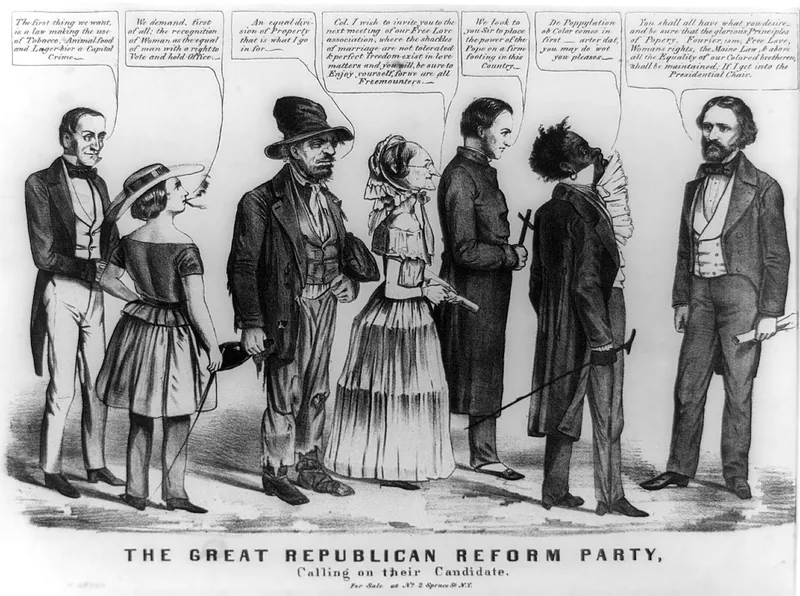
Scholars who defended the religious freedom of new movements were sometimes accused by critics of being "cult apologists", especially when they had accepted funding or hospitality from the groups they studied. The episode encouraged methodological reflection on access, funding and the duty to report harm. Moral panics of the period, including the belief in widespread Satanic ritual abuse, are examined in Satanic Panic.
Prophecy, Violence and Apocalypse§
Scholars have paid special attention to how movements cope with failed predictions. In When Prophecy Fails (1956), Leon Festinger, Henry Riecken and Stanley Schachter studied a small UFO group in Chicago that expected a flood and rescue by flying saucer; when nothing happened, some members proselytised more vigorously, a response the authors explained through cognitive dissonance. Their study has been criticised on methodological grounds, and historical research on the Millerites, discussed in Adventist and Restorationist Movements, shows a range of responses to disappointment. UFO movements more broadly are covered in UFO Religions.
A small number of movements have ended in violence: the deaths of more than 900 people at Jonestown, Guyana, in 1978; the siege and fire at the Branch Davidian compound near Waco, Texas, in 1993; the murders and suicides of the Order of the Solar Temple in Switzerland, France and Canada from 1994 to 1997; the sarin attack by Aum Shinrikyō in Tokyo in 1995, described in Japanese New Religions; the suicides of Heaven's Gate in 1997; and the deaths of hundreds of members of the Movement for the Restoration of the Ten Commandments of God in Uganda in 2000. Catherine Wessinger's How the Millennium Comes Violently (2000) argued that violence results from interaction between a group's apocalyptic beliefs, its leader, internal stresses and the actions of outsiders, including law enforcement. After Waco, several scholars advised American agencies on dealing with apocalyptic groups.
Institutions, Law and the Field Today§
The field developed its own institutions: INFORM (Information Network Focus on Religious Movements), founded in London in 1988 by Eileen Barker with British government support to provide balanced information; CESNUR, the Center for Studies on New Religions, founded in Turin in 1988 by Massimo Introvigne; and the journal Nova Religio, launched in 1997. Governments responded differently: France's parliamentary reports of 1983 and 1995 listed "sects" and led to the agency now called MIVILUDES and to a 2001 law against abuse of weakness, while Germany, Russia, China and Japan each developed their own approaches.
Today scholars study new religions as part of the normal life of religion in modern societies, with growing attention to second and third generations, online movements, gender, children's rights and the boundary between religion and therapy or business. For the main definitions and families of movements see What Is a New Religious Movement?.
Frequently asked questions§
Is brainwashing in cults real?§
Most sociologists of religion reject the strong claim that new religions use techniques that remove free will, because research shows most recruits leave voluntarily. They acknowledge, however, that manipulation, pressure and abuse can occur in some groups and should be investigated case by case.
Why do scholars avoid the word "cult"?§
Because in ordinary use it implies that a group is dangerous or fraudulent before any evidence is examined. The neutral term "new religious movement" allows scholars to describe groups first and evaluate specific harms separately.
What causes violence in new religious movements?§
Researchers point to a combination of apocalyptic beliefs, an isolated and authoritarian leadership, internal crises and confrontation with outside opponents or authorities. Such violence is rare; the great majority of new religions never become violent.
Sources and further reading§
- The Making of a Moonie: Choice or Brainwashing? — Eileen Barker, 1984
- When Prophecy Fails — Leon Festinger, Henry W. Riecken and Stanley Schachter, 1956
- Thought Reform and the Psychology of Totalism — Robert Jay Lifton, 1961
- The Elementary Forms of the New Religious Life — Roy Wallis, 1984
- The Future of Religion: Secularization, Revival and Cult Formation — Rodney Stark and William Sims Bainbridge, 1985
- How the Millennium Comes Violently: From Jonestown to Heaven's Gate — Catherine Wessinger, 2000
- Comprehending Cults: The Sociology of New Religious Movements — Lorne L. Dawson, 1998
- Misunderstanding Cults: Searching for Objectivity in a Controversial Field — Benjamin Zablocki and Thomas Robbins (eds), 2001