Birth lore · Your birthday
Gemstones · Birthstone of July and December
Ruby
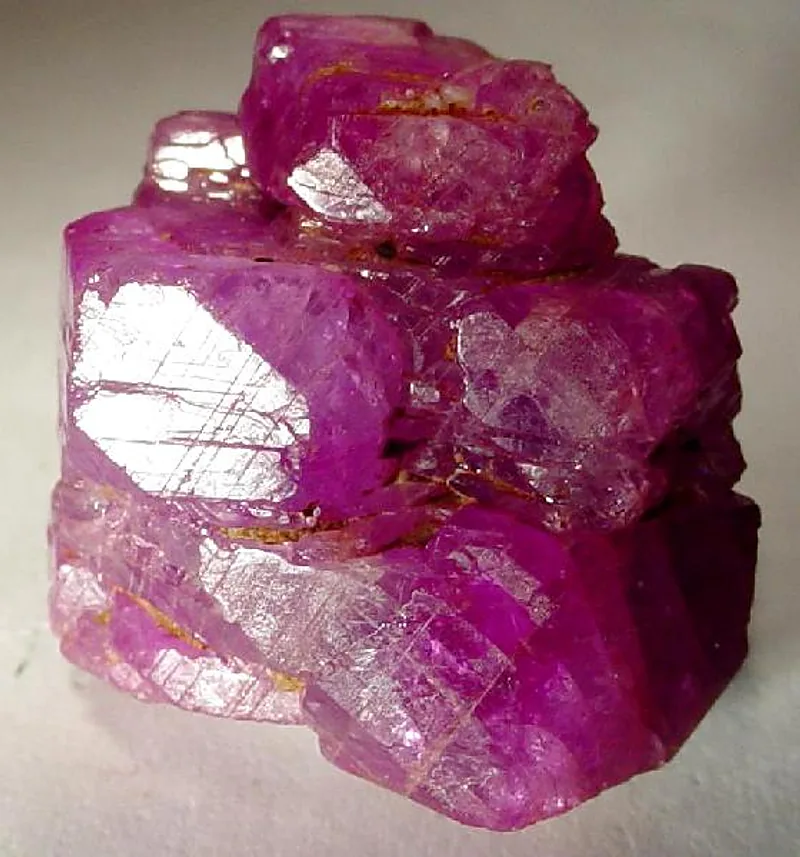
The red corundum that Sanskrit texts called the king of gems, the Navaratna stone of the Sun, prized from Burma to the courts of Europe; July's birthstone, though many famous 'rubies' are really spinels.
History and lore
"Ruby" comes from the Latin ruber, red. In Sanskrit the stone is ratnaraj, "king of precious stones", padmaraga, "red as the lotus", and manikya. The ruby mines of Mogok in upper Burma (Myanmar) have produced the most admired stones for centuries, the deep red with a slight blue tinge that the trade calls "pigeon's blood"; Sri Lanka, Thailand and Cambodia were other old sources, and East Africa, especially Mozambique, is a major source today.
Ancient and medieval writers did not separate ruby from other red stones. The Roman carbunculus covered rubies, garnets and spinels, and medieval Europe called red spinels "balas rubies". Several of the most famous historical "rubies", including the Black Prince's Ruby in the Imperial State Crown of the United Kingdom and the Timur Ruby, are in fact spinels (see spinel). Only with chemical and optical tests in the late eighteenth and nineteenth centuries were ruby and sapphire recognised as the same mineral, corundum.
In the traditions
The King James Version praises a virtuous woman whose "price is far above rubies" (Proverbs 31:10), and wisdom is likewise valued above rubies in Job 28:18; the Hebrew peninim there may mean pearls or coral rather than ruby. Some modern translations render the first stone of the High Priest's breastplate, the Hebrew odem ("red"), as ruby, though the King James "sardius" (a red carnelian) is at least as likely. See sardonyx for the sard.
In Vedic astrology ruby is the Navaratna stone of the Sun, Surya, and traditionally sits at the centre of the nine-gem setting (see Vedic astrology). Varahamihira's Brihat Samhita and the Garuda Purana include chapters on judging rubies. Medieval European lapidaries credited the carbuncle with driving away sadness, poison and evil thoughts, and Agrippa listed the carbuncle among the solar stones.
Meaning and symbolism
Ruby is the July birthstone in the American list of 1912 and later lists (see July); the old breastplate-ordered list given by George Frederick Kunz places it in December. It is the stone of the fortieth wedding anniversary. Ruby symbolises passion, courage, vitality and royal power. These are cultural and traditional meanings; studies have not found that rubies influence health, vigour or fortune.
The mineral
Ruby is corundum, crystalline aluminium oxide, coloured red by chromium; corundum of every other colour is called sapphire. Chromium also makes ruby fluoresce red under ultraviolet light and even in daylight, which helps Burmese stones glow. Fine needle-like inclusions of rutile, called silk, are typical of natural stones. At 9 on the Mohs scale ruby is second only to diamond in hardness.
Most rubies are heated to improve colour and clarity, which is generally accepted. Lower-grade stones may be filled with lead glass, a treatment that must be disclosed and that is damaged by heat and acids. Synthetic ruby was the first gem successfully made in a laboratory: Auguste Verneuil's flame-fusion method, announced in 1902, produces flawless crystals with curved growth lines. Red spinel, garnet and glass are the usual look-alikes. Clean untreated or heated rubies with warm soapy water.
Sources and further reading
- Natural History, Book 37 — Pliny the Elder, c. 77 CE
- Brihat Samhita — Varahamihira, 6th century
- Garuda Purana (Ratnapariksha chapters) — anonymous, first millennium CE
- The Curious Lore of Precious Stones — George Frederick Kunz, 1913
- Three Books of Occult Philosophy — Heinrich Cornelius Agrippa, 1533
- Ruby & Sapphire: A Gemologist's Guide — Richard W. Hughes, 2017