Liber VII · Divination · Chapter XIV: Vedic Astrology
Vedic Astrology (Jyotish): A Complete Guide to Its History
Vedic astrology (Jyotish) explained: the Vedanga Jyotisha, Greek transmission, the sidereal zodiac, nakshatras, dashas, vargas and kundali matching.

Vedic astrology, known in Sanskrit as jyotiṣa ("the science of light"), is the traditional astrology of India. It combines an indigenous calendrical science centred on the Moon and the twenty-seven lunar mansions (nakṣatras) with horoscopic astrology transmitted from the Greek world in the early centuries AD, and it uses a sidereal zodiac fixed to the stars. It remains widely consulted in South Asia for personal guidance, auspicious timing and marriage matching.
Jyotiṣa in the Vedic Tradition§
The Vedic texts are concerned with the correct timing of sacrifice, and timing required a calendar. The Vedāṅga Jyotiṣa, attributed to Lagadha and variously dated between roughly the fifth and second centuries BC, is a short manual for computing the positions of the Sun and Moon and the nakṣatras over a five-year cycle. It contains no horoscopy. The nakṣatras themselves, star groups marking the Moon's daily progress around the sky, are named in Vedic literature, and some lists began with Kṛttikā (the Pleiades) rather than Aśvinī as in later practice.
Omen astrology concerned with kings, weather and harvests also developed in early India, sometimes in parallel with Mesopotamian methods. Later tradition organised the whole field into three branches: gaṇita (mathematical astronomy), saṃhitā (omens and mundane astrology) and horā (horoscopy).
Greek Transmission and the Classical Texts§
Horoscopic astrology, with its twelve signs, houses and planetary rulerships, came to India from the Hellenistic world through trade between Roman Egypt and western India. The Sanskrit word horā itself derives from Greek. The pivotal text is the Yavanajātaka, a Sanskrit verse version made by Sphujidhvaja of an earlier prose translation by Yavaneśvara ("lord of the Greeks"). David Pingree dated it to the second and third centuries AD; later scholars have questioned parts of his chronology, but its Greek origin is not in doubt.
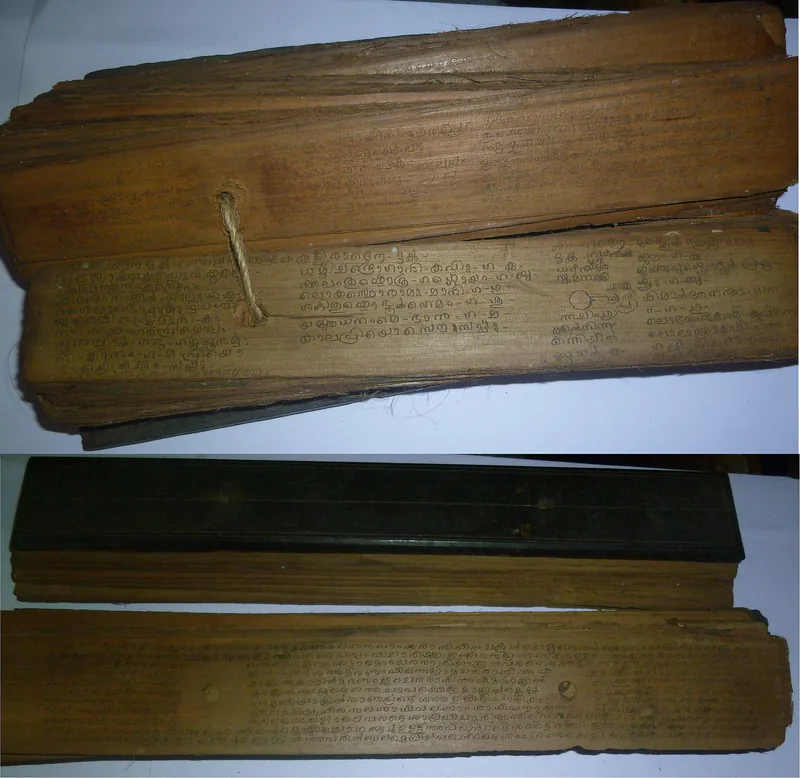
Indian astrologers rapidly made the system their own. Varāhamihira of Ujjain (sixth century) wrote the Bṛhat Jātaka on natal astrology and the encyclopaedic Bṛhat Saṃhitā on omens, architecture, gems and much else. Other classics include the Sārāvalī of Kalyāṇavarman and the Phaladīpikā of Mantreśvara. The Bṛhat Parāśara Horāśāstra, attributed to the ancient sage Parāśara and treated by many modern practitioners as the foundational text, survives in versions that scholars consider much later compilations; the widely used printed text dates largely from the nineteenth and twentieth centuries. A separate tradition, the Jaimini Sūtras, uses distinctive methods of sign-based aspects.
The Sidereal Zodiac and Ayanāṃśa§
Jyotiṣa measures the zodiac from a fixed point among the stars, not from the spring equinox. Because of precession, the equinox slowly moves backward against the stars, and the difference between the tropical and sidereal zodiacs, called the ayanāṃśa, grows by about one degree every seventy-two years. Different authorities fix its starting point differently; the most widely used value, the Lahiri ayanāṃśa, was adopted by the Indian government's Calendar Reform Committee in the 1950s and is now around twenty-four degrees. As a result, a person whose Sun is in Western Aries will usually have it in Pisces in a Vedic chart. The comparison is explained further in Zodiac & Planets.
Grahas, Rāśis and Nakṣatras§
The building blocks of a Vedic chart are:

- Nine grahas ("seizers"): the Sun, Moon, Mars, Mercury, Jupiter, Venus and Saturn, together with Rāhu and Ketu, the north and south nodes of the Moon, associated in myth with the demon who swallows the Sun and Moon at eclipses. Classical Jyotiṣa does not use Uranus, Neptune or Pluto.
- Twelve rāśis (signs), with the same names and planetary rulers as in traditional Western astrology.
- Twelve bhāvas (houses), often reckoned as whole signs from the ascendant (lagna).
- Twenty-seven nakṣatras, each of 13°20′, ruled by a deity and a planet; a twenty-eighth, Abhijit, is used in some contexts. The nakṣatra occupied by the Moon at birth (the janma nakṣatra) is highly significant and often determines the first syllable of a child's name.
The site's Vedic horoscope calculator gives a birth nakṣatra, with pages on each, from Ashwini and Rohini to Revati. The Moon's place among the mansions can also be followed in the Almanac.
Daśās, Divisional Charts and Muhūrta§
Several techniques give Jyotiṣa its distinctive character. The daśā systems divide life into periods ruled by successive planets. The most widely used, the Vimśottarī daśā, assigns a 120-year cycle among the nine grahas (Ketu 7 years, Venus 20, the Sun 6, the Moon 10, Mars 7, Rāhu 18, Jupiter 16, Saturn 19, Mercury 17), beginning from the ruler of the birth nakṣatra; each period is subdivided into sub-periods. Astrologers judge the effects of a period by the condition of its ruler in the chart.
Divisional charts (vargas) divide each sign into smaller portions to produce derived charts for particular topics; the navāṃśa, dividing each sign into nine, is the most important and is used especially for marriage. Yogas are named combinations of planets said to produce wealth, fame or difficulty. Muhūrta, electional astrology, chooses auspicious times for weddings, journeys, building and religious rites, and relies on the pañcāṅga, the Hindu almanac of lunar day (tithi), weekday, nakṣatra, yoga and karaṇa.
Marriage Matching and Jyotiṣa Today§
Comparison of horoscopes before marriage remains common among Hindu families. The widespread aṣṭakūṭa method scores the compatibility of the two Moon nakṣatras out of thirty-six points (guṇa milan), and astrologers also check for conditions such as maṅgal doṣa, an unfavourable placement of Mars. Professional astrologers practise in temples, offices, newspapers and, increasingly, online.
Jyotiṣa occupies a contested position in modern India. In 2001 the University Grants Commission proposed university courses in "Vedic astrology"; scientists objected, and India's Supreme Court in 2004 declined to stop the courses. In the West, interest grew from the 1980s, often connected with yoga and Hindu-inspired movements, and the English term "Vedic astrology" became established in that period. For the Greek side of the shared history see Astrology: A Complete Guide, and for the broader religious setting Tantra, whose ritual traditions also used astrological timing.
Frequently asked questions§
What is the difference between Vedic and Western astrology?§
Vedic astrology uses a sidereal zodiac tied to the stars, while Western astrology uses the tropical zodiac tied to the equinoxes, so signs differ by about twenty-four degrees. Vedic practice also emphasises the Moon, the nakṣatras and planetary periods (daśās), and does not traditionally use the outer planets.
Is Vedic astrology really from the Vedas?§
The calendrical science of Jyotiṣa is a Vedic auxiliary discipline, and the nakṣatras are named in Vedic texts. Horoscopic astrology, however, entered India from the Greek world in the early centuries AD; the term "Vedic astrology" is a modern English label.
What is my nakṣatra?§
Your birth nakṣatra is the lunar mansion the Moon occupied at your birth, which requires the date, time and place. The Vedic calculator computes it in the sidereal zodiac.
What is a daśā?§
A daśā is a planetary period. In the common Vimśottarī system, life is divided into periods ruled by the nine grahas in a 120-year cycle, starting from the ruler of the birth nakṣatra.
Sources and further reading§
- The Yavanajātaka of Sphujidhvaja — David Pingree, 1978
- Jyotiḥśāstra: Astral and Mathematical Literature — David Pingree, 1981
- From Astral Omens to Astrology: From Babylon to Bīkāner — David Pingree, 1997
- Mathematics in India — Kim Plofker, 2009
- Patterns of Destiny: Hindu Nāḍī Astrology — Martin Gansten, 2003
- Bṛhat Jātaka — Varāhamihira, 6th century