Liber VII · Divination · Chapter XV: Zodiac & Planets
Zodiac Signs and Planets: A Complete Guide to Astrology
The zodiac signs and planets explained: origins of the twelve signs, elements and modes, rulerships and exaltations, the seven classical planets and decans.

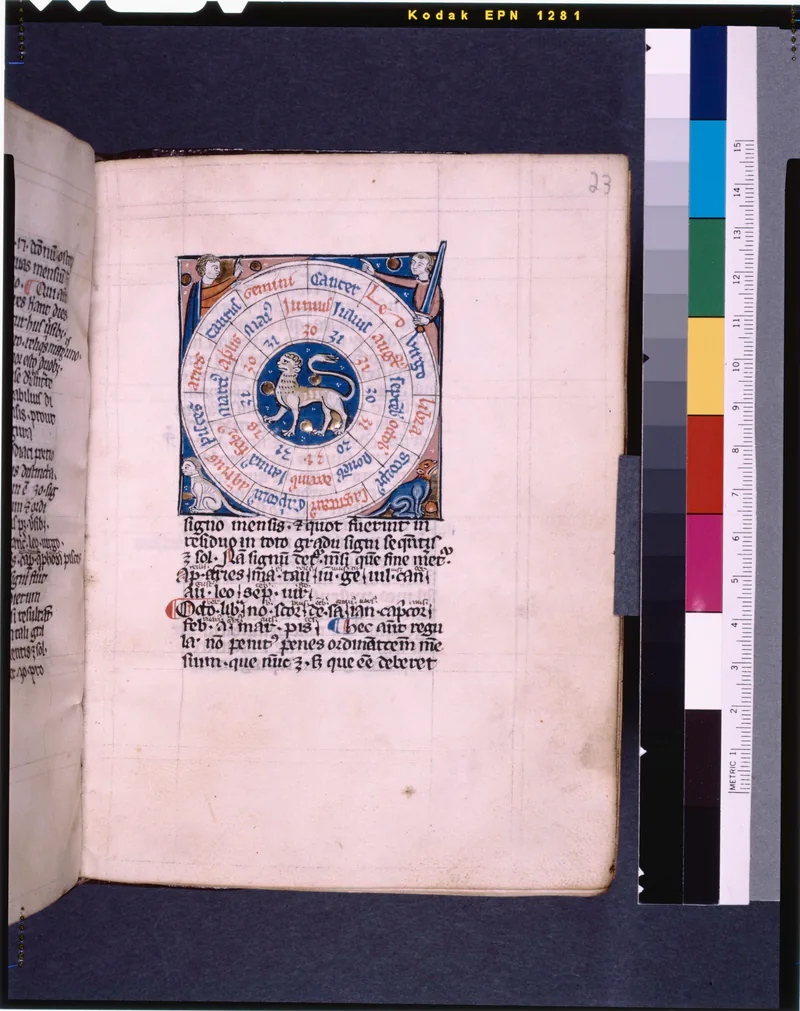
The zodiac is the belt of sky through which the Sun, Moon and planets appear to move, divided in astrology into twelve signs of thirty degrees each, from Aries to Pisces. The planets, originally the seven visible "wanderers" from the Moon to Saturn, are read as the active forces in a chart, while the signs describe the manner in which they act. Together with the houses and aspects they form the basic vocabulary of Western and Indian horoscopic astrology.
Origins of the Zodiac§
Babylonian astronomers tracked the Moon and planets against the constellations along their path. The compendium known as MUL.APIN, compiled by about 1000 BC, lists seventeen or eighteen constellations "in the path of the Moon." By around the fifth century BC this had been standardised into twelve equal divisions of thirty degrees, used for calculation regardless of the uneven sizes of the actual star groups. Several sign images are recognisably Babylonian: the Bull, the Twins, the Lion, the Scorpion and the goat-fish behind Capricorn. Greek astronomers adopted the twelve signs, and in Hellenistic Egypt they acquired the full system of astrological meanings. Libra, earlier the Scorpion's claws, became the Scales in Greco-Roman times.
The Twelve Signs: Elements, Modes and Rulers§
The table gives the approximate tropical dates when the Sun is in each sign (they shift by a day from year to year), with element, mode and traditional ruler. Each sign links to its page in the site's Western horoscope section.
| Sign | Approx. dates | Element | Mode | Traditional ruler |
|---|---|---|---|---|
| Aries | 21 Mar – 19 Apr | Fire | Cardinal | Mars |
| Taurus | 20 Apr – 20 May | Earth | Fixed | Venus |
| Gemini | 21 May – 20 Jun | Air | Mutable | Mercury |
| Cancer | 21 Jun – 22 Jul | Water | Cardinal | Moon |
| Leo | 23 Jul – 22 Aug | Fire | Fixed | Sun |
| Virgo | 23 Aug – 22 Sep | Earth | Mutable | Mercury |
| Libra | 23 Sep – 22 Oct | Air | Cardinal | Venus |
| Scorpio | 23 Oct – 21 Nov | Water | Fixed | Mars (modern: Pluto) |
| Sagittarius | 22 Nov – 21 Dec | Fire | Mutable | Jupiter |
| Capricorn | 22 Dec – 19 Jan | Earth | Cardinal | Saturn |
| Aquarius | 20 Jan – 18 Feb | Air | Fixed | Saturn (modern: Uranus) |
| Pisces | 19 Feb – 20 Mar | Water | Mutable | Jupiter (modern: Neptune) |
The elements, grouped in triangles of signs called triplicities, derive from Greek natural philosophy. The modes describe position in the season: cardinal signs begin the seasons at the equinoxes and solstices, fixed signs fall in mid-season, and mutable signs close them. The signs also alternate between masculine (diurnal) and feminine (nocturnal) polarity.
The scheme of rulerships (domiciles) is elegantly symmetrical: the Sun and Moon rule Leo and Cancer, the signs of high summer, and the other planets each rule two signs in order outward, Mercury, Venus, Mars, Jupiter and finally Saturn in the winter signs Capricorn and Aquarius. Each planet also has a sign of exaltation, where it is especially strong: the Sun in Aries, the Moon in Taurus, Mercury in Virgo, Venus in Pisces, Mars in Capricorn, Jupiter in Cancer and Saturn in Libra.
The Seven Classical Planets§
To ancient observers there were seven planētai, "wanderers": the Moon, Mercury, Venus, the Sun, Mars, Jupiter and Saturn. Astrologers classified them as benefic (Jupiter, the greater, and Venus, the lesser), malefic (Saturn and Mars) or variable (Mercury), with the luminaries, Sun and Moon, in a class of their own. Each received a temperament in the language of Greek medicine: Saturn cold and dry, Jupiter warm and moist, Mars hot and dry.
Arranged by their supposed distance from the Earth, slowest to fastest, the planets form the Chaldean order: Saturn, Jupiter, Mars, Sun, Venus, Mercury, Moon. Assigning the hours of the day in this repeating sequence and naming each day after the ruler of its first hour produces the order of the weekdays, Saturday (Saturn), Sunday, Monday (Moon), and in Romance and English names Tuesday (Mars, via Tiw), Wednesday (Mercury, via Woden), Thursday (Jupiter, via Thor) and Friday (Venus, via Frigg). The site's planetary hours calculator applies the same rule.
Renaissance magicians built on these associations. The Picatrix describes images and offerings for each planet, and Agrippa tabulated their metals, stones, plants, angels and magic squares: lead for Saturn, tin for Jupiter, iron for Mars, gold for the Sun, copper for Venus, quicksilver for Mercury and silver for the Moon.
The modern planets§
Uranus was discovered by William Herschel in 1781, Neptune in 1846 and Pluto in 1930. Modern astrologers gave them meanings (Uranus for sudden change, Neptune for dissolution and imagination, Pluto for transformation) and assigned them as co-rulers of Aquarius, Pisces and Scorpio. Pluto's reclassification as a dwarf planet in 2006 did not change its use in astrology. Traditional and Vedic astrologers generally do not use the outer planets.
Decans, Houses and Aspects§
Each sign is divided into three decans of ten degrees, giving thirty-six in all. The decans originated as Egyptian star groups whose risings marked the hours of the night; Hellenistic astrology fitted them into the zodiac, and they later passed into Indian astrology and medieval magic, where each decan received an image. In the Golden Dawn tarot the numbered cards of the minor arcana correspond to the decans.

The houses divide the chart into twelve sectors counted from the ascendant, each governing an area of life such as wealth, siblings, children, marriage or career. Several methods of division exist, from whole-sign houses, the oldest, to the Placidus system common in modern ephemerides. The aspects are angular relationships between planets: the conjunction (0°), sextile (60°), square (90°), trine (120°) and opposition (180°), to which later astrologers added minor aspects.
Tropical, Sidereal and the "Thirteenth Sign"§
Western astrology uses the tropical zodiac, which begins Aries at the spring equinox. Because the Earth's axis slowly precesses, the equinox has moved back about twenty-four degrees against the stars since the zodiac was fixed, so the tropical signs no longer coincide with the constellations of the same names. Indian astrology uses the sidereal zodiac anchored to the stars; see Vedic Astrology.
The constellation Ophiuchus, the Serpent-bearer, crosses the ecliptic between Scorpius and Sagittarius, and from time to time it is announced as a "thirteenth sign." Astronomers have long known this, and most astrologers reply that the signs are equal mathematical divisions, not constellations. For how these elements combine in a chart, see Horoscopes and Astrology: A Complete Guide.
Frequently asked questions§
What are the four elements of the zodiac?§
Fire (Aries, Leo, Sagittarius), earth (Taurus, Virgo, Capricorn), air (Gemini, Libra, Aquarius) and water (Cancer, Scorpio, Pisces). The scheme adapts the four elements of Greek natural philosophy to the signs.
Which planet rules each zodiac sign?§
Traditionally Mars rules Aries and Scorpio, Venus Taurus and Libra, Mercury Gemini and Virgo, the Moon Cancer, the Sun Leo, Jupiter Sagittarius and Pisces, and Saturn Capricorn and Aquarius. Modern astrologers add Pluto to Scorpio, Uranus to Aquarius and Neptune to Pisces.
Is Ophiuchus a zodiac sign?§
Ophiuchus is a constellation crossed by the Sun, but it is not one of the twelve astrological signs, which are equal thirty-degree divisions of the ecliptic. Neither Western nor Vedic astrology traditionally includes it.
Why are the days of the week named after planets?§
Each hour was assigned to a planet in the Chaldean order, and each day took its name from the planet ruling its first hour. The resulting sequence, Saturn, Sun, Moon, Mars, Mercury, Jupiter, Venus, survives in the names of the weekdays in many languages.
Sources and further reading§
- Tetrabiblos — Claudius Ptolemy, 2nd century (trans. F. E. Robbins, 1940)
- Ancient Astrology — Tamsyn Barton, 1994
- The Heavenly Writing: Divination, Horoscopy, and Astronomy in Mesopotamian Culture — Francesca Rochberg, 2004
- Hellenistic Astrology: The Study of Fate and Fortune — Chris Brennan, 2017
- Christian Astrology — William Lilly, 1647
- De occulta philosophia libri tres — Heinrich Cornelius Agrippa, 1533