Liber VII · Divination · Chapter VIII: Minor Arcana
Minor Arcana: A Complete Guide to the Four Tarot Suits
The minor arcana explained: the 56 cards of wands, cups, swords and pentacles, their Mamluk and Italian origins, court cards, elements and Golden Dawn decans.

The minor arcana are the fifty-six suit cards of the tarot: four suits, usually called wands, cups, swords and pentacles, each with ten numbered cards from Ace to Ten and four court cards (Page, Knight, Queen and King). They descend from the ordinary playing cards that reached Europe in the late fourteenth century, and they acquired elemental, astrological and Kabbalistic meanings only in the occult revival of the nineteenth and twentieth centuries.
Origins: From Mamluk Cards to Italian Suits§
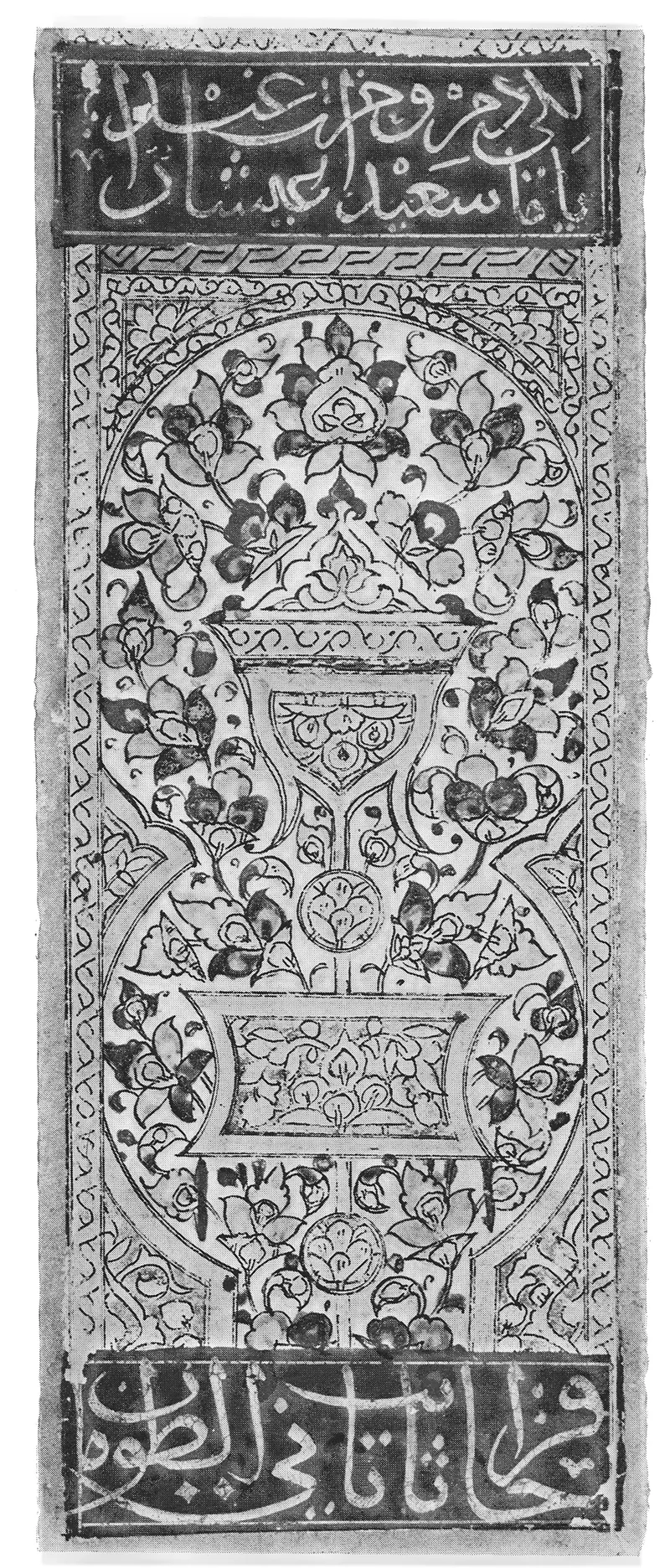
Playing cards arrived in Europe in the 1370s, probably from the Mamluk sultanate of Egypt and Syria. A fifteenth-century Mamluk pack in the Topkapı Palace Museum in Istanbul shows suits of cups, coins, swords and polo sticks, with abstract or calligraphic court cards rather than human figures. Italian cardmakers kept the cups (coppe), coins (denari) and swords (spade), and turned the unfamiliar polo sticks into batons or staves (bastoni). When the trumps were added to form the tarot in the fifteenth century, these four suits came with them; see History of Tarot.
In ordinary Italian and Spanish packs each suit has three courts: King, mounted Knight and Jack (fante). Tarot packs added a Queen, giving four. In French-suited tarot games, played today in France and central Europe, the suits are hearts, diamonds, clubs and spades, but occult and divinatory tarot has kept the Italian suits.
The Four Suits and the Elements§
Occultists from the nineteenth century onward associated the four suits with the four elements and with the four letters of the divine name YHVH. The standard English-speaking scheme, fixed by the Golden Dawn, is:
| Suit | Other names | Element | Typical themes |
|---|---|---|---|
| Wands | batons, staves, rods | Fire | will, enterprise, energy |
| Cups | chalices | Water | emotion, love, imagination |
| Swords | blades | Air | thought, conflict, decision |
| Pentacles | coins, disks, deniers | Earth | money, work, body, property |
Other attributions exist. Some French occultists, following Papus, matched wands to air and swords to fire, and individual authors have argued for other arrangements. "Pentacles," a word from ritual magic for an inscribed disk, was popularised by A. E. Waite; Aleister Crowley used "Disks" in the Thoth deck.
Earlier readings of the suits§
The elemental scheme was not the first symbolic reading. In 1781 Antoine Court de Gébelin, who launched the idea of an Egyptian tarot, interpreted the four suits as the four orders of ancient society: swords for the king and military nobility, cups for the priesthood, batons for agriculture, and coins for commerce. Similar "four estates" readings recur in later popular books on tarot. Historians regard all such interpretations as later inventions: the suits came from Mamluk cards and were chosen by cardmakers, not designed as an allegory.
The Numbered Cards and the Decans§
In the Renaissance game the numbered cards, or pips, simply showed the appropriate number of suit symbols, and the Marseille tradition decorates them with flourishes but no scenes. Exceptional early decks exist: the Sola Busca tarot (c. 1490, probably from Ferrara or Venice) illustrates every card with figures, and photographs of it are thought to have influenced Pamela Colman Smith.
The Golden Dawn gave the numbered cards an elaborate cosmological meaning:
- The Aces are the "roots" of the four elements, associated with Kether, the first sefirah.
- The Twos to Tens of each suit correspond to the sefirot from Chokmah to Malkuth on the Tree of Life, giving each number a sefirotic character.
- These thirty-six cards (nine per suit) are also assigned to the thirty-six decans, ten-degree divisions of the zodiac, each ruled by a planet in the Chaldean order. The Two, Three and Four of Wands, for example, cover the three decans of Aries, ruled by Mars, the Sun and Venus. The decans themselves descend from ancient Egyptian star groups; see Zodiac & Planets.
Each card received a title, such as "Lord of Dominion" for the Two of Wands or "Lord of Ruin" for the Ten of Swords, and Crowley shortened these to single words ("Dominion," "Ruin") on the Thoth deck.
The Court Cards§
The court cards are often read as people in the querent's life or as aspects of personality. Their names vary:
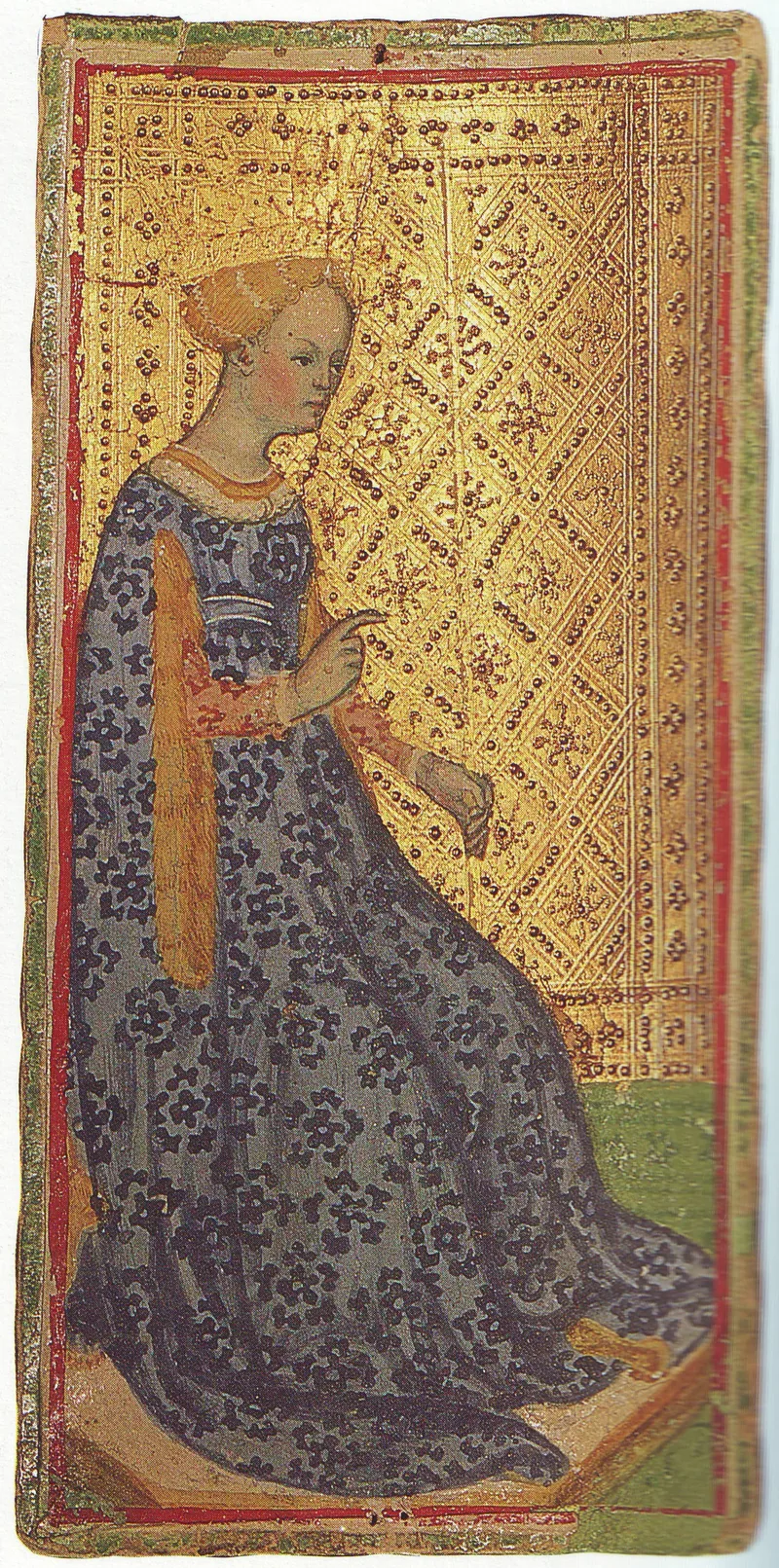
- Marseille and Rider-Waite-Smith: Page (Valet), Knight, Queen, King.
- Golden Dawn: Princess, Prince, Queen and Knight, the "Knight" being a mounted figure in the place of the King.
- Thoth: Princess, Prince, Queen and Knight.
The Golden Dawn treated each court figure as a sub-element ("Fire of Water," "Earth of Air" and so on) and assigned the Knights, Queens and Princes to spans of the zodiac, while the Princesses ruled quadrants of the heavens around the north pole. Modern authors have also linked court cards to personality types, ages and zodiac signs. This variety of names is a common source of confusion between decks.
Illustrated Pips and Modern Meanings§
Before 1909 most divinatory decks gave the pips meanings that readers memorised from booklets, many of them descending from Etteilla, who first assigned upright and reversed meanings in the 1780s and 1790s. The Rider-Waite-Smith deck changed this by giving every card a scene designed by Pamela Colman Smith under Waite's direction: the woman bound and blindfolded among swords in the Eight of Swords, the figure walking away from stacked cups in the Eight of Cups, the merchant weighing coins in the Six of Pentacles. These images let readers interpret cards visually rather than by rote, and nearly all popular decks since have followed them.
In readings the minor arcana generally concern daily life, practical matters and passing moods, in contrast to the larger themes of the major arcana. A preponderance of one suit is often read as emphasising its element: many Cups pointing to emotional matters, many Swords to conflict or deliberation. Meanings differ by tradition: Marseille readers often work from number and suit without Waite's scenes, while Thoth readers use the decan and sefirotic attributions, discussed further in Tarot and Qabalah in Thelema.
Frequently asked questions§
How many cards are in the minor arcana?§
There are fifty-six: four suits of fourteen cards, each with ten numbered cards from Ace to Ten and four court cards. Together with the twenty-two major arcana they make the seventy-eight-card tarot deck.
What element is each tarot suit?§
In the Golden Dawn system used by most English-language readers, wands are fire, cups water, swords air and pentacles earth. Some French and modern authors exchange wands and swords, so attributions vary.
Why are there four court cards in tarot?§
Ordinary Italian playing cards had three courts: King, Knight and Jack. When tarot decks were created they added a Queen to each suit, giving Page (Jack), Knight, Queen and King.
What are the decans in tarot?§
The decans are thirty-six ten-degree segments of the zodiac, originally Egyptian star groups. The Golden Dawn assigned them to the numbered cards from Two to Ten in each suit, giving each card an astrological meaning.
Sources and further reading§
- The Game of Tarot: From Ferrara to Salt Lake City — Michael Dummett, 1980
- A History of the Occult Tarot, 1870–1970 — Ronald Decker and Michael Dummett, 2002
- The Pictorial Key to the Tarot — A. E. Waite, 1910
- The Book of Thoth — Aleister Crowley, 1944
- The Golden Dawn — Israel Regardie, 1937–1940
- A Cultural History of Tarot — Helen Farley, 2009