Birth lore · Your birthday
Sard
Sard is the brownish-red chalcedony that heads the High Priest's breastplate in Exodus 28 and was the favourite seal stone of the Greek and Roman engravers.
History and lore
Sard is the brownish-red to deep chestnut variety of chalcedony, close kin to the brighter orange-red carnelian. The line between the two is a matter of convention: lighter, clearer reds are called carnelian, darker and browner ones sard. Layered with white chalcedony it becomes sardonyx, whose name joins the two. Ancient writers derived the name from Sardis, the capital of Lydia in western Anatolia, and Pliny the Elder, who notes that fine sards came from Babylon and India, says that no gem was in more common use among the ancients.
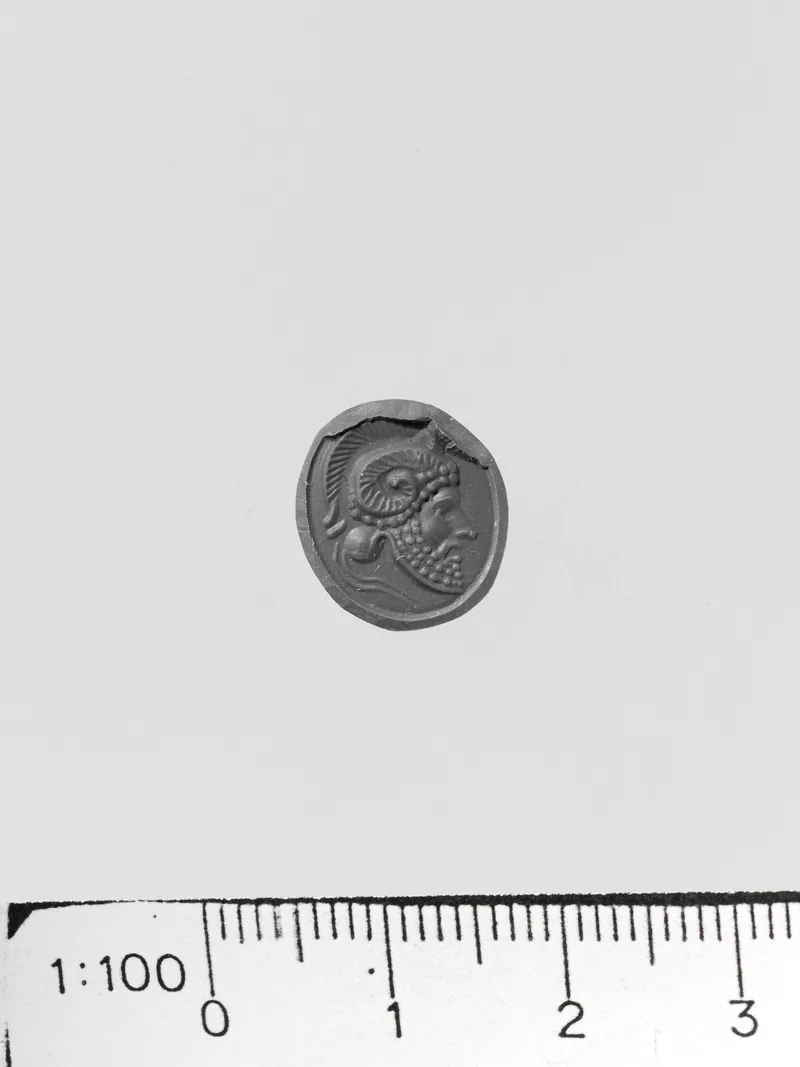
That popularity came from the engraver's bench. Sard is tough, takes a fine polish and shows engraved detail clearly against its warm translucence, and gem cutters have long said that sealing wax lifts cleanly from it. A large share of Greek, Etruscan and Roman intaglio seals are cut in sard and carnelian, and Renaissance and Neoclassical collectors sought them as relics of ancient art. In India the bead workshops of Khambhat (Cambay) in Gujarat have worked these red chalcedonies for centuries, continuing a craft that reaches back to the Harappan civilisation.
In the traditions
Sard holds the first place in the High Priest's breastplate. Exodus 28:17 (KJV) reads: "the first row shall be a sardius, a topaz, and a carbuncle". The Hebrew word is odem, from the root for "red", which suits a red chalcedony, though, like most of the twelve names, it cannot be identified with certainty. The Greek Septuagint rendered it sardion, and later Jewish tradition usually assigned it to Reuben, the first of the tribes (see the Hebrew Bible). The identification problem runs through the whole list: Hebrew gem names were based mainly on colour, and later translators mapped them onto the Greek and Latin gem names of their own day, which do not correspond neatly to modern mineral species.
The New Testament gives sard a vision of its own. In Revelation 4:3 the one seated on the heavenly throne is "to look upon like a jasper and a sardine stone", and in Revelation 21:20 the sixth foundation of the New Jerusalem is a sardius (see the Christian Bible and its canon). Epiphanius of Salamis, in his late fourth-century treatise on the twelve stones, describes the sardion as a fiery red stone used to treat wounds. Medieval lapidaries following Marbode of Rennes added that the sard gladdened the heart, sharpened the wits and shielded the wearer from the harm that onyx was believed to bring, one reason the two were happily combined in sardonyx.
Meaning and symbolism
Through its blood-red colour and its biblical rank, sard has stood for vitality, courage, protection and the first of things. Christian commentators read it as the colour of martyrdom and of Christ's sacrifice. Modern crystal books, which usually treat sard together with carnelian, speak of energy, confidence and motivation. Scientific research has not found that these stones heal or change temperament; the meanings are traditional and symbolic.
The mineral
Sard owes its colour to finely dispersed iron oxides within chalcedony. Much commercial sard and carnelian is heated to deepen and even out the red, a practice that is centuries old. Sources include India, Brazil, Uruguay and Indonesia. It is 6.5 to 7 on the Mohs scale and durable in jewellery. Dyed agate and red glass are the usual imitations: dyed stone often shows colour concentrated along its bands, and glass may show bubbles and feels less cool. Clean sard with warm soapy water and a soft brush.
Sources and further reading
- The Holy Bible, King James Version (Exodus 28; Revelation 4 and 21) — 1611
- De duodecim gemmis (On the Twelve Stones) — Epiphanius of Salamis, c. 394
- Natural History, Book 37 — Pliny the Elder, c. 77 CE
- Liber de lapidibus — Marbode of Rennes, c. 1090
- The Curious Lore of Precious Stones — George Frederick Kunz, 1913