Liber VII · Divination · Chapter II: Chinese Astrology
Chinese Astrology: Zodiac Animals, Elements and Four Pillars
Chinese astrology explained: the twelve zodiac animals, stems and branches, the five phases, Four Pillars (bazi), Purple Star astrology and the almanac.

Chinese astrology is a family of methods for reading fate and choosing auspicious times from the Chinese calendar, built on the cycle of ten Heavenly Stems and twelve Earthly Branches, the twelve zodiac animals, yin and yang, and the five phases (wuxing). Its best-known form assigns each year an animal, but serious practice relies on the full birth moment, as in the Four Pillars of Destiny (bazi) and Purple Star astrology (Ziwei doushu).
Two Traditions: Omens of Heaven and Calculation of Fate§
Historians distinguish two strands of Chinese astral divination. The first, tianwen ("patterns of heaven"), was the business of the imperial astronomical bureau. Officials watched for eclipses, comets, planetary conjunctions and unusual phenomena, which were read as signs about the ruler and the state within a doctrine of correspondence between heaven and earth. The sky was divided into the twenty-eight lunar lodges (xiu) and into regions mapped onto the provinces of China. Private study of this kind of astronomy was at times restricted, since omens about the dynasty were politically dangerous.
The second strand, the calculation of individual fate (suanming), uses the calendar rather than direct observation. It developed into a professional tradition of fortune-tellers who worked in markets, temples and homes. Richard J. Smith's studies of Qing-dynasty divination show how widely such services were used by every social class, and how they coexisted with the more philosophical uses of the I Ching.
Heavenly Stems, Earthly Branches and the Sixty-Year Cycle§
The ten Heavenly Stems (tiangan) and twelve Earthly Branches (dizhi) combine in pairs to form a cycle of sixty, the ganzhi or sexagenary cycle. Shang dynasty diviners already used it to name days, and from the Han dynasty it was also applied continuously to years. Each stem carries one of the five phases (wood, fire, earth, metal, water) in a yin or yang form; each branch is associated with a phase, a direction, a double-hour of the day and a month.
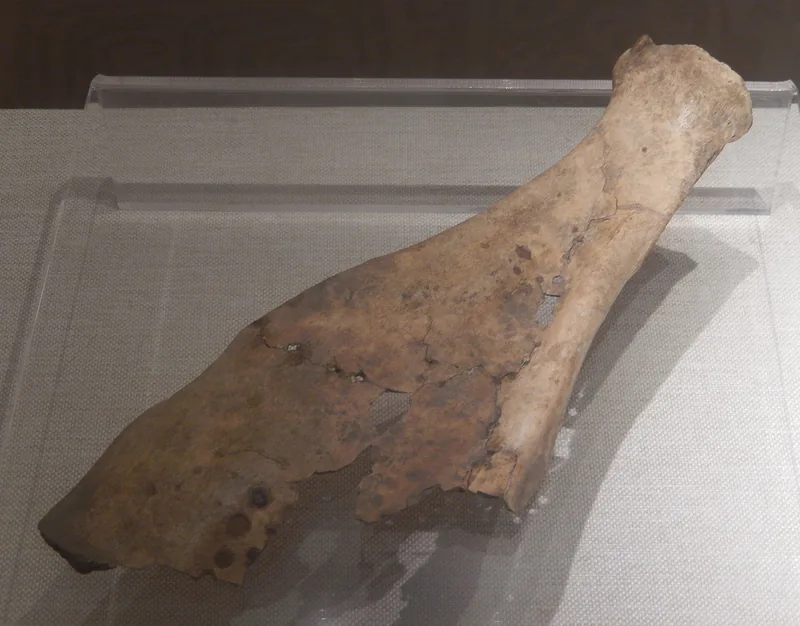
The same cycle that names years also names months, days and two-hour periods, which is why four stem-branch pairs can describe any moment. The current cycle began in 1984, and 2026 is a bingwu year: yang fire over the horse branch, popularly the Year of the Fire Horse, which began with the lunar new year on 17 February 2026.
The Twelve Zodiac Animals§
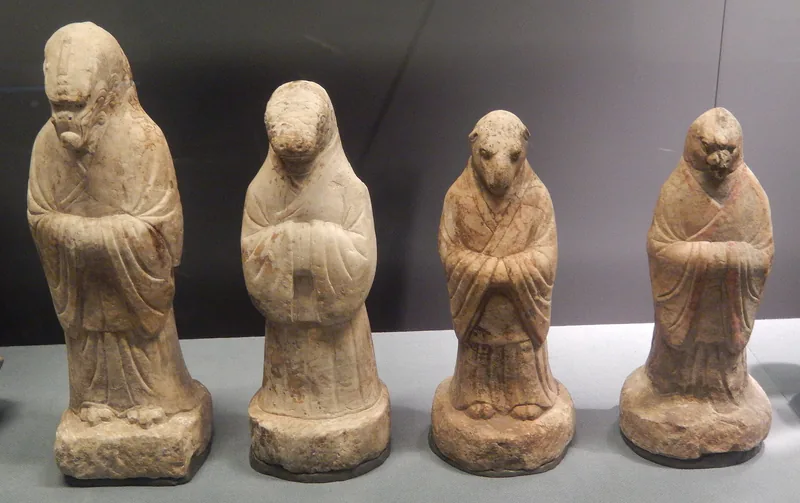
The twelve animals (shengxiao) are popular names attached to the branches. Lists linking animals to branches appear in Qin dynasty bamboo manuscripts of the third century BC from Shuihudi and Fangmatan, though some of their animals differ from today's. The philosopher Wang Chong (first century AD) gives a list close to the modern one, which runs:
| Branch | Animal | Phase | Branch | Animal | Phase |
|---|---|---|---|---|---|
| Zi | Rat | Water | Wu | Horse | Fire |
| Chou | Ox | Earth | Wei | Goat | Earth |
| Yin | Tiger | Wood | Shen | Monkey | Metal |
| Mao | Rabbit | Wood | You | Rooster | Metal |
| Chen | Dragon | Earth | Xu | Dog | Earth |
| Si | Snake | Fire | Hai | Pig | Water |
The familiar folk tale of a race among the animals, which explains their order, is a later story rather than the origin of the system. Some scholars have connected the twelve-year cycle with the roughly twelve-year orbit of Jupiter, which Chinese astronomers tracked as the "year star," though the link is debated. Neighbouring cultures adapted the set: in Vietnam the cat replaces the rabbit and the water buffalo the ox.
Popular astrology attributes character traits to each animal and judges compatibility through branch relationships: groups of three in harmony (such as rat, dragon and monkey) and pairs in opposition (such as rat and horse). The site's Chinese horoscope calculator finds the animal and element for any birth date, taking account of the lunar new year.
When does the Chinese year begin?§
Popular usage changes the animal at the lunar new year, which falls between late January and mid-February. Four Pillars practitioners usually begin the year at lichun, the solar term "Beginning of Spring," around 4 February. People born in January or early February can therefore be assigned different animals depending on the method.
Four Pillars of Destiny (Bazi)§
The most widely practised technical system is bazi, "eight characters," also called the Four Pillars of Destiny. The year, month, day and hour of birth are each expressed as a stem-branch pair, giving eight characters. Tradition credits its classic form, centred on the day stem as the "self," to Xu Ziping in the tenth century, and it is sometimes called Ziping astrology.
The reader assesses the balance of the five phases in the chart, the strength of the day stem, and the relationships between elements: generating (wood feeds fire, fire makes earth, earth bears metal, metal carries water, water nourishes wood) and controlling (wood parts earth, earth dams water, water quenches fire, fire melts metal, metal cuts wood). From these come judgements on temperament, career and relationships. Life is divided into ten-year luck pillars, and each year's stem-branch pair is read against the natal chart.
Purple Star Astrology and Other Methods§
Ziwei doushu, "Purple Star" astrology, is traditionally attributed to the Daoist Chen Tuan (tenth century), though its textual history is uncertain. Unlike bazi, it places over a hundred mostly imaginary "stars," headed by Ziwei, the Purple Star associated with the pole, into twelve palaces representing areas of life, in a chart that resembles a Western horoscope in structure.
Other calendrical methods include the "Seven Governors" astrology of the Tang and Song periods, which incorporated planetary astrology transmitted from India and the Islamic world, and the use of the almanac (tongshu or huangli), still printed annually, which lists auspicious and inauspicious activities for each day. Ideas of correlation between time, space and the five phases also underlie feng shui and the cosmology of Daoist internal alchemy.
Chinese Astrology Today§
Chinese astrology remains a living practice across East and Southeast Asia and in diaspora communities, and it has had measurable social effects. In Japan, the folk belief that women born in a fire horse year (hinoeuma) would be headstrong contributed to a sharp fall in births in 1966, roughly a quarter below neighbouring years. Demographers in several countries have documented birth peaks in dragon years. Whether a comparable effect appears in 2026 is a question demographers have been watching.
In the West, the twelve animals became widely known from the late twentieth century through restaurant placemats, popular books and lunar new year celebrations, often detached from the stems, branches and phases that give the system its structure. For a comparison with other traditions see Astrology: A Complete Guide and Horoscopes.
Frequently asked questions§
What is my Chinese zodiac sign?§
Your animal is the one assigned to the Chinese year in which you were born, which begins at the lunar new year rather than on 1 January. The Chinese horoscope calculator gives the animal and element for a given birth date.
What are the five elements in Chinese astrology?§
They are wood, fire, earth, metal and water, better translated as five "phases" because they describe stages of change rather than substances. Each stem and branch belongs to a phase, and their generating and controlling cycles are the basis of chart interpretation.
What is the difference between Chinese astrology and Western astrology?§
Western astrology is based on the positions of the Sun, Moon and planets in the zodiac at birth. Chinese fate calculation is based mainly on the calendar, expressing the moment of birth in stems and branches and reading it through yin-yang and the five phases.
What year of the Chinese zodiac is 2026?§
2026 is the year of the Fire Horse, bingwu in the sexagenary cycle. It began on 17 February 2026 and runs to the next lunar new year in February 2027.
Sources and further reading§
- Fortune-tellers and Philosophers: Divination in Traditional Chinese Society — Richard J. Smith, 1991
- Chinese Almanacs — Richard J. Smith, 1992
- Science and Civilisation in China, vol. 3 — Joseph Needham, 1959
- Pacing the Void: T'ang Approaches to the Stars — Edward H. Schafer, 1977
- Astrology and Cosmology in Early China: Conforming Earth to Heaven — David W. Pankenier, 2013
- Divination and Oracles — Michael Loewe and Carmen Blacker (eds.), 1981