Liber XXXIII · Theosophy · Chapter VII: New Thought & the Law of Attraction
The Secret by Rhonda Byrne: History, Teachers and Critics
The Secret by Rhonda Byrne: the 2006 film and book, its teachers, Oprah, the Esther Hicks dispute, sequels, critics and its place in New Thought history.
The Secret is a 2006 documentary-style film and best-selling book by the Australian television producer Rhonda Byrne, which presents the "law of attraction", the idea that thoughts and feelings draw matching events into a person's life, as a hidden key to health, wealth and happiness. After being featured on The Oprah Winfrey Show in February 2007 it became a global phenomenon, with the book reportedly selling some 30 million copies in about 50 languages. Historians place it within the American New Thought tradition, and scientists and critics have widely rejected its claims.
Rhonda Byrne and the Making of The Secret§
Rhonda Byrne was born in Melbourne in 1951 and spent her career in Australian commercial television, producing light-entertainment programmes such as The World's Greatest Commercials. By her own account, she fell into a period of grief and depression after her father's death in 2004. Her daughter Hayley gave her a copy of Wallace D. Wattles' The Science of Getting Rich (1910), a short New Thought book teaching that wealth follows from holding a clear mental image of what one wants with faith and gratitude.
Byrne said that the book seemed to reveal a principle running through history, and she began reading earlier New Thought literature, including William Walker Atkinson's Thought Vibration (1906), Prentice Mulford's essays and Robert Collier's The Secret of the Ages (1926). She then set out to make a film presenting this principle through interviews with living teachers. (For the earlier history of the idea, see the law of attraction.)
Production and release§
The film was produced by Byrne's Melbourne company Prime Time Productions, with Byrne as executive producer, Paul Harrington as producer and Drew Heriot as director. Its visual identity, including the faux-parchment look and red wax seal that appear on the book's cover, was designed by Gozer Media. The budget was roughly three million US dollars. The Australian broadcaster the Nine Network put up part of it, and Byrne reportedly mortgaged her home to cover much of the rest.
Rather than seeking a cinema or television premiere, the producers released The Secret online on 23 March 2006 as a pay-per-view stream and on DVD, an unusual strategy at the time that relied on word of mouth and the existing mailing lists of the teachers involved. An "Extended Edition" followed in October 2006. Nine Network did not broadcast the film until February 2007, well after it had found its audience elsewhere.
The Featured Teachers of The Secret§
The film presents its message through short interview segments with around two dozen speakers, most of them figures from the American self-help, motivational and New Thought worlds. They included:
- Bob Proctor, a motivational speaker who had long taught material derived from Napoleon Hill and Wattles;
- Michael Bernard Beckwith, founder of the Agape International Spiritual Center in Los Angeles, a church in the Religious Science lineage of the New Thought movement;
- Jack Canfield, co-author of the Chicken Soup for the Soul series;
- Joe Vitale, John Assaraf, Lisa Nichols, John Demartini, Marci Shimoff, Mike Dooley and James Arthur Ray, all authors or speakers on success and personal development;
- Fred Alan Wolf and John Hagelin, physicists by training, whose presence was used to suggest scientific support.
The film also includes personal testimonies, among them a woman who attributes her recovery from breast cancer to gratitude and laughter, and a man who describes his recovery from a severe plane crash. Several critics singled out such segments as potentially harmful if viewers took them as alternatives to medical treatment.
The "Secret" Framing: Hermetic, Rosicrucian and Esoteric Imagery§
The most distinctive feature of The Secret is not its content, which repeats long-established New Thought teaching, but its presentation of that content as suppressed esoteric knowledge. The film opens with a rapid montage organised around the idea that the secret was buried, coveted and suppressed. Images show the text of the Emerald Tablet being copied onto a scroll, a Knight Templar handing the scroll to a priest, an alchemist poring over the tablet, and modern businessmen in a boardroom, implying that elites have hoarded the knowledge. The word "Rosicrucian" appears repeatedly on screen, and the narration and book suggest that great figures of the past, such as Plato, Newton, Beethoven and Einstein, knew and used the secret.
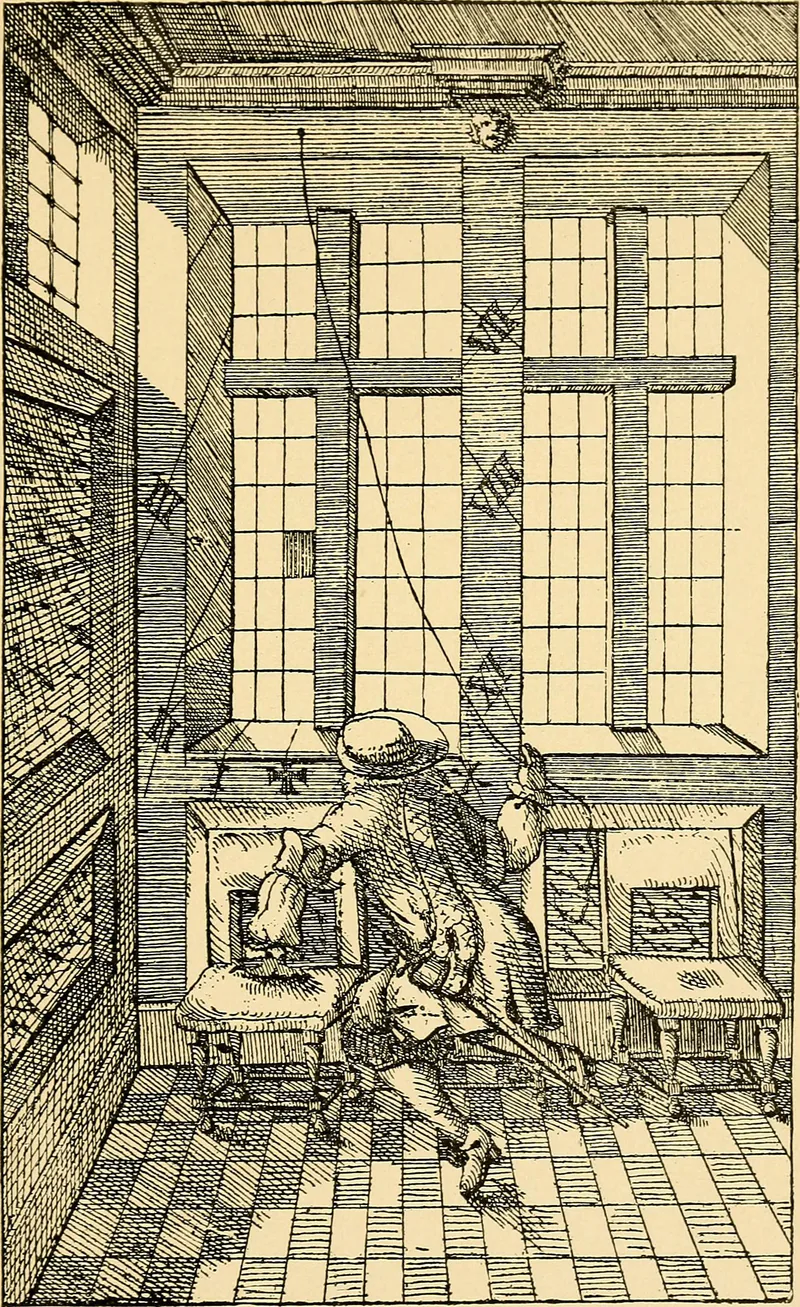
Historically, none of this is supported. The Emerald Tablet is a short Arabic and later Latin alchemical text concerned with the "one thing" and the relation of above and below; it says nothing about attracting wealth through thought. The ancient Hermetic writings of the Corpus Hermeticum deal with divine mind and the soul's ascent. The Rosicrucian manifestos of the early seventeenth century, and modern esoteric orders such as the Hermetic Order of the Golden Dawn, taught elaborate systems of spiritual and magical development rather than a single principle of attraction. Reviewers noticed the debt to popular conspiracy fiction: Salon's Peter Birkenhead compared the packaging to a Da Vinci Code aesthetic of parchment, quill fonts and wax seals.
The "ancient secret" framing has its own history. It echoes The Kybalion (1908), which presented New Thought ideas as Hermetic wisdom, and twentieth-century mail-order esoteric organisations that advertised secret teachings once known to great minds. Scholars of esotericism such as Wouter Hanegraaff have described this appeal to a hidden perennial tradition as a recurring pattern in modern esoteric and New Age movements.
Oprah, the Book and the 2007 Boom§
The book version, written by Byrne, was published in late 2006 by Atria Books with Beyond Words Publishing. It condenses the film's teaching into a simple three-step "creative process": ask, believe, receive. Byrne bases this on a verse from the Gospel of Matthew, which in the King James Version reads: "all things, whatsoever ye shall ask in prayer, believing, ye shall receive" (Matthew 21:22). Later chapters apply the law to money, relationships, health and the world, and recommend gratitude, visualisation and "feeling good" as the key practices.
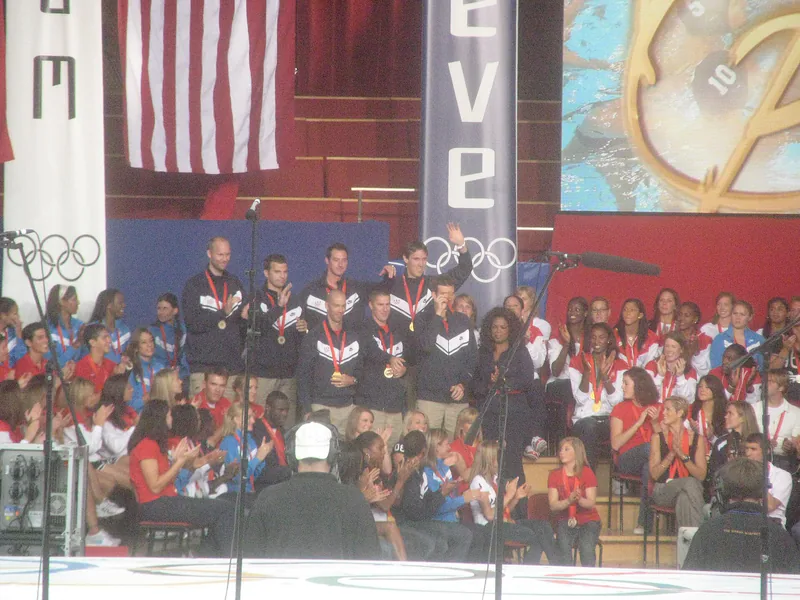
The decisive moment came in February 2007, when Oprah Winfrey devoted two episodes of her talk show to The Secret, on 8 and 16 February, featuring several of the film's teachers. Winfrey said that its message was one she had been trying to share for years. Sales exploded: the book reached number one on the New York Times bestseller list, Simon & Schuster ordered a reprint of two million copies, and the DVD topped Amazon's chart in March 2007. Time named Byrne one of its 100 most influential people of 2007. By 2009 the book and film together were estimated to have generated around 300 million dollars.
The Dispute with Esther Hicks§
The teacher most closely associated with the law of attraction before The Secret was Esther Hicks, who with her husband Jerry Hicks presented teachings she attributed to a group of non-physical beings called "Abraham." Hicks was interviewed for the film and served as its principal narrator of the law of attraction in the original 2006 release, under an agreement that gave her family a share of sales, reported to have brought them about 500,000 dollars.
The relationship broke down later in 2006. Accounts differ: Hicks indicated disagreements over the terms of the agreement, while other reports state that Byrne rescinded the contract and that Hicks would receive nothing further. Hicks's footage was removed from the Extended Edition, and other teachers, notably Lisa Nichols and Marci Shimoff, deliver material in scenes that had featured her. The episode illustrates both the commercial stakes and the fact that the film's teaching was not new: Abraham-Hicks had already been teaching the law of attraction for two decades. The production also generated later legal disputes, including one between Byrne and director Drew Heriot over payment.
Sequels, Spin-offs and Later Developments§
Byrne followed The Secret with a series of related books:
- The Power (2010), which identifies love as the force behind the law of attraction;
- The Magic (2012), a 28-day programme of gratitude exercises;
- Hero (2013), applying the teaching to pursuing one's life purpose;
- How The Secret Changed My Life (2016), a collection of readers' stories;
- The Greatest Secret (2020), which shifts emphasis toward the idea that one's true self is pure awareness, drawing on nondual spiritual teachings.
A fictional feature film, The Secret: Dare to Dream, starring Katie Holmes and Josh Lucas, was released in 2020. The brand has also been extended to apps, journals and gratitude products.
One episode cast a long shadow over the film's teachers. In October 2009 three participants died after a sweat-lodge ceremony at a retreat near Sedona, Arizona, run by James Arthur Ray, one of the film's featured speakers. Ray was convicted of negligent homicide in 2011. Critics cited the case as an example of the risks of charismatic self-help leadership, though it did not involve Byrne directly.
Critical and Scientific Assessment§
Scientific claims§
Scientists have rejected The Secret's claims that thoughts emit frequencies that attract matching events and that quantum physics supports the law of attraction. Physicists including Lisa Randall, and psychologists such as Christopher Chabris and Daniel Simons, criticised its misuse of scientific language. The Skeptical Inquirer concluded in 2007 that the film's central claim has no basis in scientific reality. Psychological research points in a different direction: Gabriele Oettingen's studies of positive fantasies suggest that vividly imagining a desired outcome, without considering obstacles, tends to reduce effort and achievement.
Ethical and social critiques§
The most persistent criticism concerns responsibility. If people attract everything that happens to them, then illness, poverty and disaster appear to be the victims' own fault. Barbara Ehrenreich, who encountered relentless positivity after her own breast cancer diagnosis, discussed The Secret in Bright-sided (2009), arguing that the cult of positive thinking isolates the suffering, discourages realistic assessment of risk and diverts attention from social and economic causes of hardship. Other critics noted the book's emphasis on acquiring money, cars and houses, and compared its message to the prosperity gospel preached in some Christian churches. Christian commentators objected to its use of scripture and its portrayal of the universe as an impersonal genie.
Defenders reply that the book encouraged gratitude, optimism and goal-setting, and many readers report that it helped them through difficult periods. Researchers would generally attribute such benefits to changed mood, attention and behaviour rather than to any law of attraction.
The Secret in New Thought History§
Historians of religion see The Secret as a repackaging of ideas developed between the 1880s and 1930s by Prentice Mulford, William Walker Atkinson, Wallace Wattles, Robert Collier and Napoleon Hill, filtered through the New Age and the Abraham-Hicks material. Its originality lay in its form: a slickly produced, internet-distributed film with an esoteric mystique, amplified by the most influential daytime television platform of its era. In the history of New Thought it marks the moment when a once-marginal American metaphysical tradition became, briefly, a mass global phenomenon, and it remains a central text of present-day "manifesting" culture.
Frequently asked questions§
What is the main message of The Secret?§
The Secret teaches the law of attraction: that a person's thoughts and feelings attract corresponding experiences. It recommends a three-step process of asking, believing and receiving, supported by gratitude and visualisation.
Why was Esther Hicks removed from The Secret?§
Esther Hicks appeared in the original 2006 version but her footage was cut from the Extended Edition after her agreement with Rhonda Byrne broke down. Accounts of the reasons differ, but they concern the terms of the contract and royalties.
Is The Secret based on ancient teachings?§
No historical evidence supports that. Its ideas come from nineteenth- and early twentieth-century American New Thought, especially Wallace Wattles' The Science of Getting Rich (1910). The film's references to the Emerald Tablet and Rosicrucians are a dramatic framing device.
Does the law of attraction in The Secret work?§
There is no scientific evidence that thoughts attract physical events. Research shows that attitudes can influence behaviour and wellbeing, but studies on positive fantasies suggest that merely visualising success can reduce motivation.
Sources and further reading§
- The Secret — Rhonda Byrne, 2006
- The Science of Getting Rich — Wallace D. Wattles, 1910
- Thought Vibration, or the Law of Attraction in the Thought World — William Walker Atkinson, 1906
- The Secret of the Ages — Robert Collier, 1926
- Ask and It Is Given — Esther and Jerry Hicks, 2004
- Bright-sided: How the Relentless Promotion of Positive Thinking Has Undermined America — Barbara Ehrenreich, 2009
- Rethinking Positive Thinking: Inside the New Science of Motivation — Gabriele Oettingen, 2014
- One Simple Idea: How Positive Thinking Reshaped Modern Life — Mitch Horowitz, 2014
- A Republic of Mind and Spirit — Catherine L. Albanese, 2007
- New Age Religion and Western Culture — Wouter J. Hanegraaff, 1996