Liber XXXIII · Theosophy · Chapter VII: New Thought & the Law of Attraction
The Law of Attraction: History, Core Claims and Evidence
The law of attraction traced from Mulford, Atkinson and Wattles to Napoleon Hill, Neville Goddard and Abraham-Hicks, with its claims and the evidence.

The law of attraction is the belief that a person's thoughts and feelings draw corresponding experiences, people and circumstances into their life, so that "like attracts like": positive thinking attracts good outcomes and negative thinking attracts bad ones. The idea was formulated by American New Thought writers between the 1880s and 1910, most explicitly by William Walker Atkinson in Thought Vibration (1906), and was later popularised by Napoleon Hill, Abraham-Hicks and Rhonda Byrne's The Secret (2006). There is no scientific evidence that thoughts directly attract physical events, although research does show that attitudes and expectations can affect behaviour.
What the Law of Attraction Claims§
Although teachers differ in emphasis, most versions of the law of attraction share a cluster of claims.
- Thoughts are forces. Thought is treated not merely as a mental event but as a kind of energy, often described as a "vibration", which goes out into the world.
- Like attracts like. Thoughts of a given quality attract circumstances of the same quality. A person who dwells on poverty draws more lack; one who dwells on abundance draws wealth.
- Feeling is decisive. Many later teachers hold that emotion, not words, sets the "frequency" of attraction, so one must feel as though a desire has already been fulfilled.
- Responsibility is total. Because inner states shape outer events, each person is said to be the creator of their own experience.
The practical methods that follow from these claims include visualisation (vividly imagining a desired outcome), affirmation (repeating positive statements in the present tense), gratitude practices, "vision boards" of images of what one wants, and the deliberate avoidance of negative thoughts, conversations and news.
These claims are religious or metaphysical, not scientific. Proponents frequently describe them in the vocabulary of physics, speaking of energy, vibration, magnetism or quantum mechanics, but they do not correspond to any known physical mechanism. In physics, "like attracts like" does not even hold for electric charge, where like charges repel.
Origins in New Thought§
The law of attraction grew out of the New Thought movement, which began with the mental healer Phineas P. Quimby in the mid-nineteenth century. Early New Thought concentrated on healing: illness was attributed to mistaken belief and cured by correcting it. By the 1880s and 1890s many writers extended the same logic from the body to fortune, career and relationships. The phrase "law of attraction" itself appeared in various senses in nineteenth-century spiritualist and Theosophical writing before it acquired its specific New Thought meaning.
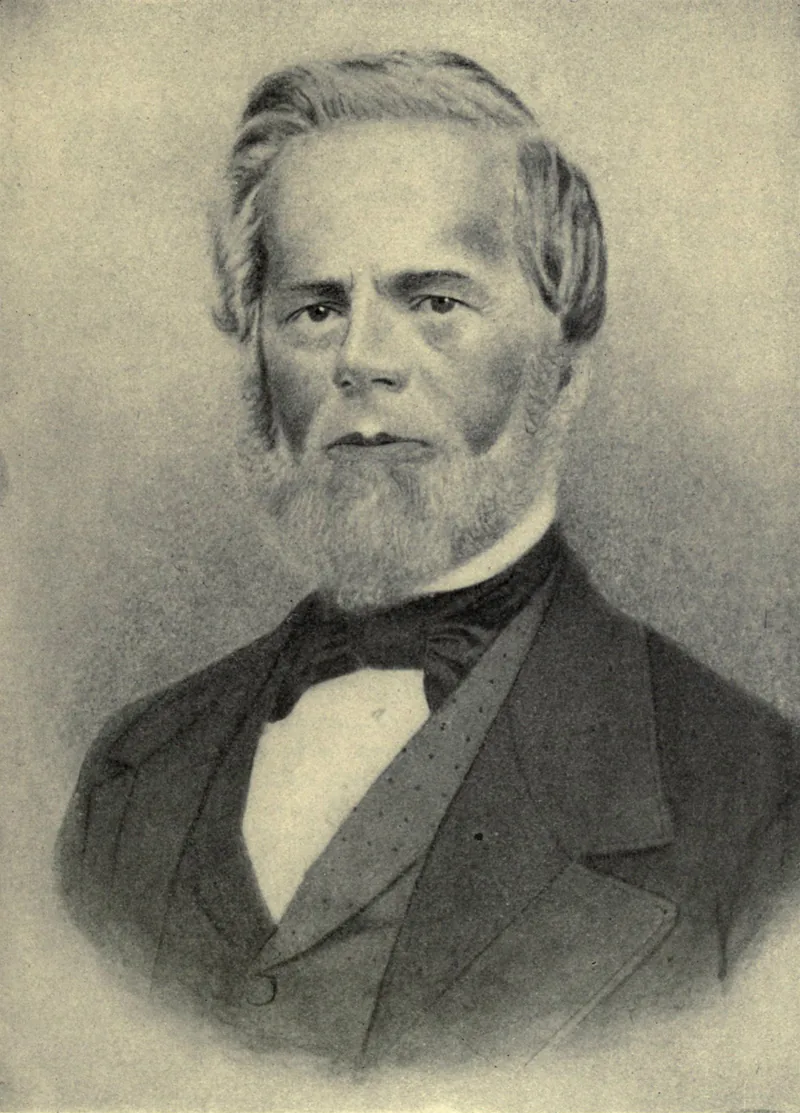
Prentice Mulford§
Prentice Mulford (1834–1891) was a journalist and humorist who had spent years in the California gold fields before turning to spiritual writing. In a series of essays published from the late 1880s, later collected under titles such as Your Forces and How to Use Them and Thoughts Are Things, he argued that thought is a real substance that acts on the world and that a person attracts what they habitually think about. Mulford's essays are discursive and personal rather than systematic, but later authors, including Rhonda Byrne, cite him as an early source.
William Walker Atkinson and Thought Vibration§
The fullest early statement came from William Walker Atkinson (1862–1932), a Chicago lawyer turned author who edited the magazine New Thought in the early 1900s and wrote prolifically under his own name and several pseudonyms, including Yogi Ramacharaka. His Thought Vibration, or the Law of Attraction in the Thought World (1906) set out the doctrine directly: thought is a form of vibration, thoughts of a particular kind attract similar thoughts and the conditions corresponding to them, and the will can be trained to direct this process. Atkinson framed the law as a natural principle comparable to gravity, though he offered no means of testing it.
The Kybalion and the "Hermetic Principles"§
In 1908 Atkinson's Yogi Publication Society in Chicago issued The Kybalion: A Study of the Hermetic Philosophy of Ancient Egypt and Greece, attributed to "Three Initiates." Most scholars and editors attribute the book wholly or largely to Atkinson himself. It presents seven principles said to derive from Hermes Trismegistus: Mentalism ("the All is Mind"), Correspondence, Vibration, Polarity, Rhythm, Cause and Effect, and Gender.
The Kybalion has become the main channel through which law-of-attraction teachers connect their ideas to Hermeticism. The Principle of Vibration in particular is often read as the mechanism of attraction, and the Principle of Correspondence is linked to the formula "as above, so below", derived from the Emerald Tablet.
Historically, however, the connection is loose. The ancient Hermetic writings collected in the Corpus Hermeticum are concerned with knowledge of God, the nature of the divine mind (nous), the ascent of the soul and spiritual rebirth. They do not teach a technique for attracting wealth or success, and the seven principles of The Kybalion are not found in them as a list. Scholars of Western esotericism generally treat The Kybalion as a work of early twentieth-century American New Thought dressed in Hermetic language, not as a transmission of ancient doctrine.
From Wealth Manuals to Mass Market: Wattles, Hill, Goddard and Murphy§
Wallace Wattles, The Science of Getting Rich (1910)§
Wallace D. Wattles (1860–1911) gave the law of attraction its most enduring application to money. The Science of Getting Rich (1910) argued that there is a formless "thinking stuff" from which all things are made, that a thought held in this substance produces the thing imagined, and that a person can become rich by holding a clear mental image of what they want with faith and gratitude, while acting efficiently in the present. Nearly a century later, the book was the direct inspiration for Rhonda Byrne's The Secret.

Napoleon Hill, Think and Grow Rich (1937)§
Napoleon Hill (1883–1970) published Think and Grow Rich in 1937, during the Great Depression. It presented a programme of definite purpose, burning desire, faith, autosuggestion and persistence, which Hill said he had distilled from interviews with successful men at the suggestion of the industrialist Andrew Carnegie. Hill's account of his commission from Carnegie, and of many of his interviews, is not supported by independent documentation, and biographers and journalists have questioned it. The book nevertheless became one of the best-selling self-help titles of all time and carried New Thought ideas into business and sales culture.
Neville Goddard and the "law of assumption"§
Neville Goddard (1905–1972), a Barbados-born lecturer who taught under his first name, offered a more mystical version. In books such as Your Faith Is Your Fortune (1941) and Feeling Is the Secret (1944), he taught that imagination is God acting in the human being and that one should "assume the feeling of the wish fulfilled", especially in the drowsy state before sleep. Neville read the Bible as a psychological allegory of this process. His work was relatively obscure in his lifetime but has gained a large following online since the 2010s.
Joseph Murphy and the subconscious mind§
Joseph Murphy (1898–1981), an Irish-born minister of Divine Science, popularised the idea that the subconscious mind accepts whatever the conscious mind impresses on it and then brings it about. The Power of Your Subconscious Mind (1963) became a long-running international bestseller. Murphy's language of "subconscious programming" anticipated much later self-help, although it does not reflect how psychologists understand unconscious processes.
Abraham-Hicks and the Modern Law of Attraction§
The term "law of attraction" became a household phrase largely through Esther Hicks and her husband Jerry Hicks. From 1985 Esther Hicks presented teachings she said came from a group of non-physical entities collectively called "Abraham." In workshops, recordings and books such as Ask and It Is Given (2004) and The Law of Attraction (2006), Abraham-Hicks taught that the universe responds to the vibration of a person's emotions, that negative emotion signals misalignment with one's desires, and that the task is to "allow" desired things by feeling good.
Esther Hicks was featured in the original 2006 version of The Secret before a dispute with its producer led to her removal from later editions. The film and book introduced the law of attraction to tens of millions of readers and viewers, and it is now a staple of social media "manifesting" culture.
Related Ideas in Magic and Esotericism§
The law of attraction has parallels with older ideas of sympathetic magic, in which like produces like, and with the Renaissance Hermetic-Neoplatonic view that the imagination can influence the world. In the twentieth century, chaos magick adopted a pragmatic approach in which belief is used as a tool and desires are encoded in sigils so that they bypass the conscious mind. Both traditions treat focused intention as efficacious, but chaos magicians typically frame their practice as experimental and ironic, whereas law-of-attraction teaching is usually presented as a universal and reliable law.
Criticism and the Scientific Evidence§
No evidence of a physical mechanism§
There is no scientific evidence that thoughts or emotions emit vibrations that attract matching physical events. Claims that quantum mechanics supports the law of attraction have been rejected by physicists, since quantum effects such as superposition and measurement do not involve human wishes shaping everyday objects. Apparent confirmations are readily explained by well-known biases: people notice and remember the times their thoughts seemed to come true (confirmation bias), successful practitioners tell their stories while unsuccessful ones fall silent (survivorship bias), and vague predictions can be fitted to almost any outcome.
Positive fantasies versus positive expectations§
Psychologists distinguish between kinds of positive thinking. Research on optimism and self-efficacy finds that people who expect, on the basis of experience, that they can succeed tend to try harder and persist longer. But the psychologist Gabriele Oettingen and colleagues have found that indulging in positive fantasies, vivid daydreams of a desired future, often predicts worse outcomes. In studies summarised in her book Rethinking Positive Thinking (2014), people who fantasised more positively about losing weight, finding a job or recovering from surgery tended to lose less weight, receive fewer job offers or recover more slowly. Experimental work suggested that such fantasies can reduce energy and effort, as though the mind treats the goal as already reached.
Oettingen's alternative, "mental contrasting", pairs imagining a desired future with identifying the obstacles in the way, and is associated with greater goal attainment. Similarly, a study by Lien Pham and Shelley Taylor (1999) found that students who visualised the process of studying did better than students who visualised getting a high grade. These findings support planning and realistic optimism, not the idea that imagining an outcome attracts it.
Victim-blaming and social critique§
Critics have also raised ethical objections. If each person attracts everything that happens to them, then illness, poverty, accidents and abuse appear to be the victim's own doing. Barbara Ehrenreich, in Bright-sided (2009), argued that compulsory positivity in American culture isolates the sick, discourages legitimate complaint and diverts attention from social and economic causes of hardship. Commentators have also noted the close parallels between the law of attraction and the Christian prosperity gospel, which teaches that faith and positive confession produce health and wealth; historians such as Kate Bowler have traced shared roots in New Thought.
Frequently asked questions§
Who invented the law of attraction?§
No single person invented it. It developed within the American New Thought movement, with Prentice Mulford in the 1880s and William Walker Atkinson's Thought Vibration (1906) providing early statements. Wallace Wattles, Napoleon Hill and later Abraham-Hicks and Rhonda Byrne popularised it.
Is the law of attraction part of ancient Hermeticism?§
Not in any direct sense. The link is mainly made through The Kybalion (1908), a modern American book usually attributed to William Walker Atkinson. The ancient Hermetic texts discuss divine mind and the soul's ascent, not attracting wealth or success.
Is there scientific evidence for the law of attraction?§
No controlled research shows that thoughts attract physical events or circumstances. Studies do show that expectations and confidence can influence effort and behaviour, but research on positive fantasies suggests that merely visualising success can reduce motivation.
What is the difference between the law of attraction and positive thinking?§
Positive thinking, in the psychological sense, refers to attitudes such as optimism that affect how people feel and act. The law of attraction makes a stronger metaphysical claim: that thoughts themselves draw matching events from the outside world, independent of action.
Sources and further reading§
- Your Forces and How to Use Them — Prentice Mulford, essays collected from the late 1880s
- Thought Vibration, or the Law of Attraction in the Thought World — William Walker Atkinson, 1906
- The Kybalion — Three Initiates, 1908
- The Science of Getting Rich — Wallace D. Wattles, 1910
- Think and Grow Rich — Napoleon Hill, 1937
- Feeling Is the Secret — Neville Goddard, 1944
- The Power of Your Subconscious Mind — Joseph Murphy, 1963
- Ask and It Is Given — Esther and Jerry Hicks, 2004
- A Republic of Mind and Spirit — Catherine L. Albanese, 2007
- Bright-sided: How the Relentless Promotion of Positive Thinking Has Undermined America — Barbara Ehrenreich, 2009
- One Simple Idea: How Positive Thinking Reshaped Modern Life — Mitch Horowitz, 2014
- Rethinking Positive Thinking: Inside the New Science of Motivation — Gabriele Oettingen, 2014
- Blessed: A History of the American Prosperity Gospel — Kate Bowler, 2013