Liber XVII · Islam · Chapter X: Sunni & Shi'a
The Twelve Imams of Shi'a Islam: Lives, Shrines and the Mahdi
The Twelve Imams of Shi'a Islam from 'Ali to the hidden Mahdi: their lives, the doctrine of the imamate, the Occultation, their shrines and esoteric teaching.

The Twelve Imams are the descendants of the Prophet Muhammad whom Twelver Shi'i Muslims, the largest branch of Shi'a Islam, recognise as the divinely appointed leaders of the community after him. The line begins with 'Ali ibn Abi Talib, the Prophet's cousin and son-in-law, and ends with Muhammad al-Mahdi, who according to Twelver belief went into hiding in the ninth century and will return at the end of time. Their lives, sayings and shrines lie at the heart of Shi'i devotion from Iraq and Iran to Lebanon, the Gulf and South Asia.
The Doctrine of the Imamate§
For Twelver Shi'is the imamate (imāma) is a fundamental principle of religion. Just as God sent prophets, He does not leave the world without a guide: after the Prophet, the Imam is the "proof of God" (ḥujjat Allāh) on earth. Each Imam is designated by explicit appointment (naṣṣ) from the one before; he is believed to be protected from sin and error (ʿiṣma) and to possess a special knowledge ('ilm) inherited from the Prophet, enabling him to interpret the Qur'an in both its outer (ẓāhir) and inner (bāṭin) sense.
Shi'is see the first designation in the Prophet's sermon at Ghadir Khumm in 632, on his return from the farewell pilgrimage, when he declared of 'Ali, "For whomever I am master (mawlā), 'Ali is his master." Sunni Muslims accept the saying but understand it as a statement of love and support rather than of succession. The origins of the division are explained in Sunni and Shi'a Islam. Together with the Prophet and his daughter Fatima, the Twelve Imams form the "Fourteen Infallibles" of Twelver devotion.
The First Imams: 'Ali, Hasan and Husayn§
'Ali ibn Abi Talib (d. 661), the first Imam, was among the first to accept Islam and married the Prophet's daughter Fatima. He became the fourth caliph in 656, and his reign was torn by civil war. He was assassinated in the mosque of Kufa and is buried at Najaf in Iraq. Sermons and letters attributed to him were collected around 1000 CE by al-Sharīf al-Raḍī as Nahj al-balāgha ("The Peak of Eloquence"), a classic of Arabic prose.
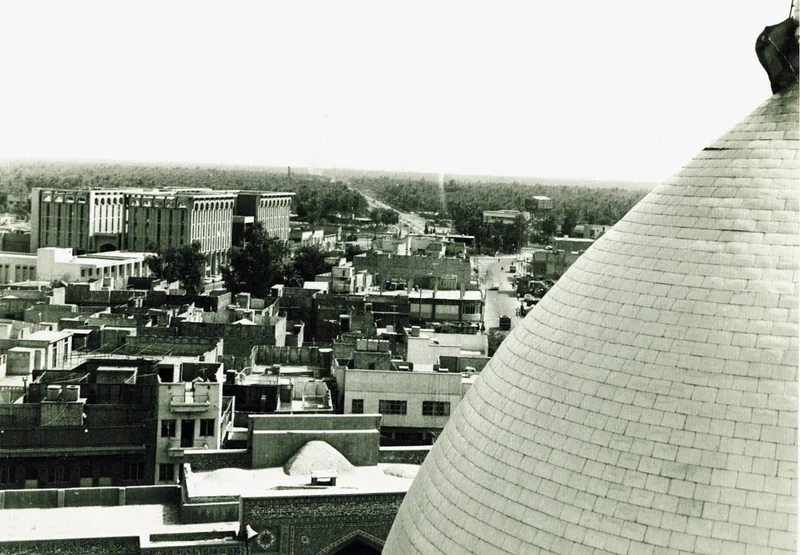
Al-Hasan (d. 670), his elder son, ceded the caliphate to Mu'awiya after a brief period and lived quietly in Medina; Shi'i tradition holds that he was poisoned. Al-Husayn, his younger brother, refused to recognise Mu'awiya's son Yazid and was killed with most of his family and companions at Karbala on 10 Muharram 680. His martyrdom, mourned each year at Ashura and forty days later at Arba'in, became the defining event of Shi'i piety, and his shrine at Karbala the focus of one of the largest annual pilgrimages on earth.
The Imams of Medina: Learning and Quietism§
The fourth Imam, 'Ali Zayn al-'Abidin (d. c. 713), survived Karbala as a sick young man. He is remembered for his devotion; the prayers attributed to him, al-Ṣaḥīfa al-Sajjādiyya, are loved by Shi'is as "the Psalms of the Family of Muhammad". The fifth Imam, Muhammad al-Baqir (d. c. 733), "the one who splits open knowledge", and his son, the sixth Imam, Ja'far al-Sadiq (d. 765), lived in Medina at a time of political upheaval but avoided revolt and devoted themselves to teaching.
Ja'far al-Sadiq is the great teacher of Shi'ism. Twelver law is called the Ja'fari school after him, and numerous scholars, including Sunni jurists, are said to have attended his circle. Later tradition made him the master of the alchemist Jabir ibn Hayyan and the source of books of hidden knowledge; historians treat these attributions with caution. A dispute over his succession split the Shi'a: those who followed his son Isma'il became the Isma'ilis, whose later history includes the Fatimid caliphs and the Nizaris of Alamut, discussed in The Assassins and the Hashish Legend. Those who followed his son Musa became the Twelvers.
The Imams under the Abbasids§
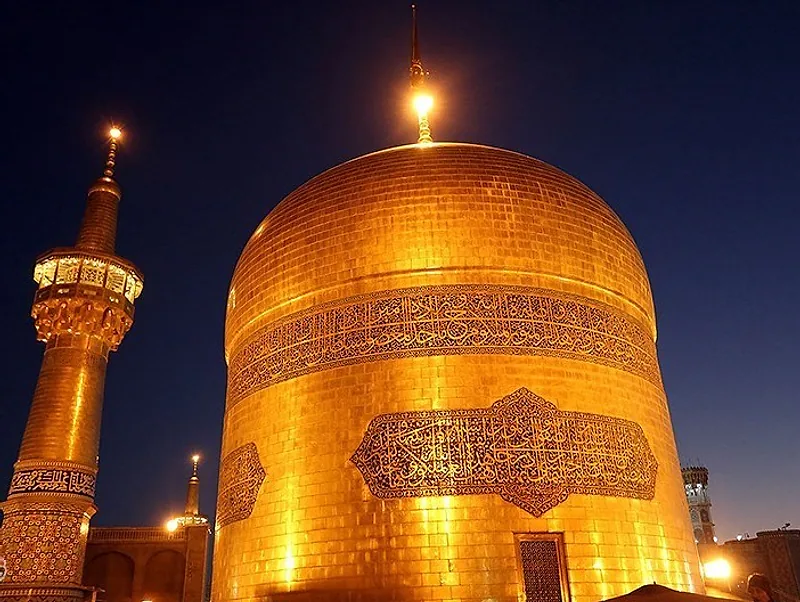
The later Imams lived under the close watch of the Abbasid caliphs, who feared their prestige. Musa al-Kazim (d. 799), the seventh Imam, died in prison in Baghdad; he and his grandson Muhammad al-Jawad (d. 835), the ninth Imam, are buried at Kazimayn, now part of Baghdad. The eighth Imam, 'Ali al-Rida (d. 818), was named heir to the caliphate by al-Ma'mun in 817 in a gesture of reconciliation, but died suddenly at Tus in Khorasan; Shi'is believe he was poisoned. His tomb grew into the city of Mashhad ("place of martyrdom"), the holiest site in Iran. His sister Fatima al-Ma'suma is buried at Qom, today a major centre of religious learning.
The tenth Imam, 'Ali al-Hadi (d. 868), and the eleventh, al-Hasan al-'Askari (d. 874), were kept in the military garrison town of Samarra. Their shrine there, the al-'Askari Mosque with its golden dome, was badly damaged by bombings in 2006 and 2007 and has since been rebuilt.
The Twelfth Imam and the Occultation§
According to Twelver belief, al-Hasan al-'Askari had a son, Muhammad, born around 869, who was hidden from the authorities for his safety. On his father's death in 874 the Imam withdrew from view, beginning the Minor Occultation (al-ghayba al-ṣughrā). For nearly seventy years he communicated with the faithful through four successive deputies (nuwwāb), who collected religious dues and passed on his written answers. In 941 the fourth deputy died without naming a successor, after announcing a final message from the Imam, and the Major Occultation (al-ghayba al-kubrā) began, which continues today.
Twelvers believe the Imam is alive, present in the world though unrecognised, and that he will reappear before the Day of Judgment as the Mahdi, the "rightly guided one", accompanied by the return of Jesus, to fill the earth with justice. Sunni Islam also has traditions about a coming Mahdi, but usually as a future descendant of the Prophet rather than a hidden Imam. In the Imam's absence, religious authority passed gradually to learned jurists, culminating in the modern institution of the marjaʿ al-taqlīd, "source of emulation", and, in the Islamic Republic of Iran since 1979, in the contested doctrine of wilāyat al-faqīh, the guardianship of the jurist. Twelver Shi'ism had become the state religion of Iran under the Safavid dynasty from 1501.
Esoteric Teaching, Devotion and Pilgrimage§
Early Shi'i hadith, gathered in collections such as al-Kulaynī's al-Kāfī in the tenth century, present the Imams as bearers of a secret knowledge. They speak of books in the Imams' possession, the Jafr, the Jāmiʿa and the Muṣḥaf of Fatima, containing knowledge of past and future, and of the Imams as pre-existent lights created before the world. The French scholar Mohammad Ali Amir-Moezzi has described this early layer as an "esoteric" Shi'ism in which the Imam is the initiator into hidden truth, later moderated by rationalist theologians. The name jafr came to be used for a form of letter divination related to the lettrism discussed in al-Buni and the Shams al-Ma'arif.
Devotion to the Imams is expressed in pilgrimage (ziyāra) to their shrines, in mourning gatherings for Husayn during Muharram, in recitation of litanies of visitation, and in celebrations of their birthdays. Love for the Prophet's family (ahl al-bayt) is not confined to Shi'is: Sunni Muslims honour 'Ali, Hasan and Husayn, and many Sufi orders trace their spiritual chains through 'Ali and through Ja'far al-Sadiq.
Frequently asked questions§
Who are the Twelve Imams in order?§
'Ali, al-Hasan, al-Husayn, 'Ali Zayn al-'Abidin, Muhammad al-Baqir, Ja'far al-Sadiq, Musa al-Kazim, 'Ali al-Rida, Muhammad al-Jawad, 'Ali al-Hadi, al-Hasan al-'Askari and Muhammad al-Mahdi.
What is the Occultation in Shi'a Islam?§
The Occultation (ghayba) is the hiddenness of the twelfth Imam. Twelvers believe that he withdrew from public view in 874, communicated through four deputies until 941, and has been hidden since then, awaiting God's command to return as the Mahdi.
Do Sunni Muslims believe in the Twelve Imams?§
Sunnis respect the members of the Prophet's family and many revere the early Imams as pious scholars, but they do not accept the doctrine of a divinely appointed, infallible imamate. Belief in a future Mahdi exists in Sunni tradition in a different form.
Sources and further reading§
- An Introduction to Shi'i Islam: The History and Doctrines of Twelver Shi'ism — Moojan Momen, 1985
- The Divine Guide in Early Shi'ism: The Sources of Esotericism in Islam — Mohammad Ali Amir-Moezzi, 1994
- Shi'ite Islam — Muhammad Husayn Tabataba'i, trans. Seyyed Hossein Nasr, 1975
- Islamic Messianism: The Idea of Mahdi in Twelver Shi'ism — Abdulaziz Abdulhussein Sachedina, 1981
- The Succession to Muhammad: A Study of the Early Caliphate — Wilferd Madelung, 1997
- Shi'ism — Heinz Halm, 1991