Liber XVII · Islam · Chapter VIII: Sufi Orders & Saints
Sufi Orders and Saints: Tariqas, Shaykhs and Shrines in Islam
Sufi orders and saints explained: how the tariqas formed, the Qadiri, Chishti, Naqshbandi, Mevlevi and Tijani orders, Islamic sainthood and shrine pilgrimage.

Sufi orders (ṭarīqa, plural ṭuruq, "paths") are the brotherhoods through which Islamic mysticism has been taught and organised since about the twelfth century. Each order traces a chain of masters back to the Prophet Muhammad, follows the method of a founding saint and gathers disciples around a living shaykh. Around the tombs of the great Sufi saints, the "friends of God", grew shrines that remain among the most visited religious sites in the Muslim world.
How the Sufi Orders Took Shape§
The early Sufis of Basra and Baghdad, whose lives are told in Sufism: History, Masters and Practices, gathered in informal circles around respected teachers. Between the eleventh and thirteenth centuries these circles became institutions. Lodges, called khānqāh in Persian lands, ribāṭ or zāwiya in the Arab west and tekke in Ottoman Turkish, provided places for communal prayer, instruction, lodging for travellers and food for the poor, often supported by endowments from rulers and merchants. At the same time the method, litanies and rules of particular masters were handed down to their disciples, who began to identify themselves by the master's name: thus the followers of 'Abd al-Qadir became the Qadiriyya.
Orders were not closed sects. A Muslim could be initiated into more than one, branches split off under new masters, and many lay members, artisans, merchants and peasants, attended the gatherings of remembrance without becoming full-time dervishes. By the later Middle Ages the orders had become one of the main forms of religious organisation from Morocco to Bengal, and they played a large part in carrying Islam to Anatolia, the Balkans, sub-Saharan Africa, South Asia and Southeast Asia.
The Shaykh, the Disciple and the Chain of Blessing§
Entry into an order is made by a pledge (bayʿa), often sealed by clasping hands with the shaykh, receiving a cloak (khirqa) or being taught a formula of remembrance. The disciple (murīd, "one who wills") places himself or herself under the guidance of the shaykh (in Persian pīr, "elder"), who prescribes litanies, corrects faults and interprets dreams and experiences. Sufi manuals compare the right relationship to that of a body in the hands of the one who washes it, an image of total trust that critics thought excessive.
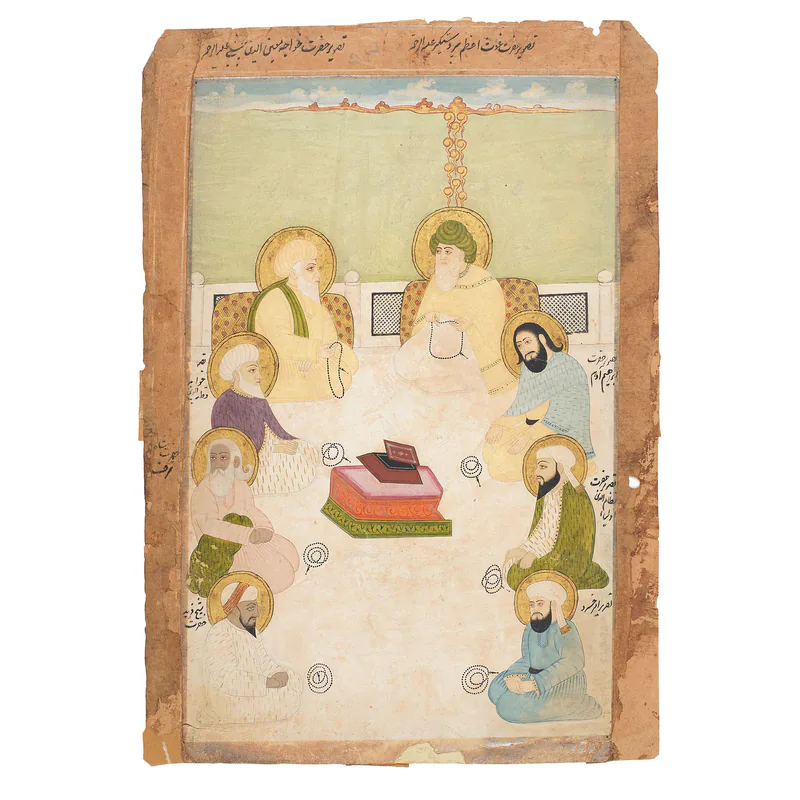
Every order preserves a silsila, a genealogy of masters stretching back through famous Sufis such as al-Junayd to the Prophet, usually via 'Ali ibn Abi Talib or, in the Naqshbandi case, via Abu Bakr. The chain is believed to transmit not only teaching but also baraka, a spiritual blessing. The practices handed down in this way, dhikr, retreat and listening, are described in Sufism in Islam.
The Great Orders of the Middle East and Africa§
- The Qadiriyya, named after 'Abd al-Qadir al-Jilani (d. 1166), a Hanbali preacher of Baghdad whose tomb there remains a major shrine. It is perhaps the most widespread order, from West Africa to Indonesia, and its founder is the subject of a rich literature of miracles.
- The Rifa'iyya, from Ahmad al-Rifa'i (d. 1182) in southern Iraq, known historically for ecstatic demonstrations, such as handling snakes or fire, which observers from medieval travellers to modern anthropologists have described.
- The Shadhiliyya, from the Moroccan Abu'l-Hasan al-Shadhili (d. 1258), who settled in Egypt. It favoured a sober piety lived in the world rather than in withdrawal. The Ḥikam, aphorisms of his successor Ibn 'Ata' Allah of Alexandria (d. 1309), are among the most read Sufi texts.
- The Tijaniyya, founded by Ahmad al-Tijani (d. 1815) in Algeria and Fez, which spread across West Africa and is today one of the largest orders in the world, particularly in Senegal and Nigeria.
- Movements such as the Sanusiyya in Libya and the Muridiyya of Senegal, founded by Ahmadu Bamba (d. 1927), combined religious teaching with economic and, at times, political organisation; the Sanusi leadership later became Libya's royal house.
Sufi Orders in Persia, Central Asia, Anatolia and India§
The Naqshbandiyya, named after Baha' al-Din Naqshband of Bukhara (d. 1389), is distinctive for its silent remembrance of the heart and its emphasis on observance of the law. Its Mujaddidi branch, from Ahmad Sirhindi in Mughal India, and its Khalidi branch, from Mawlana Khalid (d. 1827), spread through the Ottoman Empire, the Caucasus and Central Asia, where Naqshbandi leaders such as Imam Shamil fought Russian expansion. The Kubrawiyya of Najm al-Din Kubra (d. 1221) is remembered for its detailed analysis of visions of coloured lights.
In Anatolia the Mevleviyya took shape around the memory of Jalal al-Din Rumi in Konya, with its turning ceremony, the semā, accompanied by the reed flute and drum. The Bektashiyya, named after the thirteenth-century Hajji Bektash, combined Sufism with veneration of 'Ali and the Imams and was closely associated with the Janissary corps of the Ottoman army; it survives especially in Albania.
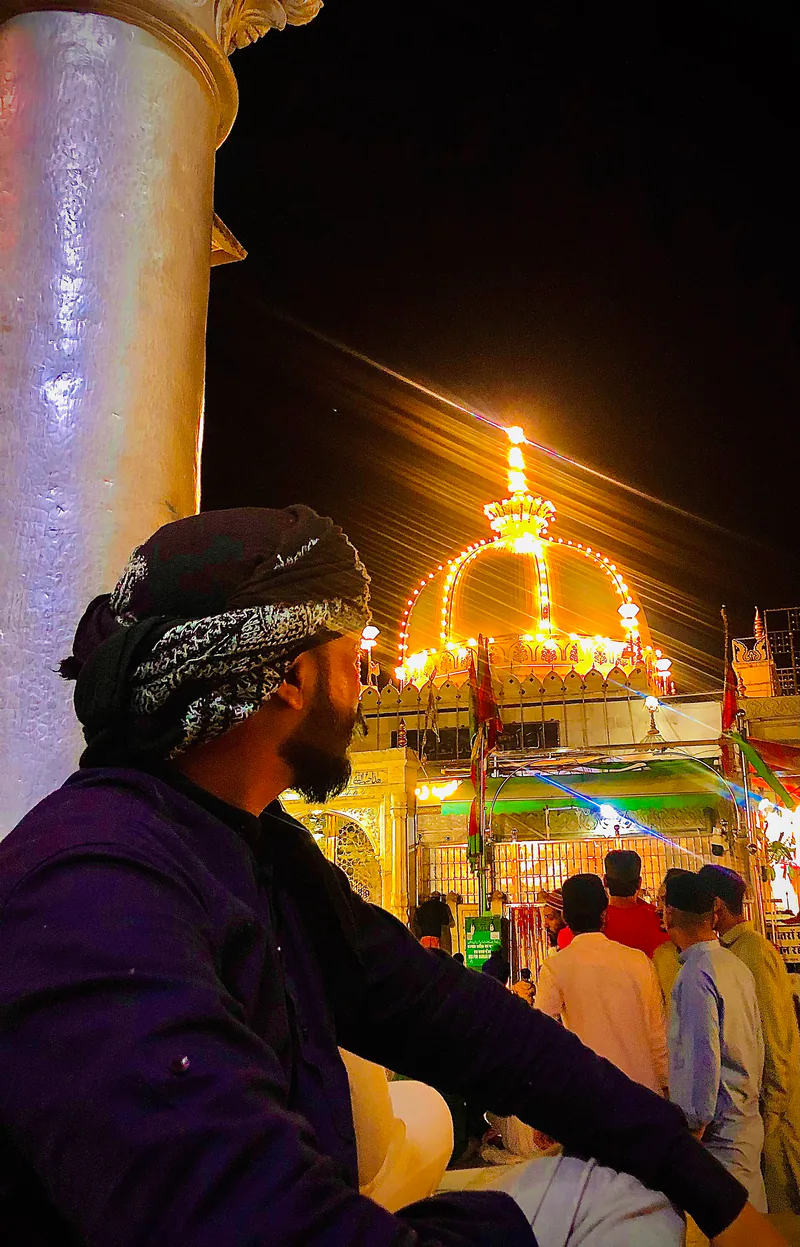
In South Asia the Chishtiyya became the most popular order. Its founder in India, Mu'in al-Din Chishti (d. 1236), settled in Ajmer, where his shrine draws vast numbers of pilgrims of many faiths. His successors included Nizam al-Din Awliya of Delhi (d. 1325), whose disciple, the poet Amir Khusraw, is credited by tradition with shaping the devotional music now called qawwālī. The Suhrawardiyya, from Shihab al-Din 'Umar al-Suhrawardi (d. 1234), whose manual ʿAwārif al-maʿārif was widely studied, was also strong in Multan and Sind.
Friends of God: Sainthood and Miracles§
The Qur'an speaks of the "friends of God" (awliyāʾ Allāh), on whom "fear (cometh) not, nor do they grieve" (Yunus 10:62). Sufi writers built on this a theory of sainthood (walāya). The ninth-century mystic al-Hakim al-Tirmidhi wrote on the "seal of the saints", and Ibn Arabi later developed a complex doctrine in which sainthood is the inner dimension of prophethood. Sufis also spoke of an invisible hierarchy of saints who sustain the world: the Pole (quṭb), the "pegs" (awtād) and the "substitutes" (abdāl), whose number is always complete. The mysterious figure of al-Khidr, identified with the servant of God whom Moses meets in sura al-Kahf, was regarded as an immortal guide who can initiate seekers directly.
Theologians distinguished the muʿjizāt or evidentiary miracles of prophets from the karāmāt, "marks of favour", of saints: healing, knowledge of hidden things, appearing in two places, or protection from harm. Sunni creeds such as that of al-Tahawi affirm that saints' miracles are real, while warning that no saint is equal to a prophet. Women saints, among them Rabi'a of Basra and Sayyida Nafisa (d. 824), whose shrine in Cairo is much visited, also hold a place in this tradition. Ideas about saints and spirits link with the broader Islamic understanding of the unseen discussed in Jinn and the Unseen.
Shrines, Pilgrimage and the Urs§
A saint's tomb, in Arabic maqām or ḍarīḥ, in Persian and Urdu dargāh or mazār, is believed to retain the saint's baraka. Visitors make ziyāra, "visitation", to recite the Fatiha, ask the saint's intercession with God, tie threads or offer vows, and share food distributed at the shrine kitchen. The great annual festival is the ʿurs, "wedding", which marks the anniversary of the saint's death, understood as union with God; in Egypt the corresponding festivals are called mawlid, as at the shrine of Ahmad al-Badawi in Tanta. Such festivals combine prayer, dhikr and music with markets and fairs.
Shrine practices have long been controversial. Ibn Taymiyya condemned travelling to tombs to seek the intercession of the dead, and the Wahhabi movement destroyed many tombs in Arabia in the nineteenth and twentieth centuries. Modern states regulated or suppressed the orders; Turkey closed its Sufi lodges in 1925, though the Mevlevi ceremony continues as recognised cultural heritage. Sufi shrines have also been targets of militant attacks in Pakistan, Mali and elsewhere. Nonetheless the orders and the cult of saints remain vital parts of lived Islam for many millions, and in South Asia shrines are often visited by Hindus and Sikhs as well as Muslims.
Frequently asked questions§
What is the largest Sufi order?§
Reliable figures are hard to obtain, but the Qadiriyya, Naqshbandiyya and Tijaniyya are usually counted among the largest, each with many millions of affiliates. Orders vary greatly from formal membership to loose devotional attachment.
What is a dervish?§
Darvīsh is Persian for a poor man or mendicant and came to mean a member of a Sufi order, especially one who has renounced worldly life. The Arabic equivalent is faqīr, "poor one", referring to spiritual poverty before God.
Do Muslims pray to saints?§
Mainstream Islamic doctrine holds that prayer is directed to God alone. Visitors to shrines usually understand themselves to be asking the saint to intercede with God or seeking blessing at a holy place, a distinction that critics of shrine practices consider too fine.
Sources and further reading§
- The Sufi Orders in Islam — J. Spencer Trimingham, 1971
- Friends of God: Islamic Images of Piety, Commitment, and Servanthood — John Renard, 2008
- Sufi Martyrs of Love: The Chishti Order in South Asia and Beyond — Carl W. Ernst & Bruce B. Lawrence, 2002
- Seal of the Saints: Prophethood and Sainthood in the Doctrine of Ibn 'Arabi — Michel Chodkiewicz, 1993
- Realm of the Saint: Power and Authority in Moroccan Sufism — Vincent J. Cornell, 1998
- Sufism: A Global History — Nile Green, 2012